Advertisement Close

Business

Why This Lebanese Street Food Is Gaining Traction in the U.S.

by  Nina Roberts 

Fortune 

It’s not as popular as pizza or falafel, but someday it could be.
In Lebanon, the manoushe is omnipresent — a flatbread best served fresh from the corner bakery’s oven and eaten on the go. It’s typically slathered in zaatar, a thyme herb mix with sesame seeds, often with dollops of labneh, a tangy thick yogurt. Despite the waves of Lebanese immigrants who have immigrated to the U.S.and made manoushe at home or at local bakeries, it has yet to be widely available to the general public.

But that’s changing. A handful of immigrant entrepreneurs have launched manoushe-centric businesses in city centers across the country geared towards a diverse customer base—and they’re flourishing.

“Somebody needed to do it,” laughs Ziyad Hermez, 32, the owner of Manousheh NYC, New York City’s only “manousherie” (falafel, hummus, and other regional staples like baba ganoush, are not on the menu). At the tiny, sleek, glass-front eatery — which opened in March 2015 in the trendy West Village — a carefully curated mix of American indie-pop songs and Arab classics play over the speakers. Hermez and his employees dress casually, speaking in English with a sprinkling of Arabic. Customers range from curious passersby who probably couldn’t locate Lebanon on a map, to NYU students, to natives of Lebanon and the surrounding region who are living or traveling in New York.

A young woman visiting from Lebanon nibbles on a manoushe. “If I close my eyes, it’s like I’m in Beirut,” she says.

Amid the scent baking bread, which wafts from the colossal central oven, Hermez, who is of Lebanese descent but grew up in Kuwait, explains that the inspiration for Manousheh NYC was simple: Longing. When he moved to Washington, D.C., for college in 2002, he was astonished he couldn’t find a fresh baked manoushe (sometimes spelled manousheh, mana’oushe, man’oushe, and man’oushé in English). The hunt continued when he moved to New York City and was working in IT.

He missed the taste of a freshly baked manoushe and the intimate experience of walking into the neighborhood bakery that sold them. And he felt New York City was ripe for a manousherie; the flatbread is the perfect snack—like a slice of pizza, a bagel, or falafel—for busy city dwellers eating on the go.

Today, business is brisk. Each manoushe at Manousheh NYC sells for $5 to $8, and customers can choose from a number of styles, including a daily special and “lahem bi ajine,” which is topped with minced beef, tomato and spices. Hermez estimates he sells an average of 200 manaeesh (the plural of manoushe) per day.

Over on the West Coast, Reem Assil has been selling manaeesh at pop-ups, catered events, and a local farmer’s market in San Francisco for several years. She offers a few non-standard artisanal toppings like pickled turnips, but uses the traditional, albeit slow, domed saj grill, which is similar to an upside-down wok. At the farmer’s market, customers of all types patiently wait in line.

“We’re making a little extra effort to translate, but not water it down,” she explains.

Assil, 33, was born in America to Syrian and Palestinian parents and grew up outside Boston, eating homemade manaeesh. She believes the fresh baked flatbread has the potential to take off in the U.S., especially because buying food is no longer just “transactional” for the millennial generation. According to Assil, “it’s about the experience.”

Having raised $50,000 on Kickstarter as part of an OpenTable competition for aspiring restaurant owners (which she won), Assil is planning to open a cafe selling Arab street foods in Oakland this fall.

Jay Hosn, a Lebanese immigrant who arrived in the U.S. in the early 1970s, is the owner of Goodie’s, a Mediterranean specialty food shop in Northern Seattle. He began making and selling fresh manaeesh in January 2014, because he, like Hermez, missed the taste. Having previously lived in Southern California, with its sizable Arab and Arab-American communities, he could buy a manoushe “every mile.”

When Hosn launched his manaeesh endeavor in a corner of Goodie’s, the business exploded. He even paid for a baker to come from Lebanon to teach manoushe making for a week. Eventually, Man’oushe Express replaced Goodie’s, which has since moved downstairs.

“I am very surprised,” says Hosn of the manoushe’s instant popularity. He guesses 40 to 50% of his customers are American-born with no connection to Lebanon or the surrounding countries. “They’re hooked on it!” he says with delight.

None of these manoushe entrepreneurs know why previous generations of Lebanese immigrants didn’t market the fresh baked manaeesh to the general public. Some believe it was the scarcity of good zaatar in the U.S., others guess they figured manoushe, which is considered a simple street food and is often eaten for breakfast, wouldn’t translate.

But in 2013, with the U.S. publication of Man’oushé, Inside the Street Corner Lebanese Bakery, a beautiful, coffee table-style cookbook by Barbara Massaad, the manoushe received a dose of mainstream publicity.

“People used to make fun of me,” Massaad recounts, speaking from Beirut. When she started working on the project, everyone thought an entire cookbook dedicated to the common manoushe was odd. But Massaad’s loving and respectful treatment, visible in her gorgeous photos and 70 recipes, has since elevated the manoushe, even in Lebanon. Assil calls Massaad’s cookbook her “bible” and Hermez proudly displays it on the counter of Manousheh NYC.

Time will tell if manoushe eateries will become part of the U.S’s cultural and economic fabric, as so many other establishments selling international food have. Early signs are promising: Hermez has received franchising inquiries from Los Angeles, Toronto, Montreal, Berlin and Amsterdam.

While he believes Manousheh NYC’s success can eventually be replicated in cities globally, he’s focusing on the one store. “It’s way too soon,” he says. The franchise offers can wait — for now.

Source: fortune.com

The Rashid Legacy: How Music Preserved Arab Heritage in America

BY: Nisreen Eadeh/Staff Writer Most of Stanley Rashid’s life has been surrounded by vinyl records, audiotapes, and CDs carrying the legendary voices of Farid Al-Atrash, Fairouz, and Wadih Safi. His father, Albert Rashid, founded Rashid Sales Company in 1934 – the first exclusively Arab music company in America. Rashid Sales Company started in Detroit during … Continued

How a casino tycoon is trying to combat an exploding pro-Palestinian movement on campuses

Teresa Watanabe

Los Angeles Times

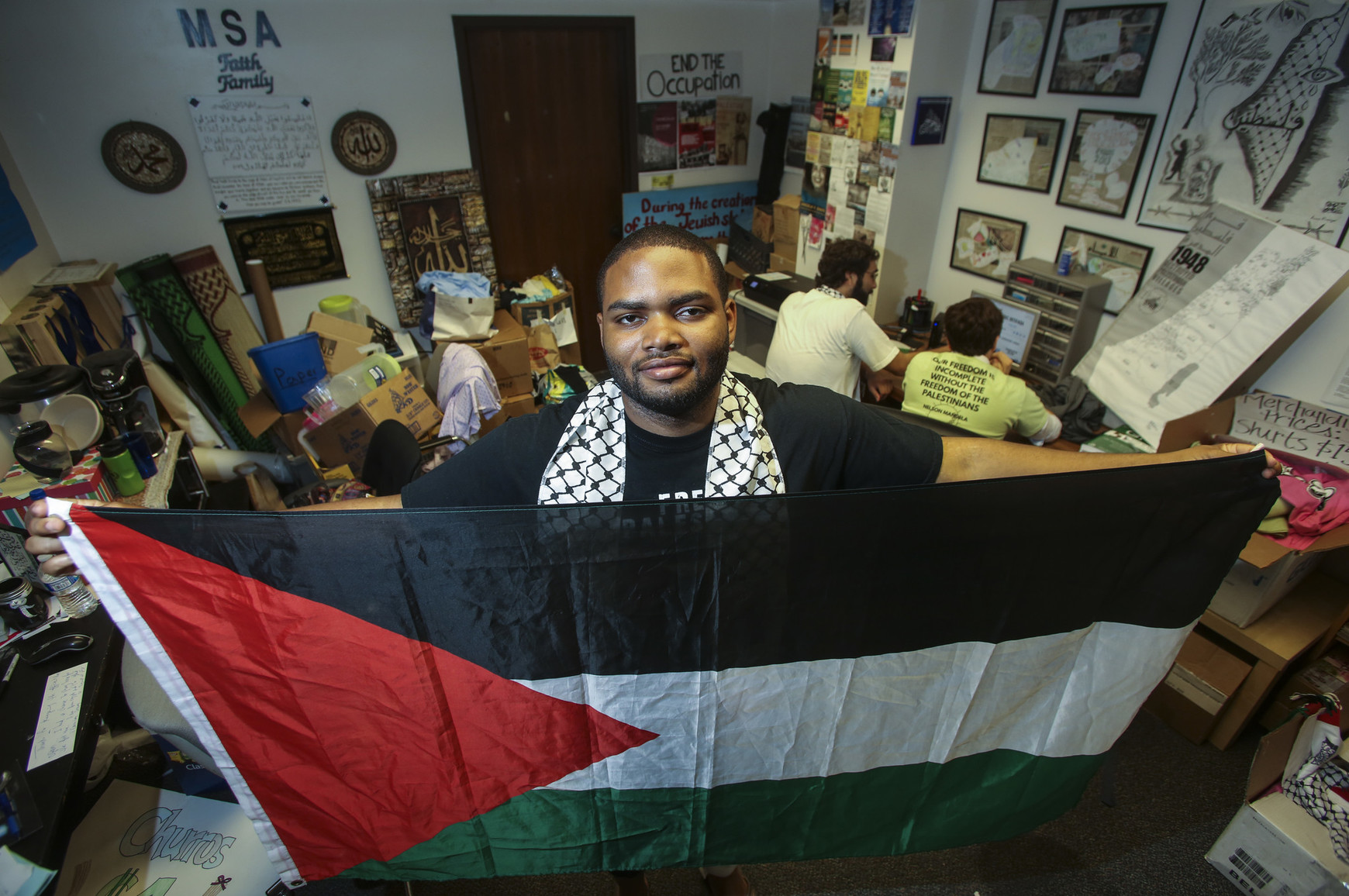
Robert Gardner rarely heard anything about Israel growing up in South Los Angeles. But at UCLA, he started learning about the Israeli-Palestinian conflict — and seeing parallels with conflicts close to home.

The African American senior likened Israeli crackdowns on Palestinian protesters to police violence against black Americans. So he joined  Students for Justice in Palestine and an international movement known as BDS, which advocates boycotts, divestment and sanctions against companies deemed players in Israeli human rights violations.

Earlier this year, though, he was shocked to see — on a poster outside a Westwood market — his name listed as one  of 16 UCLA  “Jew haters” and terrorist allies.

Since then, he says, “I’ve received death threats online, and people have followed me.”

The poster was part of a multimillion-dollar effort to combat the BDS movement, led by Las Vegas casino tycoon Sheldon Adelson and his wife, Miriam. While this kind of attack campaign is one tactic, a key aim is to win back hearts and minds for Israel via social media pushes, cultural fairs and subsidized trips to the Jewish state.

Our goal is to change the younger generation from neutral, if not opposed to, Israel to support of Israel.
— David Brog, executive director of the Maccabee Task Force
The effort kicked off this last semester at six California campuses, including UCLA, UC Irvine and San Jose State University, and will expand to 20 more college campuses this fall. 

The Adelsons and other supporters of Israel are alarmed by the precipitous growth in young Americans’ support for Palestinians. A Pew Research Center poll in May found that 27% of millennials now sympathize more with Palestinians, up from 9% in 2006 — while their generation’s support for Israel has declined in the same period from 51% to 43%.

A main cause, Israel supporters say, is the mushrooming BDS campus movement. In the last four years, student governments at eight of nine UC undergraduate campuses have voted to support the campaign. 

“It’s the No. 1 nonmilitary threat to Israel and the Jewish people,” David Brog, executive director of the new Adelson-funded task force, said of BDS. “Our goal is to change the younger generation from neutral, if not opposed to, Israel to support of Israel.”

The Maccabee Task Force — named after a small Jewish rebel group who prevailed over the Greeks two millennia ago — mainly aims to beef up positive education about Israel with such methods as hosting “peace tents” for dialogue during anti-Israel campus events and Israel cultural fairs — complete with free falafel and iced coffee. 

But Brog said the campaign also will target what he called “lies” about Israel perpetuated by Students for Justice in Palestine and BDS.

Sheldon Adelson speaks to students at the University of Nevada Las Vegas in 2014. (Ethan Miller / Getty Images)
Pro-Palestinian protests on campus regularly compare Israel’s treatment of Palestinians with South Africa under apartheid and oppression against people of color — and activists are using such comparisons to broaden their base, forging links with other campus movements.

The posters were one element of “Stop the Jew Hatred on Campus,” a task force-funded campaign launched in February by the David Horowitz Freedom Center in Los Angeles. Horowitz declined to disclose the size of the grant he received but said it helped him wage what he called a “guerrilla” campaign this spring, with posters of “Jew haters” on five California campuses.

The posters were condemned by some Jewish student groups, including J Street U and Jewish Voice for Peace. Jerry Kang, UCLA’s vice chancellor for equity, diversity and inclusion, criticized them as “thuggish intimidation” and accused the effort of promoting “guilt by association, of using blacklists, of ethnic slander and sensationalized images engineered to trigger racially tinged fear.”

Gardner called the poster’s accusations false, saying he does not support terrorists or hate Jews. His group, he said, explicitly condemns unlawful violence by anyone.

But the 25-year-old says that he’s “worried about people coming to campus to attack me.”

Horowitz, however, defends what he’s done and said he is planning more posters, speaking engagements and actions at 17 campuses, including six in California, this fall. “What the Maccabees are doing is an important service not just to Jews but to all Americans,” he said. “It’s the one hope we have. I wish there were more.”

The Maccabee Task Force has not disclosed how much cash it plans to disburse. But Brog said initial reports of a $50-million investment were inaccurate. This year, he said, the task force has spent less than $10 million on pilot projects mostly aimed at making a “proactive case for Israel.”

One organization that accepted such money was Hillel at UCLA, though Rabbi Aaron Lerner said the Maccabee grant was a “tiny fraction” of Hillel’s $2-million annual budget.

The grant, Lerner said, helped Hillel send 40 students — most of them non-Jews — to Israel. They were able to meet activists from both sides trying to work together, learn about Israel’s past peace overtures and experience the country’s vibrant diversity, Lerner said.

“The facts on the ground are very different from apartheid and genocide,” said the rabbi, “but you can get away with lying if people are not educated.”

Hillel also used some of the money to stage a more elaborate annual Israel Fest — complete with a DJ and free food — and expand its programs during Israel Independence Week in May. The organization, which aims to enrich the lives of Jewish students, hosted a campus dinner to promote U.S.-Israel ties.

Such activities will change campus conversations about Israel from “black and white … to one about complexity, nuance and dialogue, which is better suited to a university,” Lerner said. 

They also are in keeping with the new Principles Against Intolerance, which were passed by the University of California Board of Regents in March. The policy urges university leaders to combat anti-Semitism and other bias primarily with “more speech” to preserve 1st Amendment freedoms.

And more speech — or perhaps a war of words — is exactly what both sides plan.

Gardner said new support for the Palestinian cause by 50 African American organizations known as the Movement for Black Lives has galvanized students of color and their allies. The network recently unveiled a platform that mostly addresses domestic criminal justice, economic and political issues but also supports the BDS movement, calling Israel an “apartheid state” committing genocide against Palestinians. 

That language provoked scathing criticism from the Anti-Defamation League and others.

But supporters of Israel acknowledge the significant challenge posed by growing alliances between communities of color and pro-Palestinian groups.

“It’s very worrisome, and Jewish students then get shut out of dialogues about social justice,” said Lisa Armony, who directs Hillel programming at UC Irvine. “We are looking at that situation very carefully to create greater understanding.”  

Brog says the Maccabees are just warming up in their fight to turn the campus tide toward Israel. In the spring, they took South African students to Israel, then to San Jose State University to speak to Black Student Union members about what they had seen on their trip. The message: Israel is not an apartheid state as South Africa once was.

 “We will invest, we will maintain our presence and we will have the persistence to defeat it,” he said of the BDS movement.

Miguel Olvera, a UC Irvine student of Mexican descent, said his evangelical Christian upbringing instilled reverence for Israel as “God’s country,” and his conversion from “unquestioned loyalty to Israel” to support for Palestinians came slowly. Friends in an Arabic class, a course on Third World cinema and his own research eventually swayed him to regard Zionism as an oppressive ideology rather than a liberation movement.


Olvera also began making connections with his own heritage. Israel’s West Bank separation barrier seemed to him akin to Donald Trump’s vision of a wall on the U.S. border with Mexico. Palestinians, he said, seemed to be stereotyped as terrorists just as Mexican immigrants often are cast as criminals who take jobs from Americans. 

“I was almost scared about talking bad about Israel because I thought I’d be struck by lightning,” said Olvera, 21, who is studying comparative literature and Spanish. “But the [West Bank] wall was a very strong visual representation of the occupation, one I could connect to as a child of immigrants.”

His Chicano student group works with Students for Justice in Palestine. In May, they co-sponsored a controversial protest against a documentary about Israeli soldiers. 

Gardner, a political science and urban planning major, said his interest in the Middle East was first piqued by the 2014 Israel-Gaza conflict. He began researching and concluded that both Palestinians and African Americans suffered from “racialized state violence” and “mass incarceration.” Segregated housing in Israel, he said, reminded him of Jim Crow laws.

 Despite his initial fears about the poster, Gardner plans to keep protesting.

 “At the end of the day, he said, “I feel passionate that I’m on the right side of history, and I’m fighting for justice and equality.”

Source: www.latimes.com

Yemen’s Mocha Coffee Can Spark Economic Growth

BY: Anda Greeney/Contributing Writer Two years ago, I founded a two-pronged enterprise with goals to be a successful coffee retailer and an entity that used our economic engine for the benefit of the people of Yemen. We call ourselves Al Mokha, Public Benefit Corp. and we source and market Yemen’s World’s First Coffee™. It has taken me two years to wrap my head around … Continued

Aramco’s Path From One Oil Well to World’s Most Valuable Company

By Bruce Stanley and Anthony Dipaola Bloomberg  Saudi Arabia’s state oil producer is in a league of its own. The world’s most valuable company, which supplies about one in every nine barrels of crude produced and runs refineries from the U.S. Gulf coast to the South China Sea, is preparing for an initial public offering to raise about … Continued

The Halal Guys Is a Business on a Roll, Growing From Food Cart to Restaurant Chain

By CHARLES PASSY
The Wall Street Journal 

For much of its 26-year history, the Halal Guys has been known for its value-priced Middle Eastern fare, as well as the half-hour waits at its food carts in Midtown Manhattan.

The Queens-based business is now venturing beyond New York City, working with franchisees to open brick-and-mortar Halal Guys restaurants across the U.S. and overseas.

There are 12 franchised locations outside New York, including ones in Dallas, Milwaukee, San Jose, Calif., and the Philippines. The Halal Guys has sold development rights for about 340 additional locations in the U.S. and 50 in southeast Asia.

Ultimately, the privately held company wants to turn itself into a food brand with big-name recognition, perhaps similar to Chipotle Mexican Grill or Five Guys Burgers & Fries but with a New York vibe.

It is a move that comes with plenty of risk and questions, including whether a company whose food adheres to Muslim dietary laws commonly referred to as halal can find mainstream success in the U.S.

Halal Guys executives and franchisees said they are confident that it can—at least in East Brunswick, N.J., where a Halal Guys location that opened in the spring in a local strip mall has been drawing up to 800 customers a day.

“When we started, the line was around the building,” said franchisee Khattab Abuattieh, a veteran restaurateur who plans to open other Halal Guys locations in the Northeast and mid-Atlantic region as part of his territory.

Another franchisee, with more than a dozen investors, plans to open locations in the next few months in Newark and New Haven, Conn. The investors said they expect to open a total of 15 Halal Guys restaurants over the coming years, mostly in the tri-state area.

“We grew up on this food,” said Nazmul Huda, a pharmacist who is one of the investors and is leading the Newark opening.

While attending St. John’s University, Mr. Huda often trekked from Queens to Manhattan for late-night Halal Guys meals. Becoming a franchisee, he said, “wasn’t a tough sell.”

Halal Guys executives are counting on such passion as they woo entrepreneurs, who must pay a $40,000 franchise fee for each location in addition to an 8% royalty on sales. Franchisees also are responsible for all capital costs, which can easily top $600,000 a restaurant, according to Mr. Huda, who said he and his partners are prepared to invest a combined $10 million for their 15 locations.

Franchisees go through training, the company said, including even learning how the gyro meat is chopped so they can replicate the formula that made the Halal Guys a street-corner sensation.

The business wasn’t trying to win over the world when it started in 1990.

Its three founders were largely targeting the city’s Muslim taxi drivers, who were looking for inexpensive, convenient food they could get during their shifts. Halal Guys, which still operates at its original location at West 53rd Street and Sixth Avenue, soon attracted a larger base of customers.

The company is still under its original ownership but has started to gear up for expansion by looking beyond the cart business and opening two corporate-owned restaurants in the city. It also has brought in executives with experience in the restaurant-franchising world.

Halal Guys executives believe the locations outside New York can thrive during a time when American diets are increasingly diverse. Prices are part of the appeal, too: At the East Brunswick location, a heaping “regular” gyro-and-chicken platter costs $8.49.

About 95% of the company’s current customers aren’t Muslim, the executives said, underscoring their belief that anti-Muslim sentiment won’t be an impediment to the business.

Aaron Chaitovsky, a partner with Citrin Cooperman, an accounting firm that works with many franchise brands, agreed, saying quality usually trumped political concerns.

“People will refuse to buy cars from a certain country—unless they make a really nice car,” he said.

Still, Mr. Chaitovsky and franchise experts said a good product doesn’t necessarily guarantee a good franchise. Factors ranging from franchisees’ experience to back-office support can make a difference as well.

The Original SoupMan, which became a pop-culture phenomenon thanks to a “Soup Nazi” parody on the television comedy “Seinfeld,” launched as a national chain about a decade ago, but within a few years, several of its franchised locations had closed. Officials with the company, which is still operating, couldn’t be reached for comment.

It is too early to tell what the future holds for the Halal Guys and its franchise operations. Daniel Michael, a student who lives in South Brunswick, N.J., is already a regular at the East Brunswick location, saying he was relieved he no longer had to invent excuses to go to Manhattan for his Halal Guys fix.

To his frustration, he still often has to wait in line. Even in New Jersey, he said, “you have to find the right time.”

Source: www.wsj.com

The First Palestinian Planned City Is Nothing if Not Divisive

  In May, two of Rawabi’s apartment communities had been completed. (Nasser Nasser/AP)  MIMI KIRK CITY LAB-From the Atlantic  Earlier this month, thousands of Palestinians flocked to the Roman-style amphitheater in Rawabi, Palestine’s first planned city. The enthusiastic, post-Ramadan crowd came to hear Palestinian singer and Arab Idol winner Muhammad Assaf belt out some of … Continued

Honey provides sweet relief for Palestinian women

World Bulletin / News Desk

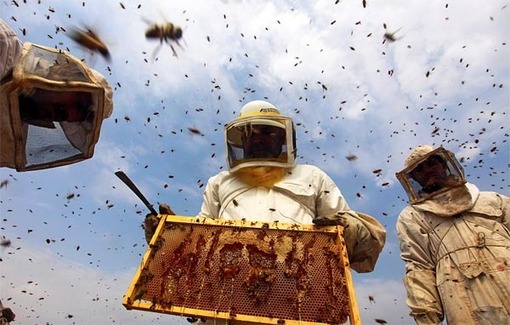
Their faces covered in mesh and bodies protected by white suits, three Palestinian women carefully inspect beehives which they say have helped to transform their lives.

In the hills of the West Bank, occupied for nearly half a century by Israel, producing honey has become an economic lifeline for a growing number of women.

The income it brings is a major boost in the Palestinian territories, where one in four people — and 40 percent of women — are unemployed.

Muntaha Bairat, 37, started beekeeping four years ago in an olive grove near the village of Kafr Malik, near Ramallah, the seat of the Palestinian Authority.
She was not expecting big results, she told AFP as she examined the beehives, which she runs with five women from the village.

“But after we worked we discovered it was a great project for us,” she said. “It has totally changed our lives.”
Each year they produce 600 kilos (1,320 pounds) of honey, which sells for about 100 shekels ($26, 23 euros) per kilo.
Once maintenance costs are deducted, each woman takes home around 6,000 shekels a year — more than $1,500.
From the profits, one woman was able to send her son to college, while another bought a television she had long dreamed of, Bairat said.

“Before this project, some of the women never left Palestine,” Bairat said.

“Today they travel to Jordan or Spain” to display their goods in agricultural and trade forums.
As well as honey, they now aspire to make products with jelly and beeswax.
 Strong roots 

The project was supported by the Palestinian Agricultural Relief Committees (PARC), an organisation that helps 103 women run 64 small agricultural projects across the West Bank and Gaza.
Most of the projects in the West Bank are in the region known as Area C, the roughly 60 percent of the West Bank under full Israeli control since the Oslo Accords of the 1990s.
Since then, Israel has tightly restricted any Palestinian development of the area.

The decision to focus on Area C was deliberate, says PARC’s Nasseh Shaheen, who oversees the projects.
He said the goal is to “support people to stay on their land, especially women living in agricultural areas.”
The share of agriculture in the Palestinian economy has fallen by 72 percent since the Oslo agreement.
It now represents just four to five percent of the economy, according to the United Nations Conference on Trade and

Development.

In the West Bank, more than one in 10 families rely on the mother as the major breadwinner.

This is true among the beekeepers, with some feeding families of seven or nine members, Bairat said.

No’ama Hamayel expects the annual harvest in August. The 52-year-old mother of six has school bills to pay and “by selling a kilo of honey every week, my finances improve substantially.”

Source: www.worldbulletin.net

Nader on Automobile Safety

Evan Carter The Detroit News (Photo: Max Ortiz / The Detroit News) Dearborn — Car safety advocate Ralph Nader has serious reservations about fully self-driving cars, and says they’re far from being ready to hit the highways. “I don’t see a fully autonomous vehicle replacing the driver fleet any time in the next generation,” Nader … Continued

Arab American Entrepreneur, Tom Barrack, Speaks at RNC

BY: Nisreen Eadeh/Staff Writer Speaking at the Republican National Convention in Cleveland, Ohio on Thursday was famous Arab American businessman, Tom Barrack. The grandson of Lebanese immigrants, Barrack worked hard to become a real estate investor and eventually the founder, chairman, and CEO of Colony Capital. During his speech, Barrack pledged to only speak positively about … Continued

323 Results (Page 8 of 27)