Advertisement Close

Business

Ted Talks: 3 Lessons On Success From An Arab Businesswoman

Jeff Thomas

CCT News


It is crystal clear that professional Arab women are tasked with juggling quite a number of tasks compared to their male counterparts. In fact, everyday they have to face cultural rigidity as compared to women who live in the west. Their success is a story to learn from especially in regard to their tenacity, prioritization, managing ferocious competition, not to mention their entire progress.

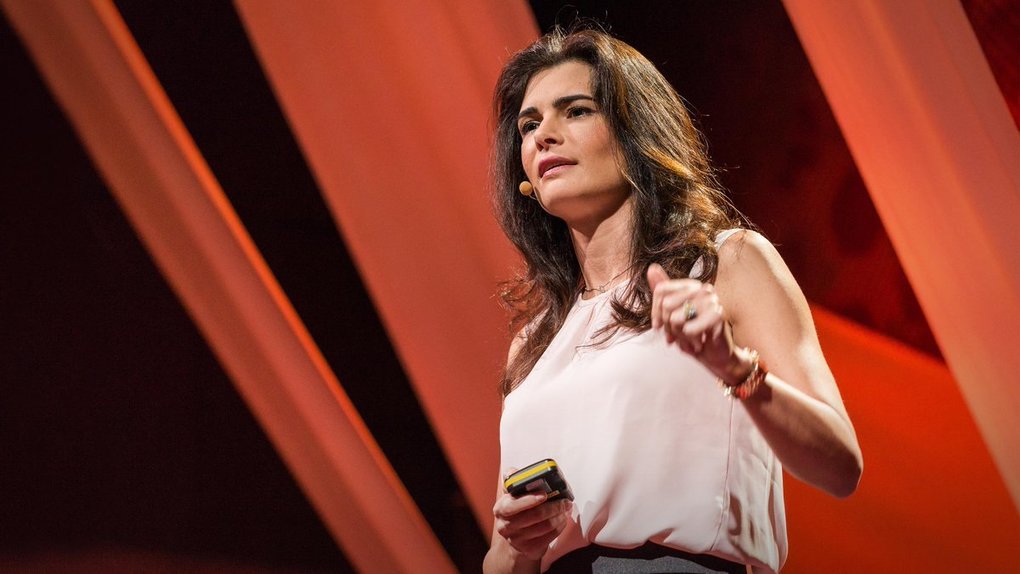
Leila Hoteit is a trained engineer by profession, senior partner at B.C.G, tasked with heading education and human capital department in the entire Middle East. Her career spans well over 13 years in management consulting industry. She is an ardent advocate of women rights, an authority in employment and culture, and also, spearheads women education and empowerment in NEMA. A region that has been dogged with entrenched societal issues that negatively affect women. Dr. Hoteit is also a mother of two little children, living and working in Abu Dhabi. She shares the 3 important lessons on how to thrive in this modern world-as a woman.

Education, Resilience, and role models

She vividly states that education was a priority reserved for the male child (days when she was growing up). Her unique case of being the first born in her family with no son to her father, created an environment making her automatically her father’s ‘son’. And for this reason, her father consistently encouraged her and her sister to pursue education to higher levels-despite the cultural odds at that particular point in time.

Dr. Hoteit reiterates by saying that her mother’s generation had totally nothing to do with professional work. As such, there was always pressure from different spheres of life with a society that strongly believes that a woman’s life is at home. It was all about having happy children, happy husband, and you become a good mother.

The women who pursued education at that particular time had to be their own role models. There were some men who encouraged the female students, though. She points out the fact that the western woman like to give piece of advice to Arab women, not having in mind that their environmental challenges, constraints and lives, are relatively different from what the Arab woman faces in their everyday life.

Family

It is vital that you as the Arab woman maintains perfect, or near perfect home having the best interest of your children at heart. At the same time, she should maintain her focus and not compromise her career in anyway. This is where your professional skills must be applied to your personal life. In her case, DR. Hoteit says that she counters this problem by domestic help that is affordable, focused, and willing to support her family. Importantly, she sets time for her family every evening where she can be with the young ones and take care of their psychological and emotional needs.

Networking

Despite having the lion’s share of responsibilities back at home. The Arab woman has learnt to strike a balance between her career and family. In her generation, there was little chance for them to been in public and this explains the limited number of women politicians in the Arab world. Nevertheless, they sharpened their social skills in sitting rooms, coffee shops, and over the phones. As such, many of the career women managed to develop better networking skills that have come in handy in their career development.

It is now acknowledged that women have realized by helping each other, only can they beat a patriarchal society that is stooped against them.

Source: www.cctnews.com

Meet the American who brings new hope to the Arab film industry 

by CHRISTOPHER SILVESTER

Spear’s Magazine

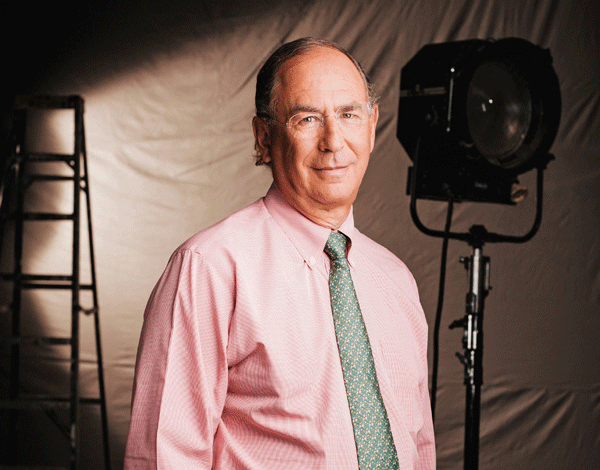
After a long business career, American Michael Garin is enjoying his unlikely new role helping to develop Abu Dhabi’s film industry. Christopher Silvester reports.

Last October, three of the feature films and one of the feature documentaries shown at the 2015 London Film Festival were produced by Image Nation Abu Dhabi, one of the leading media and entertainment companies of the Arabic-speaking world, though still a relative newcomer. The Idol is a feelgood biopic about the Palestinian youth who won the Arab Idol TV contest; From A to B is a comic road movie in which a group of three Emiratis drive to Lebanon via Saudi Arabia, Jordan, and Syria — it makes mildly satirical observations about each country; Zinzana is an intense and stylish psychological thriller set in a police station in an unnamed Arab country at some unspecified time in the 1980s; and He Named Me Malala is a documentary about the Pakistani education activist Malala Yousafzai.

Funded by Abu Dhabi, Image Nation is led by its Emirati chairman Mohamed Al Mubarak and has an expat CEO, a Jewish American named Michael Garin, who is as passionate as any Emirati about its prospects. Most developing economies have a large population but a shortage of capital resources. They tend to move from exploitation of natural resources to manufacturing because it creates jobs. Knowledge-based industries come later. But Abu Dhabi and the UAE have been able to leapfrog that stage of development, thanks to a focus on value-added industries.

The United Arab Emirates was founded as a country in 1971 by Sheikh Zayed, under whose leadership the country invested heavily in education, women’s empowerment, and freedom of religion. ‘From the time Sheikh Zayed became ruler of Abu Dhabi,’ says Garin, ‘literacy in the UAE went from under 5 per cent to one of the highest levels in the entire world, over 95 per cent. And because 60 per cent of the college graduates in the UAE are women, the nation has managed to unleash the power of 50 per cent of the population, which remains a challenge in most other developing economies. The resources that are really powering the future of the country are education and women.’

One of Image Nation’s next feature films will be directed by a woman Emirati director, who helped oversee the production of its recent TV drama series Qalb al Adal (‘Heart of Justice’). ‘I’d describe it as LA Law meets Dallas in Abu Dhabi,’ says Garin. ‘It’s a courtroom show, it’s a family drama, and it’s shot in Abu Dhabi, set in Abu Dhabi, and shot in Arabic. Our aspiration is for that to be seen all over the world, in countries that run dubbed programming. When they are watching it dubbed in their local language, people don’t care whether programmes are shot in Spanish or Portuguese or Turkish if it’s a compelling television show with great production values. We have high hopes for this series.’

Al Mubarak and Garin expanded Image Nation’s focus beyond feature films because they saw that films tend to be produced over relatively short periods, whereas television is a longer proposition critical to supporting a permanent infrastructure. Because Abu Dhabi’s aim is to provide a sustainable industry, television has become a critical component in fulfilling this mission. In December Image Nation took this one step further, by moving from television production to broadcasting, when it launched the first non-news, non-sports, pan-Arabic television network, called Quest Arabiya, in association with the Discovery Channel. Quest is a free-to-air speciality channel that covers all 22 countries in the Arabic-speaking world — 45 million television homes.

‘Television,’ says Garin, ‘is 24 hours a day, seven days a week.’

The UAE is late in developing a film and television industry compared to other countries in the region, such as Egypt, Lebanon, and Iran, and for that reason Arabic-speaking audiences are only just beginning to appreciate its potential. The dynamics of the region have changed since the 1950s, when the Egyptian film and television industry dominated, selling its melodramas and soap operas around the Arab world and even to Israel, with hardly any competition.

‘The reason countries have sustainable entertainment industries is because they have large enough domestic markets to support them,’ Garin explains. ‘Countries with large populations can support a viable and sustainable industry, but virtually all their films are for their local market, and then once every ten or fifteen years you have a movie like Iran’s A Separation that reaches a global audience. But the fact is they’re making films every year. The same is true in Italy, France, Germany, where the vast majority of their revenues come from their home markets.

‘Our challenge is different, because our home markets are too small for us to have a sustainable industry, and, therefore we must have films that can be seen and appreciated around the world. The problem is not that most people in the region are snooty about our output, it’s that they have no experience of it. Until recently they hadn’t seen a strong Emirati film, so their judgement is like, “How can it be any good?”, especially when every successful Hollywood film plays in local theatres. So one of our challenges is educating not only filmmakers but also audiences, since every weekend they have a broad choice of movies, from Star Wars to Zinzana.’

Garin was born in Manhattan. ‘My kids are the fourth generation of our family born in Manhattan. We kind of got there and stayed. My father was in the millinery business; my mother was a social worker.’ Garin read philosophy at Harvard, where he quickly found his métier in the media. ‘I joined the Harvard Crimson [the student paper] as a sophomore, and as soon as I walked in the door of the Crimson building I knew what I wanted to do with my life.’

After graduating in 1973, he was hired by Time magazine. He worked on both Time and Fortune, and then moved over to Time-Life Television, where he became the executive in charge of co-productions with the BBC from 1975 to 1978. ‘The BBC in those days had very little money, and we co-produced many of their best-known series, like The Magic of Dance with Margot Fonteyn, The Shock of the New, The Americans, and the complete plays of Shakespeare. It was our co-production that made those series possible.’

Garin left Time, Inc. in 1978 and helped to found the company that grew to be the largest TV production company in the US, Lorimar-Telepictures. Garin had co-founded Telepictures, which merged with Lorimar in 1986. The company made some of the biggest TV dramas of the 1980s, including Dallas, Falcon Crest, and Knots Landing, as well as comedies such as Full House, Alf and Perfect Strangers and the animated series ThunderCats and Silverhawks. ‘We sold Lorimar-Telepictures to Warner Bros in 1989 and Warner Television is the company that I helped start. I thought that would be my legacy, but I think that my real legacy will be what I’m doing now in Abu Dhabi.’

Garin changed careers completely, becoming an investment banker. He was asked to be co-head of the media and investment banking group at Lehman Brothers. He mentioned this to a friend, Roy Furman, who said: ‘Look, if this is what you want to do, you should come here and build an investment banking practice for us.’

‘I knew that I would make a lot less money doing that, but I also knew that I would be infinitely more happy, because bankers are miserable people whose only reward is money, and that’s not who I am, or the kind of life I wanted to lead. I knew that if I was at Furman Selz I could build something and have a good life and still be, you know, a good banker and help companies. And I was very fortunate, because that’s exactly what happened. I did that for ten years.’

Furman Selz was a small to medium capital bank, but Garin built a large cap media practice advising companies including NBC and General Electric, CBS Westinghouse, Thames Television, Caisse des Dépôts, Verizone and TCI.

When Furman Selz was acquired by the Dutch bank ING in 1997, Garin became the global head of telecommunications and media investment banking for ING for the next four years, before quitting to run a technology company that bit the dust in the dotcom crash. ‘Unfortunately, at that time my first wife was diagnosed with lung cancer and I spent the next fourteen months just looking after her. When she died, I was 56. Despite my successful career, age discrimination was as real as sexual discrimination and racial discrimination, and I never thought I’d have a full-time job again.

‘So I ended up going on boards. One of the companies on whose board I served asked me be the CEO. That was Central Media Enterprises (CME). I was able to take a company that was basically a collection of disparate minority investments and help it become one of the largest broadcasters in Europe, operating in seven countries — Ukraine, Romania, the Czech Republic, the Slovak Republic, Slovenia, Croatia, and Bulgaria. We grew the enterprise value from €350 million to a peak value of €5 billion.

‘When I arrived all the local teams were from the local countries, but 100 per cent of the corporate staff were from the UK, Canada, the US or Australia/New Zealand. By the time I left, 50 per cent of the corporate team were from the region and my successor was from Romania — the first Nasdaq CEO from a central European country. And that’s what Abu Dhabi aspires to — having its businesses run entirely by Emiratis.’

Garin first came to Abu Dhabi as the only expat on the board of the Abu Dhabi Media Company, on which he sat for five years. ‘Because of my board position I became a trusted adviser. When the management of the Media Company changed I was asked to run Image Nation and came in with Mohamed Al Mubarak, the chairman. It has taken the two of us to be as successful as we’ve been, because Mohamed has the confidence of the Abu Dhabi leadership and I have his confidence — and this allows the two of us to do things that neither one of us could ever have accomplished on his own.’

Garin and Al Mubarak have a fully funded five-year business plan. ‘Because I’ve always run public companies and had to work with shareholders and boards, and Mohamed runs a public company, Aldar, we created the same kind of accountability to our stakeholders, the leadership in Abu Dhabi, as we would have had if Image Nation were a public company. Because we provided the tools by which to measure the quality of what we were creating, it inspired great confidence.’

Garin enjoys the village atmosphere of Abu Dhabi and prefers living there to Dubai. ‘Abu Dhabi is an Emirati city,’ he says, ‘and I went there to be with Emiratis, not to be with other expats.’

The goal for Image Nation is to produce local movies for modest budgets, and while these films may be low-budget by Western standards, they are not low-budget by a regional standards. Because of the technology and the experience of Image Nation’s team, the films’ production values belie their budgets. ‘We have two big advantages in producing our films: one is that “above-the-line” costs are low, because we don’t have expensive stars, and the other is that we don’t need enormous P&A [prints and advertising] budgets, because in our part of the world, social media and other forms of communication are very powerful marketing tools.’

Another advantage Image Nation has, both internationally and domestically, is that it is not in the distribution business, hence it does not require a stream of product to feed a schedule — a summer movie or a Christmas movie. In the US, movies often go into production before they are ready, with their creative teams hoping to fix them as they go along. Image Nation has ‘the luxury of only green-lighting pictures when they’re ready and when we believe they’ll be successful — either creatively, which is our criterion locally, or financially, which is our criterion internationally.

‘It’s not a guarantee of success,’ Garin admits, ‘ but fortunately every local film we’ve made has met that creative criterion and every international film we’ve financed has met the financial criterion.’

Source: www.spearswms.com

Syrian refugees list their tent on Airbnb

Laurie Balbo

Green Prophet

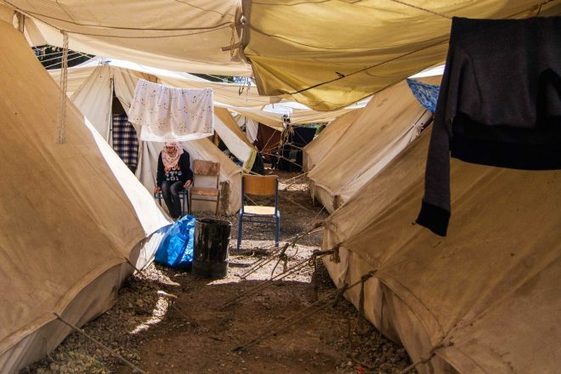
Take empathy to a new level by living just like a displaced person. A group of Syrian refugees advertised their camp tent as a rentable destination on Airbnb, offering intrepid travelers “scorpions, dehydration and broken promises”. They describe the Ritsona, Greece refugee camp, about 80 kilometers north of Athens, as “the most unique neighborhood in Greece”.

Airbnb proved a brilliant platform for protesting their wretched living conditions. In their ad – which the rental company has since removed from the website  – the anonymous posters said they have lived for three months in a small tent. “This is a real opportunity to experience life as a Syrian refugee,” they posted. “While EU politicians talk about refugees, you can have an authentic refugee experience – tents, wood-fire cooking, 41 degree heat, marginal sanitary situation, friendly scorpions, broken promises, even dehydration.”

As do many other Airbnb property owners, the refugees teased prospective renters with ironic special deals, including “free parking”, access to portable toilets (shared by 600 others), and “rarely available” medical care and schooling. “If you are lucky you might get one of the two hot showers. There is a large vacant lot where the toilets are, which the children use as a playground. Please join in the games.”

Millions of people around the world use the in San Francisco-based service to find shared accommodation. Despite a company credo that states, “Whether an apartment for a night, a castle for a week, or a villa for a month, Airbnb connects people to unique travel experiences, at any price point, in more than 34,000 cities and 191 countries”, Airbnb issued a statement saying it had removed the listing because it was “not permitted under our terms of service”.

It said that it understood the listing intended to highlight the plight of refugees living in camps which have been criticized by international aid groups and the U.N. High Commissioner for Refugees (UNHCR). A company spokesperson noted that Airbnb has raised “hundreds of thousands of dollars” for UNHCR.

Last year, a constant flotilla of small boats and inflatables carried more than 800,000 refugees and migrants, primarily from Syria and Iraq, from Turkey to Greece. When the so-called “Balkan Route” leading from Greece to northern Europe closed in March, over 50,000 people became stranded in Greece, left to fend the elements in makeshift camps in deplorable conditions.

In the past month, refugees moved into registered camps created by the Greek authorities and the military, but aid agencies and the UNHCR have reported the camps as being unhygienic and inappropriate for long-term accommodation. The International Rescue Committee and Doctors Without Borders warned that the new camp was not ready to host the number of refugees being placed there, now numbering over 600 people.

Maybe these anonymous refugees will now turn to EatWith, and offer “authentic dining experiences” inclusive of UNHCR rations and tainted water.  Can UBER be far behind?

Kudos to these survivors, who despite miserable circumstances and a bleak future, persevere in trying to get the rest of the world to wake up and take action.

Source: www.greenprophet.com

One Man’s Dream City Rises In The Occupied West Bank

Courtesy of Bashar Masri and Rawabi. Monica Wang Forbes.com A fine slab of carved stone stands out against the wild rocks and shrubs scattered about the mountainous Palestinian landscape. It is a sign that reads “Rawabi,” meaning hills in Arabic, and it points to a narrow path up the slope. As the paved road winds … Continued

Of brewers and bureaucrats: Beer in the Arab World

The Economist 


MAZEN HAJJAR likes to say that barley was first domesticated—in the Middle East, mind you—for the purpose of brewing beer, not baking bread. Bread is now the region’s daily staple; beer barely registers. But the founder of 961, a Lebanese microbrewery, thinks there is a fertile market in the Fertile Crescent. “There is too much light fizzy tasteless stuff,” he says.

In Lebanon the trend is growing. Colonel Brewery in Batroun, a Christian seaside town, serves its beers in its garden and sells more to 70 Lebanese bars. Beirut Beer is another brand made by a winemaking family. Schtrunz is the latest to join, made by a family with Czech roots. But Lebanon is not the rest of the region. Is there room elsewhere?

Yes, say producers. Israel has a flourishing craft beer scene, and in the West Bank Taybeh (“tasty” in Arabic) has been producing a range of craft beers since the 1990s. Even Jordan has its own microbrewery, Carakale. Some brews are flavoured with regional herbs and spices such as sumac and thyme.

Most Arabs are Muslim and most Muslims agree that the Koran bans alcohol. But not all of them shun it, and Lebanon, Jordan and Palestine have sizeable Christian populations. Brewers say there is room to grow. Beer is still underappreciated in a region where wine, arak and whisky hold sway.

In other Muslim countries, craft brews could replace bad beer. Egypt’s Stella and Sakara could use some competition, as could Morocco’s four tasteless local brands. If alcohol were allowed into Iran or Saudi Arabia, craft beers could displace secretly-produced (and often horrible) home-brews.

The biggest obstacles to wannabe brewers are the same ones that face any company trying to operate in the Middle East: red tape, lousy infrastructure and sluggish economies. When 961 started to look for export markets, sending a sample abroad with DHL required special government permission. Electricity is unreliable. Carakale took two years to get permission to set up.

The lure of expanding into virgin territory outweighs those concerns for now, says Jamil Haddad, the founder of Colonel. “I thought about opening in London or Europe,” he says. “But here it’s a new concept and I can do something unique.”

Source: www.economist.com

Ralph Nader is the next Auto Hall of Famer

BY: Nisreen Eadeh/Staff Writer On July 21, Ralph Nader will be inducted into the Automotive Hall of Fame for his momentous work in improving auto safety. Nader, once considered the auto industry’s largest rival, said he was “pretty astounded” when he learned the news. In 1965, Nader authored the best-selling book “Unsafe at Any Speed – … Continued

The Entrepreneurs of Silicon Valley with Arab Roots

By N.P. Krishna Kumar Al Arabiya English It has become the norm that when an entrepreneur conceives a novel technology or high-tech process anywhere in the world, he or she looks for support from a powerful eco-system similar to what exists in Silicon valley in Northern California in the US. The quality of university-led cutting-edge … Continued

Six Flags’ newest theme park may be in Saudi Arabia

By Max Bearak 

The Washington Post 

With its oil economy tanking, Saudi Arabia is searching for new ways to make money. Although the country is mostly desert, has a worldwide reputation for its ultra-conservatism and does not issue tourist visas to non-Muslims, the kingdom has settled on tourism as a focus for the future.

On Monday, that ambition got a lift when the chief executive of Six Flags Entertainment announced that his company, famed for its chain of theme parks, would be investing in Saudi Arabia.

Without giving any specifics, John Duffey said: “We’re very honored to be provided with an opportunity to enter into a partnership to bring Six Flags to the kingdom. … Our parks can provide the entertainment to which Saudis aspire.”

It is unclear whether a Six Flags theme park in Saudi Arabia would adhere to the kingdom’s strict codes, such as limits on mingling between men and women. But it is possible.

An outline of economic diversification called “Vision 2030” that has been promoted mostly by Deputy Crown Prince Mohammed bin Salman calls for tourism spending to increase from $8 billion to $46 billion by 2020. Tourism infrastructure is strongest around the pilgrimage sites of Mecca and Medina, which may make them likely candidates for a new theme park. But Saudi Arabia is also trying to stem the flow of its own citizens’ search for entertainment abroad. Neighboring Qatar and United Arab Emirates have made a global name for themselves as shopping and entertainment destinations, and they both draw plenty of Saudis.

The “Vision 2030” plan makes it clear that the kingdom sees increasing entertainment options as a way of catering to the expanding desires of its citizenry. “We consider culture and entertainment indispensable to our quality of life,” the plan says. “We are well aware that the cultural and entertainment opportunities currently available do not reflect the rising aspirations of our citizens and residents.”

On social media, some were quick to point out the strangeness of the news that a company so directly associated with care-free, summertime fun in the United States would be moving into a country in which morality police roam the streets.

Meanwhile, the deputy crown prince is on the next leg of a U.S. trip to pitch the kingdom’s attempts to move away from its dependence on oil revenue. After a week of meetings in Washington, he heads to Silicon Valley to meet with technology company executives. After that, he heads to New York for sessions with Wall Street investors.

Source: www.washingtonpost.com

NUSACC Hosts Fifth Annual Iftar Dinner in Washington, DC

Press release: The National U.S. – Arab Chamber of Commerce (NUSACC)


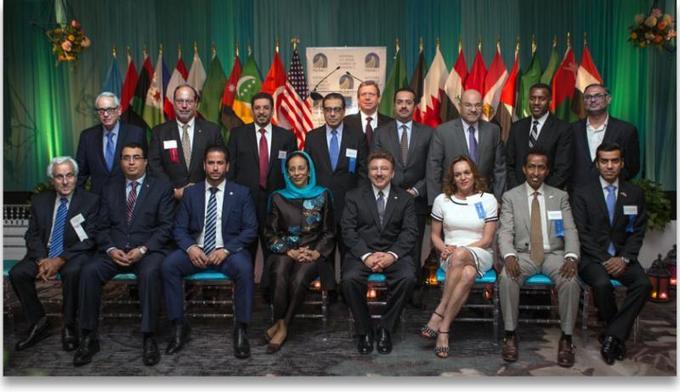
The National U.S. – Arab Chamber of Commerce (NUSACC) this week hosted its fifth annual Ramadan Iftar celebration in honor of the Arab diplomatic community and the League of Arab States. Over 200 leaders of numerous faiths attended the high-profile gathering held at The Ritz-Carlton Hotel in downtown Washington DC. Attendees included business leaders and senior U.S. and Arab government officials, including Chiefs of Mission from Bahrain, Iraq, Lebanon, Oman, Somalia, Yemen, and the League of Arab States.

Breaking the fast (Iftar) during Ramadan is a traditional event celebrated daily by more than 1.7 billion Muslims around the globe. Ramadan is a holy month of spiritual cleansing in which adherents of Islam rededicate themselves to God, worship, and reading the Quran, Islam’s holiest book. The month-long period is marked by fasting, personal sacrifice, self discipline, and increased generosity, especially toward the underprivileged.  

“In the spirit of Ramadan, let us count our blessings,” said David Hamod, President & CEO of NUSACC. “The Holy Month gives us an opportunity to celebrate what is good in the world, but it also encourages us to tackle challenges in order to make the world a better place.”

Source: campaign.r20.constantcontact.com

Forged by war: Attorney from Beirut now advocates for less fortunate 

By Sheila Pursglove
Legal News

Born and raised during Lebanon’s 15-year civil war, Rabih Hamawi saw first-hand the pain of injustice.

“I’ve always viewed law as an equalizer – a power that forces everyone to play by the same rules, and have the same rights and responsibilities,” says Hamawi, now an attorney with Fabian, Sklar, & King in Farmington Hills. “But in Lebanon, you may only go ahead in life if you come from a political family, have deep roots within a religious sector, are ready to be a mercenary for a foreign country, or are willing to carry arms to fight your neighbors or even siblings as a method to move ahead.”

Setting his sights on becoming an attorney and advocating for the less fortunate, Hamawi attended law school in Lebanon for four years, graduating in the top 2 percent of his class. Immigrating to the United States in search of a brighter future, he worked as an insurance agent for the UNITRIN family of companies before launching his own insurance and financial services agency in 2005, which he owned until this year. He holds licenses in Property, Casualty, Life, Accident, and Health insurance, is a Licensed multiple lines Property and Casualty, Life, Accident, and Health Insurance Counselor (LIC), and earned the Chartered Property and Casualty Underwriter (CPCU), Certified Insurance Consultant (CIC), and Certified Risk Manager (CRM) designations.

“Running the agency opened my eyes to the practices that insurance companies utilize to try to avoid or delay payments of legitimate claims,” he says. “To insurance companies, an insured is a good customer so long as he or she is paying the hefty premium, but as soon as the insured tries to obtain benefits under the policy, insurers often look for a way to try to deny or delay payment.”

The same year he opened the agency he started graduate school at Walsh College and earned a master’s degree in finance with a concentration in financial planning. He then spent six years working and saving money to attend law school.

The long struggle was well worth it. Hamawi earned his Juris Doctor, magna cum laude, from Western Michigan University Cooley Law School, where he was honored with the Law Review Board Award and Student Leadership Achievement Award. He served as a student attorney for the Immigrant Rights and Civil Advocacy Clinic, served on the moot court and mock trial executive boards, was a member of the national trial team and the first year moot court team, and was a symposium editor on the Cooley Law Review.

Selecting Hamawi for a federal court internship through the Wolverine Bar Association program for minority students, U.S. District Judge Victoria Roberts placed him with Judge John Corbett O’Meara of the U.S. District Court for the Eastern District of Michigan.

“The experience was amazing – I met lots of great people I still keep in touch with,” Hamawi says. “Judge O’Meara is a great person who taught me a lot through this experience. He was always open to talking and discussing various topics, which I didn’t expect to receive as an intern. I still remember the citizenship ceremony for new United States citizens that he conducted and invited me to attend. His staff was also very supportive and made me feel like one of their family members.”

During an internship for the U.S. Department of Justice in the U.S. Attorney’s Office in Detroit, Hamawi worked on cases involving one of his favorite classes: Criminal Procedure, and represented the United States in front of federal magistrates in federal misdemeanor cases.

“I enjoyed doing the duty-ticket calls because you’re trying to send a message that there are consequences for a person’s actions,” he says. “I also learned from a couple of assistant U.S. attorneys the value of rehabilitative justice by trying to give violators a second chance and encourage them to become better citizens.”

When he owned the insurance agency, he dealt with a marketing representative who was a cousin of Michael Fabian – and after passing the bar exam, Hamawi was able to get an introduction that ultimately led to him joining Fabian, Sklar, and King PC, a law firm that specializes in handling insurance disputes.

“I’m excited about the opportunities I now have working with a group of attorneys who have been so successful in achieving the same goals I’ve always strived to achieve,” he says. “I now get to utilize all of my knowledge and skills to fight for others who have lost their homes, businesses, and their most precious personal items due to disasters, and who now must persevere against an insurance company to get their lives back together. This has been a great and fulfilling journey and I know it is only the beginning.”

In his leisure time, Hamawi enjoys travel, with California, Canada, Mexico, the Dominican Republic, Germany, and France as favorites. He also enjoys working out, kickboxing, chess, ping pong, and boating and other outdoor activities. He attends the Islamic Center of Detroit, participating in events and volunteering in community-outreach programs.

“It’s nice living close to Detroit and being able to spend my free time downtown, by the river, or watching any of the Detroit sports teams,” he says. “Living in Michigan also provides the opportunity to experience all four seasons which is especially nice during the warm summer months when I travel up north to enjoy the lakes.”

The oldest of six, in 2005 the Dearborn resident was able to bring three of his siblings and his parents to the United States, where they live close to Hamawi and his wife Amy.

“Although two of my siblings still reside in Lebanon, I’m very fortunate to have the majority of my immediate family in close proximity,” he says.

Source: legalnews.com

BDS: Discussing Difficult Issues in a Fast-Growing Movement

by Omar Barghouti 

Al-Shabaka

Introduction

Israel’s attacks on the Boycott, Divestment and Sanctions (BDS) movement and other human rights defenders living under occupation, such as Al Haq staff, have dominated the headlines in recent weeks, including the direct threats made by leading Israeli officials against BDS activists and in particular against the movement’s co-founder Omar Barghouti.

Beyond the headlines, the work goes on, as does continuous debate and discussion to further the movement amongst Palestinians at home and abroad as well as among global solidarity activists. There is much to discuss and some of the issues are difficult ones, including questions of framing. Al-Shabaka Executive Director Nadia Hijab discussed some of these issues in a wide-ranging conversation with Omar Barghouti.

Omar began by clarifying that all the views he expresses here are his and his alone; they do not necessarily reflect the views of the wider BDS movement or its Palestinian leadership, the BDS National Committee (BNC).

Omar, thanks for making the time at this especially difficult juncture (to put it mildly) for the movement and for you personally. The BDS movement’s goals – self-determination, freedom from occupation, equality for the Palestinian citizens of Israel, and the right of return – encompass Palestinian rights under international law. But we know that the BDS movement will not on its own achieve Palestinian rights. What other movements are needed and what mix of strategies is necessary? 

Boycotts have historically been one of the main popular resistance strategies available to Palestinians of all walks of life, and today, in the realm of international solidarity, BDS is the most important and strategic form of support to our struggle for self-determination. The BDS movement has never claimed that it is the only strategy to achieve full Palestinian rights under international law. Nor is it possible to expect it to deliver Palestinian rights by itself. Among other strategies are, for example, local popular resistance against the wall and colonies as well as legal strategies to hold Israel and its leaders accountable for the crimes they have committed against the Palestinian people.

In fact, one of the most significant strategies available to us that is hardly being pursued is diplomatic and political work with parliaments and governments across the world to isolate Israel’s regime of occupation, settler-colonialism and apartheid and have sanctions imposed on it similar to those applied to apartheid South Africa. Taking this path is primarily blocked by a complicit Palestinian officialdom that lacks a democratic mandate, principles and vision.

“The BDS movement has never claimed that it is the only strategy to achieve full Palestinian rights…Nor is it possible to expect it to deliver Palestinian rights by itself.”

A very important component of Palestinian resistance to Israel’s regime are Palestinians in exile, who represent half the Palestinian people. We are not just talking about refugee communities, who are clearly the most important to consider, but also Palestinians, like those active in Adalah New York, Students for Justice in Palestine chapters, social movements in the UK or Chile, and their equivalent across the world of Palestinian communities in exile, who play a leading role in promoting Palestinian rights, including through BDS-related actions.

Palestinian citizens of Israel are also often forgotten when people talk about Palestinian resistance, despite their crucial role not only in steadfastness in the face of Israel’s regime of Zionist settler-colonialism but also their active popular, academic, cultural, legal and political resistance to the regime and its institutionalized and legalized racist structures and policies.

Some Palestinians in exile, however, claim they are unwilling to support BDS because “Palestinians don’t ‘do’ solidarity with our own people.”

But the traditional Palestinian political discourse of the 1960s, 1970s, and 1980s is largely gone. In South Africa, the national liberation movement remained active until the very last minute, but we have, unfortunately, lost much of what made up the Palestinian national liberation movement largely due to the Oslo agreements. The Palestinian leadership, with the explicit or implicit endorsement of most Palestinian political parties, has surrendered basic Palestinian rights and accepted dictates by the United States and European Union to adapt to most of Israel’s regime of colonial oppression.

The Palestinian people is now in a state of loss and disarray. There is no longer a Palestinian “national consensus,” if ever there was one. Even the Palestinian political parties, right and left, Islamist and secular, with almost no exception, talk of “independence” and not national liberation, often forgetting the refugees and always omitting Palestinian citizens of Israel from the very definition of the Palestinian people.

It is up to the entire Palestinian people to determine its future and the solution to this colonial conflict. In the meantime, every Palestinian individual, group or coalition must strive to weaken the Israeli regime of oppression, as a prerequisite to attain Palestinian rights under international law. We in the BDS movement have opted for developing one, time-honored form of Palestinian resistance and the most effective form of grassroots international solidarity with it, based on rights, not political solutions.

BDS of course recognizes that there are other strategies and approaches; we’re just saying that we chose to focus on the rights, not the solutions, because for any political solution – determined by the majority of Palestinians everywhere – to be just, comprehensive and sustainable it must accommodate our rights under international law. Moreover, to be effective you need to have something close to a Palestinian consensus, and to achieve that we had to stick to the most principled and strategic lowest common denominator, to the most significant and least controversial goals of the Palestinian people that hardly anyone can object to: Ending the 1967 occupation, ending the system of apartheid, and fulfilling the right of return of Palestinian refugees to their homes and properties from which they were ethnically cleansed during and since the Nakba. And we adhere to these rights strictly.

This approach has brought us broad support amongst Palestinians. The BNC recently organized a relatively large rally in Ramallah in a show of popular Palestinian support for BDS. I personally do not see that kind of street mobilization as a decisive indicator of popular support, but my colleagues insisted we needed to do it in order to demonstrate to the world the popular appeal of BDS. There were over 2,000 people and many speakers from political parties and grassroots movements and unions, all of whom expressed strong support for BDS. One of the outcomes of that rally was to defuse the perception among some local circles that BDS was “elitist”.

There are those who don’t want to support the nonviolent BDS movement because it’s “below their political ceiling.” Being revolutionary, in my view, is not about raising “revolutionary” slogans that are not implementable and that therefore have little chance of contributing to processes aimed at ending the reality of oppression. What is truly revolutionary is raising a slogan that is principled and morally consistent and yet conducive to action on the ground that can lead to real change towards justice and emancipation. Otherwise you remain an armchair intellectual.

And yet the way the BDS movement is sometimes represented makes it sound as though it alone can actually achieve Palestinian rights. The frequent references to South Africa convey that impression, whether intended or not.

We Palestinians always compare our strategies and progress to South Africa and other movements for justice, self-determination and human rights – and we know that we’re missing key pillars that were critical to their success.

In South Africa, for example, the African National Congress-led struggle identified four strategic pillars for the struggle to end apartheid: Mass mobilizations, armed resistance, an underground political movement, and international solidarity (particularly in the form of boycotts and sanctions). There is no “copy-paste” strategy to achieve liberation and human rights – every colonial experience is different and has its unique particularities. We have been engaged in evolving our own Palestinian strategies that suit our environment of struggle for justice and dignity.

“Being revolutionary… is not about raising ‘revolutionary’ slogans … What is truly revolutionary is raising a slogan that is principled and morally consistent and yet conducive to action on the ground that can lead to real change towards justice”

In the case of the Palestinian struggle, the pillar of the underground movement is limited to Gaza, where it is isolated. International law upholds the right of any nation under a foreign occupation to resist it by all means, including armed resistance, so long as all forms of resistance themselves adhere to international law and human rights principles. Aside from that, as human rights advocates, we are obliged to consider the cost-benefit of this pillar at this stage and to measure the human price of any resistance.

As for mass mobilization, what we can do in the occupied Palestinian territory in terms of popular resistance, for example, against the Wall, is fairly limited. And it is not really a mass movement in the way that, for example, the recent teachers’ strike was popular, or the strikes against the Salam Fayyad government’s neo-liberalism or against the social security law were popular.

The whole question of the effectiveness of different forms of resistance is key and we in the BDS movement engage in the question of the effectiveness of our nonviolent, international law-abiding strategies at every stage.

Another concern is that some of the BDS movement’s discourse makes it sound as if Palestinians are on the point of achieving their rights. That comes out not only in the frequent references to the South Africa “moment”, but also in statements that say that a “tipping point” has been reached.

Yes, but when we speak of a tipping point, we mean a tipping point only in terms of the specific pillar of international isolation. The measure of effectiveness is whether you’re achieving your goals or not. BDS is one of the strategies of internal resistance and it is also the most important international strategy. We never claimed otherwise. Why, then, should BDS be held responsible, say, for the inability of the Palestinian people to achieve our goals of self-determination and national liberation? At least give us credit for being realistic.

There are many and growing critiques of the international law framework. Does that pose a problem for the BDS movement given it is grounded in international law?

To be effective in mobilizing international pressure by groups and individuals of conscience against Israel’s regime of oppression, as well as morally consistent, we must adopt human rights principles that are as universal as possible as well as a language that can touch people across the world and inspire them to action. That’s the language of international law.  We know the inherent flaws of international law as well as anyone. But we also know that it is either that or the law of the jungle, and the latter does not work for us, on principle and practically, given that we are by far the physically weaker party.

We don’t want symbolic rhetoric: We’re sick and tired of rhetorical support. We need effective, strategic action that has a chance to undermine the system of oppression in order to make it more realistic for the Palestinian people to realize our UN-stipulated rights. The minimal action people can take is to end their complicity. That’s a profound legal and moral obligation to end this injustice; it is not an act of charity.

“We Palestinians always compare our strategies and progress to South Africa and other movements for justice, self-determination and human rights – and we know that we’re missing key pillars that were critical to their success.”

What are the alternatives to international law? It’s true that the colonial empires wrote it. It’s true that it is not weighted in favor of the peoples of the world, but it is not a dogma or a static set of laws that are engraved in stone. There is a simplistic view of international law that doesn’t see it as something dynamic, as something where we, through our persistent and mass struggles, can affect the interpretation and the application. After all, we are not asking for the moon; we are simply working to consistently apply international law to Israel and to end its exceptional status as a state above the law. That is a simple yet far-reaching demand that requires years of strategic struggle.

There is lack of clarity around the normalization guidelines that is often a source of tension with activists – and especially among Palestinians who may engage in activities that are said to be “normalizing” and who don’t appreciate what seems like having their nationalism called into question.

The normalization guidelines are very clear. The reference document to that was adopted by consensus at the first national Palestinian BDS conference, held in November 2007. Normalization, in this context, is understood by Arabs, including Palestinians, to mean making something that is inherently abnormal, like a relationship of colonial oppression, appear deceptively normal. According to the BDS guidelines, there here are two main principles in order for a relationship between a Palestinian (or Arab) party and an Israeli party not to be considered normalization. The Israeli side must recognize the comprehensive Palestinian rights under international law, and the relationship itself should be one of co-resistance to oppression, not “co-existence” under oppression.

The whole point is that such relationships should not legitimize, fig-leaf or whitewash Israel’s violations of Palestinian rights. To consider an example that may not be immediately obvious, say an organization in the United States is organizing a conference and has received sponsorship from Israel or an Israeli institution that is complicit in violations of Palestinian rights. And let’s say that the US organization is willing to have a panel that would include Palestinian speakers so as to provide space for a Palestinian voice. Participation under these circumstances would mean that we are effectively normalizing Israeli sponsorship – in other words normalizing the violations of our rights. This is too high a price to pay for our voices to be heard, as important as that is, given the mainstream media’s suppression of these voices. So we work closely with partners to apply pressure to rescind that Israeli sponsorship, and if that fails we call for a boycott.

But there are still gray areas, and it is in the gray areas where problems can arise – especially as some people take it on their shoulders to speak on behalf of the BDS movement and to lay down the law when in fact they have no authority to do so.

There are always gray areas. I would say 90% of the cases that we deal with are indeed gray. When we come across a gray area, we go back to the principle and try our best to measure profit vs. loss. BDS, after all, is not intended to be a dogma, but rather an effective strategy to contribute to our struggle for our rights.

Some Palestinians want to have their cake and eat it too. They allow themselves to engage in projects and activities that clearly conflict with the anti-normalization guidelines, adopted since 2007 by the broadest coalition of political parties, unions and networks in Palestinian society, yet they reject any characterization of those activities as normalization simply because they are “patriotic” and “no one should call that into question.” In the BDS movement, we do not call into question anyone’s patriotism and we never ever label anyone or resort to personal attacks; that would conflict with our principles as a movement. We also reject any suppression of freedom of speech and the simplistic and harmful dismissal of those engaged in normalization activists as “traitors.”

“We attack positions and statements but not individuals, and we don’t believe in blacklists or any form of McCarthyism. It negates our principles, it’s an abuse of power, and it’s counter-productive.”

The Palestinian BDS National Committee (BNC) simply mobilizes moral pressure to expose normalization activities in order to undermine normalization. It is vital to counter normalization activities because they constitute a key weapon that Israel has used against the movement and against the Palestinian struggle for rights in general.

And sometimes we do things that are seen as ahead of their time or use language that is not yet accepted. For example, when we first used apartheid as a key facet of Israel’s regime of oppression or insisted on the right of return in our international discourse, both were frowned upon not only in the mainstream but even in some Palestine solidarity circles in the west. Also, when the 2004 call by PACBI (the Palestinian Campaign for the Academic and Cultural Boycott of Israel) mentioned Zionism as a racist ideology that has been a pillar in Israel’s settler-colonial regime, this issue was hardly discussed in most Palestine solidarity circles in the west in the post-Oslo period.

It’s important not to conflate opposition to Zionism and to Israel’s regime of colonial oppression and apartheid as being an opposition to Jews: It is absolutely not. The BDS movement has consistently and categorically rejected all forms of racism, including Islamophobia and anti-Semitism. The fact that 46% of non-Orthodox Jewish-American men under 40 support a full boycott of Israel to end its occupation and human rights violations, according to a 2014 poll, partly attests to the inclusive, anti-racist character of the movement.

Can you give an example of what you do when there is a gray area?

We never take decisions as individual members of the BNC or of its academic and cultural arm PACBI when there’s a gray area; we always go back to the group and decide collectively, based on the agreed upon principles, not the personal opinions and biases of each of us. We don’t give our advice or recommendation until we reach consensus. If we have a deadlock we say to the person seeking advice that we don’t have clear advice to give them. We pick our battles. We don’t chase everything, and we ignore so many targets based on cost-benefit calculations.

We don’t issue edicts; rather, we issue advice. We never say “thou shalt”.

“It is vital to counter normalization activities because they constitute a key weapon that Israel has used against the movement and against the Palestinian struggle for rights in general.”

And we never use ad hominem attacks – we have never done so since BDS was founded in 2005. We attack positions and statements but not individuals, and we don’t believe in blacklists or any form of McCarthyism. It negates our principles, it’s an abuse of power, and it’s counter-productive. Personally, I’ve never engaged with anyone who, for example, attacks us as “agents of imperialism” or similar ultra-left nonsense. We pick our battles, as I said earlier, and we keep our eyes on the real enemies.
When we engage to stop a normalization activity, our objective is always to first and foremost convince the person involved to stop normalizing. You can’t use ad hominem attacks and expect that person to side with you. And in fact many Palestinians who were engaged in normalization 10 years ago are now BDS supporters, and that’s partly because we avoid personal injury. It’s wrong on principle and it’s pragmatically wrong.

When someone has a question, we recommend seeking advice from PACBI or the BNC, or one of our partners in any given country and we seek to resolve it through interactive debate. We now have much better mechanisms to implement the guidelines.

There is a gray area that was cited to me as an example of something Palestinians don’t understand, and indeed find problematic – that of Arab passport holders entering Israel on a visa issued by an Israeli embassy being treated as normalization, as opposed to getting a permit issued by the Israelis at the request of the Palestinian Authority (PA). People don’t get the difference because Israel issues both.

That is a sticky point and a very difficult one. After extensive debates, community meetings and discussions with many Palestinian artists and cultural organizations, we concluded that when an Arab passport holder receives an Israeli visa he/she is normalizing Arab relations with the regime of occupation, settler-colonialism and apartheid by treating this regime as if it were normal. Whereas obtaining a permit from the Israeli occupation authorities through the PA is not, despite the problematic nature of the PA’s role, to put it mildly, because Palestinians under occupation are in a coercive relationship with Israel: Palestinians have no choice to receive family or friends from the Arab world without dealing with the Israeli authorities. But such dealings do not per se recognize Israel’s regime as normal.  Still, we recognize this as a difficult area, and we admit that it is not the most robust or irrefutable of our guidelines.

My question is this: Why don’t Palestinian BDS critics at home or in exile write to us if they seek clarification or want to share their criticisms in a constructive way that strengthens our collective movement? We get hundreds of emails daily from solidarity activists but very few from Palestinians. A few Palestinians attack BDS without bothering to first write to the BNC and express their critique in a way that can help make this already effective movement better and more able to handle the many challenges facing it. We are open to and we sincerely encourage discussion and debate among Palestinians in our diverse communities. I beg those with questions, criticisms, or comments to communicate with us – just write to pacbi@pacbi.org or info@bdsmovement.net. Despite the workload we, as volunteers, have to deal with, we do our utmost to respond to every email we receive, especially one coming from a Palestinian sister or brother.

Source: al-shabaka.org

Casting Call for College-Aged Arab Americans

SHOOT DETAILS Client: Prominent Consumer Goods Company Photographer: JJ Sulin Shoot Date: June 28, 2016 CASTING DETAILS – College age IMEA (Indian/Middle Eastern/Arab) Men and Women – Ages of 18 to 24 – Overall: Young, Confident, and Energetic. – To portray exchange students for stills to be used for a Prominent Consumer Goods Company Recruitment targeting the … Continued

323 Results (Page 9 of 27)