Advertisement Close

Sports

Olympian at the checkpoint: why a Palestinian swimmer couldn’t train in Jerusalem
By Jimmy Hutcheon and Chloe Rouveyrolles

Mondoweiss

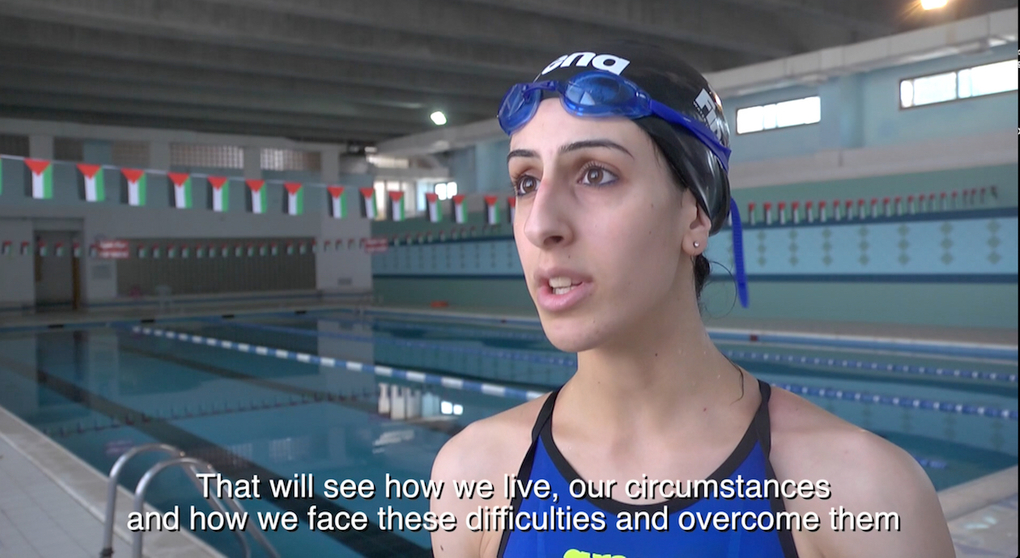
Mary al Atrash, a 22-year-old swimmer from Beit Sahour that will represent Palestine in the 2016 Olympic Games.

August 12th, Palestinian swimmer Mary al Atrash, swam for the first time in the Rio Olympics, in the 50-meter freestyle. She finished third in her heat and finished in 28.76 seconds, beating her personal best of 29.91. That finish did not affect the broader ranking: Sadly, Mary finished 63rd of 91 athletes, and will not be taking part in the semi-finals, which feature only the 16 best swimmers.

Last month we interviewed Mary al Atrash, a 22-year-old swimmer from Beit Sahour in the West Bank who was part of the largest delegation Palestine has ever sent to the Olympic Games.

She told us about her difficulties to train in a swimming pool that does not match the Olympic standards, and explained that although she technically lives close to Jerusalem, where such swimming pools, exist, she could not go there to train.

After our story was published, a controversy started: Israeli authorities explained that Mary never applied for a permit to train in Jerusalem. Other media outlets declared that Olympic-sized swimming pools existed in the West Bank. We investigated this complex situation.

After COGAT –the Israeli Ministry of Defense organization coordinating civil affairs between Palestinians and Israelis in the Palestinian territories- published a statement saying Mary al Atrash never applied for a permit to train in Jerusalem, we contacted Mary and the organizations that supervise her training such as the Palestinian Swimming Federation and the Palestine Olympic Committee.

Indeed, it seems that Mary never applied for a permit, and neither did a lot of other Palestinian athletes. They explain this situation by emphasizing their movement restrictions. They say they can be stopped at any point while going from one place to another and therefore don’t feel safe moving from one city to another. They also mention that roads or checkpoints are sometimes closed which implies a chance of wasting time that they could use to train.

The Palestinian Swimming Federation stressed “the difficulties, that all the athletes face, to enter Jerusalem for training” and that “permits are for a limited time” and that athletes still have to go “through checkpoints” even if they have a permit to train in Jerusalem which makes their situation unstable and puts them at risk of wasting their training time.

To understand the difficult situation and the restrictions of movement for Mary al Atrash, here are options to reach Jerusalem, where she could find an Olympic-sized swimming pool to train, from Beit Sahour, where she lives.

She could go through Beit Jala, a village between Jerusalem and Bethlehem, there are 2 checkpoints to cross (one in Har Gilo and one through tunnels on Road 60).

She could also first go to Bethlehem and then, from this city, drive to Jerusalem, and she would still have one checkpoint to go through (nearby by the separation wall). The Rachel’s Tomb Checkpoint, also known as Checkpoint 300, reportedly sees thousands of people crossing daily. It is considered to be one of the busiest checkpoints between the West Bank and Israel.

Lastly she could travel straight from Beit Sahour to Jerusalem, where she would also have to cross one checkpoint, off the Road 60, on Road 398.

It should not be more than 15-minute long drive but then, it depends on how long you spend at the checkpoint (it can be several hours), where you also have to change public transportation, since no Palestinian plated car can enter Jerusalem.

Besides, there was a controversy regarding the absence of an Olympic-sized swimming pool in the West bank. The Jerusalem Post conducted an investigation and finally concluded that there are no 50-meter long swimming pools meeting the Olympic standards in the West Bank although there is an ongoing project to build one.

Source: mondoweiss.net
Egyptian Judo Athlete Refuses Handshake After Losing to Israeli

By VICTOR MATHERAUG. 12, 2016
The New York Times

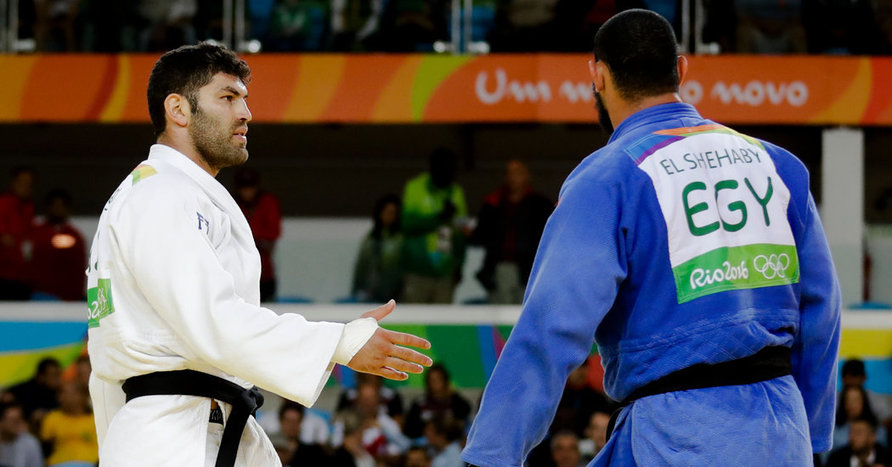
An Egyptian judoka declined to shake hands with his Israeli opponent after their match on Friday, eliciting jeers from the crowd.

Or Sasson, the Israeli, defeated Islam El Shehaby, the Egyptian, in a first-round match in the heaviest weight class, over 100 kilograms (about 220 pounds).

After a moment of prayer, El Shehaby got up and seemed reluctant to perform the traditional bow to his opponent. Eventually, he gave a quick nod and left the mat. A judge and a referee urged him to return. Sasson then approached El Shehaby with his hand extended, but El Shehany backed away.

Throughout the competition, as at all judo matches, opponents have bowed to each other, often multiple times. To decline a handshake is a serious breach of judo etiquette.

“That is extremely rare in judo,” the American coach Jimmy Pedro said. “It is especially disrespectful considering it was a clean throw and a fair match. It was completely dishonorable and totally unsportsmanlike on the part of the Egyptian.”

Or Sasson of Israel, in white, defeated Islam El Shehaby, an Egyptian, in a first-round match in the heaviest weight class. Credit Markus Schreiber/Associated Press
A judo federation spokesman said in an email to The Associated Press that a bow was mandatory but that shaking hands was not. He said El Shehaby’s “attitude will be reviewed after the Games to see if any further action should be taken.”

Before the match, El Shehaby had faced pressure on social media not to show up, the news site NRG reported. “You dishonor Islam if you lose to Israel,” he was told. “How can you cooperate with a killer?”

There is a history of animosity between Israeli and other Middle Eastern athletes at the Olympics, including in judo.

Israeli and Lebanese athletes got into a dispute about sharing a bus to the opening ceremony last week. The Lebanese team admitted preventing Israeli athletes from boarding, but said it was because the bus had been reserved for the Lebanese athletes.

When a Saudi judo player forfeited a match on Tuesday, the official reason was that she was injured, but the Israeli news media claimed it was because she would have faced an Israeli in the next round.

At the 2004 Athens Games, Arash Miresmaeili, a gold medal favorite in judo, was disqualified for showing up over the weight limit for his first-round match against an Israeli. It was reported that he had gone on an eating binge to intentionally forfeit, and he said, “I refused to fight my Israeli opponent to sympathize with the suffering of the people of Palestine, and I do not feel upset at all.”

Source: www.nytimes.com

Rio Olympics 2016: Tunisian fencer Ines Boubakri dedicates historic medal to Arab women 

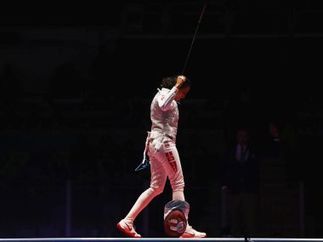
Ines Boubakri won Africa’s first women’s Olympic fencing medal on Wednesday, dedicating her bronze to “the Tunisian woman, the Arab woman… who has her place in society”.
Ines Boubakri celebrates victory over Aida Shanaeva. Getty
Boubakri defeated Russia’s Aida Shanaeva in the individual foil third-place match.
“This medal, it’s historic for Tunisia. It’s incredible,” said the 27-year-old.
“I hope that this will be a message for all Tunisians, especially our youth, all Tunisian women, the Arab woman.
“A message which says that you must believe that women exist and they have their place in society.”
Victory was particularly sweet as Boubakri had lost to Shanaeva at the world championships in Moscow last year.

Source: www.firstpost.com

Muslim-American women step forward

Editorial Board

Christian Science Monitor


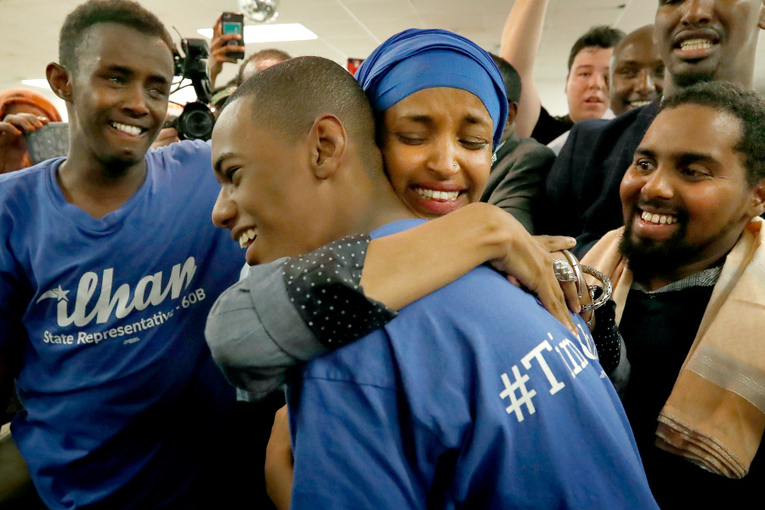
Ilhan Omar is poised to become the first Somali-American to win a seat in a US state legislature.

Ibtihaj Muhammad just became the first member of a US Olympic team to wear a hajib – the headscarf worn by some Muslim women – at an Olympic competition.

These two thoughtful, eloquent, and patriotic young women are the faces of a new generation who are breaking down stereotypes, and countering misconceptions, about Muslim-American women.

Recommended:IN PICTURES Muslim women and the veil
“[H]ow can you not see that Muslims are like any other group?” Ms. Muhammad, a fencer from New Jersey who advanced to the second round in her event at the Rio Olympic Games, told USA Today. “We’re conservatives and liberals. There’s women who cover [their heads] and women who don’t. There are white Muslims, Arab Muslims, African-American Muslims.

Ms. Omar was born in Somalia, and lived there until she was eight, when her family was forced to flee the violence that had erupted in that East African country. The family stayed in a refugee camp in Kenya for four years before being allowed to emigrate to the United States, where they settled in Minneapolis.

Encouraged by her father, Omar became interested in politics as a teenager and after college worked as a grass-roots neighborhood activist. In the recent primary she defeated a fellow Democrat (the party is known as the DFL in Minnesota) who had held the seat in the Minnesota House of Representatives for more than 40 years. Because the district leans heavily Democratic Omar is considered a virtual certainty to win the job this November.

Omar has gone “From a refugee camp to the State Capitol with intelligence and insight,” former Minneapolis Mayor R.T. Rybak told the Minneapolis Star Tribune. “This is a wonderful story to tell as Americans, and a great source of pride for the state….”

Minneapolis is home to the largest population of Somalis, some 60,000, in the US. In June the Somali community there was the subject of troubling national headlines when three young Somali-American men were convicted of conspiring to go abroad and join the Islamic State terrorist group.

“We need leaders who can change our community,” Hassan Abdi, who immigrated from Somalia himself and voted for Omar, told the Star-Tribune. “Too many young people are going around with no jobs.” Mr. Abdi was also pleased that Omar will be breaking a cultural barrier. “In my home country, men have the power,” he said. “This is an opportunity to show that women can do what a man can do.”

Earlier this year Omar shared her hopes for her campaign.

“[T]his is my country,” she told Britain’s The Guardian newspaper, “this is for my future, for my children’s future and for my grandchildren’s future, to make our democracy more vibrant, more inclusive, more accessible and transparent, which is going to be useful for all of us.”

As Muslim-American women Omar and Muhammad represent two visible examples of a new generation eager to fully participate in – and contribute to – American society.

Source: www.csmonitor.com

Olympic Tensions Offer a Window Into Lebanese History

By Denijal Jegić

Truth-Out

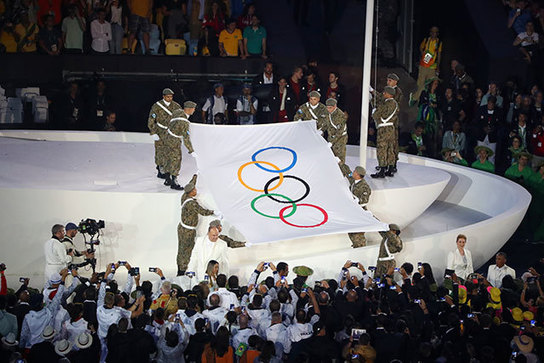
The Olympic flag is raised by an honor guard during the opening ceremony of the 2016 Summer Olympics in Rio de Janeiro, Brazil, on August 5, 2016. (Chang W. Lee / The New York Times)

The beginning of this year’s Olympic Games in Rio de Janeiro was marked by a now widely publicized situation in which Lebanese athletes refused to share the same bus with their Israeli counterparts before the opening ceremony. While there are different accounts of how the incident developed, it appears that the Lebanese delegation prevented the Israeli athletes from entering the bus. Competing explanations suggest that the reason for this was that the bus was specifically designated for the Lebanese team, or that there were many other buses, or that the Israeli team was trying to cause trouble, or that the nine Lebanese athletes did not want to share a bus with the 47 Israelis.

Israeli media immediately decried the incident as mean, outrageous and racist. Israel’s Culture Minister Miri Regev was quick to accuse the Lebanese of anti-Semitism. An Israeli coach expressed: “Does this not directly oppose what the Olympics represent and stand for… I cannot begin to express my feelings, I’m in shock from the incident.” Readers of the articles published by Haaretz, Jerusalem Post and The Times of Israel filled the comment sections with racist and threatening anti-Arab and anti-Lebanese insults and slurs.

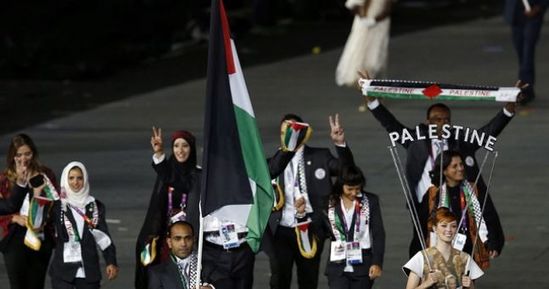
The same Israeli administration that labels such an incident as shameful and un-Olympic has repeatedly blocked Palestinians from participating in the Olympics after having imposed restrictions on their preparations, in addition to the usual limitations on Palestinians’ freedom of movement. This year, Israel also confiscated the equipment of the Palestinian team.

While many have expressed shock at this incident, very few are discussing why the Lebanese athletes may have reacted in this way. One social media comment directed at the Lebanese delegation expressed that “they are involving politics where they don’t belong” — a sentiment repeated often by commenters, along with frequent statements demanding peace and wondering why “they” (people from Lebanon) cannot for once be peaceful, instead of living in perpetual war. These utterances, however, ignore the power relations in the Levant.

Maybe the athletes are involving politics. But who defines where politics belong and where they do not? If Israelis are able to fluidly move from political to non-political spheres, then this reflects their standard of liberty and security. Much of Israel’s liberty and security, however, has been based on the subjugation of Lebanon and its inhabitants. The assumption that Lebanese individuals could decide about war or peace in the region contradicts the geopolitical reality of an Israel that not only is hegemonic in the Middle East, but has exhausted extensive military, political and diplomatic means to occupy Lebanon, and to bomb and kill Lebanese people — without ever being held responsible. The Israeli state apparatus enjoys impunity.

Since its founding, Israel has constantly contested Lebanon’s right to exist. The disastrous Israeli presence in Lebanon over the last decades has been notably evident in: the Nakba and the creation of the Palestinian refugee crisis; Israel’s destructive involvement in Lebanon’s civil war; its occupation of southern Lebanon in 1978 and between 1982 and 2000; the 1982 Sabra-Shatila massacre (i.e. Ariel Sharon’s “orgy of rape and slaughter that left hundreds, possibly thousands, of innocent civilians dead”); the 1993 “Operation Accountability;” the 1996 “Operation Grapes of Wrath;” the 1996 Qana Massacre; the 2006 war against Lebanon, in which Israel committed war crimes; or the internationally widely criticized 2006 Second Qana Massacre. Israel has regularly targeted civilians, including children. Besides the wars, Israel continues to violate several UN resolutions with the nearly daily crossings of Lebanese land, sea and air territory by Israeli war planes and drones, and through its constant mock air bombings to frighten Lebanese civilians.

The violent Israeli presence has left many people in Lebanon traumatized and threatened. Many have lost relatives and friends. Many have lost their houses and their existence. Many have been displaced. And many have been raped, tortured and humiliated. In fact, this year marks the 20th anniversary of the first Qana Massacre and this week marks 10 years since the second Qana massacre, both of which have left many still suffering from the traumatizing impacts.

The online commenters who are accusing the Lebanese athletes of “involving politics where they don’t belong” should at least be aware of the history and the present reality of the people they are talking about. Those who are claiming that Lebanese people “do not want peace” should be aware that this discussion is taking place in a context of occupation, colonization and military aggression under which Lebanon’s civil society has suffered heavily in the last seven decades.

Furthermore, those who are talking about how “these people do not want peace,” should take a closer look at what “peace” actually means. In the Israeli government’s terms, the “peace” paradigm serves to significantly conceal Israel’s human rights violations, because in the dominant Israeli narrative, peace equals keeping the status quo, which means a continuing colonization and an ethnic cleansing of Palestine without interference from Arabs or the world. So, maybe the Lebanese athletes did not want to accept this narrative of peace. Maybe blocking the bus door meant preventing Israelis from making decisions on their behalf. Maybe this was resistance.

The Lebanese athletes’ gesture must be understood at least in part as a reaction to the oppression to which they have been subjected. Israel has repeatedly violated Lebanese sovereignty, ignored UN resolutions and denounced any condemnation it might receive. Those who are branding the athletes’ behavior as racist must remember that Israel routinely violates Lebanese human rights.

Even if blocking the bus entrance to the Israeli athletes might not have been primarily done in order to gain media attention, it did serve to convey an act of protest within a Western media landscape that favors Israel and denies the Lebanese people, Palestinians, and others equal access to Western eyes, ears and emotions.

The media attention given to the incident now directly provides possibilities for open discussion on the relation between Lebanon and Israel, if we can move beyond knee-jerk reactions to asking why these athletes chose to block the bus.

Source: www.truth-out.org

Arabs Make Historic Impression at the Rio Olympics

BY: Andrew Hansen/Contributing Writer Since Friday, as the world turned its attention to Rio de Janeiro, Brazil for the 2016  Summer Olympics, audiences have been able to witness historic Arab participation in the games. After months of anticipation for Brazil’s first appearance as an Olympic host, the world watched as the country came together to … Continued

How a Mideast medical tradition became an Olympics trend

Michael Phelps, who won his 19th career gold medal so far, has credited cupping therapy with his preparations. (Reuters/Shutterstock) Staff writer Al Arabiya English A new medical treatment that has its origins in Islamic and Middle Eastern traditions is trending at the Rio Olympics used by star-athletes like Michael Phelps. Cupping, or known as ‘hijama’ … Continued

7 reasons why #Rio2016 has been epic for Arabs

  Leyla Khalife Stepfeed Arabs may not be winning gold medals at the Olympics this year, but they are winning hearts. From occupied peoples, to refugees, to women, the Arabs had a better show of the normally under-represented than ever before. In a region that saw an especially tumultuous 2016, the games, we believe, present a … Continued

Yusra Mardini delights with butterfly heat win for Refugee Olympic Team

Robert Kitson

The Guardian


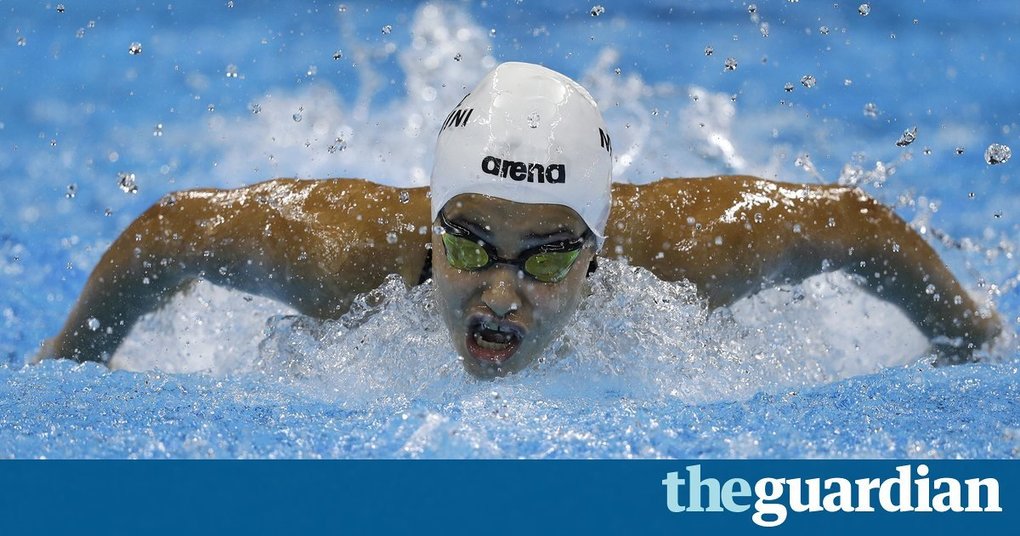
There will be plenty of inspiring swims in the Rio pool this week but few to match the personal odyssey completed by Yusra Mardini on the opening day of competition. Last year the Syrian teenager was battling in the sea for survival with fellow asylum seekers while trying to reach the Greek island of Lesbos. To go from there to winning the opening heat of the 100m butterfly at the Olympic Games is the ultimate illustration of drawing strength from adversity.

For those minded to complain about minor irritations in Rio such as humidity in the aquatics centre or a few nibbling insects, the 18-year-old’s story should serve as a timely reminder of life’s more pressing issues. Last summer Mardini and her sister Sarah fled their home in Damascus for Beirut, Istanbul and finally Izmir in Turkey, where they managed to squeeze on to a dinghy crossing the Mediterranean. Thirty minutes into their journey the motor stopped and the overcrowded boat, carrying 20 people, threatened to capsize.

There was no option but for Yusra, Sarah and another woman to enter the water and push and drag the dinghy towards the shore. They were the only ones on board who could swim. “I thought it would be a real shame if I drowned in the sea, because I am a swimmer,” Mardini said last week. The proximity of the open ocean off Rio might have stirred some uncomfortable flashbacks.

All of which made her first Olympic experience such a momentous one. The venue may have been far from full and her heat loaded with competitors entertaining nil hope of reaching the final but Mardini was the most popular of winners in a time of 1min 9.21sec, just over a second faster than her nearest heat rival. Afterwards she could scarcely contain her joy: “Everything was amazing. It was the only thing I ever wanted was to compete in the Olympics. I had a good feeling in the water. Competing with all these great champions is exciting. I’ve only been back swimming for two years so we’re only now getting back to my levels of before.”

This video has been removed. This could be because it launched early, our rights have expired, there was a legal issue, or for another reason.
Facebook Twitter Pinterest
Rio 2016 Olympics, day one: What you might have missed
Now living and training in Germany, Mardini is competing in Brazil under the banner of the specially-formed refugee team made up of 43 athletes who have been forced to flee their homelands. Unlike some competitors she also attended the opening ceremony and has been determined to enjoy her Olympic experience to the full: “The ceremony was really amazing but I couldn’t stay because I had to race.”

For her next trick Mardini hopes to be back for the 2020 Games in Japan but has already made good on her personal pre-Olympic pledge. “I want to make all the refugees proud of me. It would show that, even if we had a tough journey, we can achieve something.” It is the kind of narrative from which everyone on Earth can draw strength.

Source: www.theguardian.com

Israeli Occupation Blocks Palestinian Olympic Team Chief from Traveling

By Leena ElDeeb
Al Jazeera 

“Israel did not give Issam Qishta a permit to leave Gaza and therefore he was not able to join the rest of the Olympic team in Brazil,” Munther Masalmeh, Secretary General of the Palestinian Olympic Committee, told the Deutsche Presse-Agentur (DPA) news agency on Tuesday.

The Secretary General however told DPA news agency the trainer and the deputy head of the committee, who are also from Gaza, were given permits. The Israeli occupation’s foreign ministry, Emmanuel Nahshon, said his government was “doing its best” on allowing Qishta to join the rest of the Palestinian team “as soon as possible.” 

The occupation didn’t stop there; the Palestinian team joining in the Olympics had to buy equipment in Brazil, although they had equipment already donated from friends of Palestine. The reason behind this was that the Israeli authorities had prevented entry of their equipment into the Palestinian areas, demanding them to pay taxes, entry fees or sometimes under claims of national security, according to the Secretary General.

Source: scoopempire.com

124 Results (Page 9 of 11)