

Subscribe
to receive news by email

Poll
Will the Trump Administration Shift U.S. Policy in Favor of Palestine?
- No (87%)
- Yes (13%)
 Loading ...
Copyright © 2026 Arab America
Go topThe Arab Heart: A Homeland Love Story
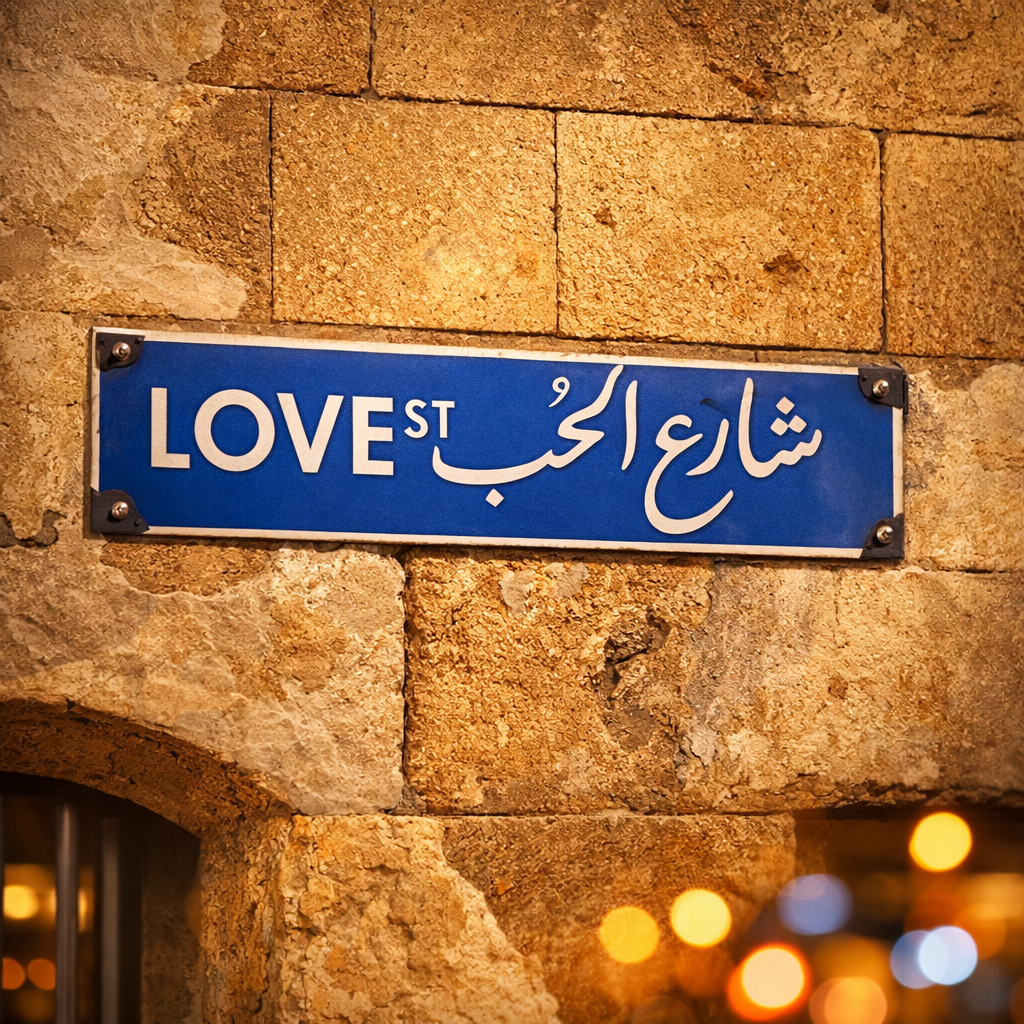
By: Nourelhoda Alashlem / Arab America Contributing Writer
When people think of Valentine’s Day, they think of roses, chocolates, and heart-shaped decorations. Around the world, many celebrate it as a day of romantic love. Yet for many across the Arab World and its diaspora, love has never been limited to romance.
For Arabs, attachment to land shapes how they understand and express love. It appears in everyday language, in family stories about “back home,” and in enduring traditions. For those in the diaspora, especially, homeland love feels familiar and deeply rooted.
The Ancient Origins of the Heart
Long before the heart became associated with romance, its shape appeared on coins in ancient Cyrene, in present-day Libya. Cyrene was a thriving Mediterranean city whose economy was centered on silphium, a plant native to North Africa. Silphium was highly valued in the ancient world for its medicinal uses, seasoning, and reputation as a “natural contraceptive.”
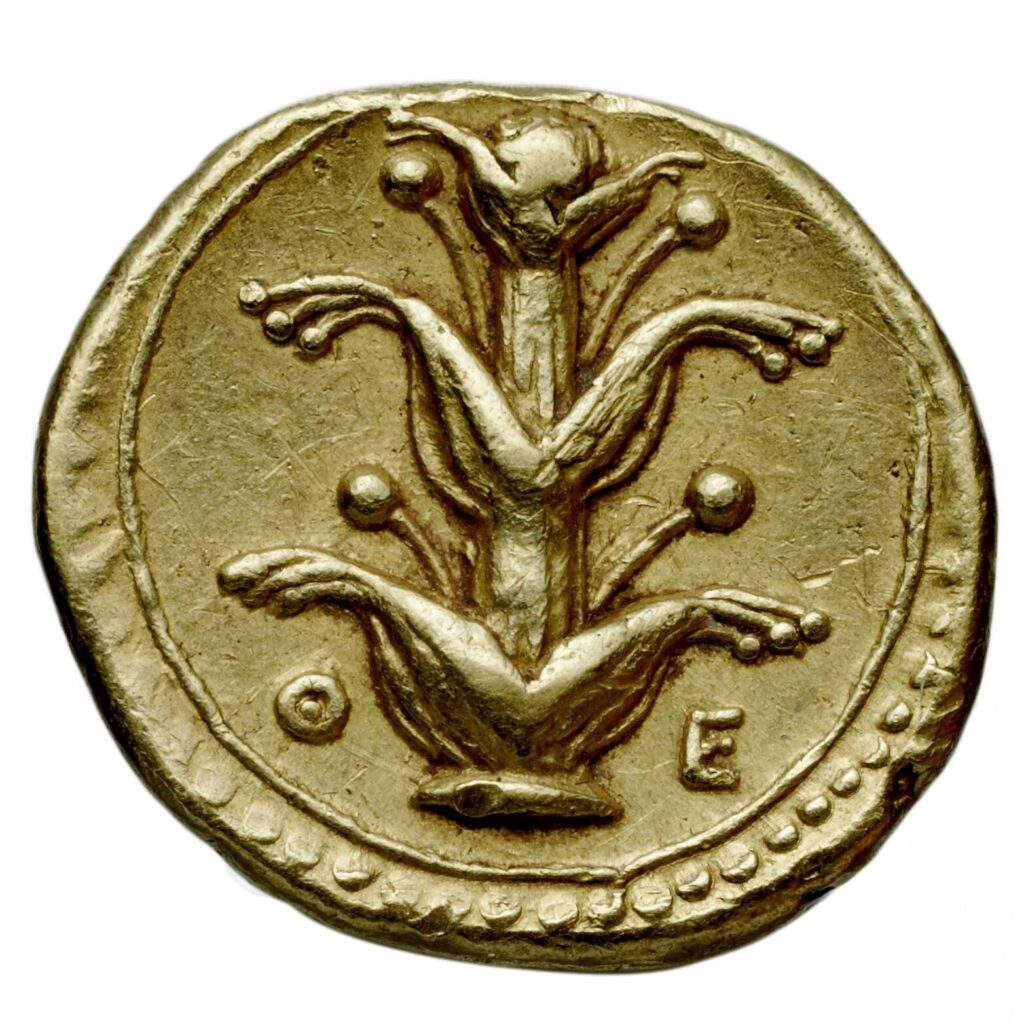
The plant’s seedpod closely resembled the modern heart shape. Because silphium was so valuable, its image was stamped onto coins and circulated throughout the Mediterranean. Although the plant eventually became extinct, likely due to overharvesting and environmental change, the symbol remained.
By the Middle Ages, the heart shape appeared in European manuscripts and religious imagery. Over time, it became linked to romantic love through literature and art. Eventually, mass production in the 18th and 19th centuries turned the heart into a commercial symbol, especially through Valentine’s Day cards.
Today, billions use the heart symbol without realizing that one of its earliest visual forms emerged from North Africa.
Even in modern art, love continues to evolve. The Kiss by Gustav Klimt, painted in 1907–1908, became one of the most iconic images of romantic love. Yet Arab artists have reinterpreted this image to reflect their respective regional identity.
Syrian artist Tammam Azzam superimposed Klimt’s embracing couple on the wall of a bomb-damaged building in Syria, juxtaposing tenderness and destruction, and how love persists in the land amongst all.
Other reinterpretations have used traditional Arab garments and regional patterns to ground a global symbol of romance in Arab identity and experience.
One artist, an emerging Korean digital artist, Kim Sin-ae created a MENA-inspired series of The Kiss, illustrating couples in traditional Libyan, Bahraini, Saudi, and other regional attire. Having lived in Qatar for seven years, she explained that her goal was to challenge negative stereotypes and highlight the richness and diversity of Arab cultures.
Loving a Homeland You Cannot Always Reach
For many Arabs, love for the homeland goes beyond symbolism. They carry it through their daily life.
Among Palestinians, especially, the homeland is often known through memory and the symbolizations. Cities and villages are remembered through stories and inherited keys. After 1948, when hundreds of thousands of Palestinians were forced into exile during the Nakba, many families kept the keys to the homes they were made to leave behind. Over time, the key became a powerful symbol of return — not only to a physical house, but to land.
Loving a homeland from afar requires resilience. Even so, distance does not erase attachment; instead, it often deepens it. As a result, families preserve the Arabic language. Likewise, food carries memory, and songs create connection. In turn, parents pass homeland love from one generation to the next, even when borders prevent return.
This kind of love complicates Valentine’s Day. Love is not always soft or so simple. It exists alongside displacement and historical trauma. For many in the diaspora, loving the homeland also becomes a responsibility. It means teaching younger generations the stories behind the symbols, like the key.
See the Key digital visuals from the Museum of the Palestinian People here.
Valentine’s Day Across the Arab World
People across the Arab world celebrate Valentine’s Day in different ways. In cities such as Cairo, Beirut, and Amman, shops fill with red decorations, and couples celebrate openly. Restaurants host special dinners. The heart symbol appears everywhere.
In Arab culture, love stays closely connected to family, homeland, and shared history. It remains collective as much as it is personal. It can be romantic, but it can also take national, cultural, and take generational forms.
If the heart symbol traces back to North Africa, and if love extends beyond romance, then Valentine’s Day carries deeper meaning. For Arab communities, especially in the diaspora, love goes beyond emotion. It demands action—uplifting Arab voices, supporting Arab institutions, honoring Arab American Heritage Month each April, and recognizing the contributions of Arab Americans across fields. It also calls for preserving history while building community in the present.
The heart looks simple, but its story holds layers. Love does too.
For many Arabs, love passes down through generations. And sometimes, the most timeless love story is not between two people, but between a people and their homeland.
Want more articles like this? Sign up for our e-newsletter!
Check out our blog here!






_Cyr%C3%A9na%C3%AFque_-_btv1b8499705t_(1_of_2).jpg)