Subscribe
to receive news by email

Poll
Will the Trump Administration Shift U.S. Policy in Favor of Palestine?
- No (87%)
- Yes (13%)
 Loading ...
Copyright © 2026 Arab America
Go topA Breakthrough? Will There Be a Palestinian State?
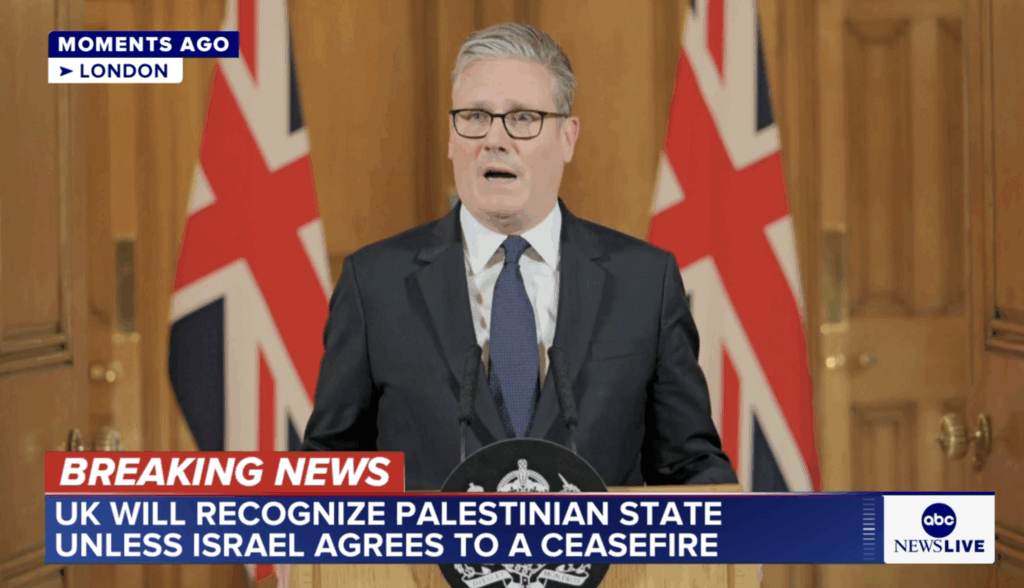
We’ve heard it all before—calls for peace, for a two-state solution, for an end to the violence. And yet, here we are. But something feels different this time. France recently announced support for recognizing a Palestinian state, and not long after, Britain followed suit. These aren’t minor players. Their shift in stance could mean more than just a symbolic gesture, especially when paired with the recent Palestinian recognition summit at the United Nations.
For Palestinians, recognition isn’t a new dream. It’s a basic demand—one rooted in decades of displacement, occupation, and dispossession. But now, with the world watching Gaza in ruins, that dream is beginning to feel a little less out of reach.
The last two years have been horrific. Gaza has been bombarded relentlessly. Schools, hospitals, even UN shelters—none of them spared. 60,000 dead, the majority of them civilians. Add to that the unbearable cruelty of enforced starvation. Israeli officials have made no secret of cutting off food and water. And it’s not just outsiders calling this a genocide—two Israeli human rights groups have stepped forward, naming it for what it is.
When voices from within Israel start using the word “genocide,” it’s a sign the world can no longer look away.
But here’s the question: Does this new wave of recognition change anything?
On the one hand, recognition affirms what Palestinians and their supporters have said all along: that Palestine is a nation, not a political puzzle to be managed. It offers a moral and diplomatic counterweight to decades of erasure. It also tells Israel—and the rest of the world—that business as usual is no longer acceptable.
On the other hand, recognition without consequences has its limits. Over 140 countries already recognize Palestine, but that hasn’t stopped Israel’s occupation or its blockade of Gaza. Settlements continue to grow. Military checkpoints still strangle Palestinian mobility. And let’s not forget, the United States still provides Israel with billions in military aid.
Yet the tide does seem to be turning. Global public opinion is shifting, especially among younger generations. Protests are erupting on campuses, in city streets, and in parliaments. The Gaza war has laid bare a truth many tried to ignore: that this isn’t just a conflict—it’s a system of control, rooted in inequality.
France and Britain speaking out could encourage other Western nations to take a stance. If the European Union begins to move in one direction, we might actually see some diplomatic leverage. And that leverage matters.
Still, let’s not kid ourselves—recognition is a first step, not a finish line. If it’s not followed by pressure, policy shifts, and actual accountability, it risks becoming yet another empty promise.
What Palestinians need isn’t just a flag at the UN. They need real sovereignty, an end to occupation, freedom of movement, economic dignity, and the right to return to their homes.
We’re at a critical juncture. The world has a choice to make: continue enabling a system that breeds despair and violence—or chart a new course based on equality and justice. Recognition alone won’t solve the problem.
But maybe—just maybe—it opens the door.
Compiled by Arab America
Want more articles like this? Sign up for our e-newsletter!
Check our blog here!