

Subscribe
to receive news by email

Poll
Will the Trump Administration Shift U.S. Policy in Favor of Palestine?
- No (87%)
- Yes (13%)
 Loading ...
Copyright © 2026 Arab America
Go topAlgeria’s Struggle, and Egypt’s Supporting Hand
By: Laila Mamdouh / Arab America Contributing Writer
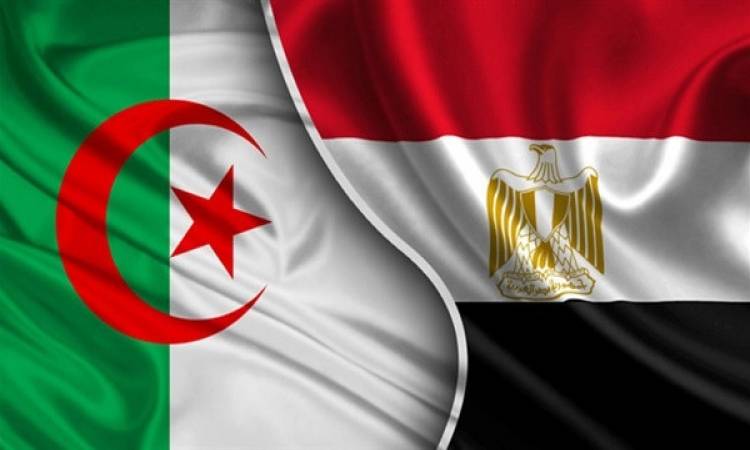
In the mid-20th century, Egypt stood in the spotlight of international politics not only because of its young leader Gamal Abdel Nasser, but because it positioned itself as a voice for those struggling under colonial rule. Nasser’s popularity came from not only his charisma but mainly the concrete support his government gave to liberation movements across the Arab world. For Algeria in particular, Egypt offered indispensable backing, though always second to the central force of Algeria’s own determination. Egypt’s actions during Algeria’s war for independence remind us that solidarity among neighboring peoples can change the course of history.
Algeria’s Burden Under Colonial Rule
To understand the importance of Egypt’s role, one must first recognize the sheer weight of French rule in Algeria. France invaded in 1830, and over time transformed Algeria into something unique in its empire: a settler colony that was treated as an extension of France itself. By the 20th century, over a million European settlers in Algeria had claimed full rights, owned fertile land, and controlled much of the economy. Meanwhile, French authorities pushed the indigenous Algerian majority to the margins, stripped them of economic opportunities, and suppressed their culture. Algerians endured daily discrimination and indignities, large and small.
This imbalance could not last forever. In 1954, the National Liberation Front (FLN) launched an armed revolt and began a long and bloody struggle. The French military struck back with overwhelming force: it destroyed villages, displaced families, and made torture routine. Algeria’s fighters, though determined, struggled without weapons, training, and international recognition. In this moment of desperation, Egypt extended its hand, but only because Algerians themselves had already chosen the path of sacrifice and resistance.
Egypt’s Commitment to Algeria’s Fight
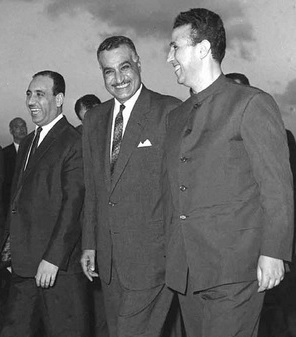
Egypt’s commitment to Algeria came at a cost. In 1956, France, Britain, and Israel launched the Tripartite Aggression to punish Egypt for nationalizing the Suez Canal and aiding anti-colonial movements like the FLN. Egyptian cities endured bombardment, and their sovereignty came under direct threat. Yet even in the face of invasion, Egypt did not retreat from its stance. Instead, it continued to provide arms, training, and political space for Algerian leaders, proving its unwavering solidarity. As Matthew Connelly notes in A Diplomatic Revolution, Egypt’s decision to keep supporting Algeria despite enduring the Tripartite Aggression underscored how far it was willing to go in defense of a shared cause. Egypt under Nasser became a lifeline for Algerians. Cairo opened its doors to FLN leaders, who organized, planned, and spoke to the world from this base. Egyptian state radio broadcast Algerian voices, and ordinary people across the region heard directly from those in the struggle. These broadcasts lifted the Algerian revolution into view, turning it from a local conflict into a cause that people across continents recognized.
But Egypt’s support was not limited to words. Scholars such as Matthew Connelly in A Diplomatic Revolution highlight how Egypt provided arms and training to Algerian fighters. Smuggling routes through Libya and Tunisia were sustained with Egyptian help, giving the FLN access to badly needed supplies. Malika Rahal, in the Oxford Research Encyclopedia of African History, notes how critical this flow of resources was to sustaining the fight. Without it, the FLN would have struggled to maintain its resistance against one of the most powerful militaries in the world.
Beyond Politics: A Sense of Responsibility
What stands out most about Egypt’s role is not just the logistical aid, but the spirit behind it. Nasser and his government framed Algeria’s fight not as a distant conflict but as a shared responsibility. Algeria’s liberation was presented as inseparable from the dignity of the Arab world. This framing mattered deeply: it showed that helping one another was not charity, but duty.
Accounts from the period underline this sense of connection. Leaders of the FLN, such as Ahmed Ben Bella and Hocine Aït Ahmed, who spent time in Cairo during the mid-1950s, later described how warmly Egyptian officials and ordinary people welcomed them and treated their cause as a shared struggle. Contemporary reports show Egyptians in Cairo’s cafes and on street corners following the developments in Algeria, as if they were happening next door. Historian Jeffrey James Byrne, in Mecca of Revolution, highlights how this atmosphere of popular engagement propelled the revolution and spread its momentum far beyond Algeria’s borders.
Algeria’s Independence and What It Taught Us
After years of sacrifice and brutal warfare, Algeria finally declared independence in 1962. It was a victory born of Algerian resilience, but it was sustained and amplified by the support of allies like Egypt. This partnership demonstrated something crucial: that solidarity between peoples under pressure can create real outcomes, even against overwhelming odds.
Egypt’s role in Algeria’s independence was not about glory for one leader or one nation. It was about recognizing a shared struggle and embracing the responsibility to act when others are in need. This sense of mutual duty, where the struggles of one become the struggles of all, remains the most enduring lesson.
Looking Forward: The Relevance of Solidarity Today
As we reflect on this history, the question is not whether Nasser was a powerful figure, but whether today’s states are willing to follow the example of extending solidarity in moments of need. Colonial powers sought to divide the region, to draw lines and emphasize differences in order to keep people weak and dependent. The Algerian experience, and Egypt’s role in it, shows how those divisions can be overcome.
If we want stronger, more resilient societies today, the answer lies in cooperation rather than competition. When governments work together; sharing resources, offering support, and amplifying each other’s voices, ordinary citizens begin to feel that same sense of shared responsibility. Over time, this internalized unity becomes the foundation for strength and stability.
A Closing Thought
History reminds us that we cannot wait for others to solve our challenges. Algeria, known as the country of the million martyrs, could not have won independence without its own courage and sacrifices. It was this fierce local determination that drew support from Egypt and made solidarity possible. Credit first and foremost belongs to the Algerians themselves, yet the assistance they inspired from Egypt was vital in sustaining their struggle. That is the balance: local determination paired with regional support. If we carry forward this lesson, then we honor not just Algeria’s freedom but also the principle that we only have ourselves to rely on. And together, that is enough.
Want more articles like this? Sign up for our e-newsletter!
Check out our blog here!