

Subscribe
to receive news by email

Poll
Will the Trump Administration Shift U.S. Policy in Favor of Palestine?
- No (87%)
- Yes (13%)
 Loading ...
Copyright © 2026 Arab America
Go topArab Astrology Traditions and How They Shaped Early Science
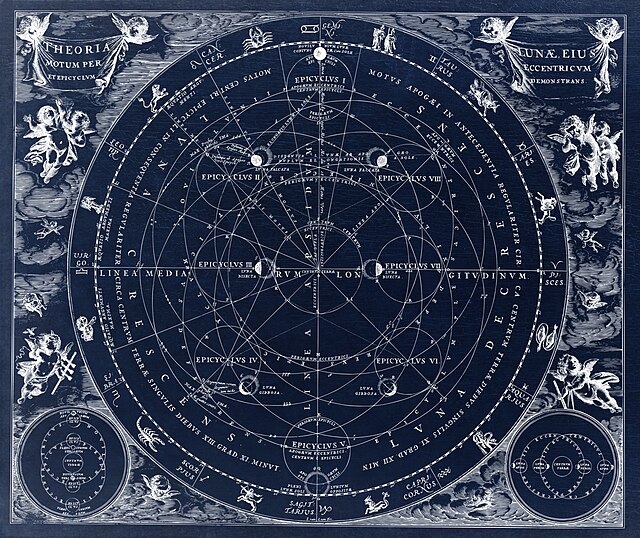
Creative Commons Zero, Public Domain Dedication
By London Sewell/ Arab America Contributing Writer
Blending Belief and Observation
Long before modern astronomy became a formal science, people in the Arab world were already building systems to understand the sky with structure and consistency. Their work did not separate belief from observation in the way we do today.
Instead, it combined both, producing a platform of knowledge that was practical and even at times could be considered philosophical. That combination, rather than just a single idea, is what helped lay the groundwork for scientific thinking in the earlier years.
Patterns in the Sky and Timekeeping
Arab astrology was not only about predicting personal fate. It was a way of organizing the natural world. The sky gave patterns that repeated with enough regularity to actually become useful.
The stars rose at predictable times, certain constellations appeared in specific seasons. The movement of the sun marked the length of days and the progression of the year. These patterns allowed them to create systems for tracking time long before mechanical clocks existed.
The Anwa System and Seasonal Knowledge
One example is the system known as Anwa, which linked the rising and setting of stars to seasonal weather changes.
These weren’t assumptions, they were built on generations of observation, with noting when certain stars appeared just before sunrise and connecting those moments to rainfall, temperature shifts, and wind patterns.
While some conclusions were shaped by cultural belief, the method of watching, recording, and comparing resembles early scientific practice.
Navigation by the Stars
Navigation offers another clear case of how this knowledge is functional in practical terms. In regions where landmarks were limited, especially across deserts or open seas, the sky became a map. Arab navigators used the position of the stars to determine direction and estimate location.
Over time the techniques began to measure the altitude of stars above the horizon, which allowed for more of an accurate navigation. These methods would later influence sea travel far beyond the Arab world.
Religious Needs and Scientific Study
Religious practice also played a role in pushing this work to the forefront. Daily prayers in Islam are tied to specific times based on the sun’s position, and the direction of Mecca must be determined accurately from any location.
Meeting these needs required careful study of both the sky and the Earth. Calculated prayer times using solar movement and worked out geographic coordinates to establish direction. With that being said they moved past simple observation to applying mathematics and geometry.
Tools That Turned Observation into Measurement
The tools they developed reflect this shift. The astrolabe, for example, was not just a symbolic instrument, but a working device that could actually solve problems. By aligning its components with the position of stars or the sun, the people who used them could determine time, latitude, and even the height of buildings.
It changed observation into measurement, making abstract patterns useful in daily life. Marking steps toward a more technical and repeatable approach to knowledge.
The Role of Mathematics
Mathematics became a key part of this process. To describe the movement of the astronomical objects, the observers needed ways to calculate positions and predict changes.
Leading to advances in trigonometry and geometry, fields that would later become essential to astronomy. Instead of relying solely on visual tracking, they began to build numerical models of the sky. Allowing for more precise data and opening the door to questioning their previous assumptions.
But, Arab researchers were not working in isolation. They translated and studied the earlier texts from Greek, Persian, and Indian traditions, then expanded on it. The process wasn’t passive, rather it involved correcting errors, refining their calculations, and introducing new methods.
The result was more reliable on understanding the celestial movement than had already previously existed. All together their stay catalogs and tables were amongst the most accurate of their time, later to be picked up by Europe.
Influence Beyond the Arab World
The influence of these developments extended beyond the Arab world. As texts were translated into Latin and began circulating in Europe, they helped astronomy grow during the Middle Ages and the Renaissance, passing along methods for measuring the stars, and mathematics were used to model the sky.
Which began as a mix of belief and observation, but later became part of a larger organized and systematic study.
The Lasting Scientific Legacy
Understanding Arab astrology in this context means not assuming it was just speculation. It worked as an early way to organize knowledge about the natural world. By studying and measuring the sky, researchers developed methods that later became a part of modern science.
The impact isn’t in the predictions, rather the method. Careful observation, pattern recognition math, and creating tools that test ideas are all of what connects Arab star studies to the rise of modern science.
Want more articles like this? Sign up for our e-newsletter!
Check our blog here!