

Subscribe
to receive news by email

Poll
Will the Trump Administration Shift U.S. Policy in Favor of Palestine?
- No (87%)
- Yes (13%)
 Loading ...
Copyright © 2026 Arab America
Go topArab Fashion Designers on Global Runways
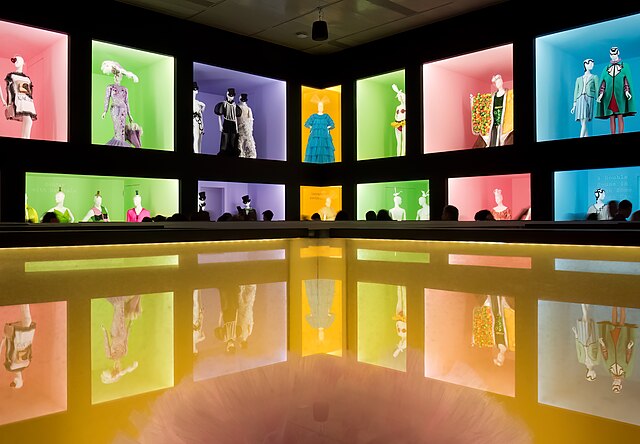
Creative Commons Attribution-Share Alike 4.0
By: Londyn Sewell / Arab America Contributing Writer
Arab fashion designers are no longer on the outskirts of the global fashion conversation. They are at the very center of it. From Paris to New York, their collections are walking major runways, dressing global celebrities, and shaping how luxury is seen and defined today.
Lebanon’s Couture Powerhouses
Lebanon has long been a powerhouse of couture lately. Designers like Elie Saab and Zuhair Murad are household names on red carpets. Saab, known for his detailed embroidery and flowing gowns, regularly debuts his pieces during Paris Fashion Week and so many more events. His designs have been worn by celebrities such as Halle Berry and Taylor Swift, often featuring elegant beadwork, sheer fabrics. There is a quiet confidence in his work. It does not need to be loud, the pieces speak well for itself.
Zuhair Murad brings a slightly bolder touch. His gowns often feature dramatic cuts, sparkling beadwork, and strong structure. He blends glamour with precision. When his designs appear at events like the Oscars or Cannes, they stand out without looking forced. With pieces being featured in Vogue. Launching his fashion brand in 1995, with his first store opening in Beirut.
However, 1995, Lebanese designer, Georges Hobeika, has also earned a respected spot in Paris couture. Presenting his collections in Paris for over a decade. His collections focus on fine detail and craftsmanship. Working with soft pastel tones and layered fabrics, creating gowns that move lightly on the runway. His presence has gained him celebrities such Jennifer Lopez, Marion Cotillard, Zhang Ziyi, and Emily Blunt as regular clients.
Saudi Arabia’s Rising Design Scene
Saudi Arabia has also seen a rise in designers gaining international attention. Mohammed Ashi, founder of Ashi Studio, became the first Saudi designer invited to join the official Paris Haute Couture calendar back in 2023. That moment was extremely important. It made a real shift in how the industry sees Saudi talent. Long underrated and under appreciated, but yet timeless.
Ashi’s work is bold, sharp lines and dramatic form. Arwa Al Banawi focuses on clean tailoring and strong silhouettes for modern women, showing the range within Saudi fashion.
The UAE and Dubai’s Global Influence
The United Arab Emirates, especially Dubai, has become a growing fashion hub. Michael Cinco, though originally from the Philippines, built his couture house in Dubai and has dressed stars like Beyoncé and Lady Gaga. His success reflects the UAE’s role as a meeting point for global fashion talent. Dubai’s fashion scene supports large-scale shows, luxury clients, and international exposure.
Arab designers stand out for their craftsmanship and their ability to balance heritage with global appeal. Red carpet moments and major fashion weeks have strengthened their presence. Beyond couture, ready to wear is growing, and with it, a more confident image of Arab creativity.
Celebrities have played a role in bringing Arab designers into the spotlight. When global stars step onto a red carpet in a gown by Elie Saab or Zuhair Murad, millions of people see it. That exposure changes perceptions. It shows Arab fashion as refined, luxurious, and innovative.
Fashion weeks in Paris, Milan, London, and New York are extremely competitive spaces. Invitations are limited. Reviews can also be harsh. The fact that Arab designers continue to show up and show out in these cities proves their power. They are not trends. They are part of the industry’s ever growing culture.
Redefining Luxury on the World Stage
Beyond couture, ready to wear collections from Arab designers are expanding. Younger designers are building brands that focus on everyday luxury, modest fashion, and sustainable practices. Social media has helped them reach global customers directly. A designer in Riyadh or Dubai can now sell to someone in Los Angeles or Tokyo with a few clicks.
The impact goes beyond clothing. These designers are reshaping how the world sees Arab creativity. For years, coverage of the region often focused on politics or conflict. Fashion offers a different narrative. It highlights skill, imagination, and cultural pride.
Arab fashion designers on global runways are not just representing their countries. They are redefining luxury with their own voice, shaped by years of craft and persistence. Today, they help expand the definition of high fashion beyond traditional trends.
Luxury now includes Beirut’s detailed couture, Riyadh’s sharp tailoring, and Dubai’s global glamour. They honor tradition without being confined by it. Their rise is also opening doors for a new generation of designers who see that global success does not require leaving culture behind but expanding it. Style is not limited by geography. It travels, it adapts, and at its best, it speaks to everyone.
Want more articles like this? Sign up for our e-newsletter!
Check out our blog here!