

Subscribe
to receive news by email

Poll
Will the Trump Administration Shift U.S. Policy in Favor of Palestine?
- No (87%)
- Yes (13%)
 Loading ...
Copyright © 2026 Arab America
Go topBethlehem Through History: Biblical Times vs Today
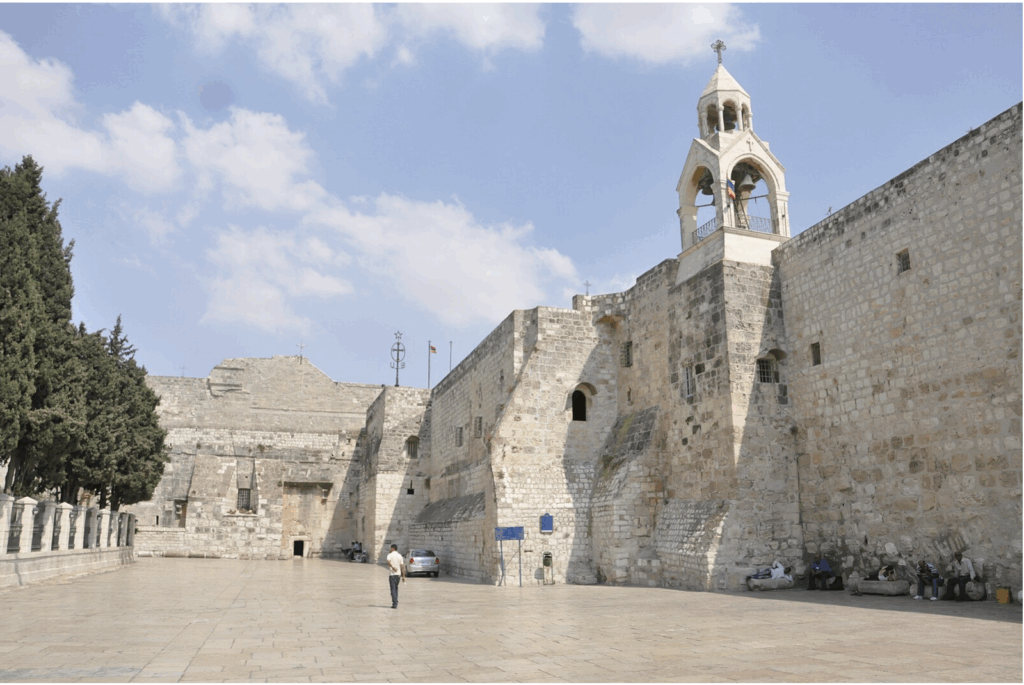
Photo By Neil Ward, CC BY 2.0, via Wikimedia Commons
By Jake Harris / Arab America Contributing Writer
Bethlehem is one of the holiest cities in Christianity. It is the birthplace of Jesus of Nazareth. The gospel of Matthew claims that Herod the Great, King of the Roman client state of Judea tried to have Jesus killed as an infant upon hearing of his miraculous birth. In an effort to escape the danger, it is said that Jesus’s family escaped to Egypt to avoid the slaughter. In the gospel of Matthew, the targeting of all infants under 2 in Bethlehem by Herod the Great is known as the Massacre of the Innocents.
Bethlehem in the Roman Empire
As the biblical birthplace of Jesus, the city holds immense significance in Christianity. Bethlehem receives numerous pilgrimages every year around Christmas time. The Church of the Nativity exists in the area said to be where Christ was born. Bethlehem’s place in the modern day Arab world has significance as it is located in what is today the West Bank, an area at the center of the Israeli-Palestinian conflict.
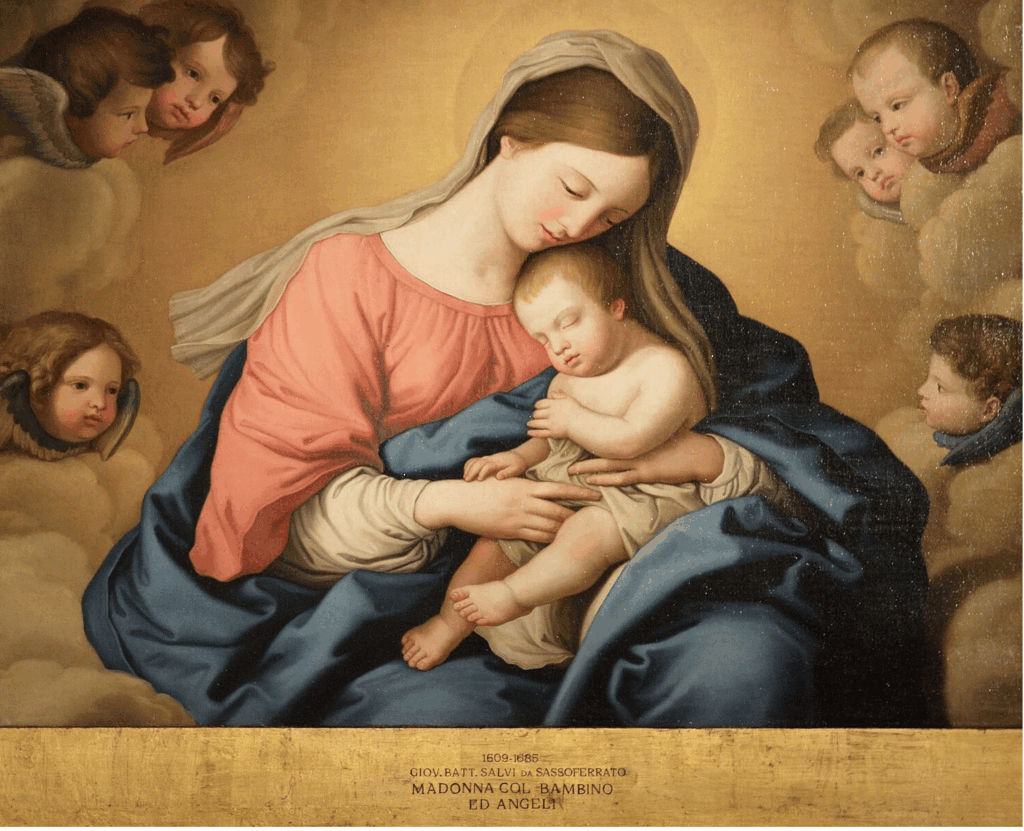
Giovanni Battista Salvi da Sassoferrato, Public domain, via Wikimedia Commons
Bethlehem during biblical times was under indirect control by the Romans. The Roman Empire gained stability from the devolution of powers, directly controlling that much territory from the Italian peninsula would have stretched resources thin. In order to mitigate this, Rome was fractured into loyal provinces, controlled by puppet kingdoms and smaller states. Modern day Israel-Palestine was part of the province of Judea in Roman times. Eventually Rome did fracture into two empires in the east and west. The Eastern Roman Empire also known as the Byzantine Empire would incorporate the holy land following the fall of the Western Empire in 476 AD.
Post-Roman Bethlehem and Arab Conquests
Following the crucifixion of Christ in Jerusalem, The prototype of the Christian religion slowly spread across the Roman Empire. Often practicing underground, early Christians were brutally punished by Pagan emperors as they saw it as an immense threat to their cult of divinity. The faith spread to a point where it was unignorable, overtaking the polytheistic Roman religion. A significant figure in the history of Bethlehem is empress Helena, the mother of Roman Emperor Constantine. Helena identified the Holy Cave as a place where the construction of the Church of the Nativity would be commissioned. Helena’s conversion to Christianity was followed by her son embracing the religion and lessening persecution. Constantine’s conversion was the penultimate moment in the Roman Empire’s gradual adaptation of Christianity as the state religion.
Following the Western Roman Empire’s collapse, Bethlehem became part of the Byzantine Empire. In 637, the Rashidun Caliphate conquered Bethlehem by way of their conquest of the Levant. Bethlehem was recaptured briefly during the crusades by Christian armies from Europe before returning to Muslim rule.
Modern Bethlehem: Part of a Fractured Nation
Bethlehem today exists in an incredibly fractured political landscape. The West Bank today is a collection of checkpoints, borders, and uncertainty. Sectarian violence is commonplace between Israeli settlers and Palestinians. Bethlehem has been under Israeli military occupation since the Six-Day War in 1967. The Oslo-Accords of 1995 intended to put Bethlehem under control of the Palestinian Authority. The accords collapsed for a multitude of reasons greatly complicating the status of the area as a whole. According to the Website of the State of Palestine, there are 18 Illegal Israeli Settlements in the Bethlehem Governorate. The restrictions in freedom of movement have helped isolate Bethlehem from the holy city of Jerusalem.
The Gaza War has greatly affected tourism in Bethlehem. For over 2 years public celebrations in Bethlehem including the famous Christmas Tree lighting near the Church of the Nativity have been cancelled. The lack of tourism and pilgrimages has poorly affected the local economy. Since the ceasefire agreement, the city has officially resumed Christmas celebrations after the two year hiatus. This Christmas, the tree will be lit again. It symbolizes the hope of the holidays shining through the darkness in what is still a very uncertain time for the entire region.
The areas of Jerusalem, Ramallah, and Bethlehem hold some of the most significant numbers of Palestinian Christians in the entire nation, although those numbers are declining. 98 percent of Palestinian Christians live in the West Bank with only 2 percent residing in the Gaza Strip.
Want more articles like this? Sign up for our e-newsletter!
Check out our blog here!



.jpg)
