
Subscribe
to receive news by email

Poll
Will the Trump Administration Shift U.S. Policy in Favor of Palestine?
- No (87%)
- Yes (13%)
 Loading ...
Copyright © 2026 Arab America
Go topBoujloud: Morocco’s Most Controversial Tradition
By: Nourelhoda Alashlem / Contributing writer
Despite its deep roots in Amazigh culture, Boujloud remains one of Morocco’s most misunderstood traditions. Also known as Bilmawen, it is an Amazigh folk celebration held in the days following Eid al-Adha.
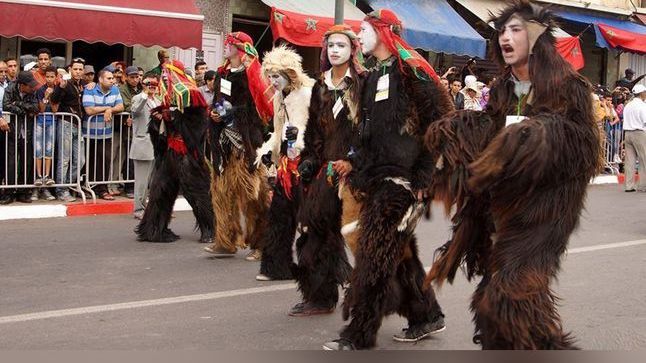
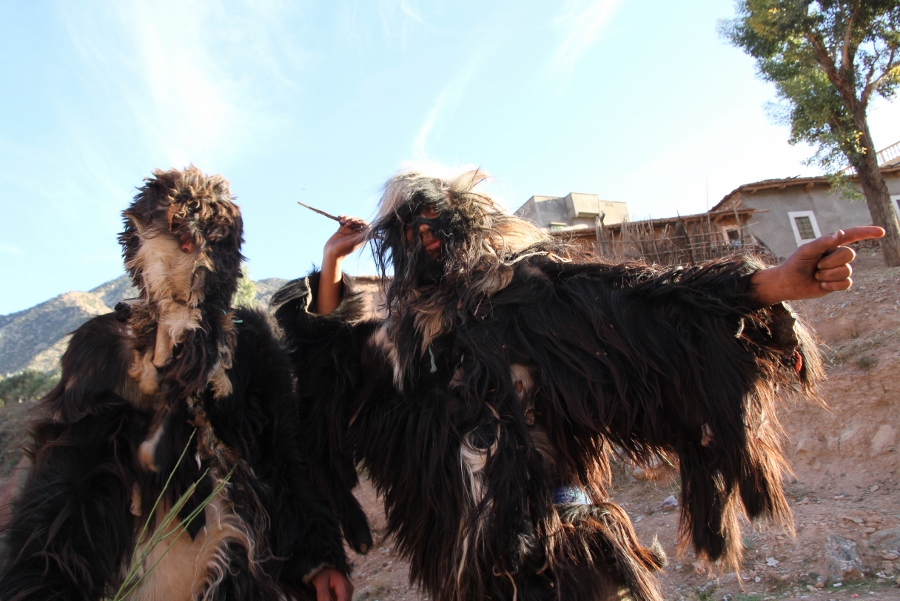
Participants wear costumes made from animal skins, generally sheepskin, and dance through neighborhoods to the rhythm of drums. Supporters describe the festival as a centuries-old cultural tradition originating from North Africa’s indigenous heritage, symbolizing renewal and communal celebration. Others find the tradition disturbing. As discussions about Boujloud circulate online, the celebration has become part of a broader conversation about identity, heritage, and cultural change in contemporary Morocco.
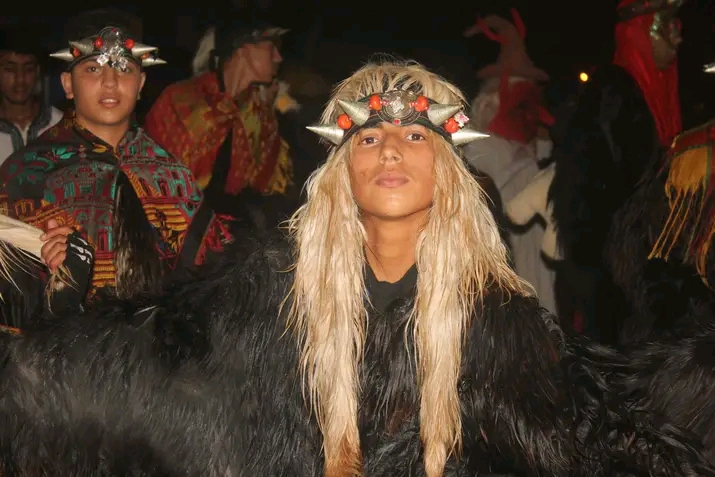
History and Origins of Boujloud
The word “Boujloud” comes from Arabic. “Bou” means father or possessor, and “jloud” means skins. It literally translates to “the father of skins.” In Tamazight, the Amazigh language, the festival is called Bilmawen, often understood as “the one with skins” or “the one with many faces.” Both names themselves center the costume.
Historians and anthropologists disagree on where the ritual began. Some argue that it developed from pre-Islamic Amazigh ceremonies connected to seasonal change, fertility, and renewal. During the colonial period, some French orientalist ethnologists, such as Edmond Doutté and Émile Laoust, described Boujloud as a survival of pagan folklore. In contrast, Finnish anthropologist Edvard Westermarck compared it to ancient Roman festivals.
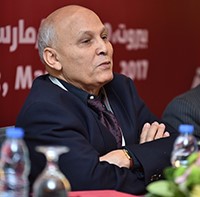
However, Moroccan anthropologist Abdellah Hammoudi disagreed. He argued that Boujloud must be understood within the context of Eid itself. The skins come from the sacrificial animal. The timing follows the feast. In his view, the ritual evolved within Moroccan Islamic life rather than outside of it.
Instead of a singular origin story, Boujloud is a reflection of centuries of cultural blending.
The Festival in the Streets
In Amazigh cities like Agadir and surrounding towns in the Souss, High and Anti Atlas regions, Boujloud typically begins on the second day of Eid and can last several days. Groups of young men typically prepare costumes together. Some attach sheep hooves to their hands. Others carry goat legs or olivewood sticks. Today, many participants tend to exaggerate the costumes to create a greater spectacle for the public.
Parades move through public squares and residential streets. Drummers and flute players often lead the way. In Amazigh areas, especially in the Rif Mountains village of Jajouka, the celebration is associated with the Master Musicians of Joujouka.
At festival highlight moments, the Boujloud figure breaks into the crowd, then lightly strikes spectators, especially children, with a hoof or stick. The exchange is meant to be playfully theatrical. The cries and laughter of children mark the high point of the performance, bringing joy to the community.
In many towns, participants also collect small donations in exchange for not being tapped. The money is known as “Zakat,” the Arabic word for “giving to charity,” often redirected to mosques or local charitable causes connected to Eid.
The Controversy of Boujloud
The meaning of Boujloud differs across regions.
In some communities, being touched by the Boujloud figure is considered a blessing. The contact is believed to carry baraka, Arabic for “blessing,” associated with the sacrificial animal. In other interpretations, the masked figure represents a chaotic force that must be confronted or defeated to secure good fortune.
Recently, Boujloud has faced immense criticism. Some Islamic scholars argue that the festival lacks precedent in early Islamic practice. They cite prophetic sayings discouraging imitation of other religious communities and question elements such as “cross-dressing“, dancing, or mimicking animals. Some even go to the extent of calling the tradition “satanic.”
Others argue that the ritual is a historical cultural practice that coexists with Islamic observance. Many participants believe Boujloud is not a philosophical entity. Instead, they believe it is a local tradition related to Eid.
A Tradition Under Pressure
While Boujloud was once more widely observed across Morocco, it has faded in some regions due to urbanization and migration. In the Souss and Anti Atlas, however, it still remains strong today. Local associations work to preserve the festival and, in some areas, have expressed interest in seeking recognition as “intangible cultural heritage.”
In recent years, Boujloud has also entered global pop culture. Recordings by the Master Musicians of Joujouka gained international attention after British musician Brian Jones recorded them in the late 1960s, bringing the ritual’s music to Western audiences. Today, viral videos from Agadir and other cities circulate widely on social media, introducing Boujloud to viewers who may have little context for its history.
Reactions, however, are mixed. Some see an exotic spectacle. Others see an uncomfortable, disturbing image. For many in Amazigh regions, it remains what it has long been: part of deep ties of life after Eid.
Each year after Eid al-Adha, Boujloud quietly forces Morocco to reconsider which parts of its traditional culture it chooses to carry forward.
Want more articles like this? Sign up for our e-newsletter!
Check out our blog here!