
Subscribe
to receive news by email

Poll
Will the Trump Administration Shift U.S. Policy in Favor of Palestine?
- No (87%)
- Yes (13%)
 Loading ...
Copyright © 2026 Arab America
Go topThe Bush Curse on the Middle East and The Everlasting Effects Until Today
By: Laila Mamdouh / Arab America Contributing Writer
On September 11, 2001, terrorists killed nearly 3,000 people in attacks that forever altered U.S. policy and global relations. These acts were unjustifiable and tragic. Yet the aftermath of 9/11 under President George W. Bush marked a turning point that launched wars abroad, pushed sweeping domestic policies, and reshaped daily life for Arab Americans. To understand this era fully, we must examine not only what Bush did, but also the scale of what his actions impacted.
War, State Disintegration, and Civilian Suffering
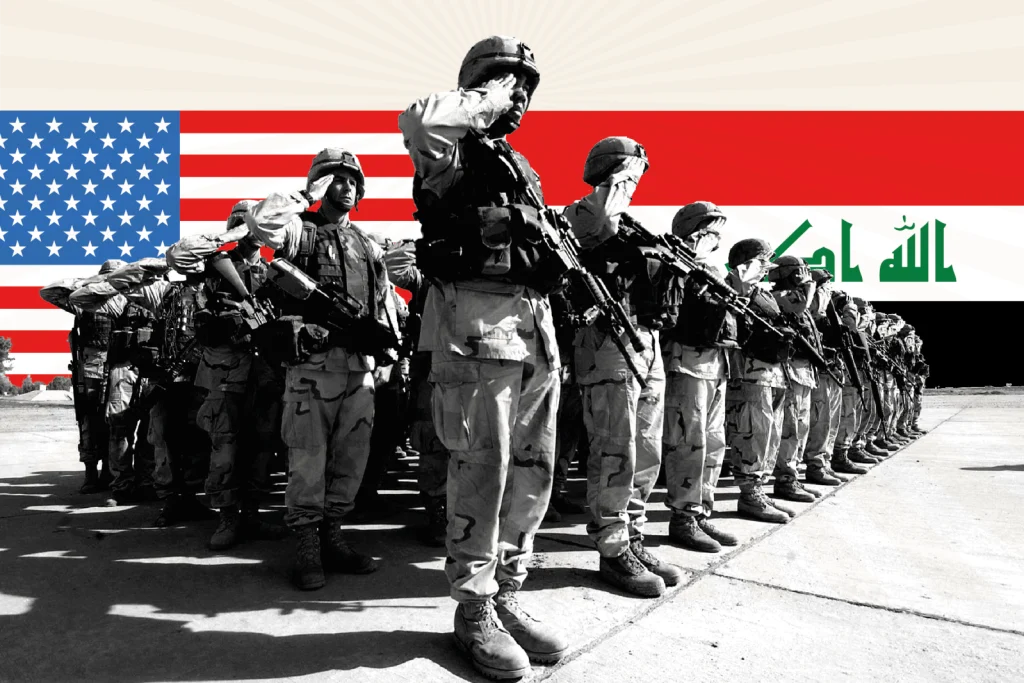
Bush’s “War on Terror” began in full force with the U.S. invasion of Afghanistan, followed by Iraq in 2003, justified in large part by claims of weapons of mass destruction. Those claims later proved unfounded, but already the effects were massive. According to the Iraq Body Count project, from 2003 to mid-2024, documented civilian deaths in Iraq due to violence reached over 187,000 (Every Casualty Counts).
Researchers from Brown University’s Costs of War project reported that by 2013, war violence had killed at least 134,000 civilians in Iraq since the 2003 invasion. Other studies place the number even higher. The Iraq Family Health Survey, conducted in 2006–2007, estimated that violence killed around 151,000 Iraqis between March 2003 and June 2006.
The U.S. invasion dismantled Iraq’s institutions, created a power vacuum, and ignited sectarian violence. Insurgent groups filled that vacuum, and extremist organizations like ISIS eventually rose from the instability. The collapse of Iraq’s state structures illustrates one of the most far-reaching results of Bush’s foreign policy.
Domestic Backlash: Arab Americans, Civil Liberties, and Islamophobia
At home, Bush quickly expanded government powers. Just weeks after 9/11, he signed the USA PATRIOT Act, which gave federal agencies authority to conduct surveillance, detain suspects, and investigate with fewer restrictions. Bush repeatedly defended the law as essential to national security.
Civil rights organizations worked to quantify the effects. The Arab American Anti-Discrimination Committee (ADC) reported that authorities detained about 725 people on immigration charges during the September 11 investigations; officials kept around 460 of them in custody at one point. Authorities also held about 370 detainees on suspicion of links to terrorist groups and charged an additional 100 foreign nationals with criminal offenses. Importantly, officials never charged many of those held on suspicion with terrorism.
Hate crimes also rose sharply: immediately after 9/11, a November 2002 Human Rights Watch report noted a 1,700% increase in reported hate crimes against Arabs and Muslims (Al Jazeera). More than 800 incidents of violence, threats, arson, vandalism, and other forms of targeting have been documented since 9/11 involving Arab-Americans, Muslims, Sikhs, South Asian Americans, and others perceived to be of Middle Eastern origin (Department of Justice).
One study covering 20 U.S. states in 2015 found hate crimes committed against Muslims increased by 78%, while hate crimes against Arab Americans increased by over 200% (Jurist).
The Dual Legacy: Security, Sacrifice, and Lasting Consequences
When Bush signed renewals of the Patriot Act and defended the invasions abroad, he often spoke of preventing another 9/11. He said, “We will confront this mortal danger, we will stay on the offensive, and we’re not going to wait to be attacked again.” These words capture the fear driving policy at the time, but also hint at trade-offs: of civil liberties, state stability, and human cost.
For many in the Middle East, the consequence was a weakening or collapse of established institutions, widespread civilian suffering, and displacement on a massive scale. For Arab Americans, it was years of suspicion, surveillance, and a social atmosphere in which their identity felt politicized and, at times, endangered.
The Long Shadow of 9/11
Bush’s presidency remains inseparable from September 11. The attacks themselves were a tragedy, but the decisions he made afterward reshaped global politics and Arab American life. The wars in Afghanistan and Iraq killed hundreds of thousands of civilians. The Patriot Act empowered surveillance and fueled widespread detentions. Hate crimes against Arabs and Muslims surged across the United States.
By situating September 11 within the larger arc of Bush’s foreign and domestic policies, we see both the tragedy of that day and the enormous costs of the response. Neither the sorrow of the attacks nor the controversies that followed have faded—and reckoning with them remains essential for understanding our present and future.
Want more articles like this? Sign up for our e-newsletter!
Check out our blog here!