Advertisement Close

Entertainment

International Community Urges Carlos Santana to Cancel Tel Aviv Performance

BY: Andrew Hansen/Contributing Writer On Saturday, legendary guitarist Carlos Santana performed in Stuttgart, Germany where many activists supporting the Palestinian Campaign for the Academic & Cultural Boycott of Israel (PACBI) met outside the concert venue to ask Santana to cancel his upcoming performance in Israel. Scheduled to take place on July 30 in Tel Aviv, … Continued

Two Arab Americans Nominated for Emmys

BY: Clara Ana Ruplinger/Contributing Writer This year, 18 minorities have received an Emmy nomination, which is up from 11 the previous year. Included in this list are two Arab Americans: Rami Malek, lead actor on Mr. Robot, was nominated for Outstanding Actor in a Drama Series; and Sam Esmail, a writer for Mr. Robot, was … Continued

Amir ElSaffar and the Crisis Suite at Maverick 

by Ann Hutton
Hudson Valley Almanac Weekly 

Lovers of jazz are in for an excellent show this Saturday when Amir ElSaffar and the Two Rivers Ensemble make their Maverick debut in the Jazz at the Maverick series, the first of this summer’s “New Century, New Voices” concerts. Born outside of Chicago in 1977 to an Iraqi immigrant father and an American mother, the accomplished trumpeter, santur-player, vocalist and composer is recognized by the Chicago Tribune as one of the most promising figures in jazz today.

What exactly does that mean, to be “the most promising” artist of any genre? ElSaffar has already performed worldwide and recorded with his own groups, and has worked with many other well-known jazz musicians as well, including Cecil Taylor, Mark Dresser, Henry Grimes and Oliver Lake. He is the recipient of commissions from the Jazz Institute of Chicago, Chamber Music America and the Metropolitan Museum of Art, among others. And he performs so continuously that he refers to New York City as “the place he pays rent.”

The promise seems to exist in the artist’s ability to translate impressions of contemporary life into work that evokes eternal ones. Having studied maqam in Baghdad and Europe, gaining firsthand exposure to the rich musical culture of his paternal ancestors, he presented Crisis Suite at the 2013 Newport Jazz Festival in an emotional premiere that inspired a standing ovation after just the first piece. ElSaffar composed the suite following a year spent living in Egypt, where he witnessed the Arab Spring protests, and in Lebanon, where he worked with Syrian musicians who were living through their country’s civil war.

He’s a composer who straddles two worlds of musical convention, embarking on a very unconventional path and joining them in a form that embraces innovation. “The music is certainly a commentary or reaction to the present and more distant past in Iraq and the Middle East, and the relationship between Western and Middle Eastern cultures. The music is an emotional and abstract reaction: a way through my own experience of what happened in Iraq and Syria and Egypt in recent years, as an Iraqi American living between the two cultures and existing in both, but not belonging entirely to either at the same time.”

I ask how his musical imagery is able to communicate such a concept, especially to Western sensibilities. And what sort of reactions does he get from people still very attached to their cultural roots?  “I haven’t actually performed in Iraq since 2002,” he says, “but there are a number of Iraqis who have written to me on Facebook, who have heard my music through the Internet, and it seems to resonate with them. My teacher, who is an Iraqi maqam specialist – rather a purist in his own way – loved the combination and the mix. I didn’t expect him to because he doesn’t like a lot of innovations within the tradition. He really enjoyed hearing the tradition that he knows so well filtered through a jazz context.”

Meanwhile, Iraqi communities in the US have embraced the music, ElSaffar says. “When we do traditional maqam that they know really well, it conjures memories from their childhood and the past, and a collective memory of Iraqi history of a place and time that no longer is. It’s a very intense emotional experience. When we do the new stuff, some people really take to it, especially younger people. It’s like they’re hearing their own tradition, but amplified. So it’s exciting, more dynamic, with lots more adventure in it than the old tradition. Oftentimes it’s a predominantly Iraqi audience, so we throw in one or two traditional songs.

“I’ve noticed people hear into it what they know. When we perform live, the Arabs in the audience seem to tune into one layer, which is an Arabic flavor, and the jazz listeners tune into the free jazz and adventurous elements. There’s a dichotomy within the music, and some people resonate with one, and the other is an added flavor.”

His next project, Rivers of Sound, involves an ensemble of 17 musicians. “In the expanded group, the maqam is strong, but there’s also a lot of orchestration that draws on my symphonic background; and of course there are jazz things happening, keeping the spirit of improvisation in a more complex, structural way. I hope to bring that group to Woodstock one day.”

Now known for integrating Middle Eastern tonalities and rhythms into contemporary contexts, ElSaffar brings in his critically acclaimed sextet, the Two Rivers Ensemble, to the Maverick to showcase the combined languages and instrumentation of a very traditional Arabic music system and contemporary jazz. The group members are Carlo DeRosa, Tareq Abboushi, Zafer Tawil, Ole Mathisen and Tomas Fujiwara. This is one of five performances in this summer’s Jazz at the Maverick series, which continues through August 13 with concerts by Vijay Iver, Fred Hersch and Jane Ira Bloom and Julian Lage with his trio.

Crisis Suite: Jazz at the Maverick with Amir ElSaffar & Two Rivers Ensemble, Saturday, July 16, 8 p.m., $25/$5, Maverick Concert Hall,120 Maverick Road, Woodstock; (800) 595-4849, www.maverickconcerts.org.

Source: www.hudsonvalleyalmanacweekly.com

Arab American Muslim comics make Trump their punch line

By Dean Obeidallah 

Washington Post

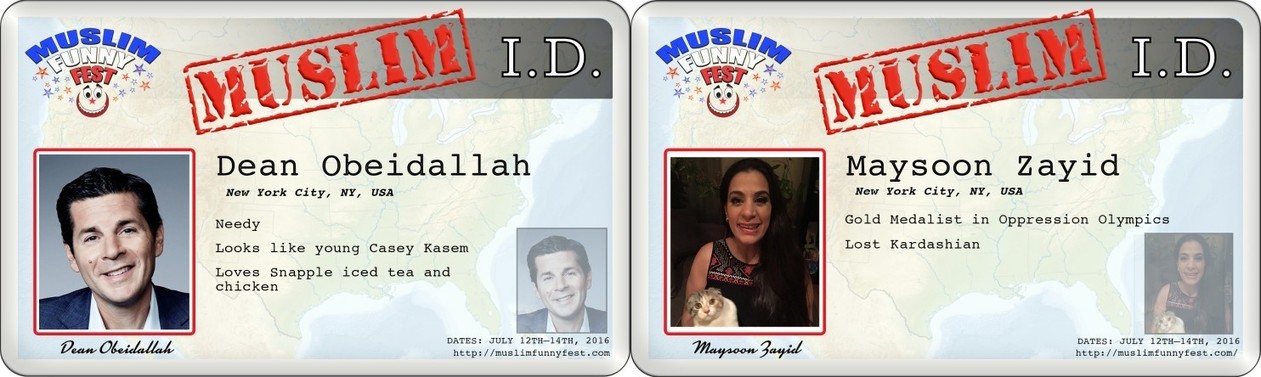
Producers of the Muslim Funny Fest have created fake “Muslim ID” cards for comics, a commentary on Donald Trump’s controversial 2015 comment on possible IDs for American Muslims. (Handout)
Like many American Muslims, Maysoon Zayid wants to obliterate Donald Trump’s presidential bid. But her chosen way to accomplish this feat is a little nontraditional — it’s with punch lines.

“Good thing I got married before Trump’s Muslim ban went into effect,” one of her jokes goes. “My husband is an Arab Muslim refugee who came here on a K1 fiance visa. If Trump had his way, I would die a virgin.”

Comics have always used jokes as a means of entertainment, catharsis and social change. But in 2016, Muslim American comedians see their art as a tool for survival.

This week, Zayid and a few dozen other comics (including myself) will unite in New York City for a comedy festival with a mission. Several of the comedians are coming from other countries out of fear that a President Trump might keep them out of the country for next year’s fest.

The goal of these Muslim comedians is to comically fillet Trump, poking fun at his divisive rhetoric, inflammatory proposals and, of course, his Muppet-inspired hairstyle. It’s only fair considering Trump’s “jihad” on Muslims, from his infamous declaration calling for “a total and complete shutdown of Muslims entering the United States” to indicating his openness to profile Muslim Americans to even suggesting the need to close American mosques.

How long until Trump proposes a Muslim Hunger Games?

Azhar Usman, one of the stars of the “Allah Made Me Funny” tour, playfully looks at the bright side of Trump with this bit: “Muslims should not be mad at Donald Trump. Because Islamophobic hate just makes reasonable people investigate Islam, some of whom end up converting. One day, Donald’s grandson, Abdullah Trump, will probably end up apologizing for him.”

In my act, I take on one of Trump’s other campaign staples: “Trump has made some outrageous proposals this campaign, but one thing he has talked about will definitely happen. If Trump is elected president, Mexico will build a wall. I’m pretty sure Canada will build one as well. In fact, maybe they will team up to build a dome over America to keep him out.”

There’s something both empowering and cathartic about having a roomful of people laugh at the person who is causing so much angst in our community. Mel Brooks once explained why he wrote a Hitler character into his iconic musical “The Producers.” The goal, he said, was to use “the medium of comedy” to rob Hitler of his power. It is the same for us.

To be clear, I’m not equating Hitler and Trump — Hitler obviously had bigger hands. (Sorry, I can’t help myself.)

We have even poked fun at Trump’s openness to requiring Muslim Americans to carry special identification cards by designing satirical versions of Muslim IDs. My Muslim ID notes that I look like a young Casey Kasem and am needy. (Both are true.)

There will of course be jokes about topics other than Trump at this week’s Muslim Funny Fest. From pop culture to family to racism, the comedians will crack wise on a broad range of topics. But given today’s political climate, Trump will be the target du jour. And given that Trump’s rhetoric has stoked the flames of hate against the Muslim community (as well as other minority groups), we are only too happy to respond with our comedic barbs.

The comedic approach in taking on Trump, however, will vary by comedian.

Some are subtler, such as Los Angeles-based comedian Ramy Youssef: “Statistically, if you have any level of education you don’t support Donald Trump — even if that education is from Trump University.” It’s funny, and it also reminds people about the Trump University fraud claims.

New York City comic Atheer Yacoub is far more direct.

“Donald Trump says women who have abortions should be punished. All women are being punished for his mom not having one.” No doubt some will be upset with that joke, but if you think we are going be politically correct when mocking a person who has spewed so much bigotry, let me quote the Italian side of my family: “fuhgeddaboudit.”

Will these jokes defeat Trump? Obviously not on their own. But if we can get Americans to view Trump not as a president but rather as a punch line, we will have done our small part in making sure that the only time Trump is in the White House is when he’s on a White House tour.

Source: www.washingtonpost.com

14 Arab Superstitions Defying Common Sense

BY: Tamara Wong Azaiez/Contributing Writer The Arab world can be an extremely superstitious place. In order to battle the evil spirits, we have compiled a list of potentially hazardous situations that may be jinxing you. Some of these superstitions seem silly, but they are long-standing cultural habits we’re not ready to let go of just … Continued

Meet the American who brings new hope to the Arab film industry 

by CHRISTOPHER SILVESTER

Spear’s Magazine

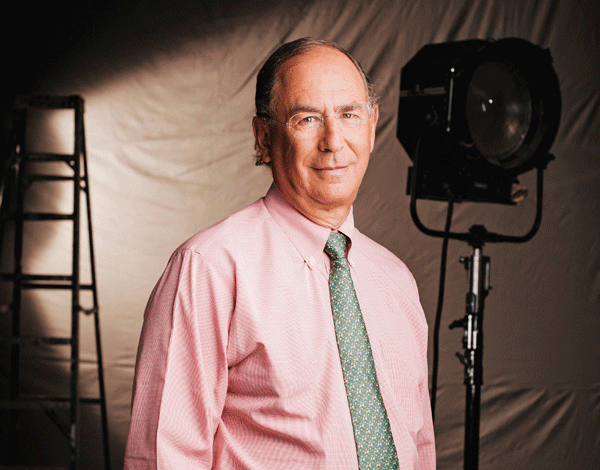
After a long business career, American Michael Garin is enjoying his unlikely new role helping to develop Abu Dhabi’s film industry. Christopher Silvester reports.

Last October, three of the feature films and one of the feature documentaries shown at the 2015 London Film Festival were produced by Image Nation Abu Dhabi, one of the leading media and entertainment companies of the Arabic-speaking world, though still a relative newcomer. The Idol is a feelgood biopic about the Palestinian youth who won the Arab Idol TV contest; From A to B is a comic road movie in which a group of three Emiratis drive to Lebanon via Saudi Arabia, Jordan, and Syria — it makes mildly satirical observations about each country; Zinzana is an intense and stylish psychological thriller set in a police station in an unnamed Arab country at some unspecified time in the 1980s; and He Named Me Malala is a documentary about the Pakistani education activist Malala Yousafzai.

Funded by Abu Dhabi, Image Nation is led by its Emirati chairman Mohamed Al Mubarak and has an expat CEO, a Jewish American named Michael Garin, who is as passionate as any Emirati about its prospects. Most developing economies have a large population but a shortage of capital resources. They tend to move from exploitation of natural resources to manufacturing because it creates jobs. Knowledge-based industries come later. But Abu Dhabi and the UAE have been able to leapfrog that stage of development, thanks to a focus on value-added industries.

The United Arab Emirates was founded as a country in 1971 by Sheikh Zayed, under whose leadership the country invested heavily in education, women’s empowerment, and freedom of religion. ‘From the time Sheikh Zayed became ruler of Abu Dhabi,’ says Garin, ‘literacy in the UAE went from under 5 per cent to one of the highest levels in the entire world, over 95 per cent. And because 60 per cent of the college graduates in the UAE are women, the nation has managed to unleash the power of 50 per cent of the population, which remains a challenge in most other developing economies. The resources that are really powering the future of the country are education and women.’

One of Image Nation’s next feature films will be directed by a woman Emirati director, who helped oversee the production of its recent TV drama series Qalb al Adal (‘Heart of Justice’). ‘I’d describe it as LA Law meets Dallas in Abu Dhabi,’ says Garin. ‘It’s a courtroom show, it’s a family drama, and it’s shot in Abu Dhabi, set in Abu Dhabi, and shot in Arabic. Our aspiration is for that to be seen all over the world, in countries that run dubbed programming. When they are watching it dubbed in their local language, people don’t care whether programmes are shot in Spanish or Portuguese or Turkish if it’s a compelling television show with great production values. We have high hopes for this series.’

Al Mubarak and Garin expanded Image Nation’s focus beyond feature films because they saw that films tend to be produced over relatively short periods, whereas television is a longer proposition critical to supporting a permanent infrastructure. Because Abu Dhabi’s aim is to provide a sustainable industry, television has become a critical component in fulfilling this mission. In December Image Nation took this one step further, by moving from television production to broadcasting, when it launched the first non-news, non-sports, pan-Arabic television network, called Quest Arabiya, in association with the Discovery Channel. Quest is a free-to-air speciality channel that covers all 22 countries in the Arabic-speaking world — 45 million television homes.

‘Television,’ says Garin, ‘is 24 hours a day, seven days a week.’

The UAE is late in developing a film and television industry compared to other countries in the region, such as Egypt, Lebanon, and Iran, and for that reason Arabic-speaking audiences are only just beginning to appreciate its potential. The dynamics of the region have changed since the 1950s, when the Egyptian film and television industry dominated, selling its melodramas and soap operas around the Arab world and even to Israel, with hardly any competition.

‘The reason countries have sustainable entertainment industries is because they have large enough domestic markets to support them,’ Garin explains. ‘Countries with large populations can support a viable and sustainable industry, but virtually all their films are for their local market, and then once every ten or fifteen years you have a movie like Iran’s A Separation that reaches a global audience. But the fact is they’re making films every year. The same is true in Italy, France, Germany, where the vast majority of their revenues come from their home markets.

‘Our challenge is different, because our home markets are too small for us to have a sustainable industry, and, therefore we must have films that can be seen and appreciated around the world. The problem is not that most people in the region are snooty about our output, it’s that they have no experience of it. Until recently they hadn’t seen a strong Emirati film, so their judgement is like, “How can it be any good?”, especially when every successful Hollywood film plays in local theatres. So one of our challenges is educating not only filmmakers but also audiences, since every weekend they have a broad choice of movies, from Star Wars to Zinzana.’

Garin was born in Manhattan. ‘My kids are the fourth generation of our family born in Manhattan. We kind of got there and stayed. My father was in the millinery business; my mother was a social worker.’ Garin read philosophy at Harvard, where he quickly found his métier in the media. ‘I joined the Harvard Crimson [the student paper] as a sophomore, and as soon as I walked in the door of the Crimson building I knew what I wanted to do with my life.’

After graduating in 1973, he was hired by Time magazine. He worked on both Time and Fortune, and then moved over to Time-Life Television, where he became the executive in charge of co-productions with the BBC from 1975 to 1978. ‘The BBC in those days had very little money, and we co-produced many of their best-known series, like The Magic of Dance with Margot Fonteyn, The Shock of the New, The Americans, and the complete plays of Shakespeare. It was our co-production that made those series possible.’

Garin left Time, Inc. in 1978 and helped to found the company that grew to be the largest TV production company in the US, Lorimar-Telepictures. Garin had co-founded Telepictures, which merged with Lorimar in 1986. The company made some of the biggest TV dramas of the 1980s, including Dallas, Falcon Crest, and Knots Landing, as well as comedies such as Full House, Alf and Perfect Strangers and the animated series ThunderCats and Silverhawks. ‘We sold Lorimar-Telepictures to Warner Bros in 1989 and Warner Television is the company that I helped start. I thought that would be my legacy, but I think that my real legacy will be what I’m doing now in Abu Dhabi.’

Garin changed careers completely, becoming an investment banker. He was asked to be co-head of the media and investment banking group at Lehman Brothers. He mentioned this to a friend, Roy Furman, who said: ‘Look, if this is what you want to do, you should come here and build an investment banking practice for us.’

‘I knew that I would make a lot less money doing that, but I also knew that I would be infinitely more happy, because bankers are miserable people whose only reward is money, and that’s not who I am, or the kind of life I wanted to lead. I knew that if I was at Furman Selz I could build something and have a good life and still be, you know, a good banker and help companies. And I was very fortunate, because that’s exactly what happened. I did that for ten years.’

Furman Selz was a small to medium capital bank, but Garin built a large cap media practice advising companies including NBC and General Electric, CBS Westinghouse, Thames Television, Caisse des Dépôts, Verizone and TCI.

When Furman Selz was acquired by the Dutch bank ING in 1997, Garin became the global head of telecommunications and media investment banking for ING for the next four years, before quitting to run a technology company that bit the dust in the dotcom crash. ‘Unfortunately, at that time my first wife was diagnosed with lung cancer and I spent the next fourteen months just looking after her. When she died, I was 56. Despite my successful career, age discrimination was as real as sexual discrimination and racial discrimination, and I never thought I’d have a full-time job again.

‘So I ended up going on boards. One of the companies on whose board I served asked me be the CEO. That was Central Media Enterprises (CME). I was able to take a company that was basically a collection of disparate minority investments and help it become one of the largest broadcasters in Europe, operating in seven countries — Ukraine, Romania, the Czech Republic, the Slovak Republic, Slovenia, Croatia, and Bulgaria. We grew the enterprise value from €350 million to a peak value of €5 billion.

‘When I arrived all the local teams were from the local countries, but 100 per cent of the corporate staff were from the UK, Canada, the US or Australia/New Zealand. By the time I left, 50 per cent of the corporate team were from the region and my successor was from Romania — the first Nasdaq CEO from a central European country. And that’s what Abu Dhabi aspires to — having its businesses run entirely by Emiratis.’

Garin first came to Abu Dhabi as the only expat on the board of the Abu Dhabi Media Company, on which he sat for five years. ‘Because of my board position I became a trusted adviser. When the management of the Media Company changed I was asked to run Image Nation and came in with Mohamed Al Mubarak, the chairman. It has taken the two of us to be as successful as we’ve been, because Mohamed has the confidence of the Abu Dhabi leadership and I have his confidence — and this allows the two of us to do things that neither one of us could ever have accomplished on his own.’

Garin and Al Mubarak have a fully funded five-year business plan. ‘Because I’ve always run public companies and had to work with shareholders and boards, and Mohamed runs a public company, Aldar, we created the same kind of accountability to our stakeholders, the leadership in Abu Dhabi, as we would have had if Image Nation were a public company. Because we provided the tools by which to measure the quality of what we were creating, it inspired great confidence.’

Garin enjoys the village atmosphere of Abu Dhabi and prefers living there to Dubai. ‘Abu Dhabi is an Emirati city,’ he says, ‘and I went there to be with Emiratis, not to be with other expats.’

The goal for Image Nation is to produce local movies for modest budgets, and while these films may be low-budget by Western standards, they are not low-budget by a regional standards. Because of the technology and the experience of Image Nation’s team, the films’ production values belie their budgets. ‘We have two big advantages in producing our films: one is that “above-the-line” costs are low, because we don’t have expensive stars, and the other is that we don’t need enormous P&A [prints and advertising] budgets, because in our part of the world, social media and other forms of communication are very powerful marketing tools.’

Another advantage Image Nation has, both internationally and domestically, is that it is not in the distribution business, hence it does not require a stream of product to feed a schedule — a summer movie or a Christmas movie. In the US, movies often go into production before they are ready, with their creative teams hoping to fix them as they go along. Image Nation has ‘the luxury of only green-lighting pictures when they’re ready and when we believe they’ll be successful — either creatively, which is our criterion locally, or financially, which is our criterion internationally.

‘It’s not a guarantee of success,’ Garin admits, ‘ but fortunately every local film we’ve made has met that creative criterion and every international film we’ve financed has met the financial criterion.’

Source: www.spearswms.com

Concert of Colors festival showcases cultural diversity

Mark Stryker,

Detroit Free Press 

We don’t just talk about diversity in Detroit. We live it.

The 24th annual Concert of Colors, which unfolds Thursday through Sunday at five venues, nearly all clustered in Midtown, is one of the best pieces of evidence. Sponsored by the Arab American National Museum, the free festival features about 35 events that span a dizzying array of cultural traditions. Among them: Eddie Palmieri’s Latin jazz, King Sunny Ade’s Nigerian JuJu, Brown Rice Family’s eclectic roots melange, Mama Sol’s hip-hop, Fred Penner’s folk music for children, Astrid Hadad’s Mexican cabaret music and Yuna’s Malaysian pop.
 
And the beat goes on. Reggae, calypso, blues, rock, jazz, salsa, indie pop dance, spoken world, film, food, children’s activities and carnival games are all on the docket. Top Detroit musicians share the bill with the international headliners.

The festival opens with a forum on community, culture and race at 6:30 p.m. Thursday at the Arab American American National in Dearborn. Journalist Martina Guzmán will moderate, and the panelists of artists and activists include, among others, Sacramento Knoxx, Naim Edwards and Nada Odeh. The major music performance venues in Midtown are the Max M. and Marjorie S. Fisher Music Center (multiple stages, indoors and outdoors), the Charles H. Wright Museum of African American History, the Detroit Institute of Arts and the Scarab Club.

Spoken Word with Joel Fluent Greene, Ajanae Dawkins, Caesar Torreano & Phoenix Eagle: Detroit poet Joel Fluent Greene has organized a reading featuring three charismatic poets who suggest the vitality of the city’s spoken-word scene: 8 p.m. Friday, Charles H. Wright Museum of African American History.

Planet D Nonet: One of Detroit’s stalwart jazz ensembles and a dynamic party band, the Planet D Nonet offers an “African Township” program including music of great South African musicians, among them Abdullah Ibrahim, Hugh Masekela and others. 9:30 p.m. Friday, Scarab Club.

King Sunny Adé: The ebullient and influential Juju music of guitarist-singer King Sunny Adé, an Afropop pioneer, marries traditional Nigerian rhythms and African melodic material with Western instruments and styles, among them synthesizers and pedal steel guitar.  With a 17-member ensemble of musicians and dancers. 5:30 p.m. Saturday, Orchestra Hall, Max M. and Marjorie S. Fisher Music Center.

Britney Stoney: A compelling singer, songwriter and guitarist and 2014 Kresge Artist Fellow, Britney Stoney brings soul-inspired vocals to original material whose sense of themes and poetry have a storytelling quality associated with folk singers. 6 p.m.Saturday, outdoor stage at Max M. and Marjorie S. Fisher Music Center.

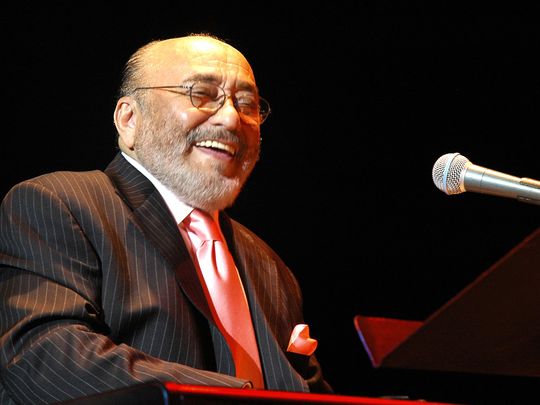
Eddie Palmieri Salsa Orchestra: One of the true innovators in salsa and Latin jazz, pianist and composer Eddie Palmieri, 79, created his own fiery take on the Afro-Caribbean and Puerto Rican dance music tradition and then increasingly pursued sophisticated jazz-influenced hybrids under the sway of such heroes as pianist McCoy Tyner. 8 p.m. Sunday, Orchestra Hall, Max M. and Marjorie S. Music Center.

Concert of Colors

Thu.-Sun.

6:30-8:30 p.m. Thu., Forum on Community, Culture & Race. “Artists Speak: Water is Life,” Arab American National Museum, 13624 Michigan Ave., Dearborn. Reservations here. 

6-11:30 p.m. Fri. Midtown venues

1-11 p.m. Sat.-Sun. Midtown venues

Midtown venues:

Max M. and Marjorie S. Fisher Music Center, 3711 Woodward, Detroit

Detroit Institute of Arts, 5200 Woodward, Detroit

Scarab Club, 217 Farnsworth, Detroit

Charles H. Wright Museum of African American History, 315 E. Warren, Detroit

Complete schedule and other details: www.concertofcolors.com

Free admission 

Source: www.freep.com

45th Arab and Chaldean Festival

Press release: Arab and Chaldean Festival The Arab and Chaldean Festival will take place at Hart Plaza, located in downtown Detroit, Michigan on July 30 and 31, 2016. The Arab World Festival was established as a non–profit community organization in 1972 and is now known as the Arab & Chaldean Festival. It is the largest … Continued

Eid Events July 6-July 13

Eid Events In Your Area!  July 6th through July 13th, 2016       ______________________________________________________________________________________________________________________ CALIFORNIA  Eid Festival July 9, 2016- July 10, 2016 12:00-10:00 PM Bay Area Star Hamada Sultan Eid Party @ Paradise Hooka Lounge July 9, 2016 8:00-11:00 PM ______________________________________________________________________________________________________________________ CANADA  Eid Breakfast July 6, 2016 11:30 PM – 2:00 AM CAMWL … Continued

10 things that just have to happen at #ArabWeddings

By Leyal Khalife Stepfeed There’s nothing more entertaining than Arab weddings. We’ve all had our fair share of annoyances, that’s for sure. Getting asked when you’re going to be next is probably the worst of all. But, there is something about the weddings that really makes them stick out. These 10 things make Arab weddings … Continued

332 Results (Page 16 of 28)