
Advertisement Close

Literature

College readers combat trend of divisiveness
BY DEBRA ERDLEY

TribLive.com

Updated 49 minutes ago
Seizing a moment when the world is rife with division and presidential campaigns highlighting the bitter divide dominate the headlines, some universities are asking students to walk a mile in the other person’s shoes this summer.

This year’s common readers — books universities assigned to incoming freshmen to read over the summer — reflect that challenge at private and public universities across the region that have hewed to the tradition.

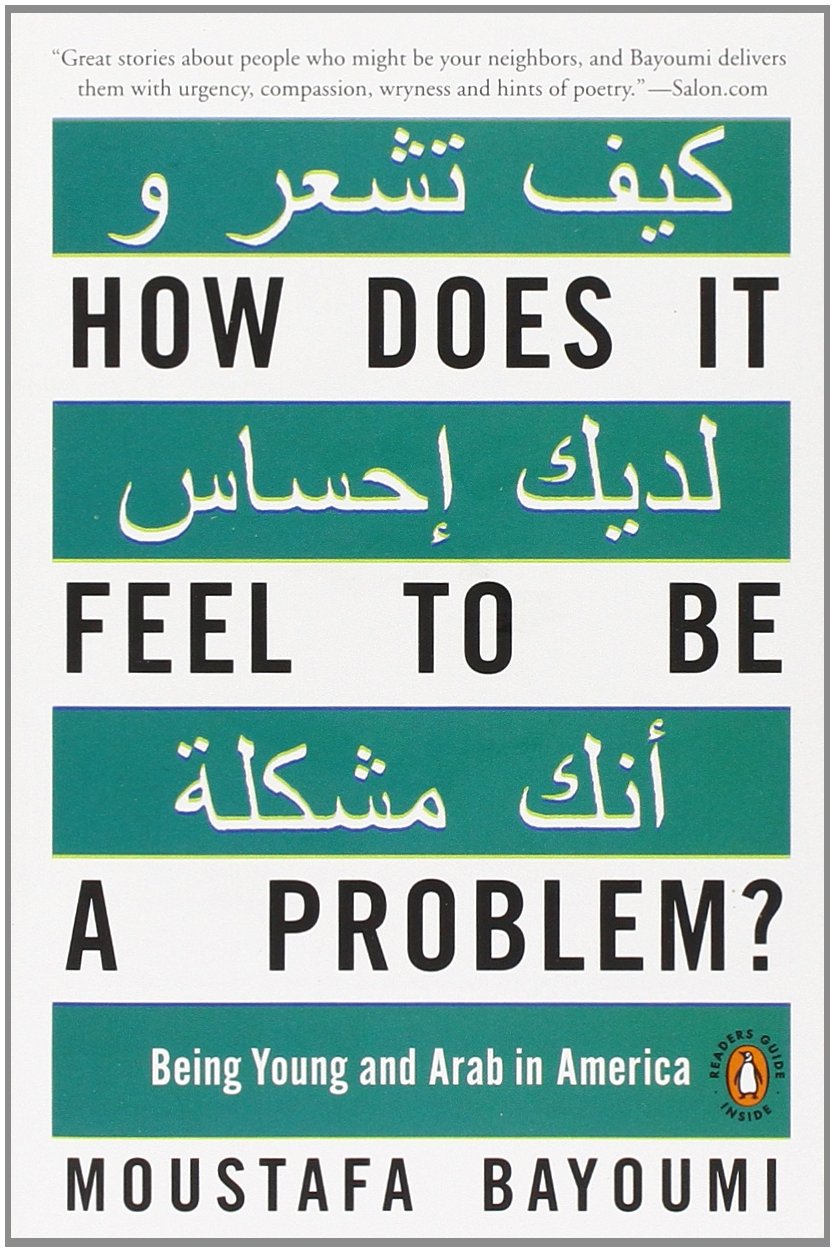
Carlow University President Suzanne Mellon said she selected this year’s Carlow common reader — “How Does It Feel to be a Problem? Being Young and Arab in America” by Moustafa Bayoumi — with such a challenge in mind.

For millennials who have grown up immersed in the world of social media and candidates’ 140-character tweets, it promises to offer a deeper discussion on issues of religion and ethnicity that are dominating presidential politics this year.

Looking to expand the conversation, Mellon extended the common reader challenge to the entire community at the private university perched in the hills of Pittsburgh’s Oakland section.

The book features seven in-depth portraits of young Arab Americans living in Brooklyn, N.Y. Their experiences range from being a college student to an Arab-American Marine who served the United States in Iraq.

“This is a launching point for a dialogue about people who have been singled out and branded persona non grata. But it also echoes the experience of men and women who persevere through triumphs and setbacks. It’s a topic that will generate a lot of discussion,” Mellon said.

Sixty miles to the east, Kevin Berezansky, associate director of the Cook Honors College at Indiana University of Pennsylvania, chose a tome that could have been pulled from yesterday’s headlines: Jonathan Haidt’s “The Righteous Mind: Why Good People are Divided by Politics and Religion.”

IUP’s Honors College has used Haidt’s book as a common reader for incoming freshmen since 2012.

During orientation, upperclassmen in the honors college lead discussions on the book with incoming freshmen. Part of the goal is to provide a model for an honest exchange of opinion — “how to disagree without being disagreeable,” as Berezansky puts it.

“We picked it the first year partly because it was an election year. But it also seems to present the issue nicely in a way people haven’t thought about. (Haidt) looks at moral intuition and talks about how people seem to arrive at things morally without really understanding where it comes from, and he talks about how that is related to the groups people come from and how that shapes them.

“We attract students from across the social and political spectrum, and it gives them a way to talk about things,” Berezansky said.

Kei Kawashima-Ginsberg, who directs the Center for Information and Research on Civic Learning and Engagement at Tufts University in Medford, Mass., has studied voting trends among millennials.

Although there’s no research pointing to the impact of such programs on voting habits, she said summer readers that focus on the perspectives of individuals outside the mainstream have a dual impact on students.

Tufts, like Chatham and IUP, assigned a summer reader that asks students to consider the perspectives of outsiders. “Life in Limbo,” the Tufts summer reader for several years, examines the experiences of undocumented immigrants.

“Although young people today are among the most diverse generation of Americans, they are growing up in an echo chamber. They go to school in districts with similar people and access social media that reflects their opinions and that of their friends,” Kawashima-Ginsberg said.

“It’s important to be exposed to new ideas and lives that have never touched yours. That can have an important impact both on the individual and on driving civic development and engagement,” she said.

And engaged voters can make a difference.

While college students traditionally vote in rates among the lowest of any voting age group, they are now part of the largest single voting group in America — millennials, ages 18 to 35, who make up nearly a third of the electorate.

Back in Pittsburgh, officials at Chatham University abandoned the concept of a common reader for new students in favor of a campus-wide book assignment as part of its Global Focus Program.

This year’s selection, “One Native Life” by Richard Wagamese, examines life from the perspective of a Native American, or one of Canada’s so-called First Nations citizens.

Chatham associate professor of history and Global Focus Coordinator Jean-Jacques Sene said Wagamese’s book should spark discussion across the social sciences and resonate with issues that have come up in recent months in the presidential races.

“Our choice was guided by the desire to revisit the dramatic history of First Nations, especially in the current context of discussion about ‘nativism’ in our own country,” he said.

Incoming honors college students at California University of Pennsylvania are reading “The Immortal Life of Henrietta Lacks” by Rebecca Skloot. It will give them a look at how one long-anonymous black woman’s cells taken without her consent became the first to reproduce outside the body and spawned tens of thousands of scientific research projects.

Mark Auen, director of Cal’s honors program, said the program has tapped the non-fiction tome for the last three years. He said the story forces students to think about ethical issues in scientific research.

“We’ve had great discussions,” he said. “Part of what I enjoy is we have art and history and pre-med and a variety of other majors in honors. Everyone has their own thoughts and approach. We always get comments along the lines of ‘They really did this to people?’ or ‘This was acceptable?’ I don’t have to do much other than give them the book and ask them to read it. They do the work and analysis. I look forward to it every year. I learn a lot.”

Source: triblive.com
Ancient Egyptian works to be published together in English for first time

Dalya Alberge

The Guardian

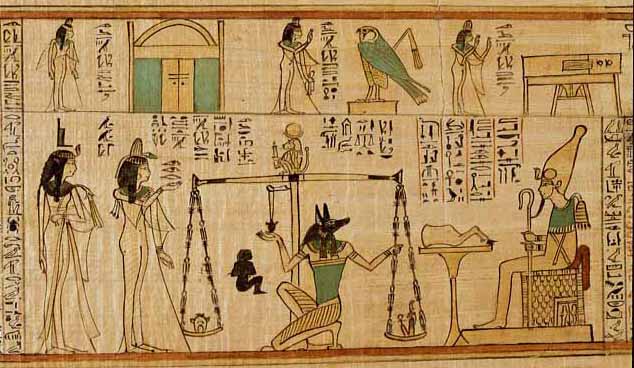
Ancient Egyptian texts written on rock faces and papyri are being brought together for the general reader for the first time after a Cambridge academic translated the hieroglyphic writings into modern English.

Until now few people beyond specialists have been able to read the texts, many of them inaccessible within tombs. While ancient Greek and Roman texts are widely accessible in modern editions, those from ancient Egypt have been largely overlooked, and the civilisation is most famous for its monuments.

The Great Pyramid and sphinx at Giza, the tombs in the Valley of the Kings and the rock-cut temples of Abu Simbel have shaped our image of the monumental pharaonic culture and its mysterious god-kings.

Carved text from pyramid. Photograph: Dalya Alberge
Toby Wilkinson said he had decided to begin work on the anthology because there was a missing dimension in how ancient Egypt was viewed: “The life of the mind, as expressed in the written word.”

The written tradition lasted nearly 3,500 years and writing is found on almost every tomb and temple wall. Yet there had been a temptation to see it as “mere decoration”, he said, with museums often displaying papyri as artefacts rather than texts.

The public were missing out on a rich literary tradition, Wilkinson said. “What will surprise people are the insights behind the well-known facade of ancient Egypt, behind the image that everyone has of the pharaohs, Tutankhamun’s mask and the pyramids.”

Hieroglyphs were pictures but they conveyed concepts in as sophisticated a manner as Greek or Latin script, he said. Filled with metaphor and symbolism, they reveal life through the eyes of the ancient Egyptians. Tales of shipwreck and wonder, first-hand descriptions of battles and natural disasters, songs and satires make up the anthology, titled Writings from Ancient Egypt.

Penguin Classics, which is releasing the book on Wednesday, described it as a groundbreaking publication because “these writings have never before been published together in an accessible collection”.

Wilkinson, a fellow of Clare College and author of other books on ancient Egypt, said some of the texts had not been translated for the best part of 100 years. “The English in which they are rendered – assuming they are in English – is very old-fashioned and impenetrable, and actually makes ancient Egypt seem an even more remote society,” he said.

In translating them, he said, he was struck by human emotions to which people could relate today.

The literary fiction includes The Tale of the Shipwrecked Sailor, a story of triumph over adversity that Wilkinson describes as “a miniature masterpiece”. It is about a magical island ruled by a giant snake – his body “fashioned in gold, his eyebrows in real lapis lazuli” – who shares his own tragedy in encouraging a shipwrecked sailor to face his predicament.

“I was here with my brothers and my children … we totalled 75 snakes … Then a star fell and they were consumed in flames … If you are brave and your heart is strong, you will embrace your children, you will kiss your wife and you will see your house,” it reads.

Letters written by a farmer called Heqanakht date from 1930BC but reflect modern concerns, from land management to grain quality. He writes to his steward: “Be extra dutiful in cultivating. Watch out that my barley-seed is guarded.”

Turning to domestic matters, he sends greetings to his son Sneferu, his “pride and joy, a thousand times, a million times”, and urges the steward to stop the housemaid bullying his wife: “You are the one who lets her do bad things to my wife … Enough of it!”

Other texts include the Tempest Stela. While official inscriptions generally portray an ideal view of society, this records a cataclysmic thunderstorm: “It was dark in the west and the sky was filled with storm clouds without [end and thunder] more than the noise of a crowd … The irrigated land had been deluged, the buildings cast down, the chapels destroyed … total destruction.”

The number of people who can read hieroglyphs is small and the language is particularly rich and subtle, often in ways that cannot be easily expressed in English.

Wilkinson writes: “Take, for example, the words ‘aa’ and ‘wer’, both conventionally translated as ‘great’. The Egyptians seem to have understood a distinction – hence a god is often described as ‘aa’ but seldom as ‘wer’ – but it is beyond our grasp.”

Words of wisdom in a text called The Teaching of Ani remain as true today as in the 16th century BC: “Man perishes; his corpse turns to dust; all his relatives pass away. But writings make him remembered in the mouth of the reader.”

Source: www.theguardian.com

Israel’s liberal paper whitewashes the disappearance of Yemenite children

By Orly Noy +972 Magazine In the 1950s thousands of babies, children of mostly Yemenite immigrants to lsrael, were allegedly taken away from their parents and given up for adoption to Ashkenazi families. Now an investigative report by Haaretz reveals dozens of Ashkenazi children also disappeared, arguing that the crime was not racially motivated. On Friday morning, … Continued

Lebanese-American Author Publishes Cookbook

PRLEAP.COM Kibbee ‘n’ Spice and Everything Nice: Popular and Easy Recipes for the Lebanese and American Family, a new book by Janet Kalush, has been released by J Lorraine Co. The goal of Kibbee ‘n’ Spice is to make Lebanese cooking accessible to everyone. For Lebanese-Americans who want to get in touch with their heritage, … Continued

Commemorating the Life of Mahmoud Darwish: A Poet of Resistance

BY: Mary Elbanna/Contributing Writer Mahmoud Darwish (1941 – 2008) is an award-winning Palestinian poet born in the village al-Birweh in Galilee, Palestine. When Darwish was six, he and his family were forced to flee Palestine as refugees during the start of the Israeli occupation and relocated to southern Lebanon. Shortly after, his family returned to … Continued

11 Arabic Books (in Translation) to Read with Teens

BY MLYNXQUALEY ArabLit.org Many of the books on the list of Middle Eastern Literature for Middle School are excellent works — my eldest child, for instance, gives a thumbs-up to Randa Abdel-Fattah’s Where the Streets Had a Name. However, the list, like most of books recommended for young readers, includes almost entirely texts written in English. There are … Continued

Naomi Shihab Nye: Beauty & Empathy

By NOE TANIGAWA Hawaii Public Radio Naomi Shihab Nye is in residence at Shangri La, July-August 2016. Her poems and short stories have appeared in journals and reviews throughout North America, Europe, and the Middle and Far East. She has traveled to the Middle East and Asia for the United States Information Agency promoting international … Continued

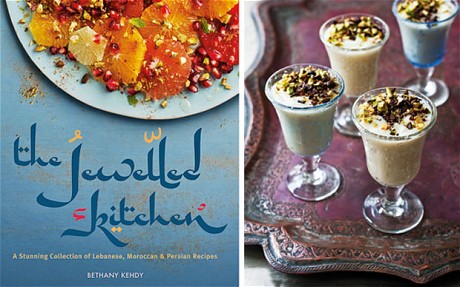
The Jewelled Kitchen: A Stunning Collection of Lebanese, Moroccan and Persian Recipes

by Nick Harman 

Foodepedia 

Another day and yet another cookbook endorsed with a gushing front cover quote from Yotam Ottolenghi, how does he find the time to read so many?

Well never mind the log-rolling, this is indeed a very good book, which actually dates from 2013 before the mini craze for Middle Eastern cooking got off the blocks. This is the paperback version from the woman who has championed this cooking through her blog Dirty Kitchen Secrets for over ten years. She was also once Miss Lebanon, so also she has the looks that never hinder a career in food.

I personally love Middle Eastern cooking, although I can live without the great hunks of meat and I am not talking about Mr. Lebanon. For me the vegetable and mezze dishes win out over skewers of lamb.

This a book that combines recipes and culture, dishes learnt from her grandmother and stories from her parents and aunts and blend classic and contemporary to great effect for plenty of tempting Lebanese dishes as well as Moroccan and Persian too.

So we have Moroccan Fish Tagine with Preserved Lemons, Lebanese Lamb Shanks with Butterbeans and Tomatoes and a Persian Chicken, Walnut and Pomegranate Stew. An Egyptian Spiced Bread Pudding looks very interesting.

Smaller dishes are where many people fall in love with Middle Eastern food and here we have Tuna Tartare with Chermoula and Sumac-Scented Chicken Parcels and Cardamom-Scented Profiteroles and Ma’amoul Shortbread Cookies.

Vegetarians are never disappointed in Middle Eastern restaurants and dishes here such as smoky aubergine and split pea stew and mixed bean and herb noodle soup are surprising finds and sure to please. While fish eaters can feast on monkfish tagine with chermoula.

This is a book to excite the senses with vibrant colours, exotic spices, the waft of warm air and the frantic sound of busy market places.

Source: www.foodepedia.co.uk

149 Results (Page 9 of 13)