Advertisement Close

Politics

Muslims at the DNC: Taking a stand against Islamophobia

by Dalia Hatuqa
Al Jazeera

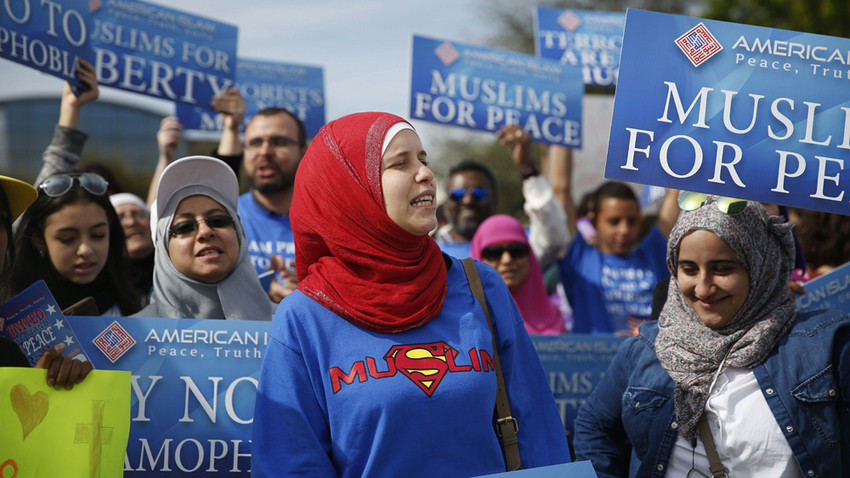
Philadelphia, Pennsylvania – On the sidelines of the Democratic National Convention, where delegates will formally nominate Hillary Clinton as the party’s presidential candidate, Muslim leaders gathered to push the community to vote, calling the ballot a powerful means to challenge the growing problem of Islamophobia.

“You don’t have to go to Canada, just register and vote,” Nihad Awad, the executive director of the Council on American-Islamic Relations (CAIR), told members of the Muslim community who had come to Philadelphia for the four-day event.

“We can defeat hate,” he added. “Islamophobia is not a Muslim issue, it’s an American issue. Hate crimes are on the rise. The biggest victim of Islamophobia is America and its future prospect.”

Awad and other Muslim leaders are encouraging members of the community to get involved in politics, a field in which they believe they are under-represented. Believing that Islamophobia, along with xenophobia and misogyny, are flourishing within the Republican party, they said the stakes now were higher than ever.

“This is not like prior elections where we are debating the role of government, whether taxes should be higher or lower and the like,” said Congressman Keith Ellison of Minnesota. “We never had a leader of a major party openly calling for religious hate against a particular community.”

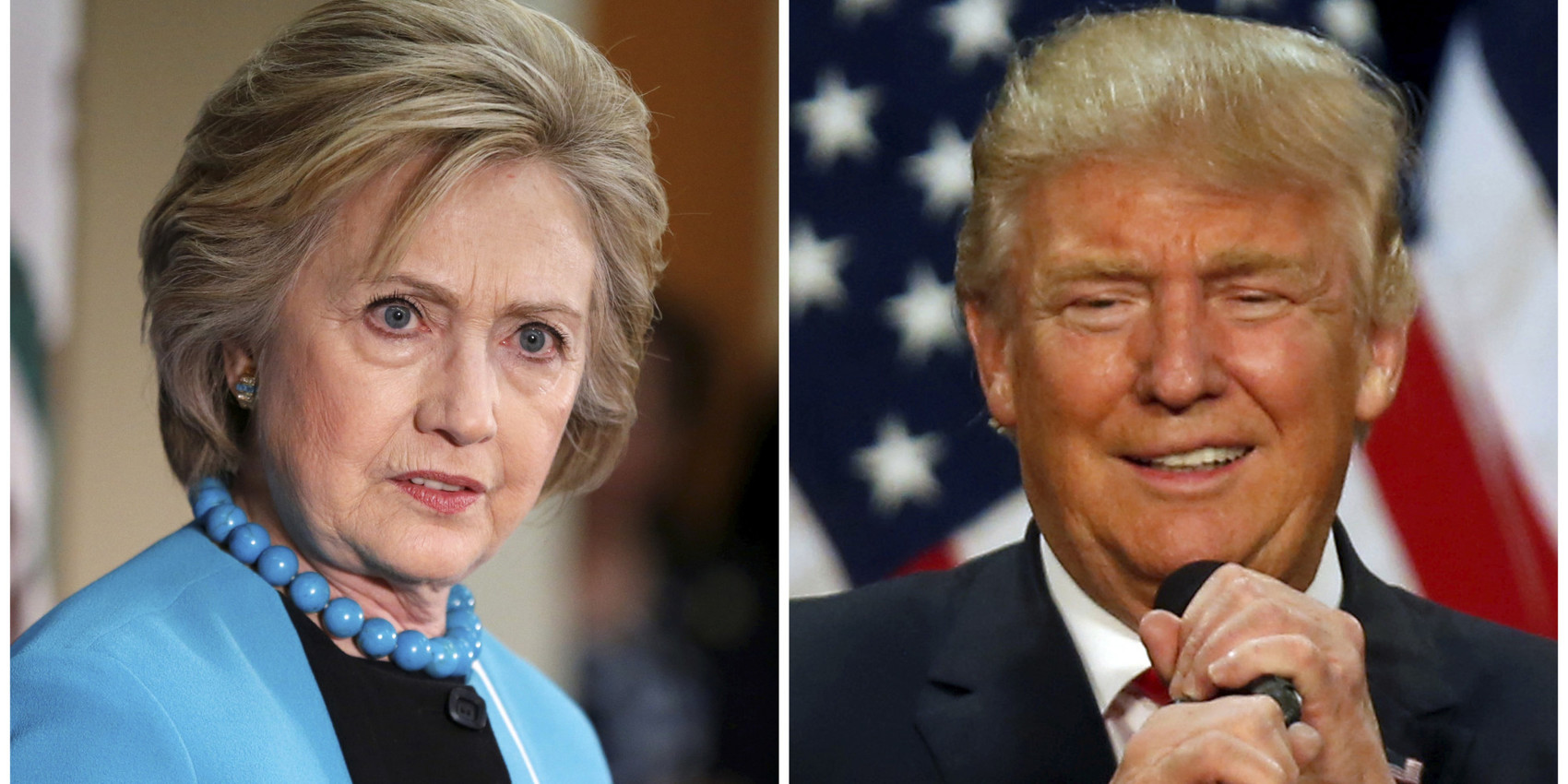
Republican nominee Donald Trump has called for Muslims to be banned from entering the US, and made it a centrepiece of his candidacy. Last week, in an interview with 60 Minutes, Trump called for “vetting” people hailing from countries with a history of “terror”.

Other American politicians have followed suit: a few days ago, former House Speaker Newt Gingrich said in an interview that people from a Muslim background should be tested to see if they believe in Sharia law, and be deported if they do. His comments, which came shortly after an attack in Nice, France, which left more than 80 people dead, were criticised by US President Barack Obama as “repugnant”.

A recent report found that more than 70 groups in the US were contributing to some extent to propagating Islamophobia. The report, released by CAIR and the University of California Berkeley’s Centre for Race and Gender, said 33 of those groups have a primary purpose of “promot[ing] prejudice against, or hatred of, Islam and Muslims”.

“Islamophobia is on the rise because we have people stoking and promoting it,” Ellison said. “They actually have organisations dedicated to pumping it up. It’s on the rise because people who are going through difficulties are being offered reasons for their difficulties, and they’re saying it’s the Muslim community.”

Going beyond the election

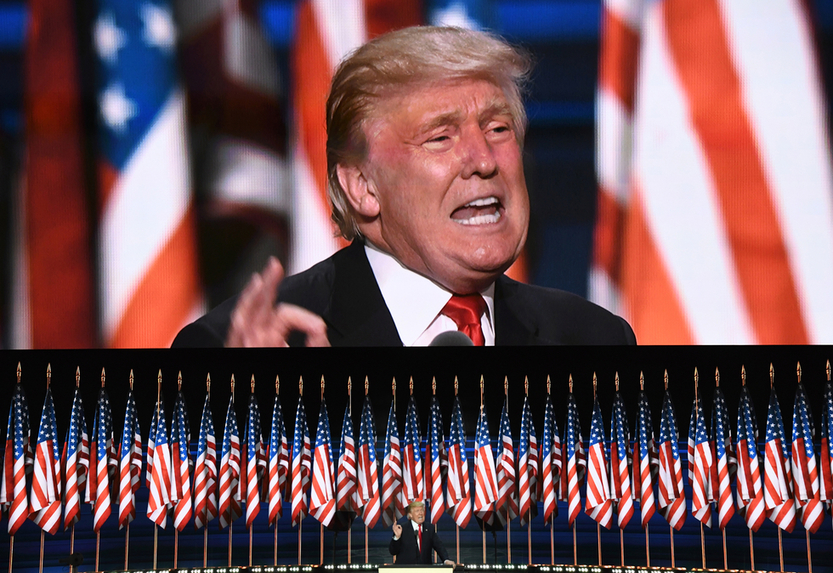
Many fear that Trump’s ideology could have a devastating impact on the political landscape of the US. In his nominating speech, he seized on the theme of law and order to paint a dark picture of America: one dominated by a deceitful “liberal media” and terrorism from within and abroad. He offered himself as the solution to these problems, but did not provide details.

Muslims, many of whom believe they are being scapegoated for political reasons, make up 1 percent of the total US population but, according to the Pew Research Centre, their numbers will double in 2050.

“There’s a lot of communities here that are critically important, and Muslims are well over 1 percent in Michigan, Virginia, Minnesota, California, New York,” Ellison said.

“There are a lot of places in this country where the Muslim vote is crucial, and I think the best way to push back on Donald Trump is be active and participate, vote, organise and then go beyond the election.”

Going beyond the election is something that Muslim groups are hoping to capitalise on in this cycle, mainly by organising and campaigning to register one million new voters.

Since Trump’s rise to the nomination, civil rights groups have noted a rise in attacks on Muslims, some of which have been deadly. 

“The problem is that we wake up every four years,” said Linda Sarsour, a civil rights activist and executive director of the Arab American Association of New York.

“This is about long-term organising, working for social justice for all people. Join me in building a movement for this election, but more so beyond this election.” 

Source: www.aljazeera.com

Israel/Palestine Bad Policy, Bad Politics

James Zogby

The Huffington Post

President, Arab American Institute; author, ‘Arab Voices’
To understand why the United States fails so miserably in efforts to achieve an Israeli/Palestinian peace, all you need to do is take a look at the mix of bad policy and bad politics found in the Israel/Palestine sections of platforms of both the Republican and Democratic parties.

The Republican document is particularly extreme, even bizarre. Finding opportunities to mention Israel in five different sections, the GOP platform: refers to Israel as “beacon of democracy and humanity”; claims that “support for Israel is an expression of Americanism”; “recognizes Jerusalem as the eternal and indivisible capital of the Jewish state and calls for the American embassy to be moved there; terms the BDS movement “anti-Semitic; “rejects the faulty notion that Israel is an occupier”; and calls for “an immediate halt to all US funding” to entities that admit the Palestinians as a “member state”—singling out the UN Framework Convention on Climate Change (UNFCCC).

Because the GOP platform committee specifically rejects any reference to either two states or to recognition of Palestinians as a people, the only time Palestinians are even mentioned in the document is in the context of the funding cut proposed for the UNFCCC.      

The Democrats’ platform, though weak, is clearly more sober. They, too, find the need to shower excessive unwarranted praise on Israel, claiming that “a strong and secure Israel is vital to the United States because we share overarching strategic interests and the common values of democracy, equality, tolerance, and pluralism”. The Democrats also “oppose any effort to delegitimize Israel, including at the UN or through the BDS movement”. And, in a weirdly contradictory formulation, the platform both recognizes that Jerusalem is a “matter for final status negotiations”, while at the same time insisting that “it should remain the capital of Israel, an undivided city accessible to people of all faiths”.  

Finally, while rejecting efforts to include language calling for an end to the occupation and illegal settlements (claiming that these terms “prejudge” issues to be decided in negotiations!), the Democrats, nevertheless, pledge to “continue to work toward a two-state solution of the Israeli-Palestinian conflict negotiated directly by the parties that guarantees Israel’s future as a secure and democratic Jewish state with recognized borders and provides the Palestinians with independence, sovereignty, and dignity”.

Republicans wrote their document haunted by billionaire Sheldon Adelson and threats from far-right evangelical Christians. Their candidate, Donald Trump, after early on suggesting that he would “be neutral” and work to earn the trust of both Israelis and Palestinians, has clearly been chastened. He now relies on the counsel of his hardline pro-Israel son-in-law (the author of Trump’s AIPAC speech).

By adopting a Netanyahu-like approach to the Israeli-Palestinian conflict, the GOP will only hasten Israel’s dangerous rightward drift, emboldening both Israel’s extremists, who will feel they can’t lose, and Palestinian extremists, who will feel they have nothing to lose.    

For their part, the Democrats wrote their language influenced by one of their own billionaires, Haim Saban (a strong BDS opponent, who secured a written anti-BDS pledge from Hillary Clinton), and haunted by their mistaken fear of “losing votes”—(their code, not mine, for Jewish voters).

The Democrat’s platform claims to want two states and supports “independence, sovereignty, and dignity” for Palestinians. This aspiration is commendable, but when they reject terming Israeli control over Palestinians an occupation and refuse to call for an end to settlements, they give little hope to Palestinians that action will be taken to fulfill their aspirations.

The bottom line is that both platforms are bad policy. If the GOP platform were followed, it would produce policies resulting in disaster, not only for Palestinians and US interests in the Middle East, but for Israel, as well. On the other hand, if the Democrat’s platform were followed, it would result in continuing the region’s depressing and dangerous downward spiral of oppression and violence.  

If the platforms’ policies are bad or weak, so too are the political calculations that went into writing them—especially for Democrats. The so-called “political fear” that drives Democrats to shy away from criticism of Israeli policies ignores the very real shifts that have occurred in the attitudes of the electorate. Polls show that: despite the fact that Israel retains a higher approval rating than the Palestinians, by a margin of 65% to 14% American voters believe that Israelis and Palestinians deserve equal rights.

Attitudes have clearly changed, especially among Democratic voters. For example, a strong plurality of Democrats (more than 2 to 1) want settlements to end, believe the US must “get tough with Israel” to force them to stop construction, and feel that boycotts are a legitimate tool that can be used to pressure Israel to end its settlement program. And a plurality of all voters, Democrats, Republicans, and Independents, feel that Israel currently receives too much US aid.

It is also clear from polls and from the rapid growth and impact of groups like J Street and Jewish Voice for Peace that speaking the truth about Israeli policies will win and not lose the support of a substantial majority of Jewish voters.        

Republicans are calling their document the “strongest pro-Israel platform, ever”, while Democrats are terming their language on Israel/Palestine the “most progressive, ever”. In a sense, both are right. The problem is that I know Israeli peace activists who would seriously question the GOP claim and I know Palestinians who are deeply disappointed with the Democrats’ final product.  

Source: www.huffingtonpost.com

PalestinePAC Endorses Donald Trump

Palestine Political Action Committee: Press Release The Palestine Political Action Committee announced today that its board of directors voted unanimously to endorse Republican Presidential Candidate Donald Trump. PalestinePAC cited Mr. Trump as the only American Leader capable of making America Great Again.  He is an independent thinker and he truly represents the interests of the … Continued

Moroccan Presence at the Nomination of Donald Trump

By Abdesalam Soudi

Morocco World News

Pittsburgh – Donald Trump and the Republican National Convention (RNC) have been making news in the United States lately.

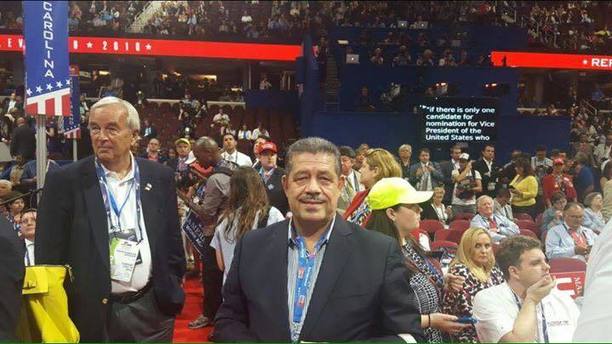
Amid the many faces and visitors to Cleveland, Ohio, was Hamid Chabat, the Secretary General of the Istiqlal Party (Independence Party), one of the major opposition political parties in Morocco. Telquel stated that he was there by invitation. As a Moroccan-American citizen and particularly as a Muslim immigrant living in the U.S, Mr. Chabat’s visit stood out to me for a number of reasons.

Donald Trump, now officially the Republican nominee for president, is well known for his racist and sexist statements regarding women, immigrants, Mexicans, and Muslims. He has suggested registering all Muslims currently in the US, banning Muslims from entering the United States, and has suggested that acts of terror perpetrated by radicals happen because other Muslims do not cooperate with law enforcement.

So why would Mr. Chabat visit the RNC, apparently supporting a man who speaks against Muslims and Arabs, and who would make us all culpable for the crimes of a few? Trump’s comments and attitudes conflict with both Moroccan and American values of peace, tolerance, and diversity. The United States has long striven to build a more inclusive society and protect the rights of all its people, regardless of race, religion, sex, or ethnicity, especially under the current administration. Diversity is enshrined in Morocco’s constitution and is part and parcel of its social fabric. The historically rooted privileges of openness, commitment to co-existence, spiritual tolerance, harmony, and concord between the diverse components of Moroccan society are a source of pride for all Moroccans. But are we to understand that this political leader in Morocco espouses the politics of fear, intolerance and hatred? His party and the citizens of Morocco need to understand the purpose of this visit to the RNC which seemingly supports Trump and his racist politics.

Furthermore, American Muslims such as myself and my family are left to wonder if the Istiqlal party supports this populist demagoguery. We already fear for our safety in the US, and would be disappointed to see any Moroccan political party support such bigotry or pattern its own behavior after such policies. Violence and hatred are becoming all too common in our world today, and we all must stand against their encroachment, not ignore it for the possibility of political gain.

So we would like to know the answers: who invited Mr. Chabat, why did he attend the conference, and what were his impressions. I look forward to learning about Mr. Chabat’s stance.

Source: www.moroccoworldnews.com

US Muslims fear Trump nomination will lead to increased Islamophobia

By Yasmine Ryan

Middle East Eye


This week in Cleveland, Trumpism went from being a punchline to solidifying into a genuine political ideology – one that may change the political landscape of the United States.

For many Muslim-Americans, that’s an especially frightening prospect.

On Thursday night, Julia Shearson gathered with a group of Muslim-American families to watch Donald Trump’s speech. Over creampuffs and basbousa, a Middle Eastern sweet cake, eight of them listened intently to the new Republican Party nominee’s defining discourse.

Shearson, who is also the executive director of the Cleveland Chapter of the Council for American-Islamic Relations (CAIR), said she vacillated between being mesmerised by his seductive promises and being horrified by his scapegoating.

“There was lots of coded language; he was speaking to white Americans,” Shearson said. “He speaks about minorities, not to us.”

The picture of the US that Trump painted was a dark one. America, as he described it, is under siege – by the deceptive liberal elite, by criminal immigrants, and most of all by “radical Islamists”. It’s a vague enemy, with the lines blurred between terrorism, crime and violence.

The only solution? Himself, of course.

“Beginning on January 20th, 2017, safety will be restored,” Trump promised. What that means for non-white Americans is not clearly defined.

The call for presumptive Democratic presidential nominee Hillary Clinton to be arrested came not only as a recurring chant from his crowd of supporters, but also from keynote speakers. One key Trump adviser even called for her to be “executed”.

In retaliation against Texas Senator Ted Cruz, a fellow Republican who pointedly refused to endorse the nominee on Wednesday, Trump has rehashed a conspiracy theory that his former rival’s father was somehow linked to President John F Kennedy’s assassin. 

Central to his claim that America needs him is the existential threat posed by “radical Islamists,” a term that is often stretched by Trump and his supporters to imply every Muslim.

Earlier in the week, the Arab American Institute (AAI) organised a comedy side event in Cleveland to challenge the vehemently anti-Muslim and anti-Arab rhetoric. It was called “BANNED: Dangerously Funny Arab Americans at the GOP Convention,” and Republican delegates were explicitly invited. About 400 people made it to the show, though only a handful seemed to be from the RNC.

“The ones who really hate us probably won’t come,” Dean Obeidallah, one of the comedians, said in an interview with Middle East Eye.

“We’re going to stay late to study for the Newt Gingrich Sharia Test,” Obeidallah quipped during his act. He was referring to one of the latest proposals to come from the prominent Republican. Gingrich has emerged as one of Trump’s most outspoken allies.

“I was once on Fox and Friends and they said, ‘So you’re Arab and Muslim. How many terrorists are there?’ I said ‘87’.”

“After this, we’ll be recruiting for Muslims, we’ve got free turkey-bacon,” he said, before quickly adding, “I’m only joking!”

“I’m so glad I got married before Donald Trump got elected, because otherwise I would die a virgin,” said another comedian, Maysoon Zayid, referring to Trump’s proposal to ban Muslims from the US.

As Trump switches into presidential mode, Muslim-Americans are bracing themselves for the next red line to be crossed. Trump hardly invented American Islamophobia, but his political success is, to a considerable degree, linked to his ability to harness it.

Shearson says it all began in the aftermath of the 11 September 2001 attacks, claiming the Bush administration introduced a series of repressive policies that targeted the Muslim community. The War On Terror was a war in foreign lands, but it also imagined a domestic enemy.

Right-wing media outlets, especially Fox News, have propagated fear of Islam. In rural America, evangelical Christian groups have embarked on a widespread campaign against the perceived threat posed by Muslims.

The so-called “anti-Sharia” movement, embraced by the Tea Party, but also by mainstream Republicans and influential members of the military and security establishment, has allowed a conspiracy theory to be used as grounds to legislate against “foreign law” in more than 30 states. The latest “anti-Sharia” bill is due to be voted on soon in the Ohio House of Representatives. Some Jewish and Catholic groups have expressed support for Muslim communities by opposing such laws.

Like Trump, white supremacist movements have co-opted Islamophobia to increase their influence. This is particularly true in the former slave-owning southern states.

“The KKK in Alabama is using the spectre of Muslim refugees as a recruitment tool,” Shearson said.

If Trumpism is bringing latent xenophobia against Muslims and other minorities out into the glaring light, it isn’t an accident. Speaking candidly at an event on the future of the Republican Party on Thursday, Cruz’s lead adviser Jeff Roe said it makes political sense for a Republican presidential candidate to focus on winning far-right voters who might not otherwise vote, and forget about swing voters in the middle.

This goes against the emphasis on winning over the middle ground favoured by both parties in recent elections.

“It’s not the way to build the party long-term, but you’re talking this election cycle,” Roe said.

Meanwhile, the Obama administration has continued many of the War on Terror policies from the Bush era, much to the disappointment of Shearson and civil rights groups like CAIR.

Source: www.middleeasteye.net

Fighting Religious Bigotry with Comedy at the RNC

By Briahnna Brown

Howard University News 


Republican Donald Trump and his supporters have said things about Muslims that even his own party members have condemned. They should be banned from the country, they said.  They can never be president, they said.  There should be a national directory for them, they added.
At the 2016 Republican National Convention, a leading Arab American organization decided it was a time to fight back, and it did — with a comedy show.

Yes, as banners and signs condemned their religion in photos and words, the Arab American Institute put on a comedy show. 
“It’s a response to the level of inflammatory rhetoric that has sadly skyrocketed,” said Maya Berry, executive director for AAI. “In the wake of violent tragedies, we’ve seen public officials pander to bigotry and fear. Some have sought to define us by exploiting our differences as opposed to celebrating our commonalities.”

“BANNED: Dangerously Funny Arab Americans and American Muslims” was a free, hour-long show at the Playhouse Square Hannah Theater in downtown Cleveland that featured comedians Ramy Yousef, Maysoon Zayid and Dean Obeidallah.
The AAI hosts events at the RNC and DNC every four years, and this year it wanted to host an “unconventional” event to match the “unconventional” election season, Berry said.

As AAI co-founder and President James J. Zogby explained at the show, “Sometimes all you can do is laugh, and that’s what we’re going to do.”

The comedians made fun of how media covers terrorist attacks, the ban on Muslims, how Donald Trump’s wife, Melania, allegedly stole parts of speech Michelle Obama made at the Democratic National convention speech, and of course there was no shortage of jokes about the Republican presidential nominee.

“Ramy, Maysoon and Dean demonstrated it very well; [comedy] humanizes folks, it humanizes minorities,” said Nadia Aziz, the government relations manager with AAI. “When people are able to laugh together, hopefully they’re able to create the groundwork to have more conversations in the future.”

BET corresponded Melissa Harris Perry offered concluding remarks at the show and discussed the significance of functioning in a Democratic nation.

“I take very seriously that to be engaged in the work of Democracy is to recognize that you’re going to lose about half the time,” Perry said. “Democracy means that even when you lose, you don’t have to shut up. Democracy means that even if your side loses today, you get to keep engaging, you get to keep a seat at the table, you get to keep being part of the conversation.”

Source: www.districtchronicles.com

American Students Studying Arabic for More Than Just Getting a Job

BY: Kristina Perry and Clara Ana Ruplinger/Contributing Writers   In the U.S. today, Arabic is a language that has been highly stigmatized. Individuals speaking Arabic have found that using the language, or even looking Arab, can make a person seem so threatening that they can be thrown off of planes, harassed, or even attacked. In the climate of … Continued

Arab American Entrepreneur, Tom Barrack, Speaks at RNC

BY: Nisreen Eadeh/Staff Writer Speaking at the Republican National Convention in Cleveland, Ohio on Thursday was famous Arab American businessman, Tom Barrack. The grandson of Lebanese immigrants, Barrack worked hard to become a real estate investor and eventually the founder, chairman, and CEO of Colony Capital. During his speech, Barrack pledged to only speak positively about … Continued

At the RNC, Arab American comedians laugh through the Trump era

Aaron Sankin 

The Daily Dot

A few block city blocks from where the Republican Party was gathering to officially nominate Donald Trump for president of the United States, Maysoon Zayid perched on a stool, brushed her long, wavy hair back over her shoulder, cracked a smile, and bragged about being Trump’s worst nightmare.

Zayid is a Palestinian American and has cerebral palsy. She’s disabled (like the New York Times reporter Trump publicly mocked), she’s a Muslim (whose parents Trump suggested shouldn’t have been let into the country in the first place), and she’s a woman (who, like Fox News reporter Megyn Kelly, has blood “coming out of her wherever”).

Good, Fast and Easy Chicken Paillard and Greek Salad!
Sponsored by: Connatix – July 21
Learn how to make a super healthy and fast chicken paillard with Greek salad that will make your mouth water.

Zayid is a comedian—and a wickedly funny one at that. On the second night of the Republican National Convention in Cleveland, Zayid deftly found the humor in the dark situations American Muslims face on a daily basis. “When I go through airport security, the TSA doesn’t just see an Arab, they see a shaking Arab,” she cracked. “I’m on the next plane to Guantánamo Bay, which is great because I heard there are a lot of hot Arab men there.”

“I’ve been married for six years and my mother-in-law had never been to the U.S. to see her son,” the New Jersey native says of her husband, whom she met in Gaza. “She can’t get into the country because she’s on the terrorist watch list.”

She waits a beat.

“That’s because I put her on there.”

With fellow Muslim standup comic Dean Obeidallah, the host of a politically minded talk show on SiriusXM radio, Zayid came to Cleveland to find the laughter in Trump riding a wave of Islamophobia to the 2016 GOP presidential nomination.

The event, held in Cleveland’s historic Hanna Theatre, was organized by the Arab American Institute, a bipartisan group founded in the mid-1980s to encourage Arab Americans of all religious faiths to get more involved in the political process. The group typically holds public policy forums in conjunction with the quadrennial major party conventions. However, as the organization’s co-founder and president Dr. James Zogby said in his introductory remarks, it didn’t seem like the political climate surrounding the 2016 Republican convention was particularly conducive to that sort of measured discussion. Instead, the group threw an unconventional event for an unconventional election cycle.

“This has been a difficult year, a difficult decade,” Zogby sighed. “Sometimes all you can do is laugh.”

In an interview with the Daily Dot after her set, Zayid insisted she wanted to perform as close as possible to the Quicken Loans Arena, where the convention is being held, because she felt that, as someone simultaneously Muslim and American, her voice, her very existence, was being silenced by a political culture that brands her as a dangerous other.

“I’m so frustrated that this is real. I’m flabbergasted that this is real. I’m watching this convention and don’t understand how so many Americans are supporting hate, supporting a scary clown,” she said, adding 2016 is the first time in her career she’s feared for her physical safety for the depressingly revolutionary act of simply being a Muslim on stage.

Growing up in a predominantly Italian American neighborhood, Zayid says she was never bullied for being Muslim. “You’re from where Jesus was from,” her friends would say. Fifteen years after 9/11, they lean over to her and ask in a hushed tone, “Is Obama really a Muslim?”

She pointed to how former Speaker of the House and erstwhile vice presidential hopeful Newt Gingrich suggested, in the wake of the recent terrorist attack in Nice, France, that Muslims in the United States should be given a test to determine if they support Sharia law and deported if they didn’t answer to his liking. “Where would they deport me to?” Zayid asked. “New Jersey?”

The idea that Muslims are the enemy, that they’re not part of the fabric of American society, is spreading. Hate crimes against Muslim Americans have spiked since Trump began running for the Oval Office on policies like banning on Muslims from entering the United States.

The problem, Obeidallah argues, is that the way Muslims and Arabs are talked about in the United States has largely become a partisan issue. “Bigotry shouldn’t have two sides to it,” Obeidallah said, leaning his elbows into a table after his set, the suitcase at his side showing how briefly he plans on staying in town. “There aren’t two sides to antisemitism. There aren’t two sides to racism, at least in general. There’s not two sides to homophobia, at least in general. Clearly, there are two sides to Muslims or Arabs even being in this country. This has been the rhetoric from the right since way before Trump. Trump is just the biggest fish.”

The Democratic-Republican divide over Muslims wasn’t always so. Prior to 9/11, and the Republican-led wars in Iraq and Afghanistan, the GOP was the natural home for American Muslims. In 2000, George W. Bush won an overwhelming majority of Muslims—a generally socially conservative demographic with a high incidence of small business ownership. Today, the ranks of Muslim Republicans have thinned considerably. In recent election cycles, the GOP share of the Muslim vote was in the single digits.

When Obeidallah asked if anyone in the audience was planning on voting for Trump, the response was a spattering of halfhearted applause, instantly crushed by the deafening silence from the rest of the room.

“I think there were more Republicans here than [the ones who] applauded, to be honest. I talked to some afterwards who [said they] didn’t clap,” Obeidallah explained after the show. “If you’re a Republican Muslim right now, it’s very challenging… and they know that. Internally in their party and externally in their community. If you’re a Muslim Republican now and you tell me you’re a Muslim Republican, I’ll ask if you’re supporting Trump. Almost everyone I know says ‘no,’ but there are one or two that are. If they are supporting Trump, people are stunned.”

Obeidallah was disappointed there weren’t more Republicans in the audience, especially at an event only a short walk from the single largest gathering of conservatives in the country, but he chalked it up to the polarization fracturing the country writ large. “You can reach who you can reach,” he shrugged. “You can only do as much as you can, unless you make it a hostage situation and you kidnap a Republican and force them to listen to your jokes. But then you’re just perpetuating a negative stereotype.”

Even so, there are are people outside of the Muslim community who are speaking up. Obeidallah pointed to a particularly thoughtful and compassionate speech delivered by Hillary Clinton after the terrorist attack in a Orlando gay nightclub, but he expressed remorse that it didn’t get more media coverage relative to speech given by Trump, which saw the GOP nominee threatening American Muslims with “big consequences” if they didn’t do more to tip off law enforcement to potential terrorist threats.

One of the main problems, the comics argued, is that there aren’t enough Muslim voices elevated by the media to tell their own stories. “It’s deliberate,” Zayid charged. “It’s because we don’t fit the narrative. When was the last time you saw a Muslim woman on television that doesn’t cover her hair but is a practicing Muslim who speaks Arabic and has read the Quran?”

In the decade after 9/11, Zayid was a frequent guest on political talk shows. Yet, in recent years, those bookings have dried up entirely. “There aren’t diverse voices,” she said. “We don’t know what Muslims look like. We are only fed the story that we’re supposed to be fed and absolutely nothing else.”

Part of the issue with the pervasive stereotyping in popular culture that regularly prevents Arab Americans from telling their own stories is that it paints whole community with the same broad brush. While the Middle East is overwhelmingly Islamic, that’s not the case for Arabs living in the United States. A 2002 survey conducted by Zogby International and the Arab American Institute found that 63 percent of Arab Americans identify as Christians.

The fear being spread about Muslims has regularly led to people outside of the faith being targeted by harassment and, in some cases, physical violence. After a gunman killed six people in a 2012 shooting a Sikh temple near Milwaukee, many in the community speculated it the attack was a result of the shooter confusing Sikhs for Muslims. In that way, hate directed against one group can put the wider population at risk.

And the issue of representation extends to all corners of popular culture. “If you’re doing a show about Muslims, someone is going to be a terrorist,” Obeidallah noted. “You’re not going to have an Arabic family sitcom where no one is a terrorist. If you’re going to have someone’s Arab identity in a film, there’s going to be something involving terrorism, even if they’re not the terrorist. Something in there will touch on it. Our entire existence in entertainment media is tied to terrorism in one way or the other.

“If there was a Muslim family show where no one was a terrorist, you could be sure that right-wing people, ones at this very convention, would be upset about it,” he continued. “They’d say you’re doing this to whitewash terrorism to make us not afraid of Muslims.”

In a sense, this fixation on Muslims being terrorists is a result of American culture being normatively white and Christian. Terrorism is the primary frame through which many white Christians, a significant portion of whom don’t regularly interact with any Muslims on a personal level, relate to the Islamic faith. Pop culture, even when it’s about Muslims, is rarely for Muslims. That’s why Obeidallah and Zayid have had to carve out their own spaces like the New York Arab-American Comedy Festival and Axis of Evil Comedy Tour.

Zayid ended her set, as she always does, with a joke told entirely in Arabic. It was the first joke she ever heard her father tell—the joke he gave her when she first informed him she wanted to be a comedian.

I don’t speak Arabic, so I didn’t understand a word of it, and Zayid didn’t follow it up by translating the joke into English. She didn’t need to. The laughter erupting from the audience when she got to the punchline spoke volumes. That laughter might have caught in the throat of many an audience member, but at a time when the community sees itself as under assault simply for existing, it was the best they could hope for. At least, for now. 

Source: www.dailydot.com

Battle over Palestine may spill into Democratic convention

Rania Khalek Electronic Intifada The Democratic primary race for president is effectively over following Bernie Sanders’ endorsement of Hillary Clinton. But the battle over Israel and Palestine within the party is just getting started and will likely spill over into the Democratic National Convention in Philadelphia next week. Throughout the platform writing process, those appointed … Continued

#HummusHaters in Congress

With all the anti-Arab bashing we see in the news every week, Arab America is determined to expose those who discriminate against our community. We will recognize those who vilify the positive influence and contributions Arabs have made to the fabric of American society. And we will use hummus as our weapon. By naming those … Continued

Arab America Picks a President: The Republican National Convention

BY: Fred Shwaery/Contributing Writer The Republicans are in Cleveland and the Democrats will be in Philadelphia next week. There are so many events to join in these conventions so if you’re anywhere near Cleveland or Philadelphia, consider stopping in to watch history unfold before your eyes.   There are thousands of delegates at each convention … Continued

1,530 Results (Page 87 of 128)