Advertisement Close

Religion

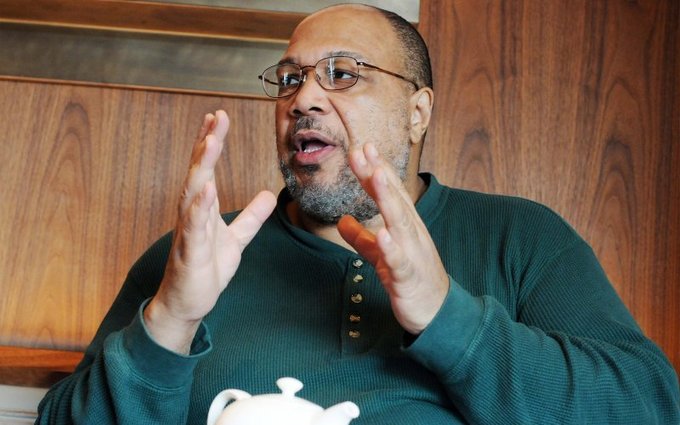
Gay American Imam Daayiee Abdullah ‘Heartbroken’ by Orlando Murders

Dean Obeidallah

The Daily Beast

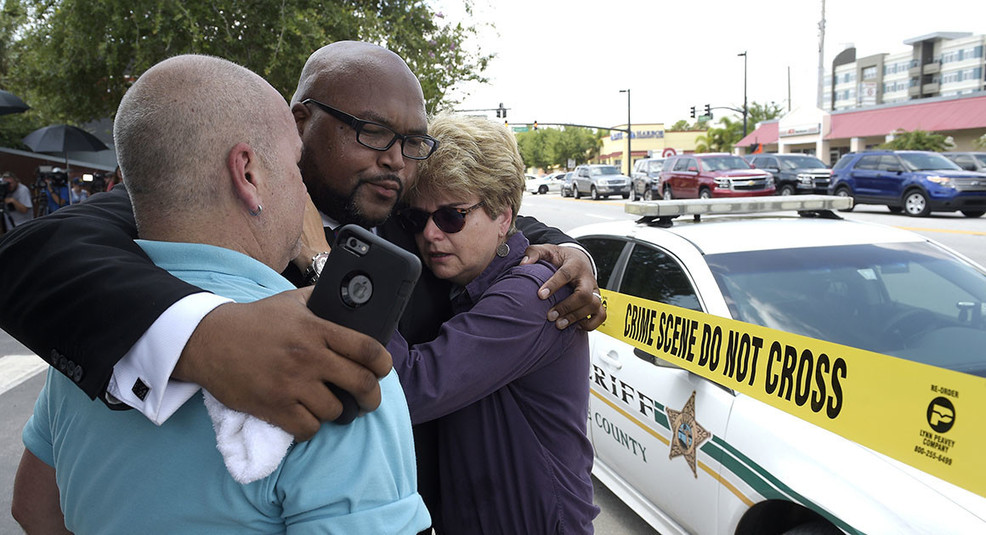
Heartbroken” was the one-word response from Imam Daayiee Abdullah, America’s only openly gay imam, to the attack that took the lives of 49 people at a popular gay night club in Orlando.
“Historically, the LGBT community has suffered violence on an individual basis in America,” said the 62-year-old African-American imam, who’s also a lawyer. “We have seen it from isolated cases like Matthew Shepard’s murder to 28 members of the LGBT community being killed in a fire targeting a gay night club in New Orleans in 1978 and the list goes on.” He added: “the goal of this violence is to sequester and keep us (gays) hidden because some are afraid of change and of people who are different.”
But while America has seen no shortage of anti-gay violence and prejudice, the Orlando attack was unprecedented in its death toll. The gunman, Omar Mateen, reportedly pledged his allegiance to ISIS, but details are still emerging about his mental state and motivations.

Whatever a person’s motives, it’s “easy access to guns,” said Abdullah, that allows someone who hates a minority group to easily commit mass shootings, a point—the exact point President Obama made Sunday, the 18th time this president has spoken to Americans after a mass shooting. Just one year ago this month, he spoke after Dylann Roof murdered nine African Americans in a South Carolina church, motivated by his white supremacist views.
“Nowhere in the Quran does it say punish homosexuals,” said Abdullah, a scholar in Quranic and Sharia interpretation, who added that even in the verified teachings of the Prophet Mohammad there is no support for killing gays.
But, he said, “I can’t deny some Muslims do” have a serious problem with gays, and that some Muslims have been taught that gays need to be punished or even killed. ISIS has murdered homosexuals, and five Muslim countries (out of more than 50) still have a death penalty for homosexuality on the books.
“The actions of ISIS in killing gays is fueled by a perverted understanding of Islam. An understanding typically learned by word of mouth, not an actual reading of the text and understanding of the principles of Islam,” Abdullah added.
While Muslim Americans and the LGBT community have teamed up on issues like fighting for anti-bullying legislation to advocating for human rights for Palestinians, “some Muslims prefer to put their heads in the sand or be silent when others are spewing hateful comments about the LGBT community,” he remarked. “We need more Muslims worldwide to speak out to counter the hate so that those who harbor such horrible views realize their views are not consistent with our faith.
It’s been inspiring for Abdullah to hear his fellow Muslim Americans standing in solidarity with his fellow members of the LGBT community in the common fight against homophobia and Islamophobia—including at a press conference Sunday organized by CAIR and featuring leaders from numerous other American, Muslim groups speaking of Muslims standing “shoulder to shoulder” with their LGBT peers in the face of this hate crime.

Still the Imam hoped to see even more from members of the community who have remained on the sidelines. “It’s not just about speaking out, but creating a Muslim community where perverted interpretations of the Islamic faith are immediately countered—both in person and online where ISIS recruits.”
Imam Abdullah went further, adding that while leaders of Muslim American groups have denounced violence, “it’s now time for Muslims worldwide to “engage in that as well.”
“If not, next they [the extremists] may be coming for you.”
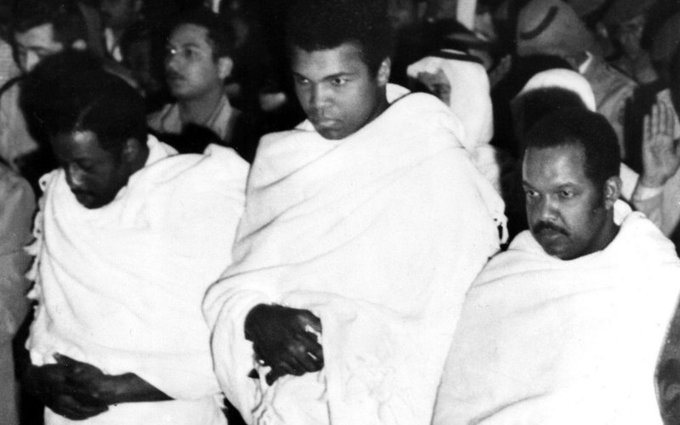
Given that this attack happened only days after many Americans were moved by their first exposure to a Muslim funeral, for an American icon, the question for many will be who truly represents Islam in America: Muhammad Ali or the shooter in Orlando?
The answer depends on if you want to divide or unite us.

Source: www.thedailybeast.com

UCC leaders issue statement supporting the First Amendment right to use economic measures in the case of Israel-Palestine

United Church of Christ 


Prompted by New York Governor Andrew Cuomo’s plan to halt state business with companies that back a boycott of Israel, and the growing interest in several state legislatures in criminalizing the Boycott, Divestment and Sanction movement, the national officers of the United Church of Christ are speaking out against what they see as an infringement of First Amendment rights. 

Here is the text of their statement:

New York Governor Andrew Cuomo signed an executive order this week calling on his state’s agencies to boycott and divest from any entity that participates in the Boycott, Divestment, and Sanctions movement related to Israel/Palestine. The governor’s action bypasses the New York legislature. But in seven states, initiatives to criminalize this targeted movement have already been adopted by state legislatures, and thirteen more are yet to be considered (including New York), according to the Jerusalem Post—this with the US Congress’s encouragement.

The United Church of Christ has actively supported human rights campaigns, sometimes through consumer boycotts and even divestment of companies that have profited from injustice. Most recently, the UCC Board of Directors endorsed a boycott of Wendy’s for not joining the Fair Food Program—refusing to pay a fair wage to Immokalee farm workers in Florida to pick tomatoes. Last summer, the UCC adopted a resolution at its General Synod calling for divestment from “companies that profit from or that are complicit in violations of human rights arising from the occupation of the Palestinian Territories by the state of Israel,” and to “boycott goods produced in or using the facilities of illegal settlements located in the West Bank.” While not a full endorsement of Palestinian civil society’s BDS Movement, the UCC’s action clearly supports one of that movement’s calls—an end to Israeli occupation of Palestinian lands.

The UCC is deeply concerned about the attempts by state legislatures to stifle consumer boycott and responsible investment as expressions of free speech—guaranteed by the U.S. Constitution’s First Amendment. The UCC remains committed to seeking justice and peace for Israelis and Palestinians, to working to support bringing an end to Israeli occupation of the West Bank, and to using non-violent tactics—including economic leverage—to do so.

We call upon our elected officials at all levels of government to uphold the Constitutional right of free speech, in all its forms, including the right to use economic measures to bring change; we also call on our members, and allies in the quest for justice and peace for Palestinians and Israelis, to hold their elected officials accountable to that principle.

The National Officers of the United Church of Christ,

Rev. John Dorhauer
General Minister and President

Rev. James Moos
Executive Minister, Wider Church Ministries

Rev. Traci Blackmon
Acting Executive Minister, Justice and Witness Ministries

Source: www.ucc.org

The Orlando Shootings and American Muslims – The New Yorker

By Robin Wright 

New Yorker

Hena Khan, the author of best-selling children’s books, thought Muhammad Ali’s funeral on Friday was going to be a turning point for American Muslims. “Ali spent his life trying to show the real Islam—battling Islamophobia even as he battled Parkinson’s disease. That’s what was highlighted after he died,” she told me this weekend. “It was nice to feel proud—and to see people saying ‘Allahu Akbar’ interpreted in a positive way.”

On Saturday, Khan was herself honored for the publication of “It’s Ramadan, Curious George,” a groundbreaking new book that also tries to span the cultural chasm for a new generation. The Diyanet Center of America packed its auditorium with kids and their parents to hear Khan read from her book. In this latest spinoff, the mischievous simian learns from his friend Kareem about the sacred Muslim month of fasting, good deeds, contemplation, and evening feasts. Together, they help with a food drive for charity. George gets up to his usual antics, this time planning a good deed to donate all the shoes that Muslims leave outside a mosque when they go in to pray, only to be stopped in the nick of time. In the evening, George and Kareem break the fast together with pizza and chocolate-covered bananas. In honor of Ramadan, The Man in the Yellow Hat—the caregiver who brought Curious George to America seventy-five years ago—dons a yellow fez.

At the end of Khan’s reading, a teen-ager dressed as Curious George raced down the aisles, onto the stage, and fist-bumped Khan. The kids went wild. “It was a weekend of hope and feeling inspired,” Khan told me. “It was a time of reaffirmation,” especially during the first week of Ramadan.

On Sunday, Khan woke up and, as is her habit, checked the news on her cell phone before waking her family. It was consumed with the killings at Pulse, the gay night club in Orlando, Florida. “First it was twenty people, then fifty,” she told me. “I thought, Not another shooting! When is this going to stop? This is insanity.

“Then I saw the name,” Khan said, her voice choking back sobs. Omar Mateen, the lone gunman in the largest terrorist attack in the United States since the September 11th attacks, in 2001, is an Afghan-American. Khan is Pakistani-American. Both are second-generation. Mateen, who was twenty-nine, was born in New York and later moved to Florida. Khan, who is forty-two, grew up in the Washington, D.C., area and now lives with her husband and two children in the Maryland suburb of Rockville.

“It added a whole new layer of anguish,” she told me. “I bore this tragedy as much as any American, and then to see his name. You can’t even find the words. It’s unbelievable. And during Ramadan! As a Muslim, your heart sinks.”

Ramadan runs from June 6th until July 5th. The timing is based on Islam’s lunar calendar, which shifts by eleven days each year. Last month, Muhammad al-Adnani, the isis spokesman, released a video calling on other jihadists “to make it a month of calamity everywhere for non-believers . . . especially for the fighters and supporters of the caliphate in Europe and America.” A State Department report warned that a jihadi sacrifice during Ramadan “can be considered more valuable than that made at other times, so a call to martyrdom during the month may hold a special allure to some.”

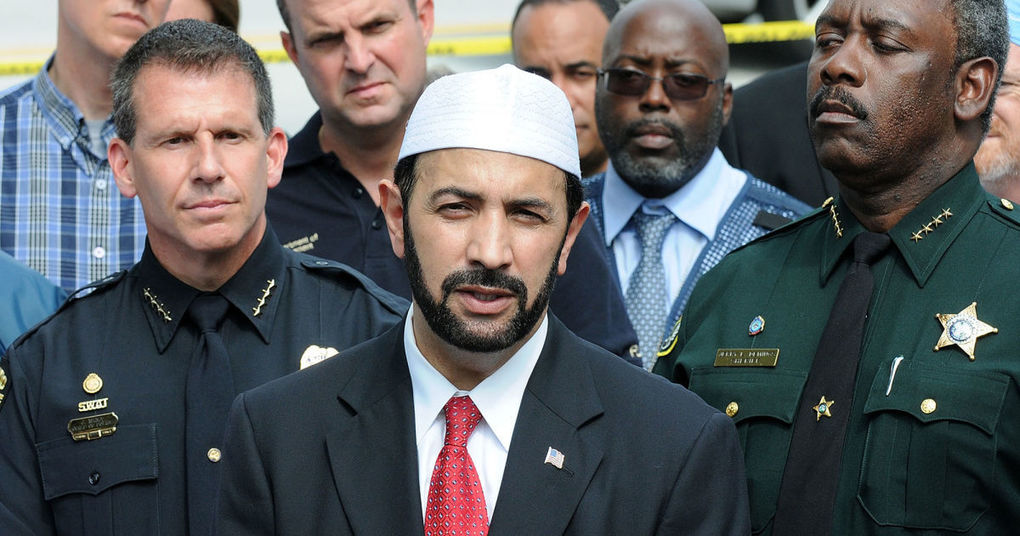
Muslim groups across the United States rushed to condemn the attacks. Standing with Orlando officials, Muhammad Musri, the president and imam of the Islamic Society of Central Florida, called the attack “monstrous.” He appealed to Muslims to donate blood for the wounded and to coöperate with Florida police and the F.B.I. At a hastily organized press conference in Washington, Nihad Awad, of the Council on American-Islamic Relations, the largest Muslim civil-rights and advocacy organization in the United States, scolded isis. “You do not speak for us,” he said. “You do not represent us. You are an aberration. You are outlaws.” He went on, “They don’t speak for our faith. They claim to, but 1.7 billion people are united in rejecting their extremism and their acts of senseless violence.”

Awad also pledged to stand with the gay community. “For many years, members of the L.G.B.T.Q.I. community have stood shoulder to shoulder with the Muslim community against any acts of hate crimes, Islamophobia, marginalization, and discrimination. Today we stand with them shoulder to shoulder,” he said. “The liberation of the American Muslim community is profoundly linked to the liberation of other minorities—blacks, Latinos, gays, Jews, and every other community. We cannot fight injustice against some groups and not against others. Homophobia, transphobia, Islamophobia—we cannot dismantle one without the other.”

That has been a common theme in the reaction among America’s Muslims. Khaled Latif, the executive director of New York University’s Islamic Center and a Huffington Post blogger, wrote on Facebook, “Thinking of my brothers and sisters in the LGBTQ community this morning. I can only imagine how the loved ones of those killed in last night’s horrific actions in Orlando are feeling. The only way to make sense of such senseless acts is through living with hope, compassion and love. My thoughts and prayers are with you all.”

Khan, the children’s-book author, has also worked with the Institute for Social Policy and Understanding, a Muslim group based in Dearborn, Michigan, which published a report on the common challenges faced by Muslims and the gay community. “I view the L.G.B.T. community as an ally in fighting bigotry,” she told me. “There are so many parallels. Anti-Sharia and anti-gay laws reflect overlapping bigotry. We’re learning from each other. The fact that this community was targeted is tragic.”

The mother of two boys, aged eleven and fifteen, Khan posted a reflection on her Web site last October about anti-Muslim campaigns in the United States. “My gut reaction when I heard about the hatred-inspired anti-Muslim protests that are taking place later this week across the country was to grab my children, crawl under the covers of my bed, and distract us all with a Sponge Bob marathon,” she wrote. “My instinct is to retreat to a safe haven and hide, much like I did when I was young child. The difference is that when I was little, I had to wait until Saturday morning for the Looney Toons, and the threats were largely external—fostered by a Cold War and a common enemy that united us all in fear of a nuclear holocaust.

“Today, in this increasingly confusing world I wonder, who exactly is the enemy? Is it . . . me? My children? My Muslim family members who do amazing things that don’t make the headlines: strengthening government systems for the Department of Homeland Security, conducting flight safety tests on aircrafts, performing skin grafts on burn victims? Is it isis? The Taliban? Russia? Or is it the armed hate groups united under a false banner of ‘humanity’ planning to target mosques and Muslim communities to intimidate and bully us in an attempt to take back America from ‘people like you’?”

In the last of several conversations we had over the weekend, Khan said the identification of the shooter as a Muslim had consumed her. “I have this intense fear that it is going to change everything,” she said.

Source: www.newyorker.com

As ISIL claims attack, LGBT community in shock

By NAHAL TOOSI 

Politico.com

Share on Facebook Share on Twitter
In their so-called caliphate in Iraq and Syria, Islamic State extremists have killed suspected gay men by throwing them off buildings. On Sunday, the terrorist network claimed responsibility for the worst mass shooting in U.S. history, one that left 50 dead, including the shooter, and dozens wounded at a gay nightclub in Orlando, Florida.

That the Islamic State could have played a role in the early morning attack, which came during Gay Pride Month, sent shudders through the LGBT community in the United States, where fears of terrorist assaults on soft targets such as schools, shopping centers and nightclubs already were on the rise.

Gays and lesbians are no strangers to discrimination and violence, but “historically, gay clubs and bars are a safe place so for that type of environment to be the victim of this is just very traumatizing,” said Ida Eskamani, development officer for Equality Florida, an advocacy group. “The whole community is just reeling from this.”

In a televised statement about the attack, President Barack Obama made sure to point out the impact on gays, lesbians and others in their community, calling what happened “an act of terror and act of hate.”

The gunman, Omar Mateen, who was killed in a shootout with police, was a U.S. citizen of Afghan descent. Media reports said he called 911 shortly before reaching the Pulse nightclub and pledged allegiance to the Islamic State. The group’s Amaq news agency said Sunday the attack was “carried out by an Islamic State fighter,” Reuters reported. U.S. officials, however, are still investigating the extent of the Islamic State’s connection to the attack; it could have played more of an inspirational role than an operational one.

Mainstream interpretations of Islam generally forbid homosexuality, and gays and lesbians in many Muslim countries live under social and legal threat, so relatively few are open about their sexual orientation. Islamists in particular often point to Western tolerance of homosexuality as a reason Islam can’t be reconciled with liberal values.

Still, the violence practiced by the Islamic State against gays — or for that matter other social, ethnic and religious minorities — is unusually vicious, whether it’s through beheadings, stonings or throwing people off buildings. But the terrorist network apparently views its approach as a sign of its fidelity to the faith — and one way to recruit.

“I’ve seen them point to Western tolerance for homosexuals as a reason why pious Muslims should repudiate Western countries and embrace the Islamic State,” said Will McCants, a senior fellow at the Brookings Institution who has written extensively on militant Islam.

The shooter’s father, Mir Seddique, told NBC News that the attack “has nothing to do with religion” but added that his son was angered by the sight of two men kissing a few months ago.

Shadi Hamid, author of “Islamic Exceptionalism: How the Struggle Over Islam Is Reshaping the World,” said the Islamic State’s leaders are far more focused on trying to retain their territory in Iraq and Syria amid a U.S. and Iraqi-led assault than they are on destroying gays and lesbians.

But the fact that the attack was on the gay community makes it easier for the group to justify the attack to Muslims who might question it. “From a messaging standpoint, it helps in the sense that they can argue to their followers that these people deserved to be killed,” Hamid said.

He noted that in part because of greater political awareness among American Muslims (some of it inspired by presumptive Republican presidential nominee Donald Trump’s call for a ban on Muslims entering the U.S.) there has been growing dialogue between Muslims and gay and lesbian organizations around the subject of civil rights.

Muslim organizations in the United States unequivocally condemned the Orlando assault on Sunday, and some urged Muslims to donate blood to help the 53 people wounded in the attack.

“The Muslim community joins our fellow Americans in repudiating anyone or any group that would claim to justify or excuse such an appalling act of violence,” said Rasha Mubarak, an official with the Council on American Islamic Relations Florida chapter.

The American-Arab Anti-Discrimination Committee also weighed in with a message of solidarity with gay rights groups. “We have worked regularly with the (gay and lesbian) community, as they have been on the forefront of helping combat Islamophobia and Anti-Arab sentiment,” it said.

Condolences poured in from around the world, including the government of Jordan, a key Muslim ally of the United States. In a news release, Jordanian government spokesman Mohammad Momani said the country condemns all forms of terrorism and violence “no matter what their source and motives are.”

Eskamani, of Equality Florida, stressed that the gay community is sympathetic to the discrimination faced by Muslims in the United States, especially in the wake of attacks carried out by extremists.

“That hate and that intolerance that they face is the same that the LGBT community faces,” Eskamani said. Equality Florida has launched a fundraising page to help the victims of the attack.

Eskamani said it’s possible that gay nightclubs and similar gathering places will look into ways to further enhance their security, but that because of the history of hate crimes against gays and lesbians, security has long been a priority.

“We don’t want to live in a world of fear, and we’re always going to choose love and compassion over fear and hate,” she said.

Source: www.politico.com

I’m a gay man. Don’t use an attack on my community as an excuse for Islamophobia.

German Lopez

Vox.com


Like other gay Americans on Sunday, I woke up to the news of the mass shooting at a gay club in Orlando, Florida, with absolute horror. My immediate reaction was to turn to my sleeping husband and hug him, trying to ensure myself that we will be okay — that we are safe. But I could not shake the feeling that my community was under attack, and the hate I felt directed at my community was like nothing I have felt as an out gay man in the US for years.

It is the hate I felt directed at my husband, myself, and my community that makes me confident that we should not use this horrific act of violence to perpetuate even more hate — particularly against our Muslim brothers and sisters.

It didn’t take long, shortly after the shooter was revealed to be Muslim, for the typical Islamophobic cries from politicians. Here’s Donald Trump, who has repeatedly called for a ban on Muslims entering the US:

I am not Muslim or religious at all. But I know what it’s like to have politicians say horrible things about your people. And I know, today more than ever, how it feels to be hated. So instead of using an act of hate to push even more hate, I would appreciate it if politicians and everyone else used the Orlando shooting as a time to reexamine their own bigotries — against LGBTQ people across the world specifically, but also against Muslim people, black people, Hispanic people, and women.

While it seems easy or possible to lump up Muslims into a monolith to pander to racist and xenophobic voters, the truth is most Muslims — like any other group of people — abhor violence. This is just a fact: Pew Research Center surveys have found that the great majority of Muslims around the world say that violence in the name of Islam is not justified. And it’s worth remembering that the primary victims of terrorist groups like ISIS are other Muslims.

The Orlando shooter, in other words, doesn’t represent the great majority of Muslims.

It’s also true that there are millions of LGBTQ Muslims around the world. Some may even be among the victims of the Orlando mass shooting. (We don’t have a full list of the dead and wounded yet.) They, surely, did not approve of the violence we saw today.

Ramadan and LGBTQ Pride Month are both underway. This should be a time to respect and honor the diversity that makes America so great. No terrorist attack — especially one that seeks to perpetuate hate — should be allowed to change that. We can’t fight hate with hate.

Source: www.vox.com

Muhammad Ali: His Funeral and the Greater Arab World

By: Eugene Smith/Contributing Writer Muhammad Ali’s deeds reverberated in America’s conscious as emblematic of freedom, redemption, and an unwavering commitment to justice. He was prone to controversy, yet he never wavered from his principles. In his old age he rose to reverence, as a voice for peace and acceptance, garnering the utmost respect and admiration … Continued

The Beauty Of An Arab American Ramadan

Nesreen Issa
The Huffington Post

In Arab countries, you count the days in anticipation of Ramadan. In the United States, we also count the days as we wait for Ramadan. We close our eyes and day-dream about its spiritual details, which, in a way, we miss out on. We fantasize about listening to the morning call to prayer that signals the beginning of our fast — we imagine it as if it were coming straight from the mosque’s minaret. Our hearts beat as we imagine the maghreb (sunset) call to prayer.

Ramadan in the United States is not as dreary as some people may think. The Muslim diaspora here is large, and the ties between them grow stronger during Ramadan. Mosques and homes become decorated with religious symbols, such as lanterns and crescents.

If you walk into Arab grocery stores, you would definitely get a taste of Ramadan. You’d run into people asking about the price of dates, or buying Vimto — a Ramadan favorite — or looking for a crescent-shaped ornament to place on their doors. At the end of the day, you’ll have an iftar table, large or small, with a special Ramadan flair.

We eat katayef (a Ramadan pastry) like everyone else does, but the difference is that we bake it at home. We go through the hassle so that we’d be able to hold the piece of katayef in our hands, take in its scent, and say that we are truly observing Ramadan.

In the United States, unlike in Arab countries, Muslims exert extra effort to create a Ramadan atmosphere.

If you’ve lived in the United States your whole life, you wouldn’t find it difficult to enjoy Ramadan. You would be able to get together with your family and relatives, and have an experience similar to that of any other Muslim in the Arab world.

If you were a visitor to the United States, and your trip happened to coincide with Ramadan — don’t worry or despair. If you want to retain that spiritual experience this Ramadan, you should try to go to cities where there is an abundance of Arab restaurants, such as Chicago, and you’ll find Ramadan in one of them. You will see other Muslims waiting for the call to prayer so that they could start eating. Everyone there will be fasting like you, and will say a prayer before they break their fast with a glass of water and dates. You won’t feel like you’re missing out just because you’re in the United States.

You’ll feel as if you’re experiencing all the Ramadans of the world, combined in one Ramadan in America.
The night prayers during the last 10 days of Ramadan are particularly beautiful here. If you go to the mosque at midnight, you would find young and old worshippers, parents and students, united in worship until sunrise. Many Muslims here — those who speak Arabic and those who don’t — make an effort to read the Quran in full throughout the month.

The diaspora here works really hard, and they work even harder during Ramadan. They organize events, group iftars and charity banquets at mosques and schools. They also organize Quran competitions, in which young and old Muslims from Turkey, Ethiopia, and Arab countries participate. We do all this with love, and we try to breathe that love into our children, so that Ramadan may become a shining light, even away from home.

The taraweeh prayers (special night prayers) make up a central part of Ramadan. Are taraweeh prayers different in the United States? I would say yes, but the difference is not necessarily for the worse. I have lived in Arab countries as well as in the United States, and I used to attend taraweeh prayers there — and I miss the company at the mosque and the taraweeh sermon. But taraweeh prayers in the United States will also make you feel like you’re observing Ramadan. You’ll walk into the mosque and you’ll find it beckoning you, as if saying: “I have Ramadan here, come!”

You’ll run into Palestinians, Syrians, and Indians, and you’ll exchange smiles with a Sudanese or an Egyptian Muslim from across the room. You’ll hear “Ramadan Mubarak” from a Pakistani Muslim. At that point, you’ll feel as if you’re experiencing all the Ramadans of the world, combined in one Ramadan in America.

Ramadan is part of our identity, wherever we are. We will keep observing Ramadan to show the whole world that it is is alive in our hearts.

Source: www.huffingtonpost.com

What Muhammad Ali’s Funeral Will Teach Us About Islam

Dean Obeidallah

The Daily Beast


Thursday, we will see the most widely covered Muslim funeral in our nation’s history.  No one would’ve been happier about this than Muhammad Ali.

Ali wanted to be an ambassador for Islam in America, as he told us in his 2005 book The Soul of a Butterfly: Reflections on Life’s Journey, co-authored with his daughter Hana.  In it, he shared an unfulfilled dream he had harbored, “I sometimes thought I would like to be a Muslim Billy Graham.” He continued: “But God had a different plan for me.”

That “plan,” of course, was Parkinson’s disease. It was only through his Muslim faith, Ali continued, that he “could deal with this challenge… it was my faith that restored my sense of purpose and self-confidence. My faith gave me back my joy and enthusiasm for life.”
 
It’s hard for me not to cry reading that. To cry that a man who called himself “The Greatest” and had achieved so much knew that Parkinson’s made the beautiful dream he had for next phase of his life impossible.

And to cry tears of regret that if Ali could have fulfilled his dream of being a bridge between Muslims and our fellow Americans, perhaps our community wouldn’t be in the place we find ourselves in today. 

That’s a dark, challenging and often lonely place. One where politicians like Donald Trump demonize us to score political points. A place where hate crimes against us have spiked over the past year. Where Muslim American students being bullied for their faith is no longer the exception, but the disturbing new norm.

On a personal note, I can’t help but think of the traditional white cloth my late father was wrapped in after the ceremonial washing of his body—just as Ali will be before his funeral Thursday, when many Americans will have a new experience and even learn a new word: Janaza. That’s the Arabic word for funeral, and one Christian Arabs also use.


For Muslims, however, Janaza signifies the Islamic funeral ritual. As New York City based Imam Shamsi Ali explained, at Thursday’s Janaza for Ali, Zaid Shakir will offer a traditional prayer that asks God for “mercy, forgiveness of Ali’s sins and acceptance of Ali into heaven.”

Imam Ali, a national leader in the area of interfaith work, explained that the Islamic funeral prayer is very much like the ones offered at Christian and Jewish funerals of seeking mercy, forgiveness and acceptance into heaven.  “We may use different words or even languages but all three of these Abrahamic faiths share the same common humanity and God,” he remarked.

Some have asked me about the delay in burying Ali, and if that’s a violation of Islamic law.  Well, as Imam Ali explained, “typically in Islam, like Judaism, the deceased should be buried as soon as possible.” But he noted that it’s not an absolute mandate, rather “it’s more about appropriateness.”  He added that in Ali’s case, it was appropriate to wait so that the family could organize the funeral and memorial service so that the nation could pay their respects to one of its icons—a man who was proudly Muslim, proudly Black and proudly American.

Ali’s prayer service, at the Freedom Hall in Louisville Kentucky, is open to people of all faiths. It will be followed Friday by an interfaith memorial service for the greatest. As the spokesperson for the Ali family, Bob Gunnell explained earlier this week, “Ali spoke of inclusiveness his entire life and we want this to be inclusive of everyone.”

This significance of Ali’s public funeral has certainly not been lost on Muslim Americans. As Dalia Mogahed, the Director of Research at the Institute for Social Policy and Understanding commented, Ali’s “detailed wishes for his funeral prayer and memorial were that they be open to all people and all faiths, a powerful testimony to the inclusive principles he lived by” as a Muslim and an American.

And Dawud Walid, the Executive Director of the Michigan chapter of the Council on American-Islamic Relations, remarked, “In a political climate in which Islamophobia is front and center, his funeral will be counterpunch the ridiculous notion that being a good Muslim and a good American are at odds.”

When a person dies, Muslims traditionally say, “To God we belong and to God we shall return.” Ali may have returned to God, but on Thursday and Friday Ali will bring together Muslims from across the nation to stand shoulder to shoulder with their fellow Americans of different religions and races. Even after his death, Ali is still fighting for the things he so dearly believed in.

Source: www.thedailybeast.com

Muhammad Ali: His Faith Was Part of His Revolutionary Spirit

BY: Barbara Nimri Aziz/Contributing Writer When someone famous or very wealthy dies, individuals rush to the fore with anecdotes about when their personal encounters with him or her, all to demonstrate perhaps that they too may have had a role in his/her greatness. So my first reaction to some of the fatuous statements in today’s … Continued

464 Results (Page 21 of 39)