Subscribe
to receive news by email

Poll
Will the Trump Administration Shift U.S. Policy in Favor of Palestine?
- No (87%)
- Yes (13%)
 Loading ...
Copyright © 2026 Arab America
Go topDocumenting Gaza: The Power of Palestinian Storytelling
By: Emma Campbell / Arab America Contributing Writer
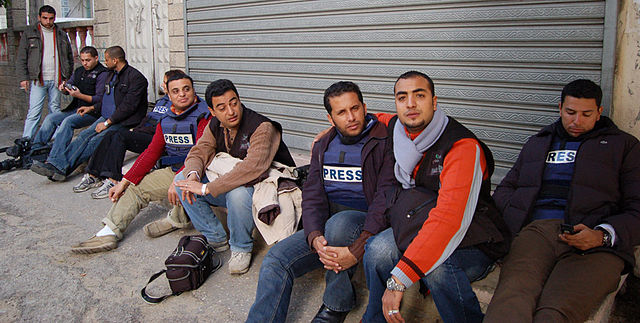
As the Gaza ceasefire collapses and the genocide continues, it is crucial to examine how media consumption shapes global perceptions of the conflict. Few wars have been so widely documented, yet this visibility comes at a devastating cost – at least 248 journalists have been killed in Gaza, according to the UN Human Rights Office. In this analysis, Arab America Contributing Writer Emma Campbell highlights Palestinian storytellers – from photojournalists to filmmakers – whose work shapes how the world sees and understands Gaza.
The Lens of Motaz Azaiza
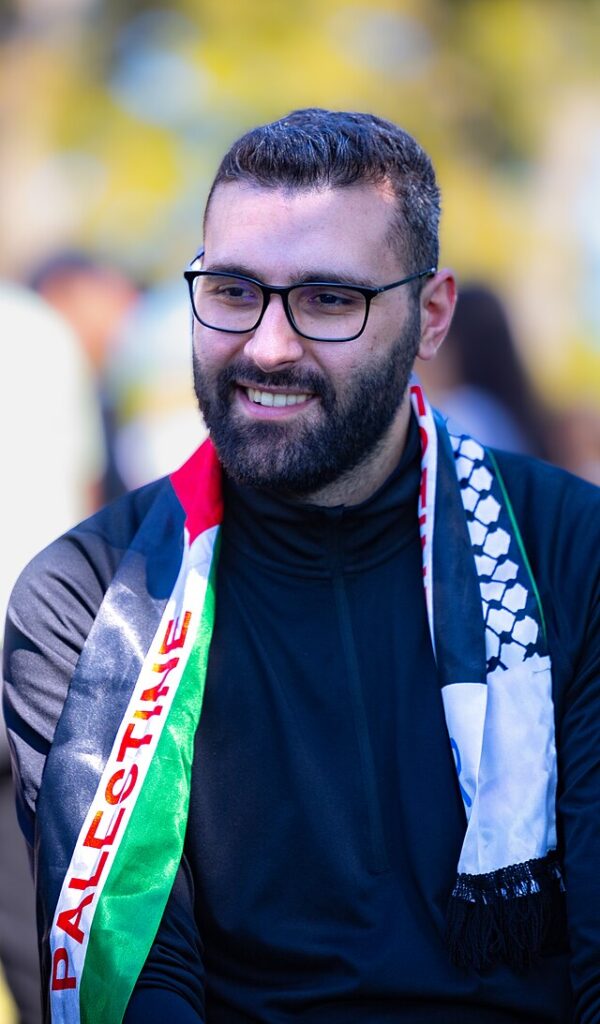
Amid this unprecedented media coverage and the risks faced by journalists, individuals like Motaz Azaiza have emerged as crucial narrators. He is a 26-year-old photojournalist from Gaza and born in the Deir al-Balah refugee camp. From October 7, 2023 to January 2024, Azaiza spent 107 days capturing the realities of life under Israeli occupation and genocide. During this time, he risked his life to document both the suffering and civility of Palestinians – connecting their experiences with an audience of over 17 million worldwide.
Sharing Gaza with the World
Through his social media, speaking tours, and fundraising missions, Azaiza exemplifies how firsthand narratives have the ability to shape global understanding. His work has been crucial in amplifying voices often marginalized in mainstream media. Furthermore, his photography demonstrates how visual narratives can shape international understanding of the unbreakable Palestinian spirit – or صمود (sumud). As he notes, “Photos are a window into another world, one that many would probably never see. Great photographs go even beyond that and show the people and the humanity of those being photographed”. This blend of lived experience, visual documentation, and diaspora outreach positions Azaiza a model for how Palestinians abroad can bring global attention to Gaza’s realities.
From Stories to Action
Over the course of the past year and a half, Azaiza has completed two speaking tours. In partnership with UNRWA USA, he worked to fundraise for Gaza. The most recent of these tours was 2025’s Gaza Through My Lens. He highlights the essential nature of fundraising campaigns for Gaza refugees, stating: “While I’m talking to you, people are sending me texts saying, ‘We need to evacuate people from Gaza City to Deir al Balah. We need water here. We need something. And I need to focus my energy on them. So once I finish my interviews, I’ll wire money so they can leave.”. In addition to touring, Azaiza has also started his own foundation, the Motaz Foundation Inc., to raise money and visibility for those in Gaza. However, these tours and efforts are not without issue. Azaiza notes, “I wish you could have gotten to know me under different circumstances,” and discusses how lifeless and tired he feels, with all his energy and even his body belonging to Gaza. The trauma of Gaza never left Azaiza. Instead, he made it his message – one shared by many in the Palestinian diaspora today.
Amplifying Gaza’s Voice
Similarly, many Palestinians in the diaspora across the world are using storytelling, literature, and media to amplify the cause. In particular, these efforts show how shared experiences can become powerful tools for advocacy.
Plestia Alaqad: Writing Gaza’s Story
Plestia Alaqad was 21 when the war began, and quickly gained an audience online for her reporting and photojournalism. She left Gaza with her family in November 2023, yet keeps Gaza in her heart. In February 2025, she released a book titled The Eyes of Gaza: A Diary of Resistance details her life in Gaza since October 7 through diary entries. According to Alaqad, this book is “for children of a free Palestine”. Additionally, she notes, “The people who I hope read my book are not alive yet: the future generations. I will be dead, you will be dead. We will all be gone. I want future generations to read it as a witness to history”. Alaqad’s storytelling reflects a larger shift among Palestinians in the diaspora – turning grief, exile, and memory into creative advocacy that ensures Gaza’s story endures.
Watermelon Pictures: Palestine on Screen
The same mission defines Watermelon Pictures, a Palestinian-owned film production and distribution company focusing on creative resistance. Its production of films and docuseries strives to celebrate Palestinian work and preserve collective memory. Through its motto, “From the river to the screen, Palestine will be seen”, the company emphasizes visual storytelling and film to amplify marginalized voices. By creating platforms to showcase Palestinian culture, history, and temporary realities, both Plestia Alaqad and Watermelon Pictures highlight the power of storytelling. They use media and literature to amplify Gaza’s voices and shape international understanding.
Bearing Witness to Gaza
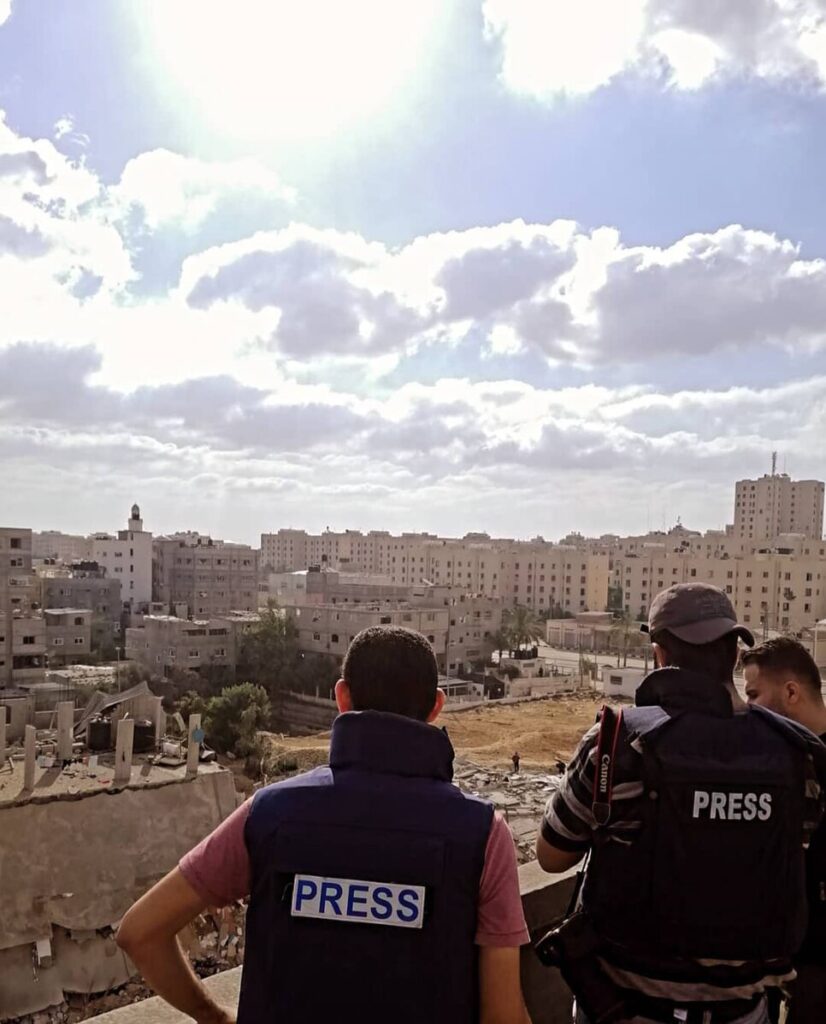
As the world has watching the genocide in Gaza unfold in real time, the human cost of this conflict can not be ignored. With over 67,000 people being killed by Israel, documentation of life under occupation has been imperative. Reporters in Gaza, like Motaz Azaiza and Plestia Alaqad, have reached millions online. Moreover, with constant attention on Palestine, storytelling and advocacy help Palestinian voices reach the world, ensuring that their stories are seen, heard, and retold.
Want more articles like this? Sign up for our e-newsletter!
Check out our blog here!