
Subscribe
to receive news by email

Poll
Will the Trump Administration Shift U.S. Policy in Favor of Palestine?
- No (87%)
- Yes (13%)
 Loading ...
Copyright © 2026 Arab America
Go topFrom Nomadic Verses to Abbasid Courts: How Persian Influence Revolutionized Arabic Poetry
By: Laila Mamdouh / Arab America Contributing Writer
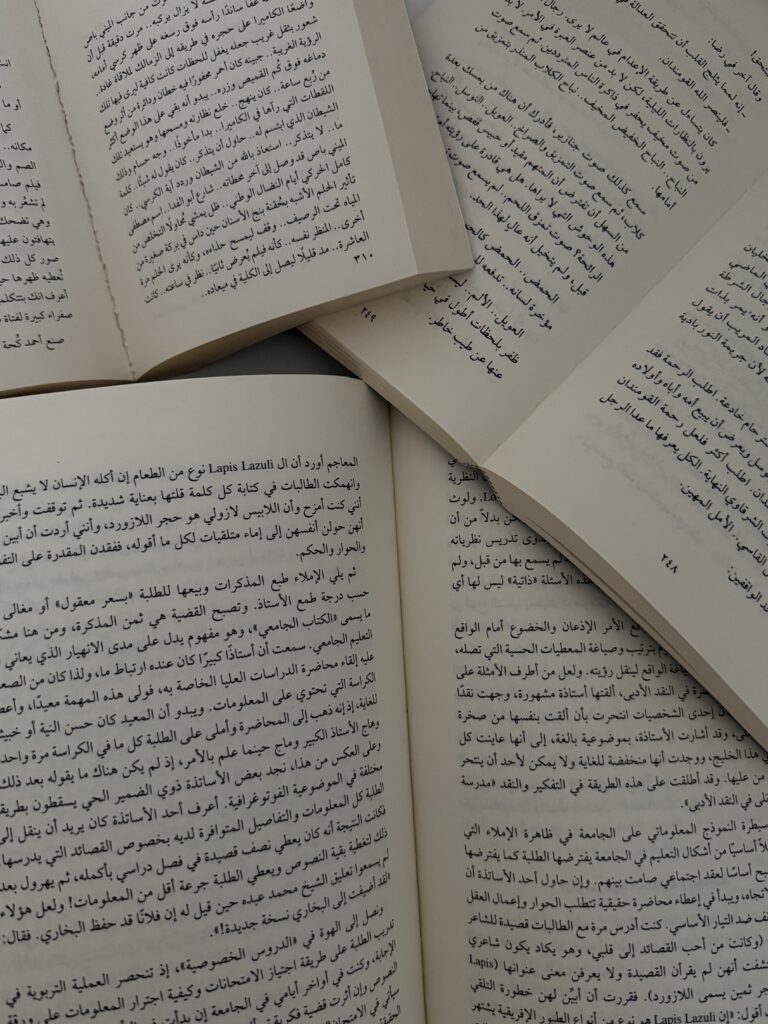
Arabic poetry has long served as a mirror for Arab identity, thought, and beauty. From its early days in the harsh deserts of the Arabian Peninsula to its flowering in the cosmopolitan courts of Baghdad under Abbasid rule, Arabic verse has evolved with each shift in culture and power. Perhaps the most radical and vibrant transformation came during the Abbasid period, when Persian influence introduced new dimensions to Arabic poetry, bringing with it metaphoric depth, sensual imagery, and philosophical abstraction.
To understand how this transformation unfolded, we will journey through Arabic poetry’s major historical periods: from pre-Islamic tribal verse, through early Islamic devotional poetry, the courtly rhetoric of the Umayyads, and finally to the Persianized poetics of the Abbasid Golden Age.
Desert Roots: Poetry in the Pre-Islamic (Jāhiliyya) Period
In the pre-Islamic era, poetry was the oral record of a people who had no written history. It was their archive, their pride, and their battlefield. Poets like Imru’ al-Qays and Zuhayr ibn Abī Sūlmā wrote in the “qasīdah” form, which followed a strict tripartite structure: opening with a nostalgic recollection of love, moving into the hardships of travel, and ending with praise or satire. The language was earthy, immediate, and literal; rooted in the poet’s environment.
Take, for example, these famous opening lines by Imru’ al-Qays:
قِفا نَبكِ مِن ذِكرى حَبيبٍ وَمَنزِلِ”
“بِسِقطِ اللِوى بَينَ الدَخولِ فَحَومَلِ
“Stop, let us weep for the memory of a beloved and her dwelling
At the edge of the twisting sands between Dukhūl and Ḥawmal.”
The lines are grounded in real landscape, concrete emotion, and a direct appeal to the listener. There is little abstraction, as everything is what it appears to be.
Poetry in the Time of the Prophet ﷺ: Restraint and Devotion
With the rise of Islam, poetry shifted in tone and subject. While the Qur’an is itself a miraculous form of Arabic speech, early Muslim poets, such as Ḥassān ibn Thābit, redirected poetry away from tribal rivalries and towards praising the Prophet, Islamic ethics, and unity. Language remained relatively plain, and although metaphors were used, they rarely meandered from moral and spiritual clarity.
A common theme was loyalty and faith, such as:
وَأَحسَنُ مِنكَ لَم تَرَ قَطُّ عَيني”
“وَأَجمَلُ مِنكَ لَم تَلِدِ النِساءُ
“My eyes have never seen anyone more beautiful than you,
Nor have women given birth to anyone more perfect than you.”
(Attributed to Ḥassān ibn Thābit)
The focus remained on unrestricted emotion, with little emphasis on literary complexity or philosophical depth.
The Umayyad Period: Rhetoric, Court, and Early Urbanization
Under the Umayyads, poetry became increasingly politicized and urban. Courts in Damascus demanded “panegyrics and satire”, and tribal themes evolved into political commentary. Poets like Jarīr and Al-Farazdaq were master satirists, attacking each other in epic poetic duels. Still, the language was recognizable from pre-Islamic times: clarity, tribal identity, and social critique remained central.
But cracks in the tribal mold began to form. Bashshār ibn Burd, a poet of Persian origin writing in Arabic, signaled a turning point. His works hinted at self-awareness, irony, and layered meaning, influenced by his Persian heritage and urban court environment. He once boasted:
“أنا ابنُ جلَى وطلاعُ الثنايا”
“I am the son of clarity and climber of peaks.”
Though seemingly simple, such lines reflect a growing interest in stylized self-fashioning, a hint of the self-conscious abstraction to come.
The Abbasid Transformation: Persian Influence and the Poetic Renaissance
When the Abbasids overthrew the Umayyads and founded Baghdad in 750 CE, they shifted power eastward and towards Persia. This move was not just political; it was cultural. Persian administrators, intellectuals, and poets flooded the Abbasid court, bringing with them a deep literary tradition rooted in metaphor, allegory, and mysticism. (Smarthistory. 2022. Arts of the Abbasid Caliphate)
Language and Macaronics
Poets like Abū Nuwās began to incorporate Persian loanwords and themes directly into their Arabic verse; a technique scholars call “macaronic poetry” (Journal of the American Oriental Society, Cooper, 2019).
A wine poem might use Persian words like “bāda” (wine) or “shādī” (joy), alongside Arabic:
دع عنك لَومي فإنّ اللّوم إغراءُ”
“وَدَاوني بالتي كانت هي الدّاءُ
“Leave off your blame, for blame is a temptation
And heal me with that which was the cause of my illness.”
The lines play with ambiguity and paradox, a hallmark of Persian poetic influence. Is the wine literal or symbolic? Is healing physical or spiritual?
From External to Internal Landscapes
Earlier poets described what they saw. Abbasid poets, under Persian influence, described what they felt and what they meant to conceal. This gave rise to “īhām” (إيهام), or intentional double entendre. A garden could be both a literal place and a metaphor for paradise or sensual bliss.
Pre-Islamic Line:
أَجارَتَنا إِنّا غَريبانِ هاهُنا
“O neighbor, we are two strangers here.”
This line exemplifies pre-Islamic poetry’s directness and emotional clarity. The speaker expresses literal exile, seeking hospitality and expressing vulnerability. The language is unambiguous and grounded in social realities: the poet and his companion are literally outsiders in unfamiliar territory. There’s no metaphor to decode—the poet means exactly what he says. This kind of poetry served as a pragmatic tool in tribal society: to declare alliances, settle disputes, boast of valor, or grieve losses. The listener was expected to understand immediately.
Abbasid Line (Abū Tammām):
السيف أصدق أنباءً من الكتبِ
“The sword is more truthful in its tidings than books.”
By contrast, this line, from the famed Abbasid poet Abū Tammām, reflects a layered and philosophical approach. On the surface, he seems to glorify military action over scholarly discourse. But the meaning is ambiguous, and intentionally so.
- Is he saying violence reveals truth more clearly than theory?
- Or is he criticizing intellectuals who debate while soldiers die?
- Or perhaps even mocking the glorification of warfare through a sarcastic twist?
This line invites interpretation, which is typical of Persian-influenced Abbasid poetry. Through rhetorical devices like īhām (إيهام, deliberate ambiguity), the poet opens up multiple dimensions of meaning. The listener is no longer just absorbing; they are analyzing, questioning, and interpreting.
A Fusion That Redefined Arabic Poetics
By the height of the Abbasid era, Arabic poetry had undergone a revolution. The Persian imagination, with its love for mysticism, symbolism, and sensuality, transformed Arabic verse from tribal declarations to layers of meaning poetry that spoke not just to the ear, but to the intellect and the soul. What began in the desert with camels and wells ended in lush palaces filled with metaphors, doubt, and longing.
This transformation was not a rejection of Arabic heritage, but rather a synthesis. Through Persian influence, Abbasid poets expanded what Arabic could express. And in doing so, they created a poetic legacy that has shaped both Arabic and Persian literary traditions to this day.
Want more articles like this? Sign up for our e-newsletter!
Check out our blog here!