Subscribe
to receive news by email

Poll
Will the Trump Administration Shift U.S. Policy in Favor of Palestine?
- No (87%)
- Yes (13%)
 Loading ...
Copyright © 2026 Arab America
Go topGaza’s Latest Ceasefire Proposal: Old Wine in New Bottles
By: Ghassan Rubeiz / Arab America Contributing Writer
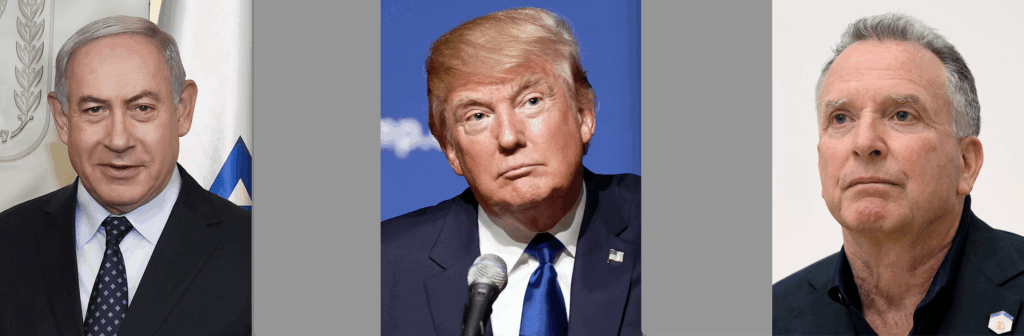
Reports suggest that Trump’s “one last” ceasefire proposal for Gaza reads like a Netanyahu wish list printed on American letterhead—old wine in new bottles that fools no one. Netanyahu remains obsessed with achieving total victory over Hamas and maintaining control over Gaza’s future through force, seemingly regardless of the fate of hostages or Gaza’s civilian population.
Growing International Pressure on Israel
International alarm about Gaza’s humanitarian and political crisis has reached critical mass. Israel is now widely recognized as a state showing little respect for international law. Responding to this shift in world opinion, the European Union declared its support for a two-state solution last week, calling for immediate attention to starving Gazans, an end to the war, and the release of all remaining hostages captured by Hamas in October 2023.
In what appears to be a coordinated diplomatic performance, the UK, France, and Canada expressed support for Palestinian statehood—a development facilitated by an Arab League gesture calling for Hamas’s end. More significantly, a substantial group of former European ambassadors issued a comprehensive statement opposing Israel’s policies toward Palestinians, recommending punitive political actions against Tel Aviv, including cutting foreign aid, halting weapon sales, sanctioning decision makers, ending the war, and facilitating prisoner exchanges.
Even Israel’s own genocide experts and major human rights organizations have confirmed that what is occurring in Gaza constitutes genocide. As one Israeli scholar noted, “Genocide is taking place in Gaza and Europe is duty bound to stop it.” https://www.euronews.com/2025/08/01/genocide-is-taking-place-in-gaza-and-europe-is-duty-bound-to-stop-it-israeli-scholar-says
Trump Administration’s Protective Stance of Israel
In stark contrast, the Trump Administration has attempted to shield Israel from criticism. Washington issued sanctions against Palestinian Authority officials last week for having pursued cases at the International Court of Justice and the International Criminal Court.
Trump has barely acknowledged the suffering of Gaza’s battered and starving civilians, casually admitting they appear to be experiencing famine—” or at least that’s what appears on the television screen,” he opined. While expressing some dissatisfaction with Netanyahu’s war plans, he blamed Hamas and threatened to escalate the conflict to allow Netanyahu to “finish the job” and force Hamas to surrender.
The Latest Proposal’s Serious Flaws
Following Trump envoy Steve Witkoff’s visit to Israel and Gaza last week to explore new avenues for ending the crisis, the Trump administration appears to have formed its “one last” proposal to end the war and release the approximately twenty hostages believed to be alive. Unfortunately, the proposed 60-day negotiating period contains several deal-killers, with little meaningful US distancing from Israel’s policy of blaming and punishing the victim.
This take-it-or-leave-it ceasefire plan, being discussed covertly, is unlikely to gain Hamas acceptance for several reasons. If Hamas were to accept such a pre-surrender deal, it would indicate the organization is in dire straits. Most fundamentally, what’s being negotiated represents a joint Trump-Netanyahu plan, clearly indicating the US is not acting as an impartial mediator.
The plan fails to commit Israel to complete withdrawal from Gaza after the fighting ends. The envisioned two-month negotiating period appears insufficient to reach even a preliminary understanding on Gaza’s future, Hamas’s role, and Palestine’s broader situation. The Trump-Netanyahu plan anxiously seeks some way to release remaining hostages, but everything else regarding Gaza’s future remains essentially improvised.
While the ceasefire plan clearly implies Hamas should disappear from Palestinian political space, it provides no recognition of Israel’s responsibility for Gaza’s destruction or the war crimes committed against its two million residents.
A Broader Pattern of Deadlock
Gaza’s crisis remains deadlocked, mirroring the unresolved conflicts on the five other fronts Israel currently faces: the West Bank, Lebanon, Syria, Yemen, and Iran.
Trump demonstrates little understanding of how to resolve the Gaza conflict and even less knowledge about addressing Palestine’s broader situation. His appointments reflect this limitation: Mike Huckabee as US ambassador to Israel—an activist Evangelical pastor who opposes Palestinians on virtually every issue—and Steve Witkoff for negotiations, a real estate figure with some business dealings in the Arab Gulf.
When both the mediator (Trump) and one party to the conflict (Netanyahu’s government) share the same script, expecting a different ending is futile. The result will be the same tragedy, only with fresh staging directions.
Ghassan Rubeiz is the former Middle East Secretary of the World Council of Churches. Earlier, he taught psychology and social work in his country of birth, Lebanon, and later in the United States, where he currently lives. He has contributed to political commentary for the past twenty years and delivered occasional public talks on peace, justice, and interfaith subjects. You can reach him at rubeizg@gmail.com
The views and opinions expressed in this article are those of the author and do not necessarily reflect the position of Arab America. The reproduction of this article is permissible with proper credit to Arab America and the author.
Want more articles like this? Sign up for our e-newsletter!
Check our blog here!