

Subscribe
to receive news by email

Poll
Will the Trump Administration Shift U.S. Policy in Favor of Palestine?
- No (87%)
- Yes (13%)
 Loading ...
Copyright © 2026 Arab America
Go topHistorical Events that Contributed to Egypt’s Ethnic Diversity.
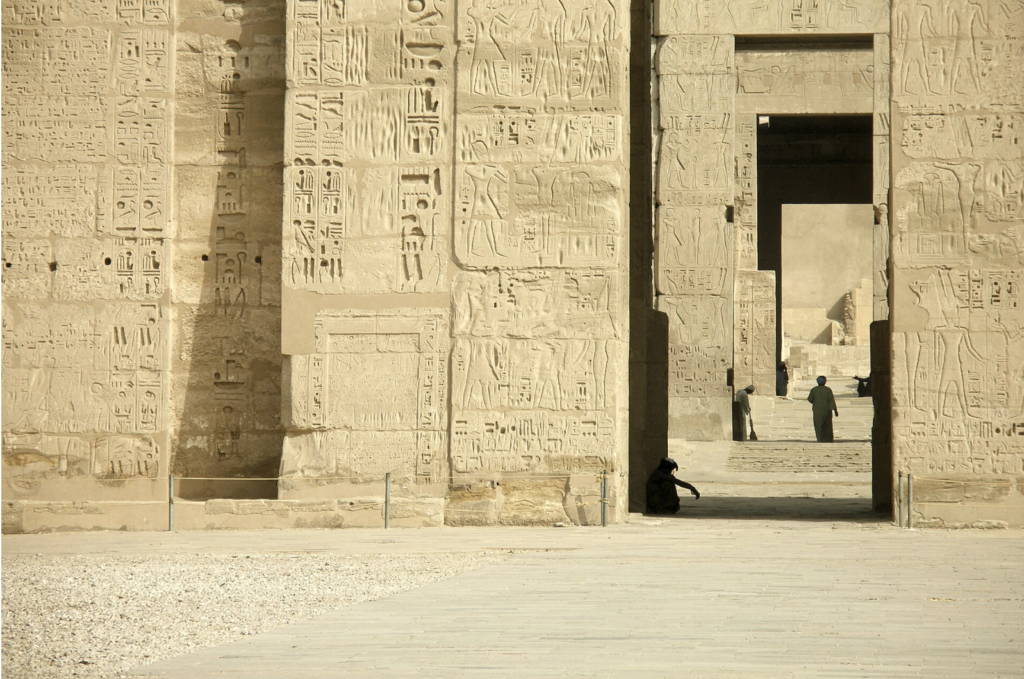

Photo by © Vyacheslav Argenberg / http://www.vascoplanet.com/, CC BY 4.0, via Wikimedia Commons
By Jake Harris / Arab America Contributing Writer
The ethnic diversity of Egypt is a long discussed topic among historians, Egypt exists in a geographically unique location, right in the area where North Africa meets the European Mediterranean, which meets the Levant, which meets Persia and the Arabian peninsula. This region of the world is oversimplified in western demographics as “MENA” or Middle East/North African. Ancient Egypt, and Modern Egypt’s location has made putting Egyptians into modern racial categories such as “Black”, or “White” a pointless exercise. Below are some of the major historical events to contribute to Egypt’s ethnic diversity.
The Hyksos Rule
The Hyksos were a Semitic people originating in the Levant that ruled Northern Egypt for over a century. Their West Semitic origin led the ancient historian Josephus to speculate that their eventual expulsion is connected to Exodus. Modern historians majorly dispute this connection. Despite a relatively short time in power, they contributed to the mixture of Levantine genetics with the Indigenous Egyptian population, as well as the Nubians to the South. The Nubians are related closer to modern day Southern Egyptians and Sudanese people. Archeological evidence done in the Ancient Egyptian city of Avaris suggests Levantine immigration into Egypt preceded the takeover by the dynasty. Avaris was the capitol of the Hyksos Dynasty varying from the capitol for the majority of Ancient Egyptian history in Thebes. Thebes was the center of the previous and subsequent dynasties.
The Late Bronze Age Collapse
The Late Bronze Age Collapse is a major turning point in the history of the human race. The powerful empires of Egypt, the Hiithites, and Mycenaean Greece all dealt with foreign invasions leading to the collapse of their centralized empires. Historians generally group these invaders under the name “Sea Peoples”. These groups were said to be nomadic warring tribes originating in the many islands off the coast of Greece and the Balkans. While historians downplay the lasting genetic impact of the Sea Peoples on Egypt’s demographics, the fragmentation from the end of the New Kingdom led to more foreign interventions in the years that followed. The beginning of the Iron Age led to an era of Greco- Roman involvement in Egypt. The collapse is a subject of mystery for historians as the collapses of the empires happened simultaneously and fairly suddenly.
The Hellenistic Period
The period following the death of Macedonian conqueror Alexander the Great is referred to as the Hellenistic Period. The Ptolemaic Kingdom of Egypt was the final iteration of Ancient Egypt. One of the multiple West Asian Kingdoms under the control of Alexander’s former empire who fought for the remnants of his conquests. Much of Greece’s influence on Egypt was through cultural diffusion. Greek culture spread to Egypt, especially in the upper classes of society. Greeks and Macedonians also migrated to Egypt.
Arab Conquest of Egypt
The 7th century Arab Conquest of Egypt remains one of the most profound shifts in Egyptian history. It represented the beginning of Islam in the country. Egypt went from a hub in the Greco-Roman world, to one of the centers of the Islamic world. In 641 AD, the Rashidun Caliphate, the first Islamic Caliphate following the death of Muhammed began to expand West into the Levant and towards North Africa. The Eastern Roman Empire (Byzantine) that survived the fall of the West in 476 AD controlled Egypt up until the Rashidun Caliphate’s invasion.
The Arabic language slowly became dominant over previous spoken languages such as Coptic and Greek. The spread of Arab culture and the Islamic religion did not happen overnight. Early Arab leaders tried to maintain somewhat of a system of continuity early on. Conversion to Islam was somewhat incentivized by not having to pay an extra tax called Jizya. It was also incentivized by becoming an avenue to higher social status. Arab culture’s impact on Egypt is evident to this day, as the nation is a member of the Arab league. The official name of the Egyptian state today is the Arab Republic of Egypt. Egypt is overwhelmingly Arabic in ethnicity today. The ethnicity is not monolithic. There are Levantine Arabs, Nubians, Sudanese and more. Modern Egypt being mostly of Arab descent does not mean the country can’t be considered diverse.
Want more articles like this? Sign up for our e-newsletter!
Check our blog here!