
Subscribe
to receive news by email

Poll
Will the Trump Administration Shift U.S. Policy in Favor of Palestine?
- No (87%)
- Yes (13%)
 Loading ...
Copyright © 2026 Arab America
Go topHonduras’ New Palestinian President
By: Robert Jackson/Arab America Contributing Writer
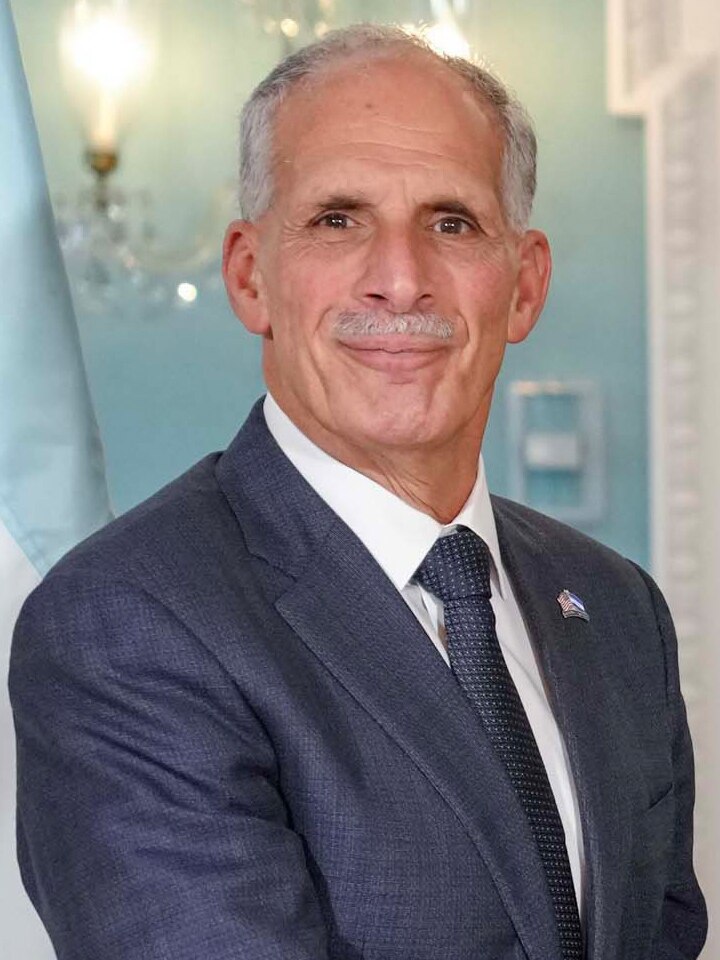
Nasry “Tito” Asfura is Honduras’ newly elected president. A prominent conservative leader in Honduras, he is a departure from his predecessor, Xiomara Castro, who was a left wing candidate. His rise from municipal politics to the presidency reflects decades of experience in business and governance, a new agenda, and significant controversy.
In late 2025, Asfura won the Honduran presidential election with about 40.3 % of the vote, narrowly defeating his closest rival in a tightly contested race that drew international attention and claims of election irregularities from the opposition. Beginning a four-year term amid intense political polarization and high expectations from conservative supporters, he has a lot to prove.
Arab Heretiage
Nasry Asfura was born in Tegucigalpa, the capital of Honduras. His grandparents on both sides of his family were Palestinians who immigrated to Honduras. President Asfura’s heritage reflects a broader Arab diaspora in Latin America which has played an important role in commerce, culture, and politics across the region.
This Palestinian background has been a notable facet of his identity, linking him to his biggest opponent in the 2025 election, Salvador Nasralla. Nasralla, came from a similar upbringing and also got his start as a businessman before entering politics.
The Construction Business
Asfura initially pursued civil engineering studies at the National Autonomous University of Honduras, though he did not complete his degree before entering business. Early in his career, he established himself in the construction sector, eventually building one of the more successful construction companies in Honduras.
His technical background and entrepreneurial experience helped him stand out in local politics, where infrastructure and development issues are often at the forefront of public debate. Asfura was first elected to the National Congress in 2009, representing the Francisco Morazán department, and served until 2014. That same year he was elected the Mayor of the capital city of Tegucigalpa.
Mayor of the Capital
As mayor, Asfura focused on public works and urban improvements. His administration prioritized road construction, bridges, tunnels, and other infrastructure aimed at easing congestion and improving quality of life in Honduras’ capital, home to more than a million residents.
These efforts strengthened his reputation among many voters as a hands-on administrator who delivered visible results. However, his tenure was not free of controversy. Asfura faced accusations of embezzlement and misuse of public funds during his mayoral terms, with allegations that municipal resources were diverted for personal or political use. Although Honduran courts ultimately declined to send these cases to trial, and he was not convicted, these episodes have followed his career and fueled debates over transparency and accountability in Honduran politics.
The 2025 Presidential Campaign
After an unsuccessful presidential bid in 2021, when he lost to then-leftist candidate Xiomara Castro, Asfura launched another bid for the presidency in 2025 as the candidate of the National Party of Honduras, a long-standing conservative force in national politics.
During the campaign, Asfura received a public endorsement from U.S. President Donald Trump, who urged Hondurans to back him and framed his candidacy as vital to regional stability and conservative governance. This intervention, which included promises to reduce U.S. assistance if Asfura did not prevail, became a major point of controversy and debate in Honduras.
The election results were extremely close and followed a slow vote-counting process that fueled allegations of irregularities from opposition candidates. Despite these tensions, the National Electoral Council validated Asfura’s victory, and he became the first man of Palestinian descent to become president of Honduras.
Policy Priorities
Asfura’s policies emphasize business-friendly governance, law-and-order policies, and fiscal restraint. A central pillar of his agenda is economic development. Asfura has proposed incentives for private investment both domestic and foreign and focused on infrastructure projects as a means of stimulating growth. He has also stressed revitalizing manufacturing and agriculture as sustainable engines for employment.
Asfura has signaled a desire to streamline public administration and cut unnecessary bureaucracy, arguing that a “smaller, more efficient state” can deliver better services and reduce wasteful spending.
Organized crime has been a long-standing challenge in Honduras. In his campaign and early presidency, Asfura emphasized confronting insecurity “head-on,” which includes stronger law enforcement and judicial mechanisms. Critics, however, have pointed out that broad-based solutions to crime require comprehensive social policy as well as enforcement.
His election shows a broader turn towards stronger ties with the United States and right-wing politics in Central America, with those like Laura Fernandez in Costa Rica and Nayib Bukele in El Salvador growing in popularity. Asfura has already met with Marco Rubio in January and plans to meet Trump in Mar-a-Lago soon, further solidifying U.S.-Honduran ties.
Challenges Ahead
President Asfura will face significant political division in Honduras during his term. His ability to address economic stagnation, public security, and deep social inequalities will be his main benchmark for success. The close nature of his election underscores a polarized electorate, making fast results essential to gain the confidence of more Hondurans.
Want more articles like this? Sign up for our e-newsletter!
Check out our blog here!