
Subscribe
to receive news by email

Poll
Will the Trump Administration Shift U.S. Policy in Favor of Palestine?
- No (87%)
- Yes (13%)
 Loading ...
Copyright © 2026 Arab America
Go topHope in Zohran Mamdani
By: Laila Ali / Arab America Contributing Writer
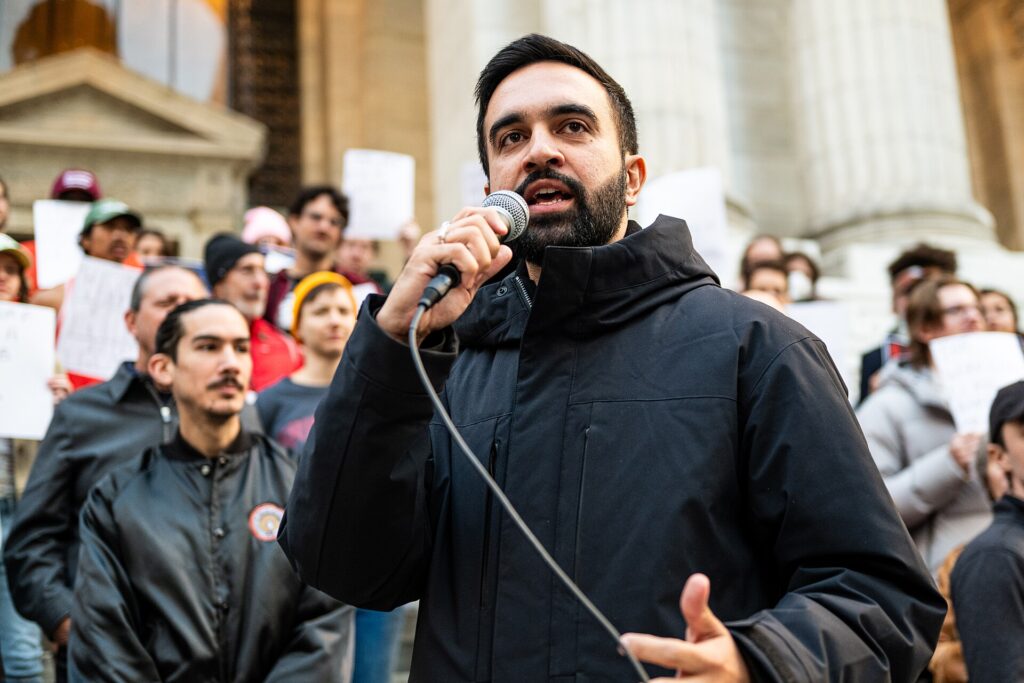
In the heart of New York City’s mayoral race, a conversation far bigger than the five boroughs has taken shape. Zohran Mamdani, a 33-year-old New York state assemblyman who represents the 31st District of Queens, has been having this conversation for months and with more nuance, depth, and clarity than most of his opponents or local candidates in recent memory.
An immigrant and the son of two left-wing activists, Mamdani is now running to become the city’s first-ever Muslim mayor, and it is in his discussion of the war in Gaza that we see humane politics break through in a typical American campaign. Despite Mamdani’s central focus on what New Yorkers actually need to thrive, affordable housing, equitable public transit, and a more livable city for all, he has been able to do what few local politicians in the city or country have dared to do. He has spoken openly and from the heart about the war in Gaza and, more specifically, about what hope for a cease-fire would mean for his Arab, Muslim and conscientious constituents.
The Debate
On Monday, October 16, during the last debate before the New York City election, Mamdani discussed the ceasefire.
“I’m proud to be one of the first elected officials in the state who called for a cease-fire,” Mamdani said. “That means all parties have to cease fire and put down their weapons. And the reason that we call for that is not only for the end of the genocide, but also an unimpeded access to humanitarian aid. I, like many New Yorkers, am hopeful that this cease-fire will hold. I’m hopeful that it is durable. I’m hopeful that it is just. And for it to be just, we also have to ensure that it addresses the conditions that preceded this.”
The line garnered cheers from the crowd, some criticisms and, most importantly, plenty of attention. In an election where few thought Gaza would make any significant splash, Mamdani has made peace itself a campaign value.
Leading the Field
The latest polling numbers showcase the power of Mamdani’s message. Mamdani has the most support of any candidate in the election. According to a Quinnipiac University poll published on October 11, Mamdani leads all candidates with 46 percent of “likely votes.” He is followed by Democratic nominee and former governor Andrew Cuomo at 33 percent, and Republican nominee Curtis Sliwa at 15 percent. Mamdani’s margin over the other leading candidate, Andrew Cuomo, has solidified him as the frontrunner in the final weeks before the election. His standing has also been attributed to a kind of “moral authenticity,” a much-needed young voice with a platform that champions working-class New Yorkers and their families.
In a city where years of political pragmatism have come to characterize both Democrats and Republicans in the state, it seems that Mamdani’s ability to talk about affordable rent stabilization and Palestinian liberation in the same breath has struck a chord with a New York City population looking for something different. In a moment when “hope” is seen by many as a naive political act, Mamdani, by his actions and his words, positions hope as a civic duty.
For Arab Americans, if Mamdani does take the lead (and the election on November 2) it will be a feeling much bigger than the simple concept of being represented by a Muslim American at City Hall. Muslim Americans have never had such a large candidate in a election before now. And, for many, this sense of pride runs deeper than political policy. In fact, it is, for some Arab Americans, something more foundational.
Hope as a Political Act
One of the most powerful things that Mamdani has done, especially when discussing Gaza and Palestine, is to insist on hope. Hope is political, but in much of American public discourse, the very concept of hope has been weaponized and, in fact, used to shame, chastise, and discredit. Yet Mamdani refuses to let the language of hope be dismissed. Not only that, but his insistence on a just cease-fire abroad is tied intimately to the just political work that must be done at home: a City of New York where housing displacement ends, where racial equity is a reality, and where everyone, no matter their class or background, has a fighting chance at prosperity and a decent life.
Arab-American voters, readers, and families may find something quietly revolutionary in that simplicity. Hope that the war in Gaza will end is driven by the same moral urgency and longing for dignity that fuels calls for the end of housing displacement, gentrification, poverty, and much more for New Yorkers. To Mamdani, they are the same struggle. Arab-Americans see that in him.
Criticism and Courage
This moment, however, does not come without cost or, for some, political criticism. Groups such as the American Jewish Committee have taken to attacking Mamdani’s perceived divisiveness and for, in their words, taking a political stance on Gaza that is “too far.” One particular criticism lobbed at Mamdani by opponents in the last weeks of the campaign, especially during the debate, was the assertion that he should be clearer on whether his call for a cease-fire includes a condemnation of Hamas and their role in the ongoing war with Israel.
Mamdani has been clear in this response, reiterating the fact that he will “call for peace until peace is actually possible” and that for peace to be a reality in Gaza, the “conditions that preceded this” must be addressed. Mamdani has remained unfazed by his opponents’ criticisms. In his response to them after the October 16 debate, he said: “If you want peace, you cannot silence calls for justice.”
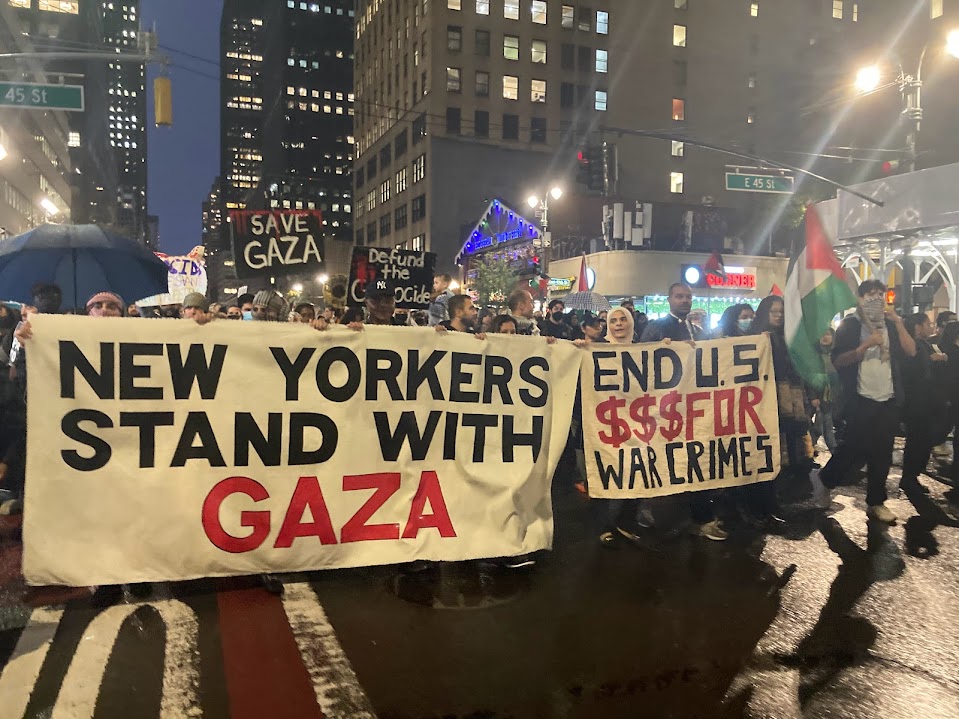
No matter what criticisms Mamdani has received, he continues to represent the beliefs of a majority of New Yorkers. Recent polling by Siena University shows that 44% of registered voters in New York City sympathized more with Palestinians, while 26% sympathized more with Israel, a striking reflection of the city’s shifting political conscience. Across boroughs, thousands have taken to the streets calling for a ceasefire and justice for Gaza, echoing the same message Mamdani has championed throughout his campaign: that peace and humanity must prevail over politics.
Representation and the Arab-American Moment
Whether or not he wins, Mamdani’s candidacy is significant for Arab-American communities and families across the country in a way that goes far beyond having an Arab American elected to serve as mayor of the United States’ most populous city.
For decades, it has been difficult for Arab Americans, Muslims, and American Muslims to feel represented and seen in their own country. To be seen as “American” has often meant to be silent on issues of global, moral, and political import, especially when it comes to the Middle East. To advocate for peace, for an end to violence and for justice is to go against what some have implied are “American values.” Mamdani, through his candidacy, his platform, his outspokenness, and his representation of a Muslim constituency, is in the process of shattering that narrative.
To have an American-Muslim mayor speak so candidly about Gaza, about Palestinian liberation and, by extension, about other issues of local and international justice is to have a person who was long thought to be invisible emerge and center themselves in the conversation. Arab-American activists and organizers are watching closely. It is too early to call Mamdani the next mayor of New York City. But even if he does not win, this election will be remembered by many as a new beginning. Not the end of struggle, but the affirmation that in politics, as in humanity, peace is still worth believing in.
Want more articles like this? Sign up for our e-newsletter!
Check out our blog here!