Subscribe
to receive news by email

Poll
Will the Trump Administration Shift U.S. Policy in Favor of Palestine?
- No (87%)
- Yes (13%)
 Loading ...
Copyright © 2026 Arab America
Go topIbn Khaldūn and Hierarchy Today
By: Diksha Tyagi/Arab America Contributing Writer
In countries across the Arab world and beyond, hierarchy seems like a necessary outcome of society. Yet, the inequality that results leads many to consider how hierarchy might be dissolved and why it has persisted for so long. To understand why hierarchies form and have strengthened in many nations today, the writings of Ibn Khaldūn can provide a foundation, particularly relevant for Arab nations.
Who is Ibn Khaldūn?
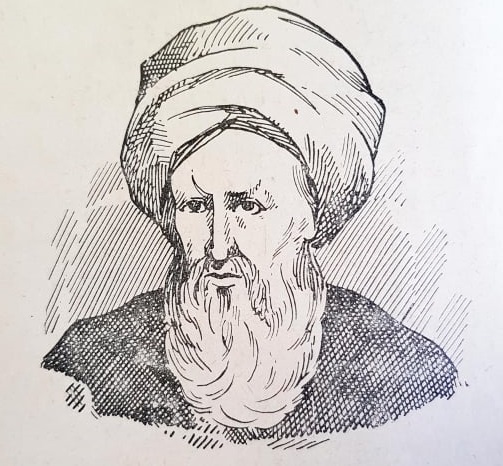
Ibn Khaldūn was an Arab historian, philosopher, and theorist of the 14th century. He was born in Tunis, the capital of modern-day Tunisia, during a time of political instability throughout the region. He served numerous political roles, but after stepping back, he began writing works of history, sociology, and more.
His most well-known work was the Muqaddimah, written in 1377. Initially intended to be a history of the Arabs and the Berbers, he was one of the first in history to develop a type of sociology. His sociology was applied to multiple realms, explaining its effects on economy and politics.
In his work, the theory of asabiyyah is one of his central ideas. Asabiyyah refers to a sort of social cohesion that happens within groups of people. This bonding happens spontaneously but can be reinforced and strengthened by factors such as shared identity, loyalty, and dependency.
Asabiyyah as Power
Khaldūn argued that asabiyyah is the origin of political power. Groups that share strong asabiyyah motivate one another, mobilize, and eventually take power over weaker groups. Therefore, political authority comes from socially produced unity.
However, for Khaldūn, this unity changes when control is seized. In the early stages, leaders remain connected to the communities that they serve, which supported their rise to power. Yet, as authority shifts to become more secure, this changes. Once the elite secure authority, survival is no longer dependent on collective solidarity. Therefore, the elite become separated from those they govern. Power is institutionalized, and social bonds seem less necessary. This stage sees asabiyyah decline and go from being inclusive to exclusive, binding certain groups together once authority has been established. Hierarchies are formed, groups bunch together, and economic and political factors bond some while excluding others.
Yet, Khaldūn argued that all political authorities need asabiyyah to exist. Even though they may use force, it would not be enough to compensate for an incohesive society. In a country without social cohesion, another group with greater asabiyyah would form and replace the rulers, and begin the cycle again.
The Modern State
Though Khaldūn’s concepts were developed in a very different time, the social mechanisms that he developed remain relevant. Cohesion is an integral part of a society’s functioning, and groups continue to bond together based on shared identities and dependencies. However, these forms of cohesion bind certain classes of people together and reinforce their statuses. Inequality becomes structural, with access limited to only those of the same class.
Today, many nations see varying levels of inequality. The Arab world has a particularly concentrated share of wealth at the top, where a large portion of national wealth belongs to a small number of earners. In Egypt in 2019, 32 firms controlled 60% of corporate profits, showing how economic power becomes concentrated and maintained through social ties. In many Gulf countries as well, rentier social contracts institutionalize hierarchy. These are where much of the national wealth is distributed to certain parts of the population, while migrant workers, though partly providing the wealth, have little legal and social protection. This creates a stark social hierarchy that binds certain groups together. Therefore, elite asabiyyah is created through selective inclusion, with inequality part of the labor structure.
The Persistence of Hierarchy
Whether in Egypt, the Gulf, or among a number of nations with stark hierarchies, social cohesion becomes concentrated within the elite and is structurally preserved. This explains how inequality persists despite changing laws or institutions. Yet, fragmented societies cannot form strong enough bonds to challenge existing authorities. Differences in class, identity, and legal status make social cohesion much more difficult, whether in society as a whole or across peripheral groups. In such situations, then, hierarchies become increasingly difficult to overcome.
Though Khaldūn’s theory can be seen as cyclical, it also shows how hierarchy could be dissolved. When asabiyyah is concentrated, hierarchy hardens. When broad cultural or social movements bring various groups together, however, inequality can lessen. Therefore, though social cohesion helps form hierarchies, it also provides a way to resist them.
Want more articles like this? Sign up for our e-newsletter!
Check out our blog here!