
Subscribe
to receive news by email

Poll
Will the Trump Administration Shift U.S. Policy in Favor of Palestine?
- No (87%)
- Yes (13%)
 Loading ...
Copyright © 2026 Arab America
Go topInternational Women’s Day: Reflection, Resolve, Resistance
By: Lina Abi Rafeh / Arab America Contributing Writer
Why do I hate this day?
I hate the one day every year when we’re supposed to pat ourselves on the back for progress that hasn’t arrived. As if designating a date on the calendar accelerates anything. Did we need a special occasion to remind us that we’re not equal? In 1911, women — and men — marched in the streets demanding the right to work, to vote, to hold public office. That was 115 years ago. We are still, in too many places and in too many ways, making the same demands. The UN’s official theme for 2026 is “Rights. Justice. Action. For ALL Women and Girls” — because no country in the world has closed the legal gaps between men and women. Right now, women hold only 64 percent of the legal rights that men have worldwide. Sixty-four percent. In fundamental areas of life — work, money, safety, family, property, mobility, business, and retirement, the law is systematically stacked against us. That is not a reason to celebrate. That is a reason to be outraged. The theme demands the dismantling of discriminatory laws, weak legal protections, and the harmful norms that continue to erode the rights of women and girls. I agree. Now let’s actually do it.
Every year when International Women’s Day arrives, I find myself reflecting on what it truly means. For years, I wrote about my frustration with how the day is often reduced to slogans, flowers, and social media posts while many women around the world continue to face injustice, violence, and loss. Yet the day still matters. It matters because it reminds us to remember the women whose voices are unheard, and to renew our commitment to dignity, equality, and justice for all women.
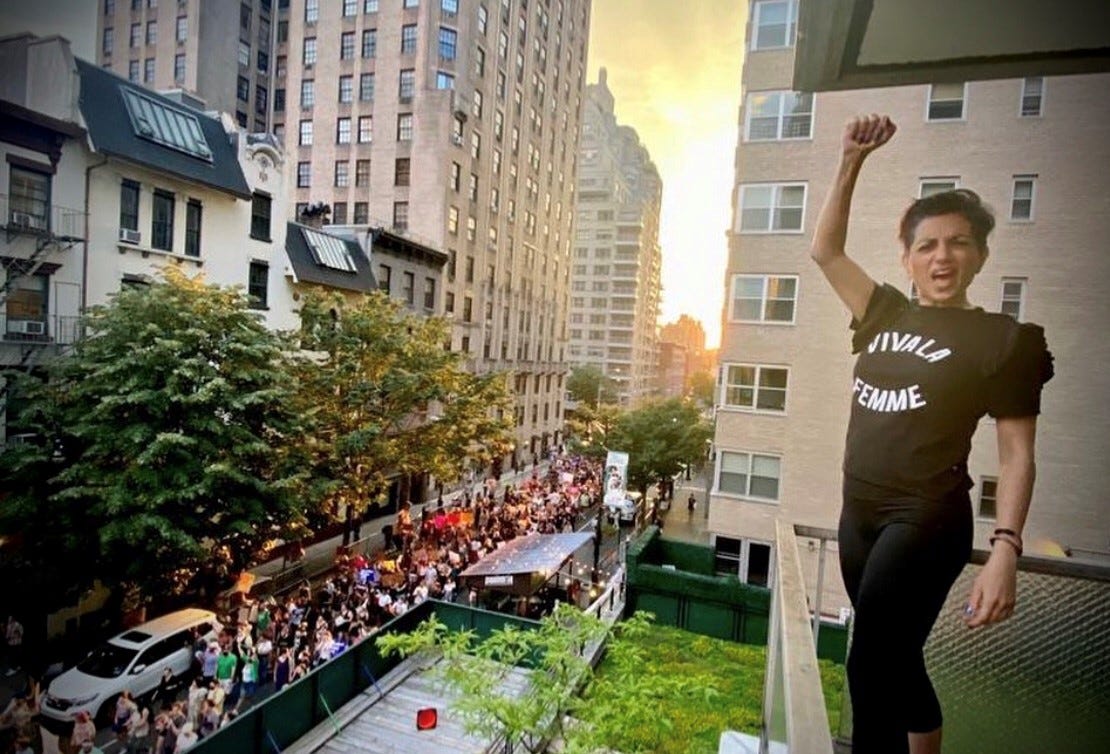
According to the World Economic Forum, we are 123 years away from closing the global gender gap. The UN Women Gender Snapshot gives us 300 years. Either way, is anyone planning to still be here for that? I am not. And I am not willing to accept it. We’re generations — lifetimes! — away, and micro-movements change nothing for the women living through inequality right now, today. I have said this before and I will keep saying it: the clearest indicator of a country’s capacity for peace, prosperity, and progress is not its form of government or the state of its economy — it is how that country treats its women. The data have proven this over and over. The world keeps ignoring it.
One in three women and girls worldwide will experience some form of violence in their lifetime. That is nearly 736 million people — more than double the entire population of the United States. This figure doesn’t even include sexual harassment. Women do the majority of unpaid labor on the planet. When we do work for pay, we earn less — in every sector, every country, every occupation. In positions of power, we remain largely invisible, and when we do break through, we’re still referred to as “the female CEO,” as if the modifier is the story and the job is the footnote. At the current pace, gender parity in national legislatures won’t arrive before 2063.
This year’s campaign slogan from the IWD website is “Give to Gain” — implying that feminist advocacy is some sort of transaction, a networking event, a corporate exchange. As if the 115-year fight for women’s liberation can be distilled into a tagline. This is what has happened to a day born in the labor and suffrage movements: it has been polished, branded, depoliticized, and handed back to us as a brunch invitation. The flowers. The discounts. Yesterday I bought a bra at 20% off because, well, “women’s day.” My boobs were celebrating — even if the rest of me was not.
And still, every year, there are “celebrations” and “sales” and LinkedIn posts praising women on the team. And the corporations tweeting solidarity while paying women less, year after year, the algorithm catching them at it — and nothing, year after year, changing. This day was born in resistance. It must stay rooted in resistance.
But this year, resistance itself feels almost impossible to hold onto.
My countries are Lebanon and Palestine. For nearly three years, I have watched a genocide unfold. For decades before that: occupation, displacement, destruction — slow, steady, and largely ignored by a world that had other things to attend to. Since late February, the faux-ceasefire has collapsed. Again. The bombs are back. Brutally. The body counts are back. The media blockades are back. And women and children bear the greatest weight, as they always do. Western feminism has long branded non-white suffering as simply “what happens over there,” as though our pain is background noise, as though Brown and Black women are inherently less feminist, less grievable, less worth centering. I reject that. I have always rejected it.
And day after day, I’m still told to tone it down, to post less, to be less… political. My entire job, my entire existence, is to be political. And Iam being passed over for work because I’m “too political.” As feminists, we are inherently political. If we are not political, what are we?!
I have a word for what I feel. It is Arabic: قهر — qahr. There is no clean translation into English. It sits somewhere between rage and persecution and a grief so deep it doesn’t have edges. It is the feeling you get when you dedicate your life to this work — three decades of it — and then watch hundreds of thousands more people become displaced virtually overnight. Uprooted. Erased. And the world moves on to the next headline. Sometimes I feel paralyzed. Then I remind myself to focus on the small piece I can actually do — and I pick up and keep going. But the weight of it does not lift.
Lina AbiRafeh is a women’s rights expert, activist, and aid worker with close to three decades of experience creating positive change for women around the world. Contact her and sign up for her newsletter: http://www.LinaAbiRafeh.com
Want more articles like this? Sign up for our e-newsletter!
Check our blog here!