
Subscribe
to receive news by email

Poll
Will the Trump Administration Shift U.S. Policy in Favor of Palestine?
- No (87%)
- Yes (13%)
 Loading ...
Copyright © 2026 Arab America
Go topLanguage on the Brink: Arabic Dialects in Decline
By: Fayzeh Abou Ardat / Arab America Contributing Writer
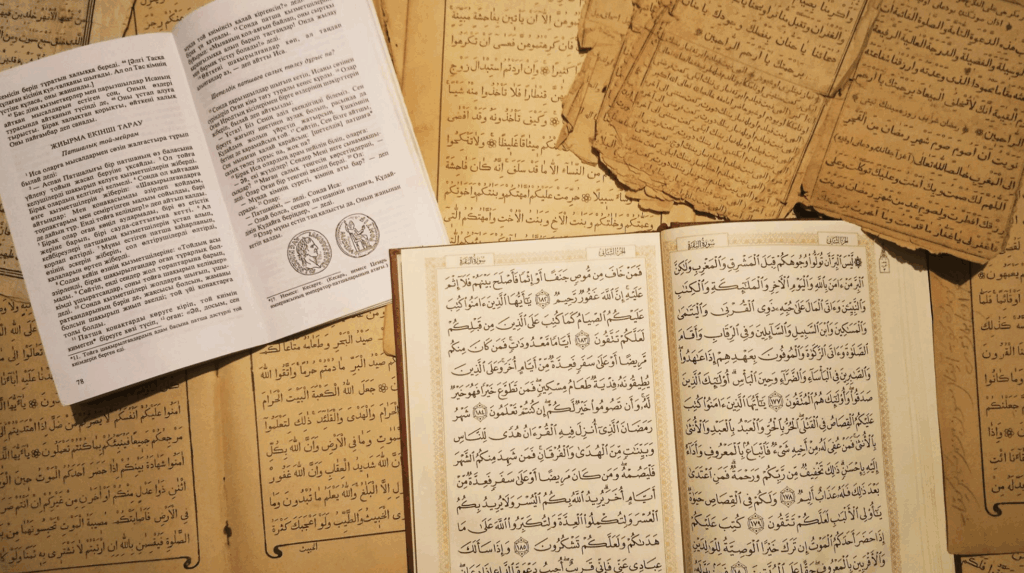
Arabic is sometimes viewed as a single, united language, with soaring classical poetry, Quranic passages, and the shared medium of Modern Standard Arabic (MSA). However, underlying this uniting layer is a huge and convoluted web of dialects spoken variants of Arabic that vary by region and even the community. These dialects are more than just styles of speech. They represent histories, identities, and distinct cultural manifestations. Nonetheless, many of them are under threat of extinction.
Why Dialects Matter and Why They’re Disappearing
Linguists frequently characterize languages as living archives. Every accent, idiom, or turn of phrase is a reflection of centuries of migration, commerce, conquest, and cohabitation. For example, North African Arabic dialects have Berber, French, and Spanish influences, but Levantine Arabic retains traces of Aramaic and Ottoman Turkish. Yemen’s various dialects of the highlands and coastal regions maintain vocabulary that is more similar to Classical Arabic than most current varieties.
When a dialect disappears, not just words are lost, but sometimes entire perspectives on the world. Oral traditions, folk songs, proverbs, and local histories are typically only available in the spoken language. A proverb in rural Morocco may reflect a worldview fashioned by farming and village life, but a saying in southern Iraq may recall riverine culture along the Tigris and Euphrates.
Several factors contribute to the decline of Arabic dialects. Globalization favours either Modern Standard Arabic or dominant regional dialects like Egyptian (boosted by cinema and television) or Levantine (widely understood owing to popular music and theatre). Urban migration hastens the transition, with younger generations growing up in cities and speaking more standardized forms. Colonial history, particularly in North Africa, left behind hybridized languages labelled as “broken Arabic.” Conflict and displacement pose additional risks, dispersing communities and undermining the intergenerational transmission of local language.
Endangered Dialects and Preservation Efforts
Some of the most vulnerable dialects are situated in geographically isolated or neglected areas. The Marsh Arab dialect in southern Iraq has declined as a result of fighting and ecological destruction. In Cyprus, the once-thriving Cypriot Maronite Arabic, called locally as Sanna, has shrunk to a few hundred people. Judeo-Arabic dialects, which were previously common throughout the Middle East, are now practically extinct, with only elderly people remembering them.
Despite these dangers, documentation efforts are increasing. Linguists are capturing oral histories, proverbs, and discussions in local dialects before they disappear. At the same time, social media and grassroots creative groups are reclaiming dialects as sources of pride, with podcasts, theatre, and online material promoting rather than repressing regional language.
Arab Americans and the Role of Diaspora Communities
In the Arab American diaspora, dialect preservation presents both a difficulty and an opportunity. Many immigrant families bring their regional languages, including Palestinian, Yemeni, Egyptian, Lebanese, and Iraqi, to communities across the United States. However, assimilation pressures frequently cause these dialects to vanish swiftly, particularly in the second or third generation, when English dominates daily life.
Nonetheless, Arab Americans have special means for preservation. Strong Arab populations in locations like Dearborn, Michigan, and Paterson, New Jersey, allow dialects to thrive not just in homes, but also in public spaces, mosques, community centres, restaurants, and businesses where Arabic is spoken on a daily basis. Festivals, music events, and theatre in dialect help to mainstream their use beyond the house.
Families play the most important function. Children who grow up hearing their parents and grandparents speak dialect frequently develop a passive understanding, even if they answer in English. When parents make an effort to speak their dialect regularly, tell tales in it, and share folk tunes, they pass on cultural memory as well as language.
Arab American artists, comedians, and content providers are also reviving accents. By incorporating colloquial Arabic into stand-up routines, TikTok videos, and spoken word poetry, they demonstrate that dialects can flourish in modern, hybrid identities. These innovative approaches assist younger Arab Americans in viewing their ancestral speech as a source of pride rather than a burden.
Why Preservation Matters
The disappearance of dialects is both a cultural tragedy and a setback to linguistic science. Arabic dialects are one of the most diverse and complex groups of spoken variations in the world, providing insights into language development, contact, and survival. For communities, keeping a dialect is about identity and continuity, not just nostalgia.
Some governments have begun to respond. Algeria’s designation of Tamazight (Berber) as a national language has increased public acceptance of linguistic variety, even if other Arabic dialects continue to lack institutional backing. Recognizing dialects in education, media, and public life may assist guarantee that they remain alive traditions rather than museum relics.
Languages, like individuals, store memories. Each dialect contributes to the chorus of Arab identity. To let them go quiet would be to lose valuable pieces of history. Preserving them, on the other hand, assures that the future of Arabic is as diverse and alive as the past.
Want more articles like this? Sign up for our e-newsletter!
Check our blog here!