
Subscribe
to receive news by email

Poll
Will the Trump Administration Shift U.S. Policy in Favor of Palestine?
- No (87%)
- Yes (13%)
 Loading ...
Copyright © 2026 Arab America
Go topLuxury Amid Displacement
By: Fayzeh Abou Ardat / Arab America Contributing Writer
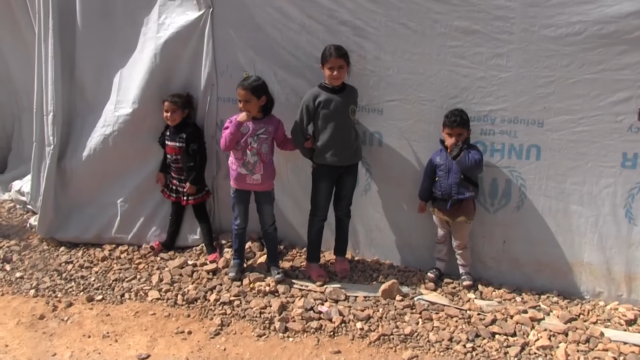
Two very distinct realities frequently coexist in the Middle East. On one side, glistening skyscrapers, retail centres, and five-star resorts stand for prosperity, security, and advancement. On the other hand, thousands of people who escaped persecution and conflict are living in vast refugee camps, where they struggle every day to meet their basic requirements. This contrast is particularly noticeable in nations like Jordan and Lebanon. Where economic disparities and humanitarian crises coexist to produce a glaringly unequal environment.
The area has historically been at the intersection of prosperity and instability. Millions of Syrians have escaped their homes and sought safety in neighbouring countries since the start of the civil war in 2011. Despite their lack of funding, Jordan and Lebanon welcomed these displaced people into their countries. However, a sharp contrast between the lives of the wealthy and migrants has become more apparent as foreign help declines and host economies buckle under the strain. Short distances separate informal refugee settlements from upscale residences, exclusive clubs, and designer shops. This contrast creates ethical, social, and political concerns about privilege, empathy, and accountability in a communal setting.
Jordan: The Refugee Burden Beside the Boulevard
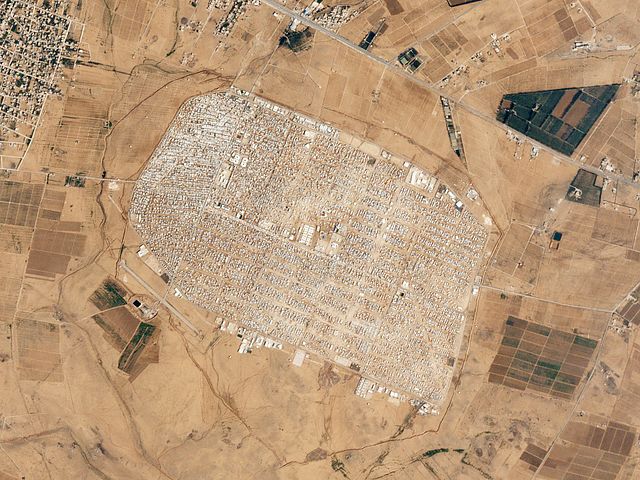
One of the biggest per capita refugee populations in the world is found in Jordan, a comparatively small and resource-poor nation. About 80,000 Syrians are housed in the Zaatari Refugee Camp in northern Jordan, close to Mafraq. It has developed into a semi-permanent community with stores, schools, and even improvised solar grids. However, Amman, the capital of Jordan, is only a few hours away and offers upscale retail areas like Abdali Boulevard, upscale hotels like the Four Seasons, and wealthy neighbourhoods with gourmet restaurants and foreign embassies.
This closeness between poverty and wealth is not only a geographical phenomenon. It is a reflection of more profound socioeconomic divisions in Jordanian society. While the nation’s aristocracy and expatriates enjoy cosmopolitan lifestyles, many refugees live under severe mobility restrictions and have few job options. Events such as international conferences on humanitarian aid, where delegates may address the plight of refugees while lodging in five-star hotels in the same nation, exacerbate the dilemma.
The government of Jordan must balance sympathy and restraint. Although taking in refugees has cost the nation billions of dollars, it also depends on foreign assistance. This is because of its position as a “stabilizing” state in a volatile area. Low-income Jordanians’ animosity has grown as a result of the migrants’ presence. Which has also put a burden on infrastructure and raised housing costs in less affluent places. As a result, the contrast between Zaatari’s tents and Amman’s opulent constructions is more than just aesthetic. It symbolizes a larger conflict between economic realities and humanitarian values.
Lebanon: Opulence Beside Overcrowding
The contrast is likely even more stark in Lebanon. The nation, which is about the size of Connecticut, is home to more than a million Syrian refugees. The Bekaa Valley and the outskirts of Beirut are lined with refugee camps and informal settlements. These areas are frequently a few miles away from upscale seaside communities like Jounieh and the downtown area of Beirut. Both homes to tall apartment buildings with views of the Mediterranean.
Despite economic unrest, Lebanon’s capital continues to be a centre of extravagance, with private beach clubs, designer labels, and rooftop bars for the elite. In contrast, migrants reside in tents or repurposed garages in places like Arsal or the outskirts of Tripoli. These migrants live without consistent access to utilities like electricity, water, or medical care. Conditions have gotten worse since Lebanon’s economy collapsed in 2019, but refugees are the ones who suffer the most. Many Lebanese, who are already poor due to inflation, are angry at what they see as foreign preference for migrants, which further alienates displaced populations.
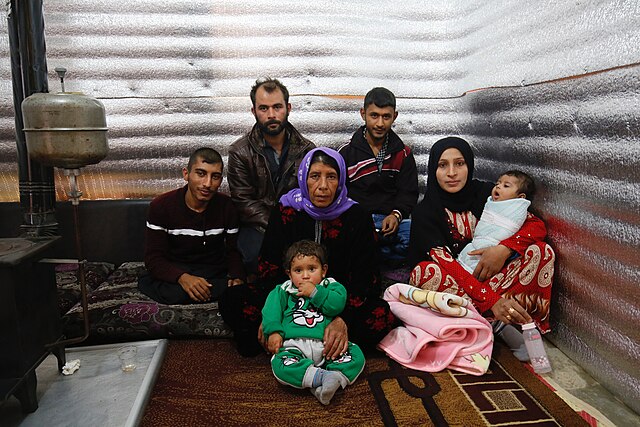
International NGOs have emphasized this juxtaposition’s moral discomfort on numerous occasions. The wider injustice is shown by pictures of opulent boats anchored off the shore of Beirut while local families go hungry. However, the issue is systemic: despite the collapse of public services, a small portion of society continues to profit from Lebanon’s privatized and elite-driven economy. Refugees join an unseen underclass that keeps the economy running on cheap labour while continuing to be socially stigmatized.
Beyond Borders: Inequality as a Regional Mirror
Jordan and Lebanon’s juxtaposition of luxury and poverty is indicative of a larger trend in the Middle East. The dazzling wealth of nations like Saudi Arabia, Qatar, and the United Arab Emirates is based on structures that frequently marginalize or exclude vulnerable migrant and refugee communities. The gleaming emblems of prosperity are rarely distant from informal communities and refugee camps.
In the end, these differences bring up issues that transcend humanitarian assistance. They draw attention to more profound problems with government, moral responsibility, and global inequity. The distinction between survival and indifference is hazy in areas where the wealthy eat in front of the displaced. Therefore, addressing the refugee problem calls for not only increased financing or assistance but also an examination of the social structures that permit luxury to coexist with poverty.
The world is reminded that wealth without empathy is only half a success by the silent agony of migrants under the shadow of the Middle East’s contemporary skylines.
Want more articles like this? Sign up for our e-newsletter!
Check our blog here!