Subscribe
to receive news by email
Poll
Will the Trump Administration Shift U.S. Policy in Favor of Palestine?
- No (87%)
- Yes (13%)
 Loading ...
Copyright © 2026 Arab America
Go topMaking the Desert Bloom: Nature in Palestinian Poetry
By: Ramsey Zeidan / Arab America Contributing Writer
In order for me to write poetry that isn’t political

I must listen to the birds

and in order to hear the birds

the warplanes must be silent.

- Marwan Makhuoul
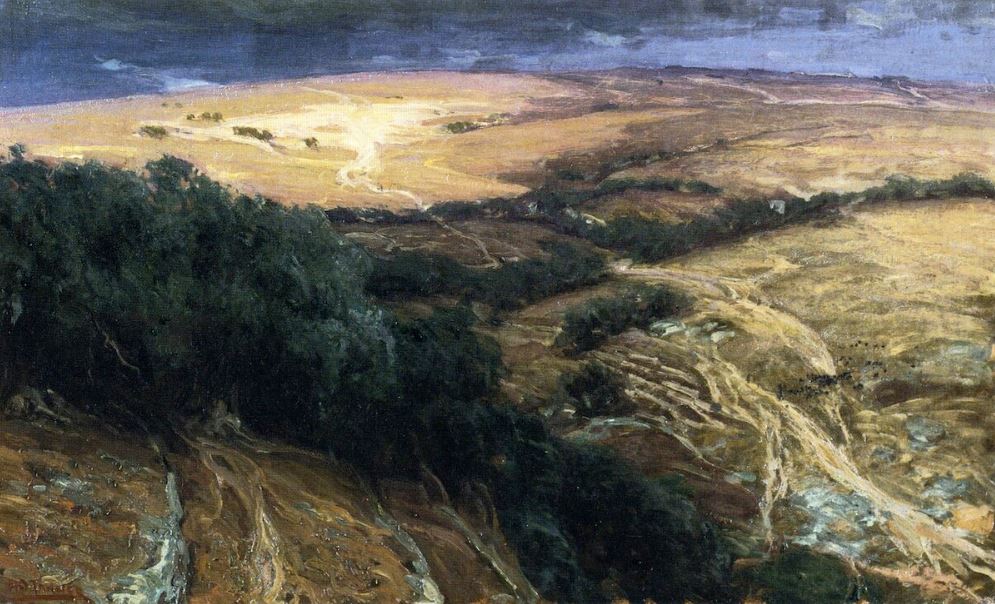
Nationalism and natural beauty are inevitably intertwined in the art and literature of Palestine. In a sense, nature is a constant. While the land of Palestine exchanged hands during colonial rule, its beautiful landscape remains. Nowhere is this motif more apparent than in poetry, where nature takes the form of many metaphors. People indigenous to the Levant have a unique relationship with their land that comes alive in poetry. The oranges of Jaffa, the harvest of the olives, and the aroma of the Za’atar plant create distinctive sensations.
In the heart of Palestine, the olive tree serves two purposes: a witness and a bulwark of resilience. Exploring this duality, acclaimed poet Mahmoud Darwish writes:
The olive tree does not weep and does not laugh. The olive tree

Is the hillside’s modest lady. Shadow

Covers her single leg, and she will not take her leaves off in front of the storm.

Standing, she is seated, and seated, standing.

She lives as a friendly sister of eternity, neighbor of time…
Darwish takes solace in the idea that the occupation is temporary, while nature is eternal. Palestinians give their life to the land because they know it will return the favor when they die. It holds their body dear while the soul may find another home. Furthermore, Darwish personifies the tree as stoic, exploring the notion that nature returns love by design. It is unfazed by change and who tends to it, but those who treat it well are naturally rewarded. However, the olive tree’s unchanging stature has been the primary target
Israelis act in line with “biblical” visions of grandeur for what Palestine should look like, ignoring what is already there. In doing so, they raze hundreds of thousands of olive trees, with estimates approximating over 800,000 trees destroyed. It is an intentional strategy that aims to delegitimize historical claims to the land.
Nevertheless, Palestinians have a deep and compassionate relationship with the land, antithetical to the colonialist mindset. A colonizer foreign to the land sees it as something to be conquered instead of nurtured. The importance of coexistence is only understood by those who store centuries of history in the roots of the humble olive tree.
Making the Desert Bloom
Zionist claims to Palestine go hand-in-hand with the narrative that the Palestinian landscape must be restored to its biblical splendor. Settlers often argue they “made the desert bloom”, implying that Palestine was void of people or greenery.
Much like the olive tree, Palestinians have their roots in the land. Olive trees are cared for by generations of Palestinian families, passed down through ancestral lineage. Not only are the olive trees evidence of Palestinian stewardship, but they are also the grounds of resistance. Perhaps the most famous example of the olive tree’s symbology comes from Mahmoud Darwish in his work The Second Olive Tree:
These soldiers, these modern soldiers

Besiege her with bulldozers and uproot her from her lineage

Of earth. They vanquished our grandmother who foundered,

Her branches on the ground, her roots in the sky…
Darwish refers to the tree as “our grandmother” to portray deep-rooted ancestral and ecological connections to the land. The pain of the tree is not only physical, but metaphysical; it represents the literal eco-terrorism as well as the family lineage uprooted by the occupation. The contrast between the “modern” soldiers and the tree’s old age further illustrates this.
Another beautiful illustration and continuation of Darwish’s themes comes from Mosab Abu Toha, a displaced poet from Gaza.
And when we die,
our bones will continue to grow,
to reach and intertwine with the roots of the olive
and orange trees, to bathe in the sweet Yaffa sea.
One day, we will be born again when you’re not there.
Because this land knows us. She is our mother.
Mosab Abu Toha mentions the sea of Yaffa, which is now off limits for nearly all Palestinians. He also mentions the icons of Palestine’s natural beauty: the oranges and the olives. Complementing this iconography, he uses the bones of the dead as a metaphor for the seeds of resistance. They are intertwined with the roots of the tree, the same way nature is intertwined with the Palestinian struggle. Similar to Darwish, Abu Toha likens Palestine’s nature to a motherly role. While this alludes to the comforting figure of Mother Nature, it also reinforces the inseparability of people and land.
Want more articles like this? Sign up for our e-newsletter!
Check out our blog here!