
Subscribe
to receive news by email

Poll
Will the Trump Administration Shift U.S. Policy in Favor of Palestine?
- No (87%)
- Yes (13%)
 Loading ...
Copyright © 2026 Arab America
Go topMauritania: Africa’s Untold Story at the Edge of the Sahara
By Jake Harris/Arab America Contributing Writer
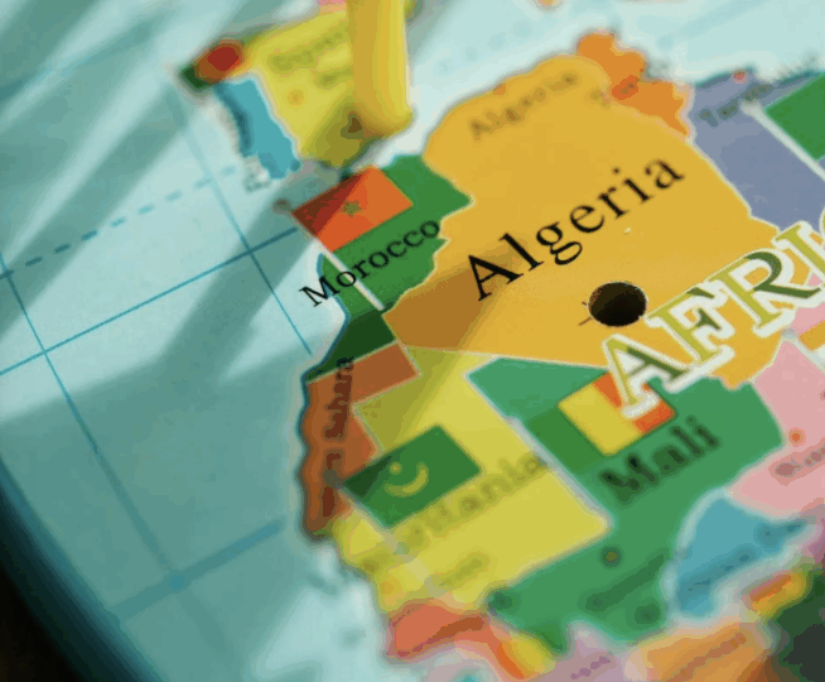
The Arab Diaspora has extended thousands of miles from the origins on the Arab Peninsula westward to Mauritania and Morocco. Arab migration and conquest reached as far as the westernmost areas of the African continent. Arab Muslims first arrived in Mauritania during the period of the Umayyad Caliphate. The Umayyad Caliphate was the second Islamic Caliphate following the death of Muhammad. The caliphate succeeded the Rashidun Caliphate, whose first caliph was Abu Bakr, the close companion and father-in-law of Muhammad, and considered the rightful successor under Sunni Islam. Living in Mauritania at the time of the start of the Islamization of the area were the Berber tribe. The Berber Tribe was lumped in with other ethnic groups by Europeans as part of a larger group of Islamic North Africans that became known as the Moors.
French Colonization of Mauritania
Africa faced widespread colonization beginning as early as the 15th century when Europeans established trading posts. The Arab-Berber population of Mauritania remained relatively sovereign up until the 20th century. This is due to the European powers being interested in coastal trade for the majority of colonial history, leading up to this point. Mauritania’s natural environment was harsh. Only 0.5 percent of Mauritania’s land is arable, as most of the physical geography is desert.
In the early 20th century, Mauritania became a French Colony. The main strategy of France to keep the population subdued was to completely assimilate Mauritania’s ethnic diversity. William Ponty, the governor general of French West Africa, wanted to “destroy the hegemony” of one race over the other to gain sympathy.
Independent Mauritania
After World War II, there was a massive wave of decolonization. There was a new world order. The old European monarchies and aristocracies were shattered with debt and destruction from two major wars. America and the Soviet Union rose from the ashes. Mauritania gained independence from France in 1960.
Ethnic Diversity
A great barrier to national unity has always been how heterogeneous the population was and continues to be. The Haratin ethnic group makes up a plurality of Mauritania’s ethnic demographics. They are also referred to as “Black Moors”. A considerable amount of the Haratin population descends from Slaves brought to the area from Sub-Saharan Africa. Despite having origins in Sub-Saharan Africa, the group has assimilated religiously and linguistically into Northwest Africa’s Arab culture, adopting the Islamic religion and the Arabic language. “White Moors” or the Beidane population is an ethnic group of people who descend from a combination of Arabs and Berbers. The Beidane population has traditionally held political and economic power over the Haratin group.
Slavery in Mauritania
Slavery has been a long-standing issue throughout Mauritania’s history. In 1981, Mauritania became the last country to officially abolish slavery by decree. A law criminalizing slavery was not passed until 2007. Despite Slavery officially being illegal, descent-based slavery still is widespread throughout the country, according to human rights groups such as Amnesty International. They report that there has been a significant lack of prosecution and enforcement of breaches of the law in regards to continued practice of slavery.
Signs of Declining Political Instability
Since the nation’s independence, there has been a consistent pattern of military coups. In 2019, the country had its first peaceful transfer of power since gaining independence, indicating signs of progression towards a more democratic government. Mohamed Ould Ghazouani was elected to the presidency with 52 percent of the vote.
New Flag with New Meaning
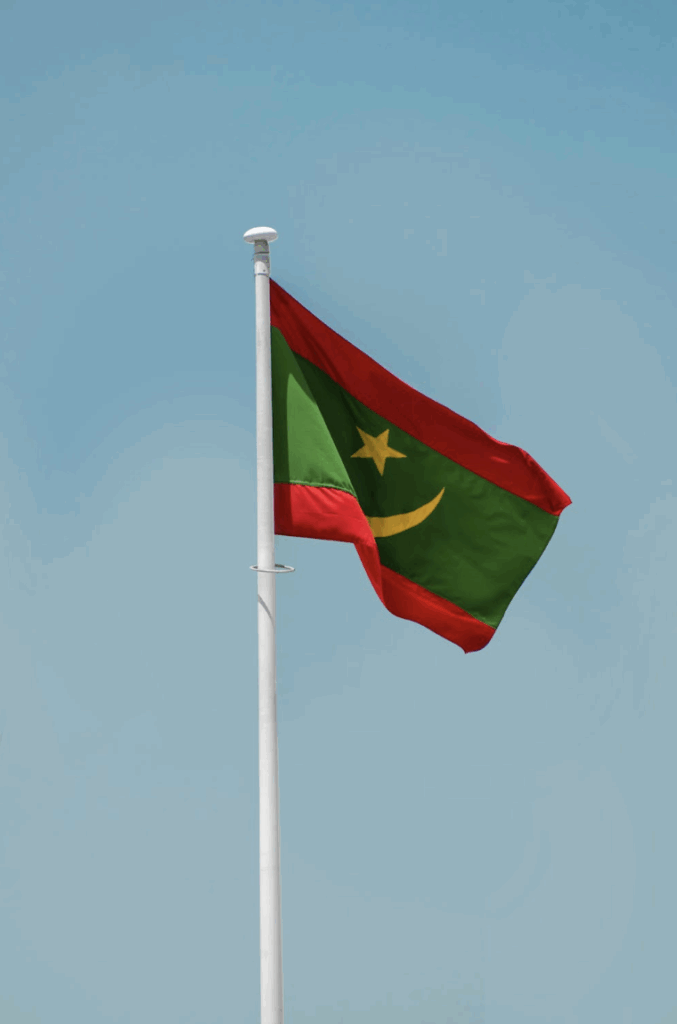
A small but subtle recent development in Mauritania is the change in the national flag. For the majority of the history of Mauritania, the flag was a pure green background with a yellow crescent and star, the symbol of Islam. In 2017, Mauritania voted in a referendum to add two red bars at the bottom of the flag, symbolizing the bloodshed in the struggle for independence. The flag also incorporates the Pan-African colors, a symbol showing a desire for national unity even in a hugely diverse population.
Mauritania in 2025
In 2025, Mohamed Ould Ghazouani was part of a delegation of African leaders to attend a White House lunch with President Trump. The main discussions of the meeting were ways to respond and interact with Trump’s tariff policy. Ghazouani praised Trump’s role in peace negotiations between Rwanda and the Democratic Republic of the Congo. The conflict is a long-standing one in African Geopolitics.
Mauritania today still faces significant challenges. Poverty remains widespread, and the human rights situation is still a work in progress. There are subtle signs of the country growing economically and expanding the social safety net. Addressing corruption has become a particular point of emphasis in recent years.
Want more articles like this? Sign up for our e-newsletter!
Check out our blog here!