Subscribe
to receive news by email

Poll
Will the Trump Administration Shift U.S. Policy in Favor of Palestine?
- No (87%)
- Yes (13%)
 Loading ...
Copyright © 2026 Arab America
Go topNetanyahu's Sectarian Worldview: "Muslim Invasion" Rhetoric Reveals His Political Strategy
By: Ghassan Rubeiz / Arab America Contributing Writer
The entire Middle East lives in the shadow of sectarianism. While most Arab state leaders have been trying their best to suppress (e.g. Egypt), ignore (e.g. Lebanon and Iraq), or recover from (e.g. Syria) sectarian political dynamics domestically, Israel’s current leadership has become used to weaponizing religious identity regionally and globally.
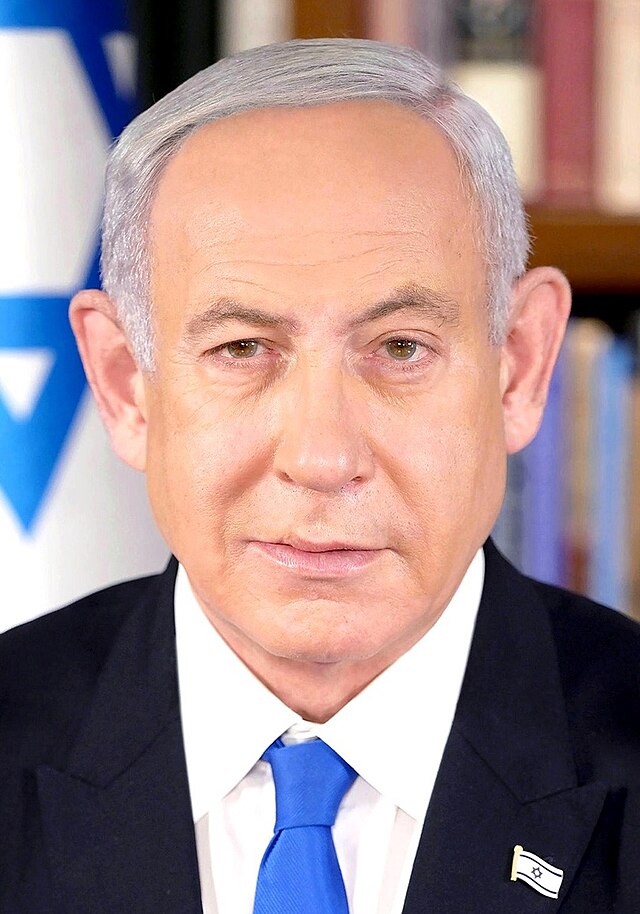
As Israeli Prime Minister Benjamin Netanyahu blames Europe’s growing opposition to Israeli policies on “unlimited immigration to Western European nations by Muslim minorities,” he reveals far more than his views on European demographics. This inflammatory rhetoric, delivered during a finance ministry conference in Jerusalem, exposes a sophisticated and cynical political strategy rooted in sectarian division and international right-wing alliance building.
Dog-Whistling to Europe’s Far-Right Movements
Netanyahu’s “Muslim invasion” language directly echoes the core narrative of European nationalist parties—from Germany’s AFD to Italy’s Lega to France’s National Rally. By validating their claims (demography replacement conspiracy) that Muslim immigrants are “ruining Europe,” he strategically aligns himself with the very political forces most supportive of Israel on the European continent. This is political messaging to strengthen ties with parties that exploit anti-immigrant sentiment while portraying Israel as a protector of Western civilization.
A Pattern of Divide and Rule
This rhetoric fits a long-standing Israeli strategy of exploiting religious and ethnic divisions across the Middle East. From plotting to arm Druze minorities in Syria against the ruling regime to supporting Christian militias against Muslim groups in Lebanon during the 1980s and 1990s, Netanyahu’s approach consistently seeks to fragment societies along sectarian lines. His interpretation of European opposition through this same lens reveals a worldview that sees sectarian division as both inevitable and exploitable for strategic advantage.
Stunning Hypocrisy in Muslim Relations
The contradiction is stark: while demonizing Muslims as an invasive force in Europe, Netanyahu simultaneously courts Saudi Crown Prince Mohammed bin Salman for Abraham Accords expansion and seeks legitimacy from the broader Muslim world. This reveals a purely transactional approach—Muslims are valuable partners when they serve Israeli interests, but a civilizational threat when explaining diplomatic isolation. Such hypocrisy undermines any claim to principled policy-making.
Building a Transnational Right-Wing Alliance
Netanyahu’s rhetoric resonates powerfully with Trump’s MAGA base, Evangelical churches, and the broader American right-wing ecosystem that supported the Muslim travel ban and views Islam as a threat to Judeo-Christian values. By framing opposition to Israeli policies as part of a larger Islamic challenge to Western civilization, he anchors Israel within an international network of right-wing movements. This allows him to present Israeli actions not as isolated policies, but as frontline defense of an imagined Western identity under siege.
Netanyahu views geopolitics through a divisive lens, willing to inflame religious tensions and validate discriminatory narratives when politically convenient, while simultaneously pursuing pragmatic relationships with the very communities he publicly demonizes.
Israel desperately needs visionary leadership, difficult to envision when Washington today, its major source of support, suffers the same deficit. To a certain degree, Palestinians, however, could help shift these dynamics by broadening their alliances with Jewish groups committed to justice-based peace.” As for Arab leaders, better democratic-leaning governance is ultimately the best way to gradually control deep-rooted sectarian sentiments.
Ghassan Rubeiz is the former Middle East Secretary of the World Council of Churches. Earlier, he taught psychology and social work in his country of birth, Lebanon, and later in the United States, where he currently lives. He has contributed to political commentary for the past twenty years and delivered occasional public talks on peace, justice, and interfaith subjects. You can reach him at rubeizg@gmail.com
The views and opinions expressed in this article are those of the author and do not necessarily reflect the position of Arab America. The reproduction of this article is permissible with proper credit to Arab America and the author.
Want more articles like this? Sign up for our e-newsletter!
Check our blog here!