
Subscribe
to receive news by email

Poll
Will the Trump Administration Shift U.S. Policy in Favor of Palestine?
- No (87%)
- Yes (13%)
 Loading ...
Copyright © 2026 Arab America
Go topOn Women and Weeping: Pathos in Bedouin Elegies
By: Mitzi Tapang / Arab America Contributing Writer
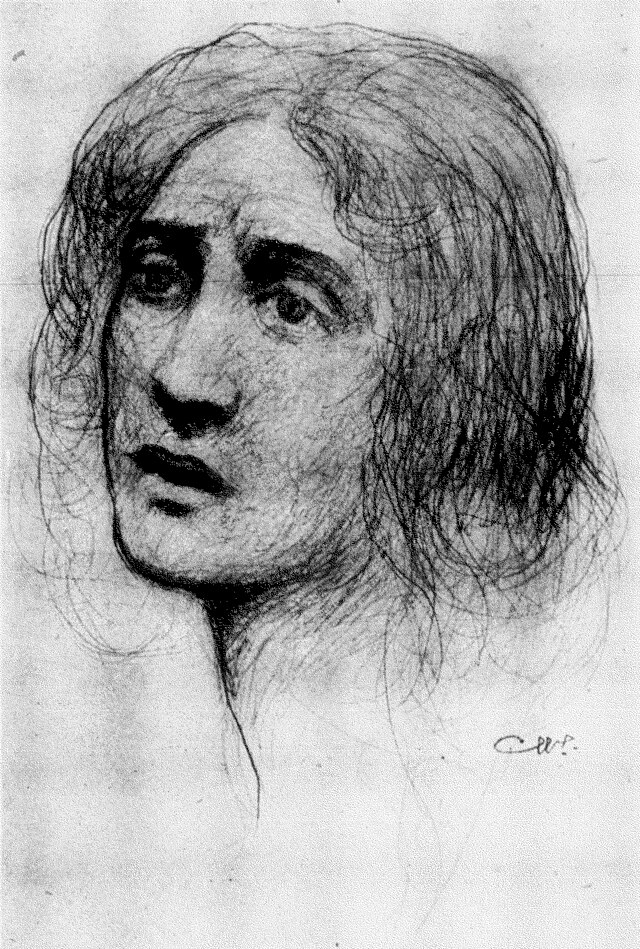
Poetry has long been part of the cultural and political landscape of the Arabian Peninsula, but often lags behind capturing the contribution of women in shaping its recognition in contemporary times. Elegiac writing, in particular, finds its grounds across Egypt and other parts of the Arab world but is scarcely acknowledged by the domains of scholarly thought. If it does, too, it falls under the overt pretext of the patriarchal system, or on the gendered discourses of death and lamentation.
Talking about gender dynamics prevalent in today’s context and how they affect systems of social hierarchies necessitates an analysis on the one that existed in the space of history that has fragmented the course of feminist thought, and one bound by customary beliefs. In a rapid turn of events, the value attributed to women’s writing has occurred in sporadic pauses, some hidden, some made to be forgotten.
The Marthiya
Pre-Islamic rithāʾ (marthiya as genre) follows an abridged profile of the dead, praising their courage, generosity, and tribal function. Voicing grief is often fused with a call for revenge or, at least, a moral reckoning. The addressee is straightforwardly the immediate kin group, and its range is the honor economy of the tribe.
After the Battle of Karbalāʾ, the collision of Imam Husayn and caliph Yazid, the relatively tight frame from which the genre operated stretched to include quasi-epic narratives. In this regard, the death of Husayn and his companions was told scene by scene, from farewells, battlefield episodes, the killing of individual martyrs, the captivity and return of the survivors, and the lamentations of women. The marthiya, then, became capacious, structurally and with its scope, because it ought to accommodate the repertoire of set episodes that the tribe already knew of and hence expected to relive.
Doctrinally, the poem carries a dense ritualistic overtone of embodied responses. It is now recited or chanted in Muharram gatherings, with timed chest-beatings and deliberate imagery and language. The “literary effect” of the marthiya relied much on its efficacy in producing collective grief and identification with Husayn’s suffering. Over time, this performative function entailed the significant refinement of its technical features (refrains, end-rhymes, climactic repetitions, and parallelism). The marthiya’s narrative symbolism had so been restaged and emotionally ratified that it instantly rose into a wide-ranging, liturgical-literary apparatus.
Anxiety of Hybridity
Hence, why is it that the marthiya, despite its long history of deep-rooted integration into Arab tradition, still marginalises the poetic articulation of women? Particularly in the general sketch of Bedouin women’s poetic heritage, there is little-known history of the underpinnings and upkeeps of their enactment. In fact, fragments of poetic compositions by Bedouin women were known before the discovery of oil in the Arabian Peninsula. It was only until the mid-to-late 1920s that some were transcribed and preserved by a poet named Ibn Radda. Even then, in more than a decade of his pursuit, he was threatened with death for violating tribal law.
This is made all the more complex if we take into account the long mono-rhymed ode (qaṣīda) in conjunction, or as it constructively has been, in comparison, to the marthiya. Scholars have debated these boundaries as many marthiya are built on qaṣīda-like structures, while numerous qaṣīdas contain extended elegiac passages within an ostensibly panegyric or boastful frame. In such cases, we can either classify by metre and design and thus call the poem a qaṣīda or treat it as marthiya by dominant occasion and ritual use, and these two principles of genealogical definition do not always align.
Nonetheless the comparison allows for a more substantial clause in driving a narrative of the power imbalance between a male-dominated “encapsulation of a literary paradigm” and the overall expression of feminine lamentation, which is generalized as mono-thematic and rarely containing hikma or wisdom. What is left out from the implied definitions is the reinforcement of an exploitative binary that lies in simply stating that there is an inherent difference between the two forms.
Arab Women’s Elegies: Enactment and Subversion
In retrospect, that matter relegates the poetic expression of women into a position that is in constant association with a widely “male” genre, which consequently risks downgrading the agentic exercise and psychological nuances of being “female.” It becomes necessary, then, to avoid delimiting the elegiac form as merely female sentimentality. In the marthiya, women
found a paradigm that suited their feminine stance, be it cultural or sexual, at the same time that it exploited the widely appreciated structures, themes, and metaphors of what came to be known as the poly-thematic qaṣīdah…
Agentic exercise, too, has a lot to do with the pattern present in the work of al-Khansāʾ, where, in the first few lines, she says:
I watched the stars, though it was not my task to watch;
at times I wrapped myself in my remaining rags.
The poetic stance is a realm turned upside down, or as it is depending on the realities and loci of the poet. Indeed, narrative choices are detrimental to how the narrative is to be received by the community. Now, as before, traces of discrepancy may be accounted to positionalities present within a supposed objective articulation; in art, education, linguistics, and more so in literature. A text is not simply a medium through which authors reveal themselves but their radical separation from the larger economy of ideological conditioning.
Want more articles like this? Sign up for our e-newsletter!
Check out our blog here!