
Subscribe
to receive news by email

Poll
Will the Trump Administration Shift U.S. Policy in Favor of Palestine?
- No (87%)
- Yes (13%)
 Loading ...
Copyright © 2026 Arab America
Go topPalestine Recognition Grows: 147–and Now the West?
By: Fayzeh Abou Ardat / Arab America Contributing Writer
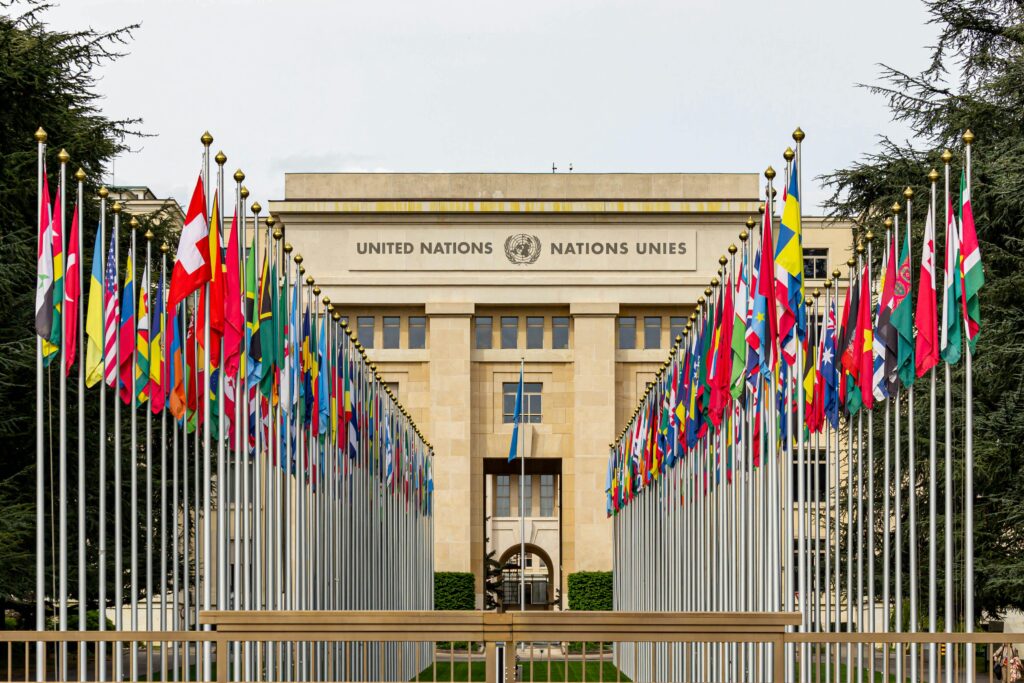
In a major diplomatic shift, Canada, the UK, Malta, Portugal, and France are reportedly set to recognize the State of Palestine this September. If it happened, the action would constitute the turning point in Israeli-Palestinian geopolitics. It is especially significant among NATO and EU member nations that have traditionally been unwilling to act unilaterally. So far, 147 of the UN’s 193 member states recognize Palestine as a sovereign state. This demonstrates a rising Western alliance with the global South and the Arab world on Palestinian statehood.
The scheduled September recognitions correspond with the UN General Assembly and come amid increasing international scrutiny of Israel’s military campaign in Gaza. The political timing, close to the anniversary of the Oslo Accords, raises concerns about the West’s future in peace efforts. It also suggests a possible shift toward multilateral recognition of Palestinian sovereignty.
The Numbers: Where the World Stands
As of mid-2025, 147 of the UN’s 193 member states had recognized the State of Palestine. These recognitions are spread across Africa, Asia, Latin America, and the Middle East. Notably, countries including Brazil, Russia, China, India, and the majority of Africa and Southeast Asia have traditionally supported Palestinian sovereignty. The United States, Germany, Australia, and Japan maintain deep strategic ties with Israel or support a negotiated two-state solution. Despite this, they have yet to formally recognize a Palestinian state.
The anticipated September recognitions by Canada, the United Kingdom, Malta, Portugal, and France are important for their geopolitical weight within the Western alliance structure. France and the United Kingdom are permanent members of the United Nations Security Council. Canada and Portugal, while not big global powers, have significant influence within NATO and the EU. Malta’s status as a tiny but diplomatically engaged EU member adds symbolic depth to the developing bloc of Western acceptance.
France has always expressed support for a two-state solution, but has abstained from formal recognition without broader EU agreement. Similarly, the UK Labour Party, which is largely likely to remain in power for the foreseeable future, has pledged to recognize a Palestinian state. Canada’s decision would mark a major break from its long-standing alliance with the United States and Israel. It signals a significant foreign policy shift under the newly elected government. This administration has adopted a more assertive stance on international human rights and multilateral diplomacy.
Political and Diplomatic Implications
Such recognitions have a wide-ranging political impact. For Israel, the action signifies a further degradation of its international reputation, notably in Europe, where public and government criticism of the Gaza conflict has reached new heights.
However, these acknowledgements may indicate a lack of patience with the decades-long peace process, which many now regard as a failing framework. The expansion of Israeli settlements and the weakening of the Palestinian Authority have drawn increasing international concern. Combined with the Gaza war’s devastating human toll, these factors have shifted global opinion on the conflict. Recognizing Palestine is increasingly viewed by Western nations as an essential step toward resuming diplomatic momentum, rather than a radical decision.
This developing trend reflects larger developments in global power relations. The Global South is gaining influence in international forums like BRICS+ and the G77. This shift is placing growing pressure on Western countries to reconsider their foreign policy positions. There is increasing demand for alignment with global human rights values and international law over outdated Cold War alliances. Recognition of Palestine is now being characterized not merely as a humanitarian obligation, but also as a pragmatic recalibration in accordance with international agreement.
What Comes Next? The Risks and the Realities
The path to recognition does not come without risks. In practice, it may further polarise the international community. The United Nations Congress has already threatened to restrict financing to governments or institutions that recognize Palestine unilaterally without a negotiated settlement. Israel may retaliate by reducing diplomatic ties or suspending bilateral agreements with countries that acknowledge Palestinian statehood.
There are also internal political calculations. In the United Kingdom and Canada, for example, increased support for Palestinian rights among younger voters and expatriate populations has elevated the issue to the level of domestic electoral concern. Meanwhile, far-right parties in Europe may use recognition efforts to accuse mainstream governments of “abandoning” Israel, thus fueling antisemitism and Islamophobia in public debate.
Nonetheless, the symbolic and political significance of these recognitions might be enormous. They may improve the Palestinian Authority’s status in international legal institutions such as the ICC and the ICJ. This might bolster its efforts to investigate suspected war crimes and occupation. Recognition may also encourage regional actors, notably Arab Gulf states, to reconsider normalization agreements with Israel in the absence of significant Palestinian progress.
Perhaps most importantly, the debate has shifted from whether Palestine should be a state to how it may be established. Recognition shifts the focus to the practical and secure realization of Palestinian statehood. It puts pressure on Israel and its allies to provide a viable alternative to the two-state solution. The alternative must address Palestinian aspirations without resorting to indefinite occupation or separation.
As global opinions shift and the cost of preserving the status quo in the Israeli-Palestinian conflict becomes more apparent, change is required. The recognition of Palestine by Canada, the United Kingdom, Malta, Portugal, and France would be an important turning point. It reflects not only disappointment with the existing peace process, but also a shift in Western foreign policy to align with the rising worldwide consensus. Already, 147 of the United Nations’ 193 member states acknowledge Palestinian statehood. The September declarations may be the turning point for making Palestinian sovereignty a diplomatic reality.
Want more articles like this? Sign up for our e-newsletter!
Check out our blog here!