Subscribe
to receive news by email

Poll
Will the Trump Administration Shift U.S. Policy in Favor of Palestine?
- No (87%)
- Yes (13%)
 Loading ...
Copyright © 2026 Arab America
Go topPathbreakers of Arab America—Kareem El-Badry
By: John Mason / Arab America Contributing Writer
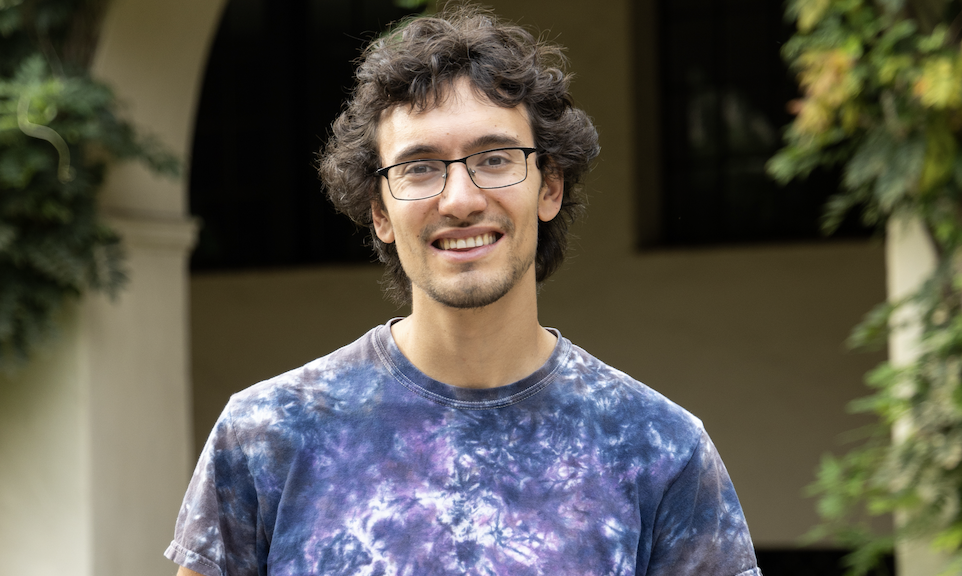
This is the one-hundred and first in Arab America’s series on American pathbreakers of Arab descent. The series features personalities from various fields, including entertainment, business, sports, science, the arts, academia, journalism, and politics. Our one-hundred and first pathbreaker is Kareem El-Badry, an Egyptian American astrophysicist known for his discovery of hidden stars and black holes. He is a recent winner of the MacArthur ‘genius’ award and is a proud member of a long line of astronomers dating to the period of medieval Arab and Islamic astronomy.
Kareem El-Badry named 2025 MacArthur Fellow, for work uncovering hidden stars and black holes
Kareem grew up in Roseburg, Oregon, the son of Egyptian American parents. His religion is not officially noted, though the surname El-Badri is associated with a historic Muslim name, El-Badr. While little information is available for his early years, his academic career is clear-cut. He completed his B.S. degree at Yale University, followed by a postdoctoral position as a Junior Fellow during 2021-2023 at the Harvard/Smithsonian Center for Astrophysics. Kareem holds an Adjunct Scientist appointment at the Max Planck Institute for Astronomy in Heidelberg. Kareem received his PhD. from the University of California, Berkeley in 2021. In 2023, he joined the California Institute of Technology as an assistant professor of astronomy.
At Caltech, El-Badri teaches and researches topics including binary stars, black holes, and related stellar ‘exotica.’ He describes his research group as using “a combination of large-scale surveys, targeted observations of individual objects, and theoretical stellar evolution calculations to understand better how these objects form, evolve, and interact with their surroundings.” On a broader level of astrophysics, Kareem studies topics he defines as “Milky Way stellar populations, galaxy formation, and statistical astronomy.”
Earlier this year, the John D. and Catherine T. MacArthur Foundation awarded El-Badry a MacArthur Fellowship. This is an honor: a $800,000 grant described as “no-strings-attached.” The Foundation defines the award, known colloquially as “genius grants, [which honor extraordinarily creative individuals with a track record of excellence in a field of scholarship or area of practice.”
The MacArthur award was granted to El-Badry specifically to honor his numerous discoveries, involving “stars and black holes using datasets from large astronomical surveys. The award also recognized his early work in 2018, when he developed a new method for identifying binary stars—pairs of stars that can be hard to distinguish because they are close together in the sky. Using data from the APOGEE (Apache Point Observatory Galactic Evolution Experiment) project, he found over 3,000 binary systems in the Milky Way, and in later work using data from the European Space Agency’s Gaia mission, he discovered more than 1 million binaries—the largest known sample to date.”
Yet another, later example of El-Badry’s research, in 2022, is his and his colleagues’ discovery of the closest known black hole to Earth, “lying about 1,600 light-years away (for reference, the center of our Milky Way galaxy is 25,000 light-years away). The inactive, or dormant, black hole, dubbed Gaia BH1, orbits a star like our Sun. Though it emits no light, El-Badry was able to spot the black hole through a gravitational tug it induces on its lighter-weight stellar companion, like a parent swinging around a toddler.” In 2024, he unveiled “21 hidden neutron stars orbiting around stars like our sun…and the first-known ‘black hole triple,’ a system of three stars, one of which is a black hole.”
When Kareem first heard about his MacArthur Fellowship, he said he was very surprised. “At first, I was pretty sure someone was trying to scam me,” he joked. “It feels great to have my work recognized, and I feel lucky to have been chosen. My work relies heavily on collaboration. In fact, the Gaia collaboration that produces a lot of the data I work with involves hundreds of people, many of whom are less visible but without whom the work wouldn’t be possible. I can also thank my students for the hard work they put into our research.”
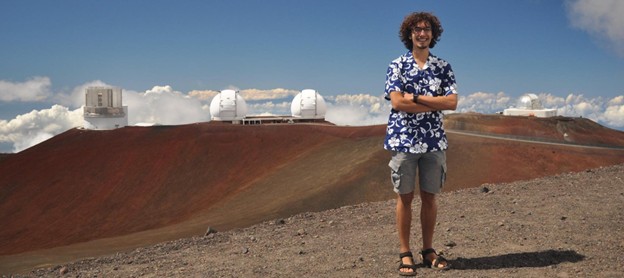
El-Badry, a ‘Star’ in the pantheon stretching from the period of medieval Arab and Islamic astronomy
Kareem would be right at home with his predecessors from the medieval Arab-Islamic period of astronomical development. This period dates specifically to the so-called Islamic Golden Age during the 9th–13th centuries. These developments, according to Wikipedia, mostly took place in the Middle East, Central Asia, Al-Andalus, and North Africa, and later in the Far East and India. They built on existing foreign science, incorporating elements of Greek, Sassanid, and Indian works.
Arab and Islamic astronomy played a significant role in the revival of ancient astronomy following the loss of knowledge during the early medieval period. Even today, “A significant number of stars in the sky, such as Aldebaran, Altair, and Deneb, and astronomical terms such as ‘alidade,’ ‘azimuth,’ and ‘nadir,’ are still referred to by their Arabic names.
Importantly, it was partly the rise of Islam, with its obligation to determine the five daily prayer times and the qibla (the direction towards the Kaaba in the Sacred Mosque in Mecca) that inspired intellectual progress in astronomy.
It is from a Caltech website that we get an inkling of how El-Badry fits into the august pantheon of Middle Eastern astronomers:
“Kareem is an astronomer with extraordinary creativity and deep physical intuition. He is driving major changes in our understanding of the late stages of binary-star evolution through his innovative use of the enormous Gaia dataset. He has discovered invisible companion stars and puzzling systems that challenge theoretical models developed over decades to explain earlier data,” says Hirosi Ooguri, the Fred Kavli Professor of Theoretical Physics and Mathematics and the Kent and Joyce Kresa Leadership Chair of the Division of Physics, Mathematics and Astronomy at Caltech. “We are thrilled that he has received this well-deserved honor.”
Kareem’s MacArthur award amplifies his expansive contribution to astrophysics. It notes: “His ability to extract insights from the enormous amounts of data gathered in space observation missions has led to many discoveries—from overlooked dormant black holes in our galaxy to new classes of stars and coupled systems.” One more accolade deriving from the same award underscores the expansiveness of his contribution to the understanding of our vast universe:
“El-Badry is highly prolific and has made contributions to many other areas of stellar astronomy, including findings about high-velocity stars, triple star systems, the fates of massive stars, and galaxy formation. As more astronomical data becomes available and new observation missions launch, El-Badry is poised further to expand our knowledge about the wonders of our universe.” As we are proud of this Arab American today, El-Badry’s predecessors would have been equally proud.
Important to Kareem as both a teacher and researcher is the advice he gives to his students and younger colleagues, seen in the following quote:
“I think I’ve benefited a lot from the freedom to explore different areas within astrophysics and expose myself to different ideas. It’s much easier to have a creative idea that connects themes from different subfields when you read about and talk to people working in different areas. At all stages in a research career, I think it’s important to look for opportunities to branch out and try something new.”
Sources:
-“Kareem El-Badry Named a 2025 MacArthur Fellow,” Caltech, October 08, 2025
-“Medieval Islamic astronomy,” Wikipedia, 2025
-“Expanding our knowledge of binary star systems, black holes, and other wonders of the universe, “ John D. and Catherine T. MacArthur Foundation, 10/8/2020
-“Kareemelbadry. github.io California Institute of Technology,” Kareem El-Badry Website, 2025
-“Celebrating Creative Genius: Keck Observer Kareem El-Badry Named a 2025 MacArthur Fellow,” W.M. Keck Observatory, October 13, 2025
John Mason, Ph.D., focuses on Arab culture, society, and history and is the author of LEFT-HANDED IN AN ISLAMIC WORLD: An Anthropologist’s Journey into the Middle East, New Academia Publishing, 2017 and of his new novel, WHISPERS FROM THE DESERT: Zaki, a Little Genie’s Tales of Good and Evil (2025), under his pen name, Yahia Al-Banna. He has taught at the University of Libya in Benghazi, Rensselaer Polytechnic Institute in New York, and the American University in Cairo. John served with the United Nations in Tripoli, Libya, and consulted extensively on socioeconomic and political development for USAID and the World Bank in 65 countries.
The views and opinions expressed in this article are those of the author and do not necessarily reflect the position of Arab America. The reproduction of this article is permissible with proper credit to Arab America and the author.
Want more articles like this? Sign up for our e-newsletter!
Check out our blog here!