

Subscribe
to receive news by email
Poll
Will the Trump Administration Shift U.S. Policy in Favor of Palestine?
- No (87%)
- Yes (13%)
 Loading ...
Copyright © 2026 Arab America
Go topThe Feast of Santa Barbara: A 2,000-Year Palestinian Tradition That Traveled the Globe
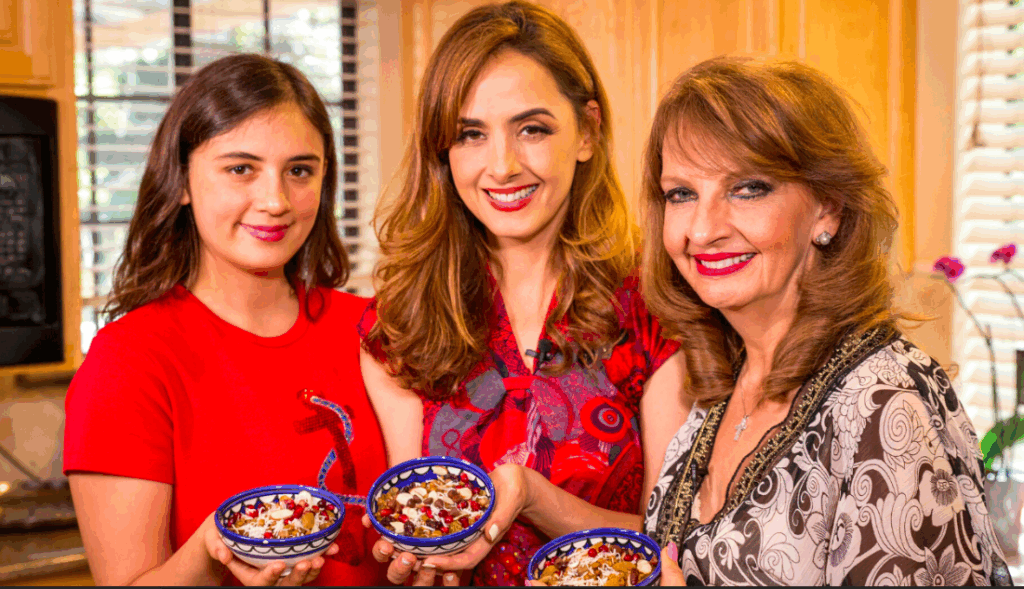
By: Blanche Shaheen/Arab America Contributing Writer
Every December 4th, Palestinian Christians, and many other orthodox Christians throughout the Levant, Greece, and Eastern Europe, prepare a sweet, fragrant porridge called Burbara. To outsiders, the dish may seem like a simple winter comfort food. But for those who grew up in the hills of Bethlehem, Jerusalem, Ramallah, Nazareth, Haifa, and villages throughout the Galilee, it carries the weight of two millennia of faith, resilience, and cultural identity.
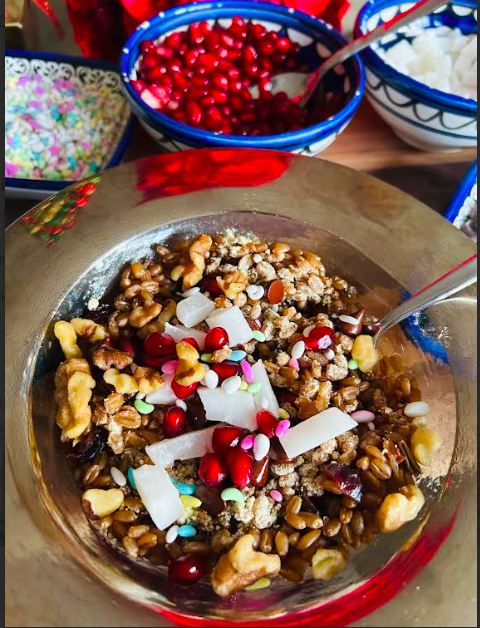
While Saint Barbara is honored across the Middle East, the connection between her feast and Palestinian Christians is especially deep. For nearly 2,000 years, Christian families in the Holy Land have commemorated her story with Santa Barbara’s feast. (“Eid el-Burbara”) This is celebrated with storytelling, dressing children in costumes, visiting neighbors, and most famously… sharing Burbara, a porridge made from wheat, chickpeas, anise, cinnamon, licorice candies, and pomegranate. As Palestinian families migrated, this tradition migrated with them, and today you can find this dish in Greece, Eastern European countries, and even South American countries like Chile.
The Story of Santa Barbara: A Tale of Escape and Miracles
The dish Burbara is named for Santa Barbara, a young woman who lived in the Levant during the third century, often believed in Palestinian tradition to have lived somewhere between present-day Baalbek Lebanon and northern Palestine.
Barbara was the intelligent and compassionate daughter of Dioscorus, a wealthy nobleman loyal to the Roman authorities. Fearing the outside world, and suspicious of her growing Christian faith, he locked her in a tower to control her beliefs and movements. Despite the confinement, Barbara embraced Christianity, helping the poor and praying in secret. For her father, this was not only disobedience—it was political treason.
When he discovered her devotion, he attempted to force her to renounce her faith. Barbara refused. She fled her father’s home under cover of night and ran into the countryside. Soldiers were sent after her. In Palestinian tradition, this is where the most iconic moment happens:
As Barbara ran into vast wheat fields, she prayed for protection.
The wheat miraculously grew tall and dense, hiding her from the soldiers and confusing their search. This miracle became the core of the feast. Wheat became the miraculous symbol of protection, faith, and resilience under pursuit.
To remember Santa Barbara’s sacrifice, Palestinian Christians cook a wheat-based festive dish called Burbara every December 4th. Every ingredient has a purpose. The nutty and chewy wheatberries honor the miracle of the wheat fields. The chickpea powder has a creamy texture and toasted tahini flavor, but chickpeas are also a winter survival food in ancient Palestine.
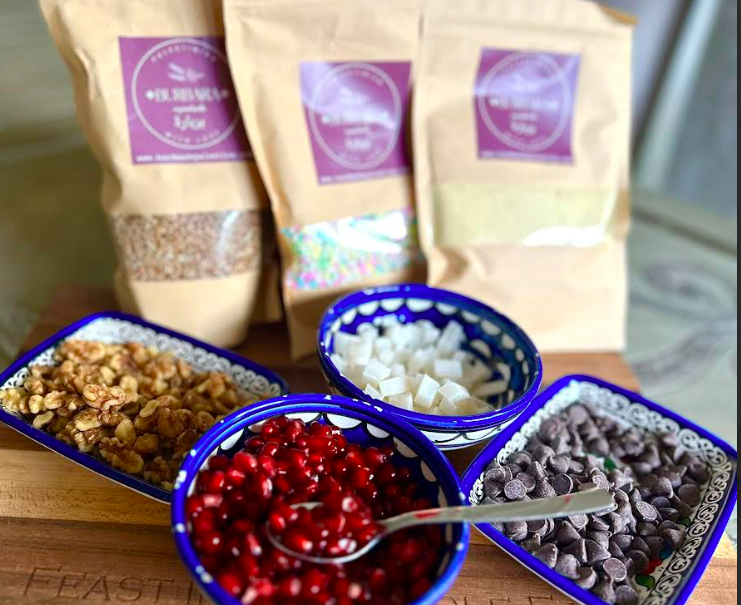
Warming spices like cinnamon, anise, and fennel are symbols of warmth and hospitality, yet provide a sweet herbal flavor. Raisins and coconut add a chewy sweetness. The colorful candy coated licorice candies, pomegranate, and walnuts add a burst of color and crunch. They also boost the antioxidants, and micronutrients in each bowl.
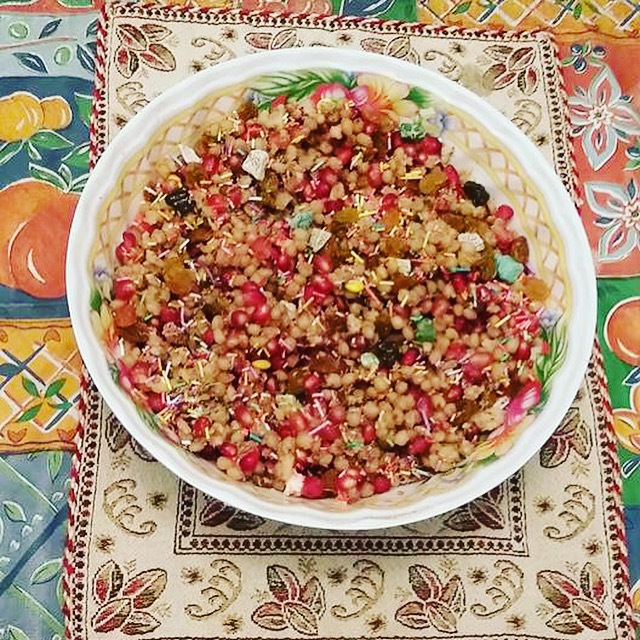
Burbara truly feels like a celebration in a bowl—perfect for winter mornings, holidays, or when you need a cozy meal with meaning. Even far from home, Palestinian families continue to prepare Burbara as a way to keep heritage alive. In doing so, they keep Barbara’s story and their own alive. For the first time in history, Palestinian farmers and artisans have even created modern burbara kits to bring people together across continents. To learn more about these kits, you can visit: https://handmadepalestine.com/products/burbara-kit-to-cook-palestinian-christmas-pudding-at-home-available-for-a-limited-time-only?_pos=1&_sid=435ae3802&_ss=r
To learn how to make burbara, click on the video below:
Traditional Burbara Dessert Recipe (Levantine Wheat Pudding)
Ingredients
Base:
- 1 cup whole wheat berries (or peeled wheat “freekeh tseed,” but whole wheat is traditional)
- 4 cups water (6 cups water if you like it more soupy)
- ½- 1 cup sugar or sugar free sweetener (adjust to your preference)
- 1 tbsp ground cinnamon
- ½ tbsp ground anise (can use 1 tbsp if you like stronger flavor)
- ½ tsp nutmeg
- 1 tsp ground fennel
- Toppings (Add as many as you like):
- Raisins
- Dried Cranberries
- Pomegranate seeds
- Walnuts
- Shredded coconut
- Candied fennel, licorice, or anise seeds (optional)
- M&M candies
- Chocolate chips
- Directions: Soak the wheatberries for 2-8 hours, then rinse and drain. Place in a pot with 4-6 cups of water. Bring to a boil, lower heat, and simmer 45–60 minutes, until the wheat is fully cooked, swollen, and tender. Add the sugar and cranberries or raisins. Simmer another 15 minutes to infuse the flavors. The texture should be soupy-thick (like a loose porridge.) It’s meant to be fragrant, warm, and lightly sweet, not overly sugary. Spoon into bowls while hot. Add your choice of nuts, dried fruit, coconut, chocolate, and pomegranate seeds.
Blanche Shaheen is an Emmy Award winning journalist, host of the YouTube cooking show called Feast in the Middle East, and cookbook author. For more authentic and classical Middle Eastern recipes, you can purchase her cookbook, “Feast In the Middle East here: https://secure.mybookorders.com/mbo_index.php?isbn=9781545675113 For her cooking video tutorials, visit https://www.youtube.com/user/blanchetv Her recipes can also be found at https://feastinthemiddleeast.wordpress.com/