
Subscribe
to receive news by email

Poll
Will the Trump Administration Shift U.S. Policy in Favor of Palestine?
- No (87%)
- Yes (13%)
 Loading ...
Copyright © 2026 Arab America
Go topThe Great Controversy of Being Arab: Unity in Diversity
By: Laila Mamdouh / Arab America Contributing Writer
Arab nationalism began as a dream of belonging after years of colonial division. In the early twentieth century, Arab intellectuals and revolutionaries worked to reclaim self-determination. The Nahḍa (Arab renaissance) inspired an ideology that viewed the Arab world as a single cultural and political community.
This movement gained momentum after World War II, leading to the creation of the Arab League in 1945 and reaching its height under Gamal Abdel Nasser in the 1950s and 60s. For many, Nasser represented dignity and independence. He stood firm against Western and Soviet pressures and imagined a self-reliant Arab world.
The Promise and Power of Pan-Arabism
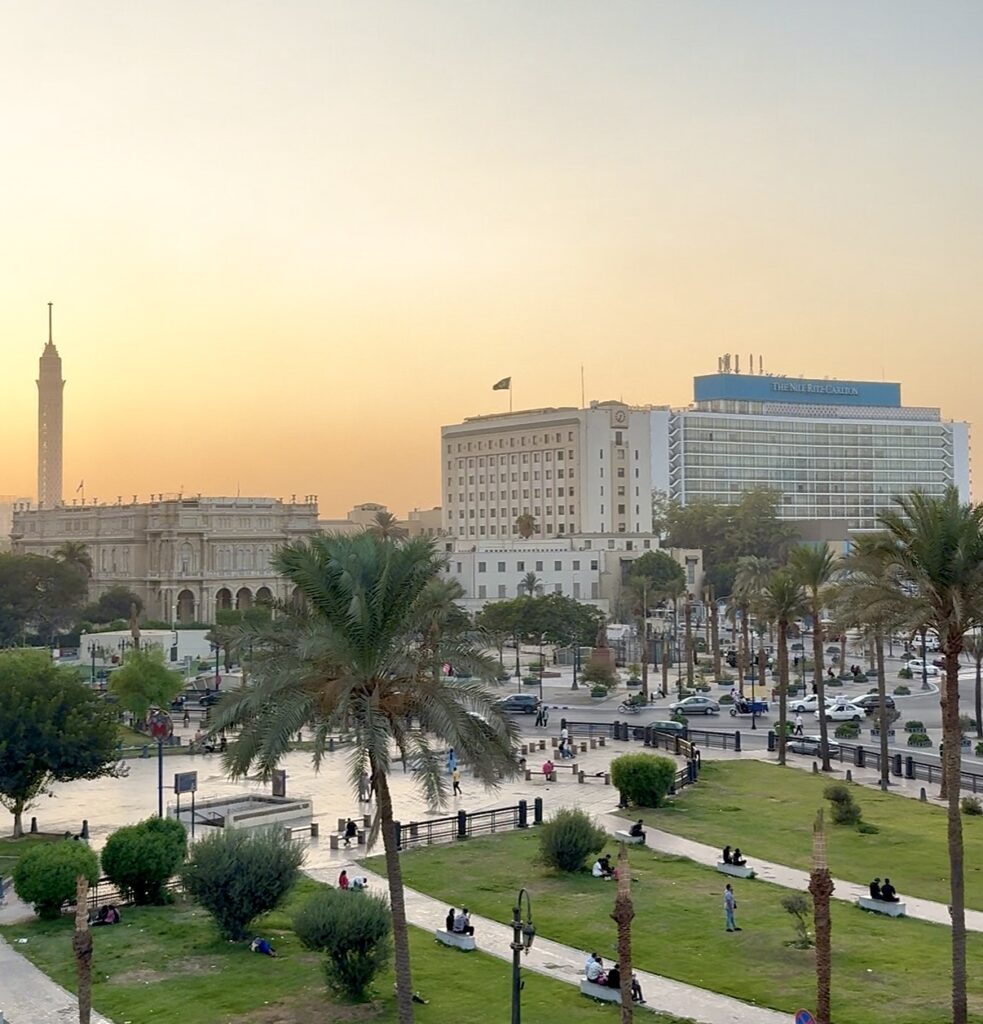
Pan-Arabism offered the region something deeply empowering: a shared sense of pride, solidarity, and belonging. It was a vision of strength rooted not in borders but in the common threads that unite Arab peoples’ languages, cultures, and histories.
Institutions like the Arab League made cooperation seem possible. Economically, culturally, and diplomatically, the idea of “one Arab nation” showed a shared desire to stand tall on the world stage. For the first time, the Arab world could speak in its own voice, confident, independent, and proud.
This dream also revitalized the Arabic language and culture. Writers, poets, and educators championed Arabic as the heart of identity, transforming it from a mere tongue into a symbol of selfhood and resistance.
When Unity Overshadowed Diversity
Yet this powerful current, this strong sense of unity, came with a hidden cost. The ambitious project of pan-Arabism, though noble, sometimes became too broad and overlooked the diversity it aimed to bring together. The idea of a single “Arab identity” started to overshadow the fact that being Arab means very different things to different people. Arab nationalism often prioritized unity over individuality. Differences, whether ethnic, linguistic, or sectarian, were sometimes treated as inconvenient. To disagree or assert distinction could be seen as weakening the dream. And so, what was meant to empower sometimes ended up silencing.
Arab Ethnicity vs. Arab Nationality: Two Threads, One Fabric
This is where the heart of the controversy lies: in the blurred line between Arab ethnicity and Arab nationality.
To be Arab ethnically often means belonging to groups historically connected to the Arabian Peninsula. These are people whose ancestry, culture, and early language traditions are rooted in that region. Their sense of “Arabness” is ancient, tribal, and genealogical. For them, Arabic is not just a language but a birthright, passed down through generations of Bedouin tribes, poets, and warriors.
Ethnicity, in this sense, is about heritage. It connects individuals to shared ancestors, customs, and cultural practices. It’s woven into family trees, dialects, and even the landscapes that shaped their histories.
Arab Nationality: A Modern Political Identity
In contrast, being Arab by nationality is a modern idea shaped by colonial borders and the creation of new states. Someone can be Arab by nationality if their country is part of the Arab League or uses Arabic as its official language, even if their ancestry is not ethnically Arab.
For example, an Amazigh person in Morocco or a Kurdish citizen in Syria may carry an “Arab” nationality, not because of ethnicity, but because their nation-state identifies as part of the Arab world. Similarly, an Egyptian might be “Arab” in a cultural or political sense but trace their roots to ancient civilizations distinct from the Arabian Peninsula.
Nationality, then, is about belonging to a community of citizenship. It is a shared political and cultural identity, not based on bloodline.
Where They Meet and Where They Clash
When pan-Arabism surged in the 1950s and 60s, it often blurred these two definitions. The rhetoric implied that to be a true Arab meant to embody both ethnic and national identities. This made it difficult for people whose heritage didn’t align with Arab ethnicity to assert their identity without being seen as “less Arab.”
But the truth is: these two forms of Arab identity can coexist beautifully. One does not cancel out the other, just as wearing a shirt does not mean you cannot wear pants. You can have both an ethnic and a national identity at the same time. You can belong to a tribe, a heritage, or a language while also being part of a modern nation.
Recognizing that distinction allows Arab identity to grow and remain flexible, rather than become stifled by uniformity.
Reclaiming Arab Identity as a Mosaic
The strength of Arab identity comes from its diversity. Across 22 nations and over 400 million people, the Arab world covers many continents, climates, and cultures. From the Maghreb’s Amazigh traditions to the Levant’s ancient Christian communities, from Gulf Bedouins to Sudanese Nubians, each group has its own story, and each story is Arab in its own way.
Our task now is to embrace Arab identity as a mosaic, not a monolith. The Arabic language itself shows this, with its many dialects, rhythms, and poetic forms. All are valid and beautiful. There is no single way to sound or look Arab. By seeing Arabness as an umbrella rather than a mold, we reclaim what early pan-Arabism aimed for: solidarity, without losing individuality. For the Arab Future.
The future of Arab identity lies in celebrating our plural belonging. We can be Arab and Amazigh, Arab and Nubian, Arab and Palestinian, Arab and Egyptian, without contradiction. Arab unity should be about shared dignity, not sameness; about collective pride, not conformity. It should encourage every Arab to bring their differences to the table, enriching the whole rather than threatening it.
As Arab youth today, we have the chance to rewrite the narrative, to honor our past while shaping a future where “I am Arab” means “I belong, in all my colors.”
Want more articles like this? Sign up for our e-newsletter!
Check out our blog here!