

Subscribe
to receive news by email

Poll
Will the Trump Administration Shift U.S. Policy in Favor of Palestine?
- No (86%)
- Yes (14%)
 Loading ...
Copyright © 2026 Arab America
Go topTHE LIFE OF ĪLĪYĀ ABŪ MĀDĪ
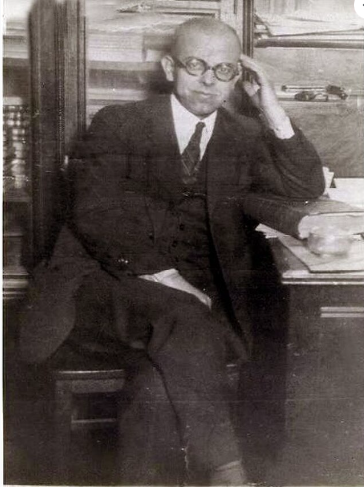
By: Habeeb Salloum/Arab America Contributing Writer
Īlīyā Abū Māḍī was born in 1889 in the village of al-Muḥayḍitha, which was at the time of his birth a part of Greater Syria. Like the other children of his town, he attended a small village school. By the age of eleven, Īlīyā Abū Māḍī left Syria with his family and immigrated to Alexandria, Egypt. It appears that this move was made because of the poverty and hardships he faced in Syria, but perhaps also due to the existence of a movement of immigration to Egypt at that time.
In Alexandria, in his youth, he spent his days selling cigarettes and in the evening, he would keep occupied by studying Arabic grammar by himself or in a local school. Little has been written about Abū Māḍī’s education, but it may be assumed that he attended high school in Alexandria where he acquired a good knowledge of Arabic grammar. Here also his studies made him acquainted with the rich literature of the Arab world, which in later years became the cornerstone of his literary works.
His stay in Egypt lasted eleven years. There he published his first book consisting of a few poems which he put together under the title of The Diwān. The years he spent in Egypt were happy years and he grew to love that country as much as he loved Syria, the land of his birth.
In 1912, Abū Māḍī immigrated to Cincinnati in the United States and with his brother Murāḍ, worked in that city for four years as a merchant. Throughout these four busy years, he did not do any writing but kept busy looking after his business. In this period, he became acquainted with the North American way of life and this knowledge in later years influenced his poetry.
In 1916, he began his journalistic life when he established himself in New York and where, in the years to come, wrote his elaborate poetry. He became a member in a literary association known as Al-Rābiṭah Al-Qalamīyah (The Pen Bond) and shone brilliantly as one of its great literary members.
Not long after coming to New York, Abū Māḍī was invited by some Palestinian Arabs living in that city to take on the responsibility of editing an Arab journal. By accepting this position, he contributed to the successful issuing of the Arabic newspaper Al-Fatāt (The Young). He also contributed articles to the newspaper Al-Sā’iḥ (The Traveller). Abū Māḍī, like many other emigré poets, felt that Arabic newspapers in North America would preserve the Arabic language and maintain that part of their heritage in the West. Therefore, he considered that Arabic publications were necessary and beneficial to an emigrant’s life.
In June 1916, the newspaper Al-Funūn (The Arts), after having been suspended for a time, reappeared. This journal had many illustrative contributors such as – Amīn Rīhānī, Khalīl Jubrān, Nassīb cArīḍa, Mikhā’īl Nacayma, Rashīd Ayyūb, Amīn Mushriq, William Kātsiflīs, cAbd al-Masiḥ Ḥaddād and Īlīyā Abū Māḍī, all enthusiastic emigrant writers and poets. These writers felt that it was necessary to lift the existing Arabic literature from its medieval state and direct it toward a new modern living type of literature. They used the newspaper al-Funūn as an effective vehicle for that purpose and this journal flourished.
On April 21, 1920, after two consecutive meetings, Al-Rābiṭah came into existence with Rashīd Ayyūb, Nadra Ḥaddād, Jubrān Khalīl Jubrān, William Kātsiflīs, Wadīc Bāḥūt, Ilyās cAṭā Allāh, Nassīb cArīḍa, Mikhā’īl Nacayma, cAbd al-Masīḥ Ḥaddād and Īlīyā Abū Māḍī as members. These men wanted to revolutionize Arabic literature and frowned upon literature which was not suitable to the era it represented. By their experience and writings, they came to the conclusion that a break must be made with tradition, and a new living literature must flower. Al-Rābiṭah was intended to be a cultural organization which would ensure the preservation of the Arabic language and heritage in the West and, in addition, would hold the Arab community together. cArīḍa, Ayyūb, Nadra Ḥaddād and Īlīyā Abū Māḍī became the best-known poets of that club and contributed greatly to the enhancement of Al-Rābiṭah.
As for himself, Abū Māḍī had written poetry in Egypt attempting to maintain the older style of the poets of the Abbasid period and also imitating the older style of the more modern poets like al-Barūdī, Ṣabrī and Shawqī. When he left Egypt and began to compose once again the “New World”, his poetry seemed to be reborn. The old style was semi-rejected, and his feelings were put into a new type of modern poetry. His first poem written in the West, “al-Rawā’ī”, is considered the first step in the building of the modern Arab emigrant poetry.
In 1927, Abū Māḍī turned his attention to the editing of the newspaper Mir’at al-Gharb (The Mirror of the West) but left it the same year. He did not stay idle for long. In April of 1929, Al-Samīr would be his next challenge. This newspaper was published twice monthly until 1932 when it became a daily, and it continued to be published until 1959, one year after Abū Māḍī’s death.
Īlīyā Abū Māḍī’s journalistic life and his contacts with the members of Al-Rābiṭah assisted in the success of his literary works. Perhaps this association with other great literary figures of his age gave him the insight to present the Arabs of both the East and the West in the vivid pictures of his poetry.
Want more articles like this? Sign up for our e-newsletter!
Check out our blog here!