Subscribe
to receive news by email

Poll
Will the Trump Administration Shift U.S. Policy in Favor of Palestine?
- No (87%)
- Yes (13%)
 Loading ...
Copyright © 2026 Arab America
Go topThe New Pope’s First Trip
By Robert Jackson/Arab America Contributing Writer
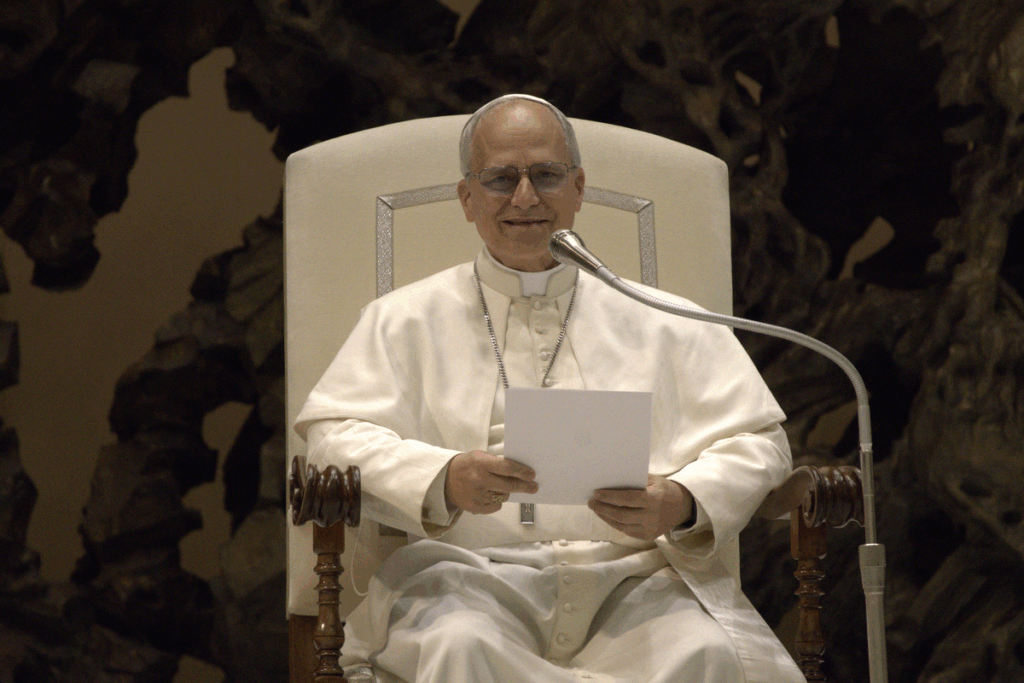
The first overseas trip by a pope is always an important one. Pope Leo XIV’s trip to Turkey, Lebanon, and the destinations within reflects the priorities of his papacy. His itinerary included interfaith ceremonies, visiting holy sites, meeting heads of state, and of course, greeting the people crowding to see him. It is important to understand what led to these visits and why they happened now.
Healing Ancient Schisms
The pope’s visit to Turkey was deeply symbolic. With this visit, Pope Leo continued the legacy of interfaith connection that had been established by previous popes, including Pope Francis who died earlier this year. This year marked the 1700th anniversary of the first Council of Nicaea. That council produced what is known as the Nicene Creed, which outlines many of the core tenets of Christian belief. In ancient Nicaea, modern-day İznik, the pope met with Patriarch Bartholomew I, the spiritual head of Orthodox Christianity, as well as many other Christian leaders. Together, the two signed a joint declaration urging peace and the end of religiously motivated violence.
“Blessed are the Peacemakers”
Lebanon occupies a unique place in the Middle East as being historically one of the region’s richest centers of Christian life. It continues to be the Arab country featuring the highest share of Christians. But decades of conflict, economic collapse, political instability, and waves of emigration have dramatically reduced the Christian presence. In many parts of the region, Christian neighborhoods, parishes, and communities have emptied out.
Pope Leo’s itinerary in Lebanon was carefully designed: visits to sites of trauma and loss like the site of the 2020 Beirut port explosion, to holy places such as the tomb of Saint Charbel Makhlouf, institutions caring for the vulnerable namely the De La Croix psychiatric hospital, and a massive gathering with Christian and Muslim leaders, youth, clergy and ordinary citizens.
Notably, Pope Leo did not visit the south of Lebanon due to security concerns. However, some are frustrated because they feel that the Lebanese who are suffering the most are in the south where conflict has continued despite the ceasefire with Israel.
The Motivations Behind the Visits
These visits were based on some of the late Pope Francis’ plans. Francis had planned to visit Turkey for the 1700th anniversary and had wanted to go to Lebanon for years though poor health prevented him from doing so. Thus, this trip can be seen as a continuation of Pope Francis’ work and legacy.
During Pope Leo’s visits he met with President Erdogan of Turkey and President Aoun of Lebanon. Both discussions centered around the topic of peace. He emphasized Turkey’s role in peace processes between Russia and Ukraine and between Israel and Palestine. During his meeting with President Aoun, the only Christian leader in the Arab world, he again stressed peace and reconciliation. In particular, peace in Palestine and Lebanon. Pope Leo reaffirmed the Holy See’s support for a two-state solution for the Israel-Palestine conflict. During a news conference held during his flight to Beirut, he called on Israel to support the two-state solution.
This stance is also not so new. The Holy See officially recognized Palestinian statehood in 2015. So once again, Pope Leo has reaffirmed his predecessor’s commitments and beliefs.
A New Statement
As you can see, Pope Leo’s messaging has largely been a continuation of previous calls for peace and interfaith community. However, a new message emerged from his visit. That being, to call on people to not flee from their homelands and even to return if they had already left. Pope Leo’s visit takes place against a backdrop of enormous instability in the Middle East: war in Gaza, ongoing regional conflicts, refugee flows, and rising sectarian tension. For many across the region, the choice to leave has become more and more appealing. In Christian communities, dwindling numbers reflect displacement, persecution, economic hardship, and fear. In that light, Leo’s visit is not primarily about realpolitik. It isn’t about redrawing borders or forging alliances. Rather, it embodies the plea that Christians remain in their historic lands and work courageously with others to rebuild and make peace with others, no matter their religion.
A Pilgrimage
Pope Leo XIV’s visit to Turkey and Lebanon is not a tourist tour. It is a pilgrimage through history, identity, suffering, and hope. Binding the ancient Christian past to the fragile present and daring to hope for a future where people are not forced to flee their homelands and communities.
In a world too often defined by division, conflict, and migration, the trip stands as an insistence on memory, unity, and shared humanity. Whether it marks the beginning of a new chapter for Christians in the Middle East or remains a fleeting moment of hope depends on what comes after. Regardless, it is a trip worth remembering.
Want more articles like this? Sign up for our e-newsletter!
Check out our blog here!