

Subscribe
to receive news by email

Poll
Will the Trump Administration Shift U.S. Policy in Favor of Palestine?
- No (87%)
- Yes (13%)
 Loading ...
Copyright © 2026 Arab America
Go topThe Sound of Endurance
By Claire Keefe/Arab America Contributing Writer
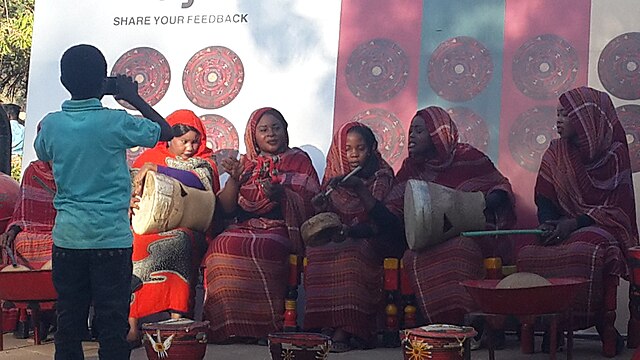
The music scene in Sudan has recently boomed, introducing a vibrant blend of modern genres. Artists are modernizing traditional sounds to reach a younger audience. These upcoming musicians are blending popular genres such as jazz and hip-hop with traditional Sudanese music. The traditional music of Sudan persists through the hardships of the region, giving joy and inspiring identity.
Alsarah and the Nubatones
Alsarah and the Nubatones were formed in 2010 by Alsarah, the lead singer. She was born in Khartoum, Sudan, but fled at age 8 following the 1989 coup. She found her home in New York City, which is where she began singing professionally. The band’s members include Alsarah’s own sister as a backup singer, Nahid, bassist Mawuena Kodjovi, oudist Luthier Haig Manoukian, and percussionist Rami El-Aasser. They have labeled themselves as East-African retro pop. The group is known for addressing topics such as migration patterns, homesickness, and cultural exchanges, especially between Egypt and Sudan. Additionally, Alsarah and the Nubatones update traditional Sudanese sounds while still including the distinctive tunes of the lead singer’s country.
Their most famous songs include “Habi Tabi”, known for its vibrant, modern Nubian-inspired sound. Another notable track is “Bye Bye”, a more recent English-language sung release. The band recognizes this song as a break-up song and blends Nubian rhythms with its original sound.
Adiga
Adiga is a Dubai-based Sudanese group consisting of Sidahmed Zaki, a guitarist and keyboardist; Ibrahim Altijani, a classical and electric guitarist; and Hassan Aljaily, a producer, bassist, and guitarist. Their goal when creating their band was to reinvent classical Sudanese music into a modern, unique sound, which is exactly what they are doing. Adiga is known for exploring different styles across Sudan and blending them to create new musical products. The main style encountered within their music is Hageeba, which emerged in Sudan in the 1920s. Adiga has become an influential piece in the rising blend of new genres in Sudan. The band quotes: “ There’s a movement happening, and very authentic music is emerging. The region is in an exciting place creatively, and we’re proud to be part of it.” Source Adiga has performed at numerous venues in Dubai, as well as at the World Culture Festival in Karachi, Pakistan, most recently.
Noori and His Dorpa Band:
Noori and His Dorpa Band was founded by Noori Jaber in 2006, leading the group with his own instrumental creation: the tambo-guitar. The band blends elements of soul and blues with the sounds of the Beja tradition, an ethnic group in eastern Sudan that comprises 5% of the country’s population. The band’s mission was to promote and recognize the group’s culture, which has been historically oppressed. Despite being composed solely of instrumentals, the band believes its music can serve as a form of defiance in support of the Beja culture. Their album Beja Power has been influential in Sudanese music. Additionally, the captivating tracks featured keep listeners locked in with the hypnotic guitar rhythms and powerful message behind the instruments.
Salute Yal Bannot:
The group Salute Yal Bannot, meaning “respect to the girls” in Sudanese Arabic, was created in 2015. The band consists of 11 members, writing music in both English and Sudanese Arabic. Their songs are inspired by the challenges women face worldwide. Multiple issues are confronted in their music, including racism and female genital mutilation (FGM). Band member Hiba Elgizouli, “We’re not just singing. We want to change what’s happening. Not just in Sudan. Everywhere, women are put down and told not to speak up. We want to change that.” source Salute Yal Bannot believes that resistance can take on many forms, including music.
Music creates and inspires spaces for free expression, felt joy, and inspiration. For Sudanese artists, music has become a saving grace, allowing Sudanese in the diaspora to preserve their musical and cultural traditions. These emerging voices create a new sound that remains rooted in their origins, enabling Sudan and the Sudanese people to persist despite the hardships they feel.
Want more articles like this? Sign up for our e-newsletter!
Check out our blog here!