

Subscribe
to receive news by email

Poll
Will the Trump Administration Shift U.S. Policy in Favor of Palestine?
- No (87%)
- Yes (13%)
 Loading ...
Copyright © 2026 Arab America
Go topThe Spirit of Thawra (ﺛَﻮﺭَﺓ) - Sudan, Remember Us-Interview with Hind Meddeb
By: Rena Elhessen/Arab America Contributing Writer
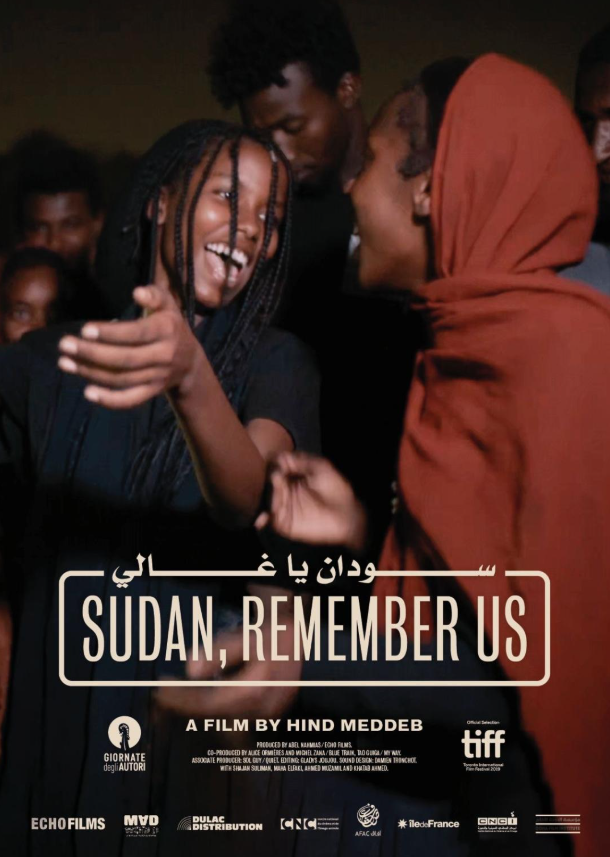
The many dialects of the Arab world mean some words are lost in translation. However, one word translates the same regardless of region, ‘thawra’ (ﺛَﻮﺭَﺓ). The Arabic word for ‘Revolution’ echoes throughout the Middle East and North African region. It was heard back in 2011 in Egypt, Yemen, Libya, Syria, and Tunisia. The Lebanese, Algerians, Iraqis, and Sudanese heard it in 2019. Watermelon Pictures’ new release, Sudan, Remember Us, embodies the spirit of thawra. Armed with her camera and an unwavering belief in democracy, documentarian and director Hind Meddeb follows the thawra in Sudan, documenting the lasting spirit of revolution.
Sudan, Remember Us
In 2019, after three decades of authoritarian rule under Omar al-Bashir, Sudan erupted in a mass uprising. Millions of young Sudanese began calling for a civilian government, the renouncement of authoritarianism, and the implementation of democracy. In April of that year, relentless civilian pressure toppled the regime, but the struggle was far from over, as the military council and paramilitaries fought to keep power out of civilian hands.
Director Hind was in Sudan at this historic moment, witnessing the spirit of revolution and documenting it unusually. Through song and poetry, the Sudanese youth managed to keep the revolution alive.
Sudan, Remember Us is a vivid portrait of a generation that chose verses over silence and vision over fear. Following the stories of Shajane, Maha, Muzamil, Khatab, and the words of poet Chaikhoon, the film weaves a cinematic chorus of youthful hope, poetic justice, and political unyielding.
Interview with Hind Meddeb
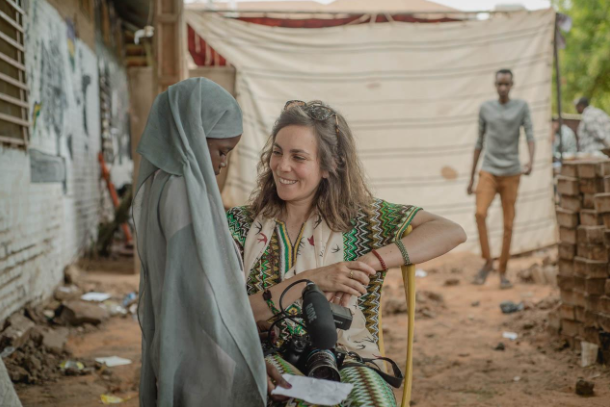
On the Film’s Genesis and Purpose
Q: What first drew you to Sudan in 2019, and what made you stay and keep filming over the next four years?
“I had worked with Sudanese refugees in Paris, translating their documentation to file asylum claims. Through this, I made friends with Sudanese people and fell in love with their culture. When the authoritarian regime had fallen, I booked a ticket to Sudan. I arrived during the revolution, and the energy of the country was ecstatic and full of hope. In those brief months, I experienced the rich culture and expression of Sudan. When the June 3 massacre happened, I began to film, choosing to stay in the country. The armed forces opened fire on peaceful protesters at the sit-in. It was devastating. I began filming Sudanese citizens trying to reclaim their voices in a repressed community.”
Q: Did you know from the beginning that Sudan, Remember Us would span such a long and turbulent period?
“Not at all. I booked a one-way ticket, but I didn’t imagine I would remain there for four years. I was drawn to stay because I saw and understood the dream of the Sudanese protesters-
“A vision of a stolen country being reclaimed by its people, their rights, their land, and their resources, becoming their own again.”
On Filmmaking in Crisis
Q: What were the most difficult moments to film?
“Everything was complicated. During demonstrations, there was a bit of free space to film, but even there, bullets could fly at any moment. These conditions created a film with holes, meaning a lot was unfinished. Much like the country itself, the documentary remains incomplete. At the airport, I was searched and had to convince the Sudanese security that it was safe to bring my camera into the country. I was arrested several times, but because I was a Tunisian citizen and a single traveler, I was released. I would tell authorities that my film is about poetry rather than the revolution.”
“Emotionally, it was hard presenting the film. The Sudanese people who came to watch the movie would thank me because it brought them pride. The pride was brought on by seeing their country and resisting the erasure of the revolution by the military.”
On the Civilian Movement
Q: What did you learn from the Sudanese youth you followed?
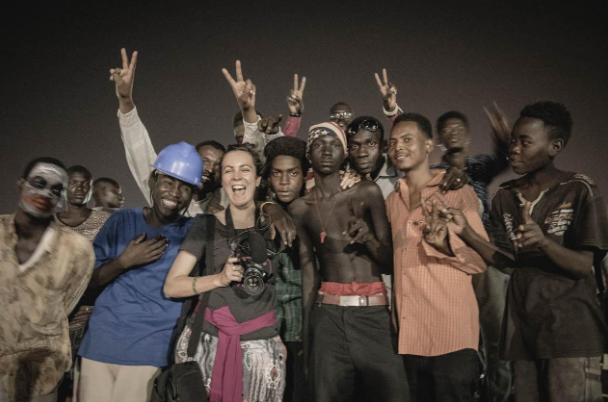
“I met people who were deeply saddened to see their country slipping away, yet they still dreamed, created, and still fought for a future. The relationships I built during filming gave me a different perspective on the war. Some of the friends I had made would flee the country. Others would fight.”
Q: How do you think the outside world misunderstands Sudan’s civilian movement?
“There’s a lot of racism. People in the West don’t take Black Africans seriously, as if they have nothing to teach us, but Sudan has a rich culture and wisdom. The media rarely explains why there is a war, and continues to ignore the interference of other countries in Sudan’s affairs. The war should be talked about if it is to ever end.”
Q: Did you see a shift in how the activists viewed their struggle over time?
“Absolutely. At first, it was full of hope. Later, it became about survival under brutal repression. But even then, the spirit of resistance hasn’t vanished; it just changed form. Activists recited poetry and sang of rebellion, continuing to dream. Currently, the friends I made during filming, who served on the fighting side of the army, no longer see a purpose in the violence. They wish to flee the country.”
On Art and Resistance
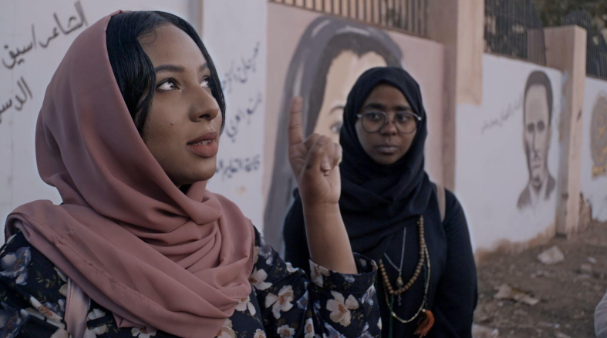
Q: The film shows how poetry, music, and street art became central to the revolution. Why was artistic expression so critical?
“Poetry is a way to stay alive when death is everywhere.”
“Even after you die, the poem remains. It can be recited, it can inspire. Art is mourning, remembrance, and resistance all in one. One painting in the film is of a man grieving his friend. One poem recited at a protest carried the voice of Rayah, who had been killed, making her present again.”
Through Hind’s lens, Sudan’s revolution is not just a political struggle but a cultural one. A battle to preserve voices, art, and dreams in the face of erasure. Sudan, Remember Us is as much about memory as it is about resistance, and as Hind reminds us, the fight for freedom often begins as a dream.
Want more articles like this? Sign up for our e-newsletter!
Check out our blog here!