
Subscribe
to receive news by email

Poll
Will the Trump Administration Shift U.S. Policy in Favor of Palestine?
- No (87%)
- Yes (13%)
 Loading ...
Copyright © 2026 Arab America
Go topThe Voice of Hind Rajab
By Londyn Sewell / Arab America Contributing Writer
A Story with Global Reach
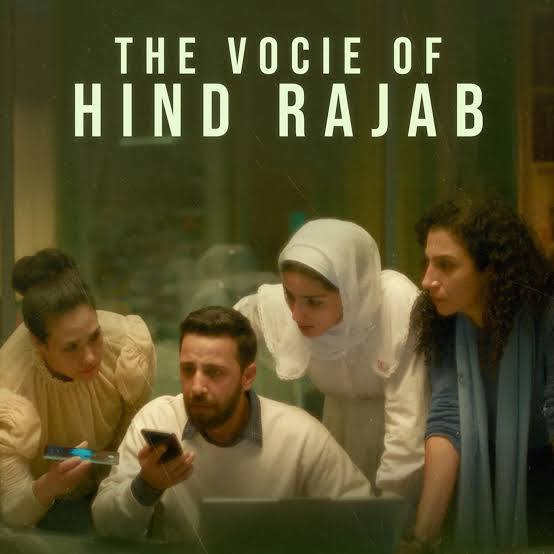
The Voice of Hind Rajab (2025), directed by Kaouther Ben Hania and Co-produced by Watermelon Pictures, tells the story of six-year-old Hind Rajab, a Palestinian child whose desperate call for help reached people around the world.
The documentary/ drama documents her final hours, by showing the recorded phone calls that encased her fear as well as those who tried to help and felt helpless trying to reach her.
Hind became trapped in a vehicle in Gaza after violence and chaos broke out around her family. People very quickly shared call recordings of her talking with first responders. Turning this young girl’s voice into a worldwide moment of grief. Her story very quickly became a symbol of vulnerability for children.
How the Film Traveled Beyond Borders
The Voice of Hind Rajab (2025) won the Silver Lion Grand Jury Prize at the 82nd Venice International Film Festival and received multiple honors between 2025 and 2026, including the San Sebastián Audience Award, Capri Humanitarian Award. Along with 17 wins & 18 nominations, the global attention placed the film among some of the most discussed international films of the year.
The recognition also showed screenings at the Toronto International Film Festival, BFI London Film Festival, and AFI Fest, which ended up growing the film’s audience even more than anticipated. Outside of awards and festivals, the impact lies in how the film resonated with so many people.
Language, Access, and Translation
Worldwide screenings have led to discussions about safety in zones where high conflict has arisen. The film doesn’t heavily rely on political standpoints or arguments. It focuses on details, from the phone calls, a child pleading for help, and the deafening silence that also left a lasting impact. When the film began reaching an international audience, it did more than just document a tragedy. It began to open a floor for reflection. Audiences from different places, faiths, and even political backgrounds. The film was not for a debate of opinions and beliefs, but rather to hear this young child’s voice.
Some moments speak for themselves. So many people and even parents understand the fear for their child’s safety in any situation. Children everywhere understand what it means to feel safe and have reassurance that they are safe.
The film also challenges viewers to confront there own self-centeredness. Its impact does not necessarily focus on being in the same circumstances of Hind nor do you have to be a parent. It requires you to step outside yourself and imagine her fear. In doing so it encourages the empathy on how we need to take the time to put yourself in someone else’s shoes.
Shared Awareness
The film doesn’t overdo it. It’s controlled and careful, it lets you experience uncomfortable moments and think about them yourself. It encourages reflection rather than defensiveness. In an age where digital media is so present, news and personal stories spread in seconds. Hinds’ voice reached far beyond Gaza, and subtitles bridged language gaps. Resulting in shared awareness. Audiences often leave the screenings quieter than they arrived; silence isn’t conflict, but rather reflection.
The film puts the trust in the audience to recognize themselves in Hind’s voice and story, regardless of where they live. The natural desire to protect and understand resonates with the majority. In that silence, and understanding the connection from the audience to the film is formed. Showing that even amongst tragedy, storytelling has the power to bring different communities together to show compassion and encourage reflection, even after the film ends.
Want more articles like this? Sign up for our e-newsletter!
Check our blog here!