
Subscribe
to receive news by email

Poll
Will the Trump Administration Shift U.S. Policy in Favor of Palestine?
- No (87%)
- Yes (13%)
 Loading ...
Copyright © 2026 Arab America
Go topTwo Years Without Tears: The Silent Grief of Gaza
By: Laila Mamdouh / Arab America Contributing Writer
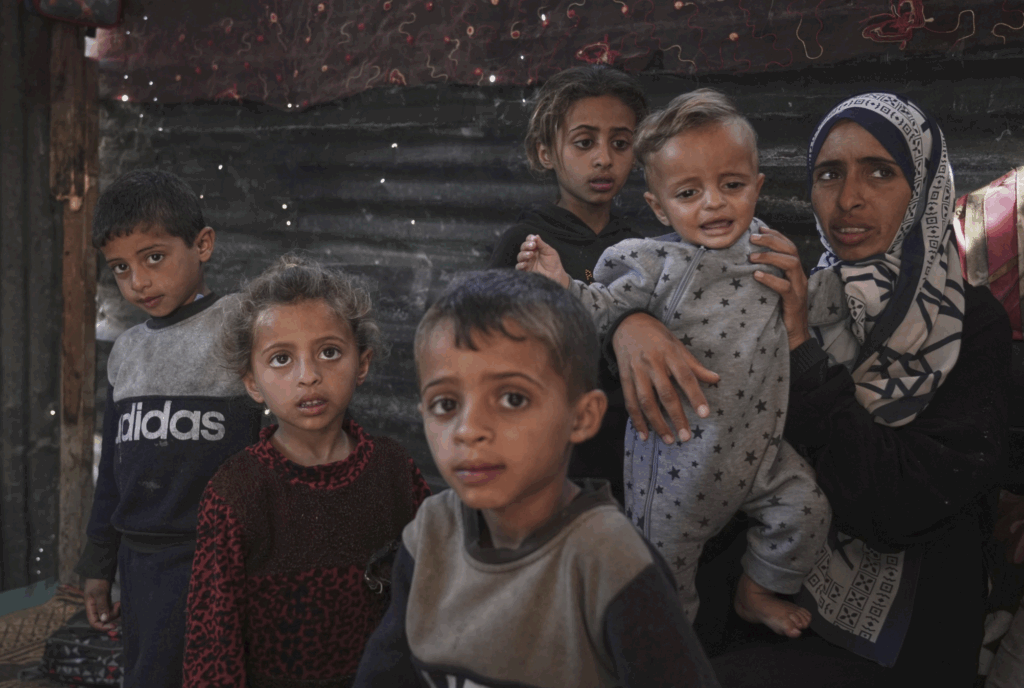
Two years. Two years since the Earth in Gaza split open and swallowed families whole. Two years since laughter turned into a memory too dangerous to recall, since children’s voices, once rising in song, were reduced to whispers under dust and rubble. This week marks the second anniversary of an unrelenting massacre; not just of bodies, but of spirits, of memory, and of time itself. Yet the world still insists on reducing it to politics, to borders, to wars of words. What is forgotten, what is silenced, are the faces of the victims.
Look into the eyes of a child in Gaza today, and you will not see tears. You will see something far more devastating: an absence, a hollowing, an emptiness where childhood should live. Grief here has no language, no ritual, no safe place to breathe. For Palestinians, grief is a luxury, one they cannot afford. In Gaza, survival consumes all.
The Wound That Cannot Bleed
In most corners of the world, grief is loud. It is tears and wailing, funerals and rituals, embraces that hold the broken together. In Gaza, grief is silent, suffocated by bombardment, displacement, and starvation. The wounded do not have the privilege of psychological mourning; the living do not have the permission to weep. They bury their dead in haste, if at all, often without shrouds, without prayers, sometimes without even a name.
Psychologists explain that when people cannot express grief, they let it fester. It seeps into the body like poison, warps memory, and twists the nervous system into a permanent state of alarm. Scholars call this complex continuous trauma, the kind of trauma that strikes not once but lives on the skin, in the bones, in the blood (Psychiatric Times). Palestinians do not experience trauma as an event; they breathe it as air. Their nervous systems lock into survival mode, and their brains scan for danger even in sleep. When the body fights to survive, it cannot mourn.
Children suffer the most. They enter life in war and grow up in rubble, where explosions echo as lullabies and ruins serve as playgrounds. A study in Gaza reports that “96 percent of children believe death is inevitable, and nearly half openly wish for it” (War Child). What does it mean when a child, who should dream of games and futures, dreams only of endings? Psychiatrists argue that even post-traumatic stress disorder (PTSD) fails to capture what Gazan children endure. PTSD assumes trauma ends, that war finishes. In Gaza, war never ends (The Lancet Psychiatry).
Eyes That Speak Louder Than Words
A video circulates of a young girl, no more than eleven, speaking about her father who was killed. Her face is still, her lips tremble with words she should never have to say. But her eyes, her eyes are fogged with something beyond sorrow. She does not cry. Not because she does not love him, but because the grief has been stolen from her. The trauma has numbed her tears, erased the body’s instinct to mourn.
When someone offers her food, she lowers her gaze. She believes she is not worthy, that another child deserves it more. This is what trauma does: it erases self-worth, it convinces children that survival itself is selfish.
The eyes of Gaza’s children archive horror. Wide, yet hollow, they hold memories the children cannot name but cannot escape. Their eyes speak a silent language of despair, and the world refuses to learn it. Psychologists call this “emotional numbing,” a defense mechanism that shields the self from breaking apart (The Lancet Psychiatry). But in Gaza, numbing destroys rather than protects. It transforms children into shadows of themselves, alive yet emptied.
The Grief That Cannot Find a Grave
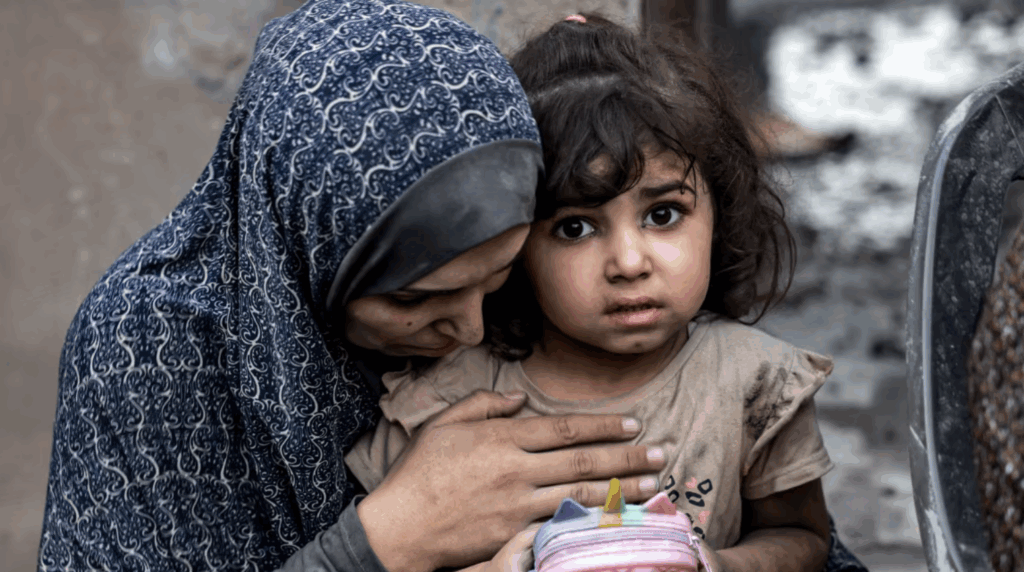
Scholars of trauma remind us that grieving is a process; tears, anger, remembrance, rebuilding. But how can Palestinians grieve when every day brings new loss? How can a child lay flowers at her brother’s grave when the earth itself is too dangerous to approach? How can a mother whisper prayers for her son when her home no longer stands?
In Gaza, grief gasps for air but finds none. Families rush through funerals, sirens interrupt prayers, and strikes cut mourning short. Psychologists describe this as “disrupted grief,” where violence severs rituals and denies closure (ResearchGate). The wound refuses to close. It festers, and each new day carries it forward.
And yet, silence does not mean absence. Gaza’s grief buries itself deep, unspoken but alive. It emerges in nightmares, trembles through hands, and erupts in children’s sudden screams at the sound of thunder. It manifests as depression, anxiety, and a haunting statistic: the overwhelming majority of Gaza’s youth believe they will not live to adulthood (BMC Psychology). They refuse to plan for tomorrow, because tomorrow steals from them.
The Living Who Are Already Dead
What does it mean to be alive in Gaza? To breathe, but not to live. To walk, but as if through shadows. To smile, only as memory.
Many Palestinians call themselves ghosts, living ghosts who carry the memories of their loved ones, the ruins of their homes, and the fragments of what life might have been. Psychologists warn that “intergenerational trauma” passes pain down like inheritance (Frontiers of Psychology). The children of Gaza inherit not only their own grief but also the grief of their parents and grandparents, etched into their bodies. Trauma marks them as a family heirloom, a shadow stretching beyond time.
Mental health care is almost nonexistent. Clinics are bombed, therapists are displaced, psychiatrists are few. Those who remain are themselves survivors, too scarred to heal the scars of others. In such conditions, grief has no witness, no guide, no healer. It is locked away in silence, growing heavier each day.
The Silence That Screams
Two years have passed. The world debates politics, legality, ceasefires. But in Gaza, grief goes unseen. It is overlooked, forgotten, silenced by statistics and headlines. Yet the silence is not empty, it screams. It screams in the eyes of children too tired to cry, in the hands of mothers that tremble without comfort, in the footsteps of fathers carrying the weight of loss without words.
Grief in Gaza does not look like grief elsewhere. It does not cry out loud. It lingers quietly, like smoke after fire, like ashes after a home is burned. It is silent, but it suffocates.
The heartbreaking truth is this: those who live are, in a sense, already gone. They are walking memories of what could have been; ghosts inhabiting their own bodies. Their grief is invisible, but heavier than stone. Their silence speaks more than the mind can comprehend, more than the heart can bear.
And perhaps the world’s greatest crime is not only that it allowed this genocide to unfold, but that it forced an entire people to grieve in silence, without ritual, without recognition. Gaza is a land of unspoken funerals, of tears locked behind eyes, of souls denied the dignity of mourning.
Two years have passed, and still, the grief has no grave.