
Subscribe
to receive news by email

Poll
Will the Trump Administration Shift U.S. Policy in Favor of Palestine?
- No (87%)
- Yes (13%)
 Loading ...
Copyright © 2026 Arab America
Go topWhen Words Lose Their Meaning
By Ghassan Rubeiz / Arab America Contributing Writer
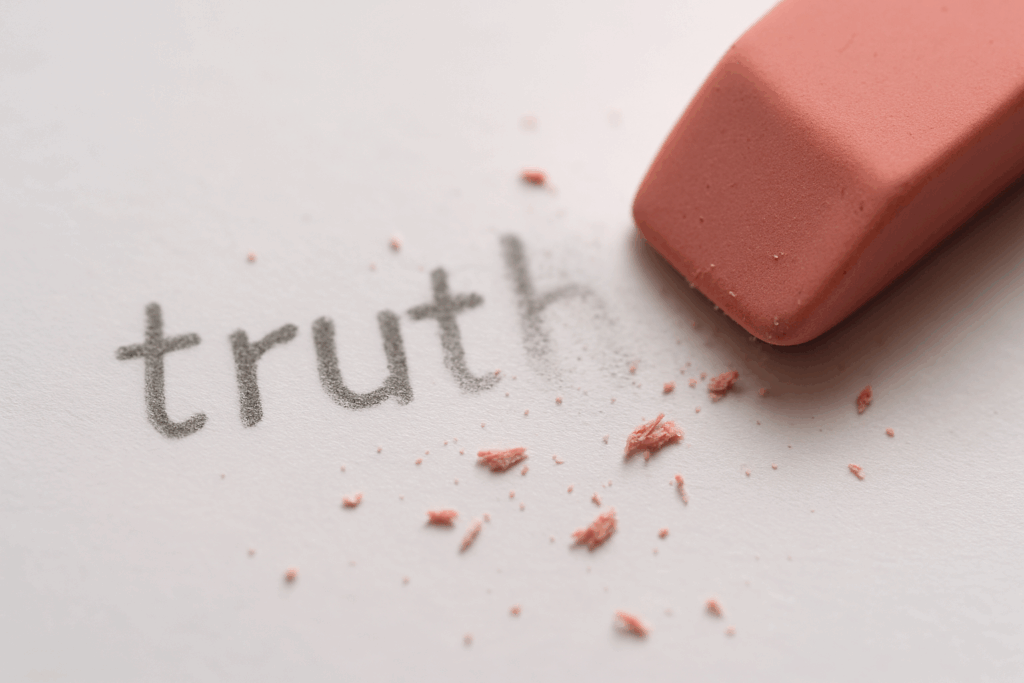
Words shape our world. When they lose their meaning and become weapons rather than tools, we risk not only miscommunicating: we risk losing the very possibility of dialogue.
Distorted language was in the spotlight last Friday when the US and Israel were among only ten states opposing the UN General Assembly’s two-state solution, a framework designed to end the war in Gaza. Rather than viewing this diplomatic initiative, which unequivocally condemns Hamas’ violence, as a potential path to peace, diplomats from both governments described the reconciliatory UN resolution as a gift to Hamas and terrorism in general.
This linguistic gambit is all too common. The term “pro-Palestinian” is taken to mean “anti-Israeli”. “Resistance” is reflexively equated with violent terrorism, and the word “terrorism” itself is deployed so widely as to become almost meaningless. The resulting irony is all the more obvious. While Israel had bombed Qatar just days earlier, targeting Hamas negotiators who were engaged in efforts to end the Gaza war, international diplomatic efforts were characterized by Israel and the United States as acts of antisemitism, simply for reviving the idea of Palestinian statehood. The Israeli right is attempting to bury Palestine using a simple label.
Any honest discussion of “terrorism” must begin with a clear, universal definition: violence against civilians for political ends. True terrorism deliberately and recklessly targets the innocent. Terrorism can be committed by Palestinians or Israelis, by state actors or non-state actors. It can be highly organized or chaotic, diplomatically packaged or brazenly crude. It can be conducted by individuals or groups, executed with improvised weapons or sophisticated military hardware, whether through suicide bombings on buses or precision airstrikes on civilian areas. Political assassinations, detention without due process, and military cyberattacks against civilian infrastructure all constitute acts of terrorism. The moral principle underlying any definition of terrorism must be absolute: innocent civilians must be protected from the cynicism of desperate political actors.
The word “terrorism” has proven remarkably convenient for the Israeli right wing and its supporters. For decades, Israeli politicians and policymakers have deployed it frequently and selectively: branding Palestinians as “terrorists” serves to demonize an entire people while simultaneously protecting Israel’s international image. This approach to defining terrorism rejects universal standards, much as it rejects internationally recognized borders and international law more broadly. It views Palestinian and wider Middle Eastern issues through a lens that magnifies Palestinian violence while systematically overlooking, for instance, the violence of Israeli settlers in the West Bank, or the use of starvation as a weapon in Gaza.
The horrific October 7 Hamas attack on Israeli civilians was undeniably an act of terrorism. It deserves universal condemnation. However, that event cannot absolve Israel of its moral responsibilities toward Palestinian civilians, nor should it provide blanket justification for all subsequent Israeli actions. Peace negotiations will require a commitment to intellectual honesty and moral consistency. We must insist on universal standards that apply to all actors, regardless of their methods of violence, political affiliations, or strategic importance. Only by restoring precision to our language, and accountability to our actions, can we hope to break the cycle of violence that has trapped both Israelis and Palestinians for far too long. The alternative is a world where words have no meaning, where justice becomes impossible, and where the innocent on all sides continue to pay the price for our collective failure to speak truthfully about the realities of conflict and occupation. In such a world, terrorism — real terrorism — thrives in the shadow of our dishonesty.
Ghassan Rubeiz is the former Middle East Secretary of the World Council of Churches. Earlier, he taught psychology and social work in his country of birth, Lebanon, and later in the United States, where he currently lives. He has contributed to political commentary for the past twenty years and delivered occasional public talks on peace, justice, and interfaith subjects. You can reach him at rubeizg@gmail.com
The views and opinions expressed in this article are those of the author and do not necessarily reflect the position of Arab America. The reproduction of this article is permissible with proper credit to Arab America and the author.
Want more articles like this? Sign up for our e-newsletter!
Check our blog here!