
Subscribe
to receive news by email

Poll
Will the Trump Administration Shift U.S. Policy in Favor of Palestine?
- No (87%)
- Yes (13%)
 Loading ...
Copyright © 2026 Arab America
Go topWork Without Rights: The Welfare Crisis of Palestinian Refugees in Lebanon
By: Fayzeh Abou Ardat / Arab America Contributing Writer
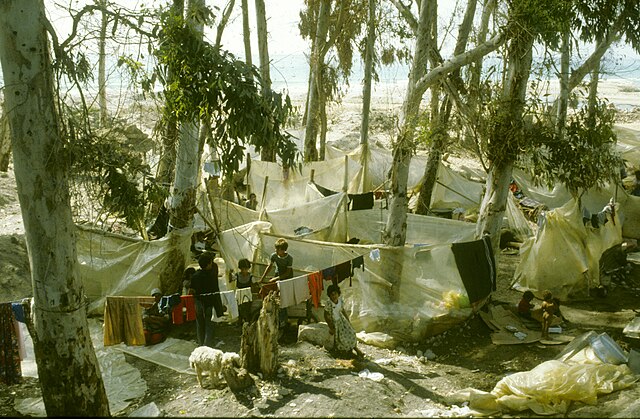
One of the most disadvantaged groups of refugees in the Middle East are Palestinians living in Lebanon. Between 250,000 and 300,000 Palestinians have stayed in Lebanon since being uprooted during the 1948 Arab-Israeli War. Living in twelve registered refugee camps as well as a number of unofficial settlements. Lebanon has chosen a tight legal and political framework that severely restricts Palestinian refugees’ access to welfare services and employment prospects. Leading to chronic poverty, social marginalization, and economic insecurity, in contrast to other refugee-hosting states in the area.
The Palestinian refugees’ restricted access to social protection and welfare is one of their biggest problems in Lebanon. The national social security system in Lebanon does not provide health insurance, family allowances, or unemployment benefits to Palestinian refugees. They are excluded from state-funded social services and healthcare since they are not citizens and do not have the same legal status as other foreign immigrants. Rather, the United Nations Relief and Works Agency for Palestine Refugees in the Near East (UNRWA) is the primary source of basic welfare services for Palestinian refugees, including limited social assistance, healthcare, and education.
However, persistent underfunding and political pressure have gradually reduced UNRWA’s capacity. Many refugees, especially the elderly, people with disabilities, and those with chronic illnesses, have been left without proper care due to cuts to health services, decreased financial aid, and overloaded medical facilities. In light of Lebanon’s protracted economic collapse, which has resulted in skyrocketing inflation, currency devaluation, and growing food insecurity, welfare aid is frequently insufficient to cover basic living expenses. As a result, compared to Lebanese nationals and other refugee groups in the nation, Palestinian refugees face disproportionately high rates of poverty.
Welfare Dependency and the Limits of Social Protection
Because UNRWA is the main welfare provider, Palestinian refugees’ access to essential services is dependent on foreign funding rather than national responsibility, creating a precarious system. UNRWA was never meant to take the place of state-based social assistance systems, notwithstanding its crucial humanitarian function. As seen by the COVID-19 pandemic and Lebanon’s current financial collapse, refugees are more vulnerable in times of distress due to the assistance system’s lack of legal participation.
Welfare issues are made worse by overcrowding in refugee camps. Health risks are increased when already scarce medical services are strained by poor infrastructure, restricted access to clean water, poor sanitation, and environmental threats. Many families are compelled to rely on debt, child labour, or unofficial networks in order to cover their basic requirements in the absence of comprehensive government support, which perpetuates generational cycles of poverty.
Employment Restrictions and Economic Marginalization
These welfare issues are made worse by employment constraints. For many years, Palestinian refugees in Lebanon were prohibited from pursuing careers in over 70 fields. Including public sector employment, engineering, medicine, and law. Access to work permits was made easier in 2010 by a few modest legal revisions, although these improvements have had little real-world effect. Palestinians must still get work permits, which are frequently expensive, time-consuming, and reliant on companies who are hesitant to deal with the paperwork. Additionally, Palestinians are still barred from professional syndicates, which effectively keeps them from working in a variety of skilled occupations even if they meet the requirements.
Because of this, the majority of Palestinian refugees are forced to work in manual labour, construction, agriculture, and other low-paying, dangerous jobs. Because these positions frequently lack social benefits, employment stability, and legal protections, workers are vulnerable to abuse and hazardous working conditions. Palestinian workers frequently lose their jobs first during economic downturns, which increases their need on humanitarian aid.
Concerns for permanent settlement (tawteen) and maintaining the nation’s sectarian balance are often used as justifications for Lebanon’s restrictive policies toward Palestinian refugees. Denying people access to assistance and work rights, however, does not address these political issues. Rather, it erodes human dignity and solidifies long-term marginalization. Enhancing social protection and employment opportunities does not entail naturalization, but it is an essential step in defending basic human rights.
Conclusion
In conclusion, systemic obstacles to employment and welfare services for Palestinian refugees in Lebanon lead to ongoing social marginalization and economic instability. Expanded labour rights, significant legal reform, and ongoing international assistance for UNRWA are all necessary to address these issues. Palestinian refugees in Lebanon will continue to suffer from the effects of long-term displacement and have few opportunities for stability or self-sufficiency in the absence of such reforms.
Want more articles like this? Sign up for our e-newsletter!
Check out our blog here!