Subscribe
to receive news by email

Poll
Will the Trump Administration Shift U.S. Policy in Favor of Palestine?
- No (87%)
- Yes (13%)
 Loading ...
Copyright © 2026 Arab America
Go topA Brief History of Marxism in the Arab World
By: Taim Al-Faraje / Arab America Contributing Writer
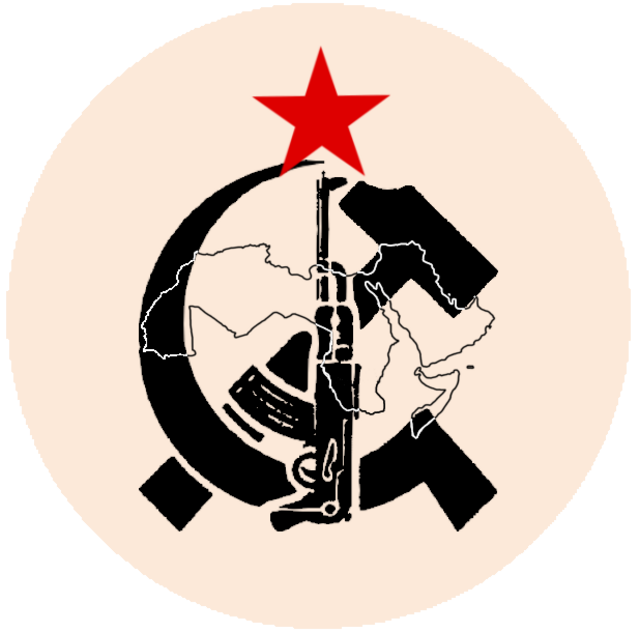
Marxism is deeply rooted in the Arab World, spanning various political ideologies, slogans, literature, and real-life applications. Whether it was through communist parties, such as the Popular Front for the Liberation of Palestine (PFLP), or socialist parties like the Ba’ath Party, or individual leaders like Jamal Abdel Nasser and Muammar Qaddafi, the influence was clear. For oppressed, resource-rich lands whose resources are constantly pillaged by outsiders and whose politics are repeatedly invaded by thieves, Marxist rhetoric was—and still is—appealing. It gave proper thought to the justification of revolution, especially in countries like Algeria, Palestine, and Egypt, among others, who utilized this justification to legitimize their struggles. This article will examine countries that used Marxism to justify political movements and evaluate whether those movements improved their situations.
Ba’ath Party
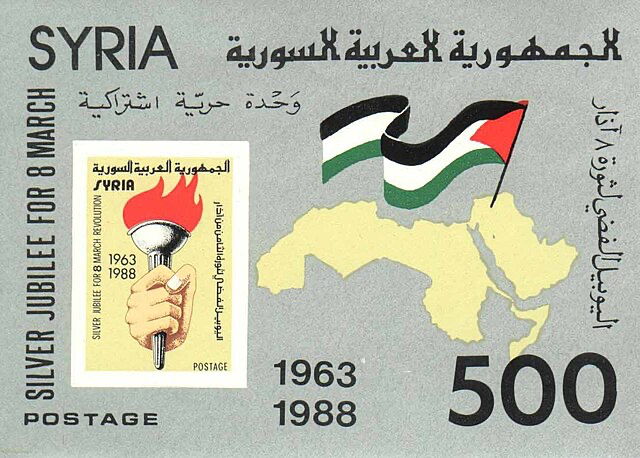
Many Marxist and Marxist-Leninist ideas can be manifested in the Ba’ath party. Although Communism was strictly banned under Ba’athist governments, this was purely political, as Communist ideas almost entirely made up Ba’athist ideology. A prominent belief of the Ba’ath is that a Ba’ath vanguard party will rule the nation they rule with a revolutionary socialist agenda and framework. This mirrors the system Lenin set up in Russia, where the Communist Party of the Soviet Union, a vanguard party with a revolutionary socialist agenda, ruled the country.
Their “revolutionary socialist” agendas also had similar characteristics. One example is the land redistribution projects that the Soviets carried out in Russia and the Ba’ath carried out in Syria. These parties took land from private companies and owners whom they believed were abusing the workers, and they redistributed this land to the workers, who then collectively owned it. This policy also directly affected landlords. Instead of banning landlords outright, as Maoist China or Castro’s Cuba did, these governments imposed heavy restrictions on them.
One of these restrictions limited how much land a person could own. In Ba’athist Iraq, for example, the government set the maximum at 500 hectares of non-irrigated land and 150 hectares of irrigated land. These ceilings were set in an effort to prevent a small group of elites from owning all the land of the country. This gave an opportunity to all citizens to purchase land as it wasn’t all in the hands of one group. If a group owned more than the allowed amount, the government nationalized the extra land and redistributed it to small-scale farmers and peasant families. The state also restricted rent increases heavily, and it required rent contracts to renew automatically. These policies show how Marxism influenced the Arab World.
Popular Front for the Liberation of Palestine (PFLP)

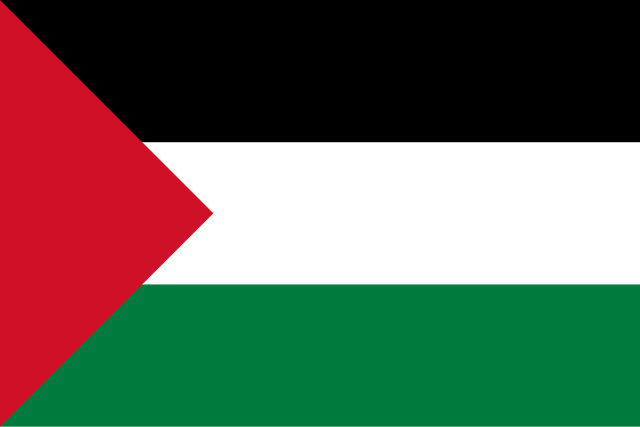
The PFLP is a Palestinian revolutionary liberation group created in late 1967, in the aftermath of the Third Arab-Israeli War. Unlike the Ba’ath party, they made it clear that Marxism-Leninism is what influenced and encouraged their struggle. George Habash, the group’s founder, and Ghassan Kanafani, the group’s spokesperson, were clear with their intentions for Palestine. They intended for a liberated Palestine to be run under a secular, socialist state. Like other revolutionary movements, they set goals and operated in the way of Marxism-Leninism, while combining aspects of Pan-Arabism and Arab Nationalism to tailor the movement to their struggle.
The PFLP derived its ideology from Marx. They argued that the history of the world was a history of class struggle, that Zionism was a project created by the manipulative global upper class to displace the native population of Palestine, and that this upper class wanted to establish a stronghold in the Arab World to prevent Arabs from uniting and revolting against their Western oppressors, just as the West had suppressed movements in Latin America, Africa, and Asia in the previous centuries.
Nasserist Egypt
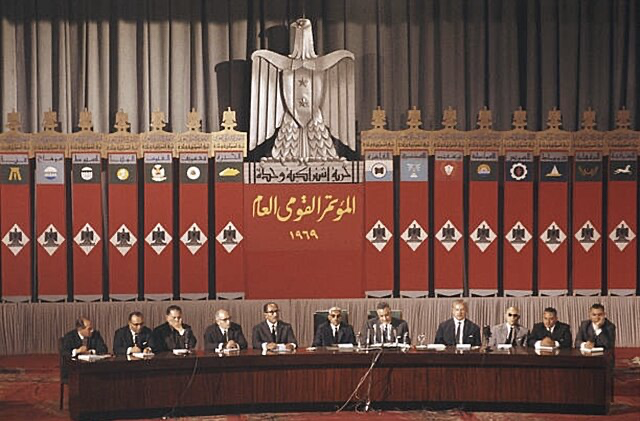
Although Egypt was technically a One-Party State under the Arab Socialist Union, the movement centered around Jamal Abdel Nasser, Father of the Arabs. Like the Ba’ath, Nasser outright banned Communism and Arab Communist Parties in Egypt. Although Marxism heavily influenced his socialist movement, he had to curb Soviet influence in Egypt because the Bolsheviks were anti-religious. Their stance did not mesh with Arab society, which was deeply religious. Egypt had many of the laws already mentioned, such as limits on the amount of property one could own, land redistribution, nationalization of factories, and more.
Conclusion
These examples, as well as many others this article didn’t include, such as Socialist Libya and Qasim’s Iraq, show how deep and intertwined Marxism was in the Arab World during the 20th century. It’s fascinating to explore how Marxism influenced the Arab World, and how different societies may have implemented it, whether they outright banned Communism like the Ba’ath, or accepted and acted in its path, such as the PFLP.
Want more articles like this? Sign up for our e-newsletter!
Check our blog here!