

Subscribe
to receive news by email
Poll
Will the Trump Administration Shift U.S. Policy in Favor of Palestine?
- No (87%)
- Yes (13%)
 Loading ...
Copyright © 2026 Arab America
Go topA Dish of Tradition: Kibbeh Nayyeh
By: Robert Jackson/Arab America Contributing Writer
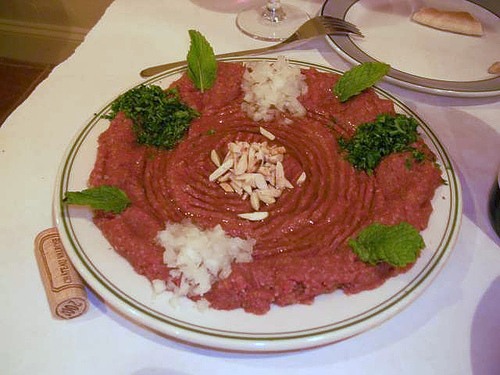
Kibbeh Nayyeh, a raw meat dish considered a symbol of Levantine cuisine, is one of the most beloved dishes in Lebanon and Syria, in addition to the wider region. Its complex flavors, history, and cultural significance make it a fascinating subject of exploration. This dish is an essential part of all sorts of family gatherings and celebrations, offering a taste of tradition that spans centuries. However, there are new recipes emerging that are adding to that legacy.
What is Kibbeh Nayyeh?
Kibbeh Nayyeh, sometimes referred to as “raw kibbeh,” is made from finely ground lamb or beef, mixed with bulgur, also known as cracked wheat, onions, and a variety of spices. Unlike traditional kibbeh, which is often fried or baked, Kibbeh Nayyeh is served raw, typically with accompaniments like olive oil, onions, fresh herbs, and sometimes a squeeze of lemon.
The texture of Kibbeh Nayyeh is unique. It is smooth, yet slightly grainy from the bulgur wheat, and the raw meat contributes a soft mouthfeel. It’s often served with flatbread or as part of a mezze spread, alongside dishes such as hummus. The key to its appeal is the balance of freshness and richness of raw meat.
Cultural Significance
The practice of consuming raw meat is common in various cultures worldwide. Kibbeh in all its forms has a long and storied history in Middle Eastern cuisine, with some tracing its origins back to the ancient civilizations of Mesopotamia. Steak Tartare, Yukhoe, and Carne Apache are all popular examples of similarly prepared meat from all over the world. Though these foods are considered to have health risks because of their raw meat content, many still love them. For many Arab families, preparing Kibbeh Nayyeh is often a communal activity, with multiple generations of family members coming together to create the dish. It’s a food of celebration, often served during holidays or other special occasions.
In the Levant, Kibbeh Nayyeh has become synonymous with socializing and is a part of the country’s rich culinary heritage. The dish connects families through generations. Often the first time the dish is tried with family, the uninitiated are not told what it is, that way, they have a more open mind towards trying it. Ultimately, many go on to develop a lifelong taste for the dish.
Kibbeh Nayyeh and New Alternatives
To diminish health risks, some steps must be taken. The meat used must be of the highest quality, and it should be as fresh as possible. For those who are concerned about consuming raw meat, it’s advisable to purchase meat from trusted sources that maintain strict hygiene standards. Additionally, some people may choose to freeze the meat before preparing Kibbeh Nayyeh as freezing can help kill any parasites that might be present.
If those precautions aren’t enough or one wishes to try a vegan version of the dish, those exist too. Some of these recipes choose to use lentils or tomatoes as a base instead of raw meat. Despite being very different, these vegetarian/vegan versions of Kibbeh Nayyeh may offer a good way to introduce someone to this dish before the original.
A Global Influence
Kibbeh Nayyeh, deeply rooted in Lebanese and Syrian culture, has found a global audience. In recent years, food enthusiasts and chefs worldwide have embraced the dish. Arab restaurants around the world offer it as a signature dish. Its popularity has also spread through diaspora communities, particularly among Lebanese and Syrian emigrants in North America, Australia, and Europe.
However, Kibbeh Nayyeh’s authenticity remains a point of pride for many Arabs. It is truly unique and offers a deep connection between communities that at times feel divided.
Conclusion
Kibbeh Nayyeh is a celebration of Lebanese and Syrian culture, history, and hospitality. The perfect blend of raw meat, bulgur, and spices delivers a flavor experience unlike any other. The dish’s special preparation is steeped in tradition. Whether enjoyed in the bustling streets of Beirut or Damascus or in the comfort of a family home, Kibbeh Nayyeh continues to be an important part of culture, connecting generations through food. For anyone looking to experience the essence of Levantine cuisine, Kibbeh Nayyeh is undoubtedly a dish worth trying.
Want more articles like this? Sign up for our e-newsletter!
Check out our blog here!