Subscribe
to receive news by email

Poll
Will the Trump Administration Shift U.S. Policy in Favor of Palestine?
- No (87%)
- Yes (13%)
 Loading ...
Copyright © 2026 Arab America
Go topLebanon's Pluralist Miracle Is Being Bombed into Oblivion
By: Ghassan Rubeiz / Arab America Contributing Writer
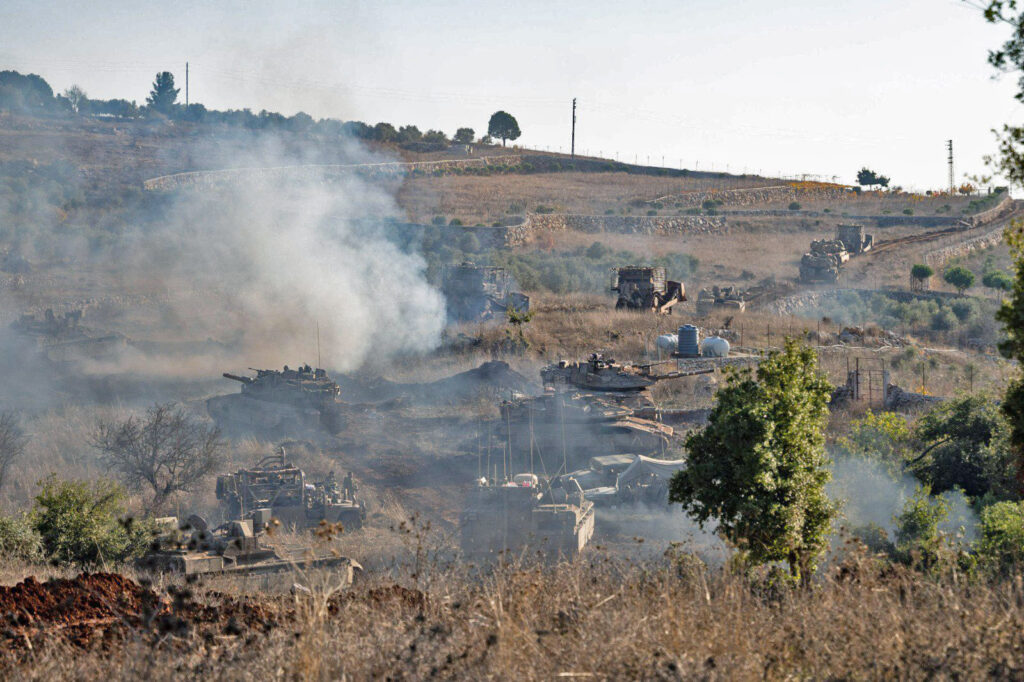
A new war is brewing on Lebanon’s southern and eastern frontier — one that threatens to redraw borders, uproot communities, and plunge the region into a deeper cycle of conflict. Israel is preparing a ground invasion framed as a final blow against Hezbollah, but its ambitions reach far beyond security. As Asharq Al Awsat analyst Huda al Husseini warns, this is an attempt to reshape the strategic landscape of the entire eastern Mediterranean — through the permanent occupation of Lebanon’s south and its eastern highlands.
Can Israel and the United States bear the consequences of simultaneously devastating Gaza, the West Bank, and now possibly Iranian Kharg Island — whose fall would accelerate the spread of the war to Lebanon? In the U.S., popular opinion is turning against this dangerous campaign, while Israeli society appears to be dismissing both international opinion and the growing unease inside America itself. The American taxpayer is already reeling from rapidly rising gasoline prices — and from a national debt that has surpassed $39 trillion.
Netanyahu and his right-wing coalition have long awaited this moment, and it is now daily news in both countries.
At a webinar hosted by the National Council on U.S.–Arab Relations this week, former Lebanese Ambassador Massoud Maalouf questioned why Washington has refused to restrain these ambitions. Maalouf revealed that the Lebanese government is prepared to negotiate a security arrangement with Israel — including continued efforts to curtail Hezbollah’s military activities — if Israel withdraws from the border villages and highland positions it currently occupies. Lebanese diplomats have long warned that Israel uses occupation and displacement to dictate political outcomes. That pattern is repeating itself today: nearly one-fifth of Lebanon’s population — residents of the south and the southern suburbs of Beirut — is already internally displaced.
I recently received a letter from an American Lebanese distinguished scholar who grew up in a village on the Israeli border and stays closely in touch:
“There is a general belief that the ground invasion is now a matter of days. If delayed, it may be because of diplomatic overtures — France, I hear, has proposed a settlement including Israeli recognition by Lebanon and Israeli withdrawal. I doubt Israel will accept. Their aim is to occupy part of Lebanon permanently. The culprit in all this is the United States, because it holds the keys to any settlement and has so far refused to use them to anyone’s benefit except Israel’s and Trump’s.”
It breaks my heart, as a Lebanese American who received my education in institutions founded by Americans, to watch Washington cooperate with this plan. For over 175 years, American institutions in Lebanon spread ideas of freedom, women’s rights, and respect for religious diversity — values that radiated across the region through generations of graduates who held prominent positions in neighboring Middle East countries. That investment, embodied today in one of the largest U.S. diplomatic facilities in the world, now stands at grave risk.
Israel’s occupation playbook is not new. During its 22-year occupation of southern Lebanon — which ended only in 2000, when Hezbollah militias forced a decisive IDF withdrawal — Israel recruited a local Christian militia as a mercenary force, deliberately deepening sectarian divisions. Today, that pattern is repeating: by targeting Shiite villages and suburbs for bombing and displacement, Israel is reigniting communal tensions that have been contained for two decades. As a massive ground invasion takes place, Shiites restricted from returning to their homes may seek shelter in Christian, Sunni, and Druze community areas, thus generating the internal friction that serves the occupier’s interest.
If Israel is not stopped through diplomacy, it will open a wider arena of resistance. Even a subdued Hezbollah will join Palestinians, Syrians, Jordanians, Iraqis, and Yemenis in a consolidated regional front — making Israel appear not as a state seeking security but as a destabilizing force across the entire Middle East.
History already offers the verdict. Israel’s 1982 invasion eliminated much of the PLO’s military presence and gave birth to Hezbollah. The Lebanese do not tolerate foreign occupation, particularly the Shiite community, which formed Hezbollah in direct response to Israeli aggression. A new occupation will not bring security; it will deepen Israel’s isolation and fuel a resistance that no army can extinguish.
Only Washington can stop this war. The question is whether it will preserve what 175 years of American [cultural] presence in Lebanon built — or stand by as it collapses into another generation of conflict.
Ghassan Rubeiz is the former Middle East Secretary of the World Council of Churches. Earlier, he taught psychology and social work in his country of birth, Lebanon, and later in the United States, where he currently lives. He has contributed to political commentary for the past twenty years and has delivered occasional public talks on peace, justice, and interfaith topics. You can reach him at rubeizg@gmail.com
The views and opinions expressed in this article are those of the author and do not necessarily reflect the position of Arab America. The reproduction of this article is permissible with proper credit to Arab America and the author.
Want more articles like this? Sign up for our e-newsletter!
Check our blog here!