
Subscribe
to receive news by email
Poll
Will the Trump Administration Shift U.S. Policy in Favor of Palestine?
- No (86%)
- Yes (14%)
 Loading ...
Copyright © 2026 Arab America
Go topAbdul El-Sayed’s Historic Victory and the Power of Arab American Participation
By John Mason / Arab America Contributing Writer
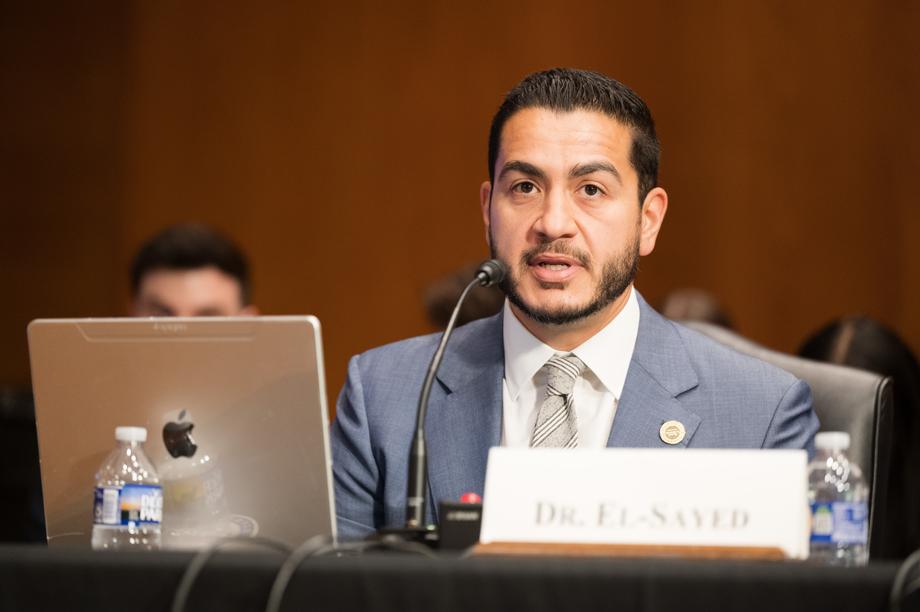
The first Muslim American ever elected to the U.S. Senate—Abdul El Sayed, is a momentous event. His triumph stands as both a cultural and historic milestone, symbolizing the resilience, talent, and determination of the Arab American community. We will see how Michigander and other Arab Americans helped get El Sayed across the victory line, and thus contributing to a milestone of Arab American participation and pride. The article highlights how Abdul’s triumph characterizes the dynamism of the Arab American community.
The cultural and historic significance of El Sayed’s stunning victory
Abdul El Sayed’s 2026 win in Michigan’s U.S. Senate race marked a milestone in American political history, symbolizing the expanding reach of democratic participation and the growing influence of diverse communities in national governance. As the first Muslim American elected to the Senate, his victory reflects a shift in the political landscape, where previously marginalized groups are now represented at the highest levels of federal government.
‘The Milwaukee Journal-Sentinel’ described his historic Michigan Victory as occurring “In a nation that prides itself on its diversity but often falls short in giving voice to those in minority communities, Abdul El-Sayed’s win in the race for Michigan’s open U.S. Senate seat stands as a mark of how inclusive and expansive American democracy – and its electorate – can and will be, given time and opportunity.”
Culturally, El Sayed’s triumph underscores the increasing diversity of the American electorate and the ability of individuals from varied backgrounds to shape national policy. A native son of Egyptian immigrants, El Sayed, a public health professional, designed a progressive policy platform that positioned him as a bridge between community concerns and national issues.
El Sayed’s immigrant heritage, public health background, and his personal story resonated with Michiganders, highlighting Arab American community engagement in his campaign. Equally, his upbringing in Oakland and Gratiot counties and how his mixed cultural background shaped his appeal across Michigan’s diverse communities appealed to voters. El Sayed’s story resonated with Michiganders and highlighted Arab American community engagement in his campaign.
El Sayed’s campaign focused on economic inequality, healthcare access, and cost of living challenges. He aligned his campaign of broader progressive priorities with Michigander voters’ concerns across demographic lines. Historically, the election is significant because it challenges entrenched beliefs that limit political representation based on religion or ethnicity. In Michigan, with its large Arab American and Muslim communities, El Sayed’s win validates that political success is possible despite tenaciously held stereotypes and vicious anti-Islamic attacks on the candidate. It also hints a potential long-term trend toward greater inclusion in U.S. politics, as more candidates from underrepresented groups enter legislative bodies.
El Sayed’s victory also reflects the strength and adaptiveness of the American democratic enterprise. It suggests that our electoral process can deliver representation even in the face of divisive rhetoric and targeted attacks. His election is a reminder that political representation is not only about the number of seats held by different groups, but also about the breadth of perspectives and experiences that can influence national decision making.
Michigander and other Arab Americans nudged El Sayed across the victory line
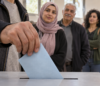
Michigander and other Arab American community members played a key role in helping Abdul El Sayed win the election. They used their local networks to spread information about the campaign, encouraging people to vote and get out the ballot. This grassroots effort helped ensure that many eligible voters were informed and motivated to participate.
Not only Arab American community leaders and volunteers but others across the demographic spectrum organized meet ups, door to door canvassing, and phone calls to potential supporters. These activities built trust and made sure that people in diverse neighborhoods felt included in the process. The focus was on getting people to the polls, not on political debates.
The campaign also relied on cultural events and community gatherings to connect with voters. These events provided a friendly setting to share information and build relationships, which helped strengthen support for El Sayed’s candidacy. By working together, Michigander and other Arab Americans created a strong base of supporters. This base was built on shared goals and community solidarity, not on religious identity. The emphasis was on unity and shared interests, which made the campaign more inclusive.
The result was a significant boost in voter turnout and support for El Sayed. There was also another convergence of social and religious factors, which, according to the publication, ‘Bold Perspectives,’ a “mix of immigrant and local heritage, along with a household (El Sayed’s) that included both Muslim and Christian family members, [which] shaped his understanding of Michigan’s diversity. He has said Michiganders care more about “what you pray for” than “how you pray,” and that focusing on issues that improve people’s lives can inspire different perspectives on leadership.”
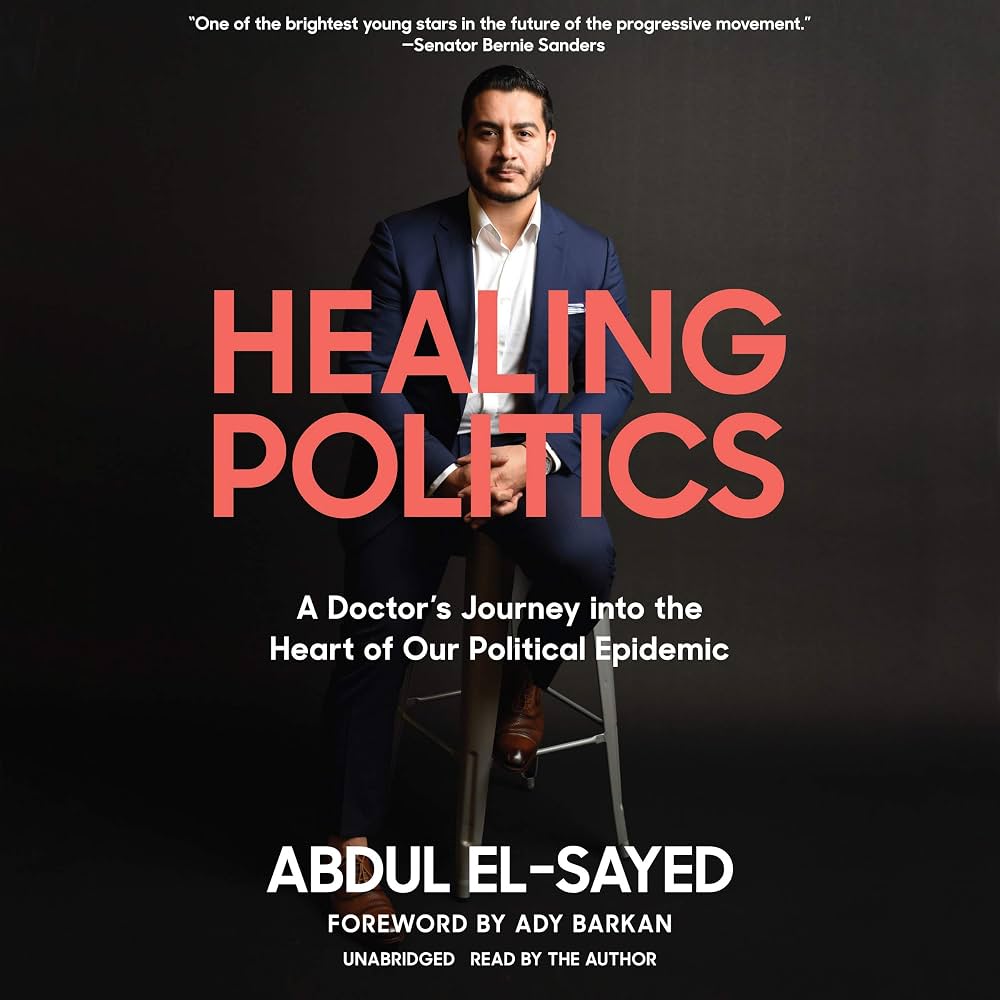
Abdul El Sayed’s Victory: A milestone of Arab American participation and pride
Abdul Sayed’s triumph stands as both a cultural and historic milestone, symbolizing the resilience, talent, and determination of the Arab American community. His win is more than a personal achievement — it is a celebration of heritage and identity, inspiring generations to embrace their roots while pursuing excellence in public life.
Abdul’s victory resonates deeply within the Arab American community, which has long faced challenges of visibility, representation, and acceptance. El Sayed’s success validates the contributions of Arab Americans to the nation’s cultural and political fabric, offering a powerful example of how hard work, community support, and cultural pride can overcome obstacles.
An important piece of El Sayed’s victory, according to ‘ThinkPeakStudio’s’ Harold Meyerson, is that the candidate had to “Bridge cultural divides in rural and less diverse communities, Reframe his identity to align with local peers while keeping core policy goals, and Leverage economic issues—and if the economy is the dominant issue, he can win Michigan.” Clearly, El Sayed figured out that his main challenge was to meet the constraint of how “to overcome ‘otherness’ by making his message and persona resonate with the social and cultural norms of the voters he needs to win, not just the policy content.”
The support from the Arab American community was both a source of strength and a reflection of unity. From grassroots encouragement to public celebrations, his peers and leaders rallied behind him, creating an environment where he could shine. This collective backing underscores the power of community solidarity in fostering individual success and in strengthening the community’s voice in the broader national conversation.
See John Mason’s Pathbreaker article about Abdul Elsayed Here
Sources
“El Sayed, Abdulrahman Mohamed. Abdul El Sayed: First Muslim American U.S. Senator from Michigan,” Wikipedia, “Abdul El Sayed” entry, Updated 11/3/2026.
“Abdul El Sayed’s win: How it happened, impact of his historic victory,” Milwaukee Journal Sentinel 11/4/2026
“Abdul El Sayed’s Story Is a Michigan Story,” (PDF), Bold Progressives, 10/26/2026.
“El Sayed’s Challenge: Overcoming ‘Otherness,’ The American Prospect,” ThinkPeak Studio. 8/6/2026.
“Author Spotlight: Abdul El Sayed — The Audacity to Change the World,” www. thinkpeakstudio.com, 8/10/2026.
John Mason, Ph.D., focuses on Arab culture, society, and history and is the author of LEFT-HANDED IN AN ISLAMIC WORLD: An Anthropologist’s Journey into the Middle East, New Academia Publishing, 2017 and of his new novel, WHISPERS FROM THE DESERT: Zaki, a Little Genie’s Tales of Good and Evil (2025), under his pen name, Yahia Al-Banna. He has taught at the University of Libya in Benghazi, Rensselaer Polytechnic Institute in New York, and the American University in Cairo. John served with the United Nations in Tripoli, Libya, and consulted extensively on socioeconomic and political development for USAID and the World Bank in 65 countries.
The views and opinions expressed in this article are those of the author and do not necessarily reflect the position of Arab America. The reproduction of this article is permissible with proper credit to Arab America and the author.
Want more articles like this? Sign up for our e-newsletter!
Check out our blog here!