
Subscribe
to receive news by email

Poll
Will the Trump Administration Shift U.S. Policy in Favor of Palestine?
- No (87%)
- Yes (13%)
 Loading ...
Copyright © 2026 Arab America
Go topAfter 14 Years, Libya Reopens Its National Museum Doors
By Nourelhoda Alashlem / Arab America Contributing Writer
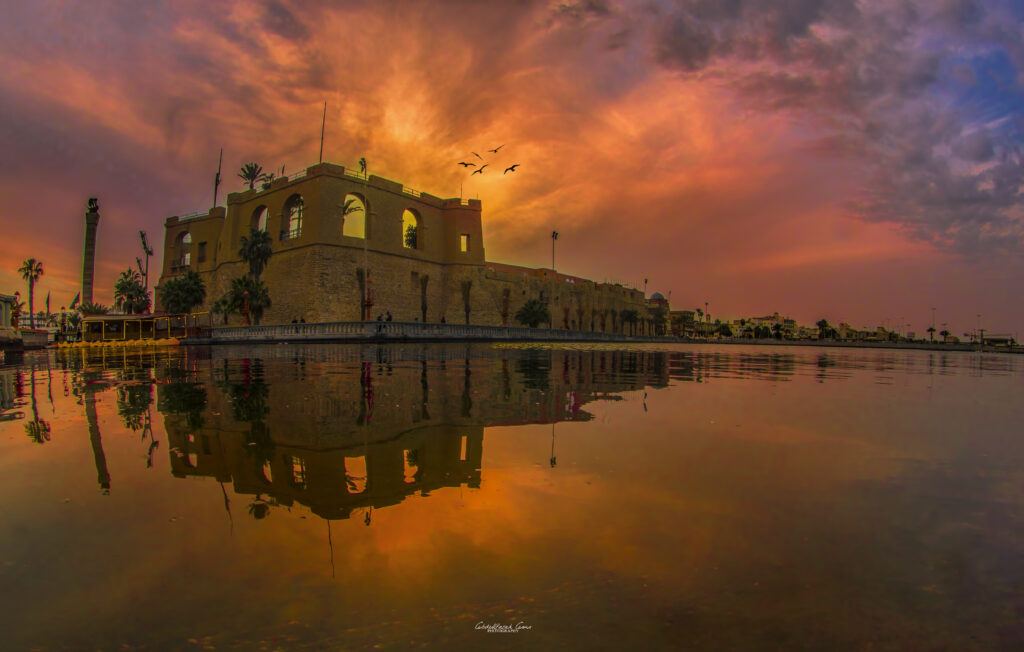
Fireworks lit up the sky above Martyrs’ Square in central Tripoli on December 12, 2025. It was a sight rarely seen in Libya’s capital in recent years. Instead of sounds signaling clashes between rival militias, the explosions marked a grand ceremony celebrating the reopening of Libya’s National Museum. The museum sits inside Tripoli’s historic Red Castle, known as As-Saraya Al-Hamra. It reopened after nearly 14 years of closure. The event restored public access to one of North Africa’s most important cultural institutions for the first time since the 2011 uprising that toppled Muammar Gaddafi. The reopening signaled a symbolic moment for a country still navigating political division. It also reflected efforts to rebuild Libya’s cultural and institutional life.
A Landmark Returns After Years of Closure
Tripoli’s Red Castle has long stood as one of the capital’s most recognizable landmarks. It has also played a central role in Libya’s cultural life. After nearly 14 years of closure, the National Museum inside the fortress officially reopened in December 2025. The reopening restored access to one of North Africa’s richest public collections.
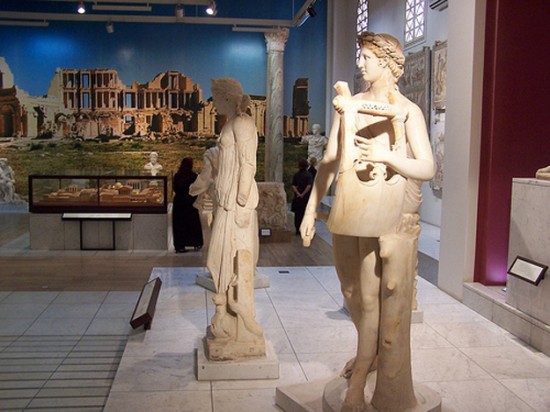
Inside, the museum contains more than 10,000 square meters of gallery space and traces roughly 5,000 years of Libyan history. The collections span prehistoric eras through Libya’s Greek, Roman, and Islamic periods and include mosaics, sculptures, coins, and manuscripts. Rare mummies from Uan Muhuggiag in southern Libya and Jaghbub near the eastern border with Egypt are among the most notable holdings. Additional galleries cover Italian colonial rule, World War II, and Libya’s independence period, presenting a wider historical arc beyond antiquity.
From Wartime Closure to Restoration
The museum closed in February 2011 after protests erupted in Benghazi. The demonstrations quickly spread across Libya and reached the capital. As violence escalated, armed clashes broke out in Tripoli. Public institutions across the country shut down, including the National Museum.
During the fighting, a group of armed men reportedly entered the museum. They believed it concealed the entrance to a secret government tunnel. Most artifacts remained intact. However, vandals damaged several regime-linked artifacts, including a 1960s Volkswagen Beetle belonging to Gaddafi. (See image here.)
Renovation work on the museum began in March 2023 under the Tripoli-based Government of National Unity, which came to power through a U.N.-backed political process in 2021. Officials have framed the reopening as evidence of institutional recovery following years of conflict and political paralysis. Prime Minister Abdulhamid al-Dbiebah described the museum’s return as “a live testimony that Libya is building its institutions.” The reopening marks one of the most visible cultural restoration projects undertaken in Libya since the 2011 uprising.
Arab Celebrities and Media Figures Attend Reopening
The reopening drew significant regional and international attention, with Arab media figures, cultural influencers, and diplomats in attendance. Egyptian satirist Bassem Youssef was among the most prominent public figures present. Alongside television hosts Mona ElShazly and Rabia Zayyat and Syrian actor Abed Fahed, whose appearances helped amplify coverage across Arab media platforms. Their presence contributed to widespread regional visibility, which shifted attention toward Libya’s cultural revival rather than its political divisions.
Delegations from several foreign embassies, including Italy and Japan, attended the ceremony, alongside senior officials from European cultural institutions, reflecting wider international interest in Libya’s heritage sector. Algeria’s Minister of Communication, Zoheir Bouamama, was also present, which showcases the event’s regional importance within North Africa and the Arab world. The mix of diplomats, government officials, and prominent media figures framed the reopening not only as a national cultural milestone but also as part of Libya’s broader effort to reconnect with regional and global cultural networks.
Recovering Libya’s Cultural Heritage
Since renovation efforts began, Libya has recovered at least 21 artifacts smuggled out of the country following Gaddafi’s demise, primarily from France, Switzerland, and the United States, according to Mohamed Farj Shakshoki, chairman of Libya’s antiquities department board of directors. There are negotiations currently underway to recover additional artifacts from other European countries.
Libya is home to five UNESCO World Heritage sites. In 2016, UNESCO declared all five endangered due to instability and conflict. Conservation efforts have since shown progress. In July, UNESCO removed the historic town of Ghadames from its List of World Heritage in Danger after security and preservation improved.
What Comes Next for Libya?
The reopening of Libya’s National Museum marks a quiet but meaningful turning point. Restoring a landmark like the Red Castle signals confidence in the country’s future. It also reflects belief in Libya’s ability to move forward.
As cultural spaces reopen and heritage is preserved, Libya begins to reintroduce itself to the world. This time, it does so through history and culture rather than conflict.
The step brings renewed hope for a future in which Libya can welcome visitors again. It also opens the door for tourism and international cultural exchange. While challenges remain, the return of institutions like the National Museum suggests a country gradually reopening its doors to the wider world.
Want more articles like this? Sign up for our e-newsletter!
Check out our blog here!