

Subscribe
to receive news by email

Poll
Will the Trump Administration Shift U.S. Policy in Favor of Palestine?
- No (87%)
- Yes (13%)
 Loading ...
Copyright © 2026 Arab America
Go topAlgeria's Traditional Architecture: Tapestry of Cultures and Climates
By: Ralph I. Hage / Arab America Contributing Writer
Algeria, the largest country in Africa, boasts a rich and diverse architectural heritage that reflects centuries of cultural fusion, geographical variation, and historical transformation. From the sun-baked kasbahs of the north to the earthen ksour of the Sahara, traditional Algerian architecture is a living testament to the country’s layered past and enduring identity.
Geographic Influence on Architectural Styles
Algeria’s vast territory stretches from the Mediterranean coast in the north to the heart of the Sahara Desert in the south. This dramatic range of climates and terrains has played a significant role in shaping regional architectural styles. In the cooler, wetter coastal regions, stone and lime are common building materials, whereas in the arid south, structures are built with sun-dried mud brick (adobe), which provides insulation from extreme heat.
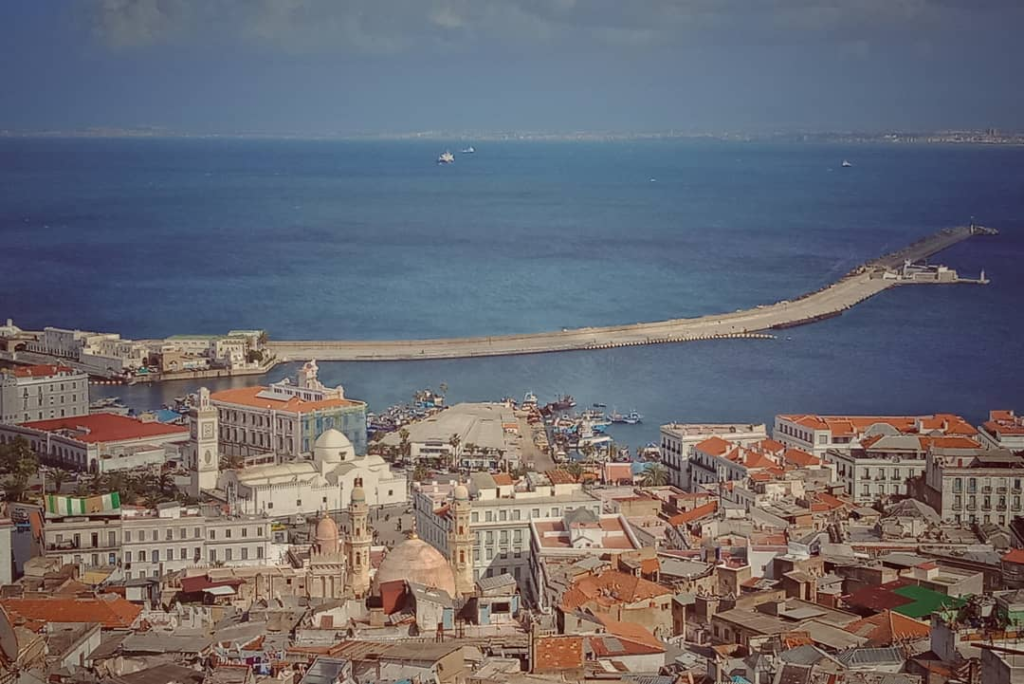
The northern coastal cities, such as Algiers and Constantine, are known for their Ottoman-era urban designs and Arab-Andalusian influences. Inland and in the southern desert, the architecture becomes increasingly indigenous, reflecting Berber (Amazigh) traditions that have been adapted to desert life. These climatic and cultural differences have produced an architectural mosaic that is uniquely Algerian.
The Kasbah of Algiers: Urban Splendor
One of the most iconic examples of Algerian architecture is the Kasbah of Algiers, a UNESCO World Heritage Site. Perched on a hillside overlooking the Mediterranean, the Kasbah is a dense maze of narrow alleys, stairways, and whitewashed houses. Originally built on the ruins of the ancient Roman city of Icosium, the Kasbah developed during the medieval period and underwent expansion during Ottoman rule in the 16th century.
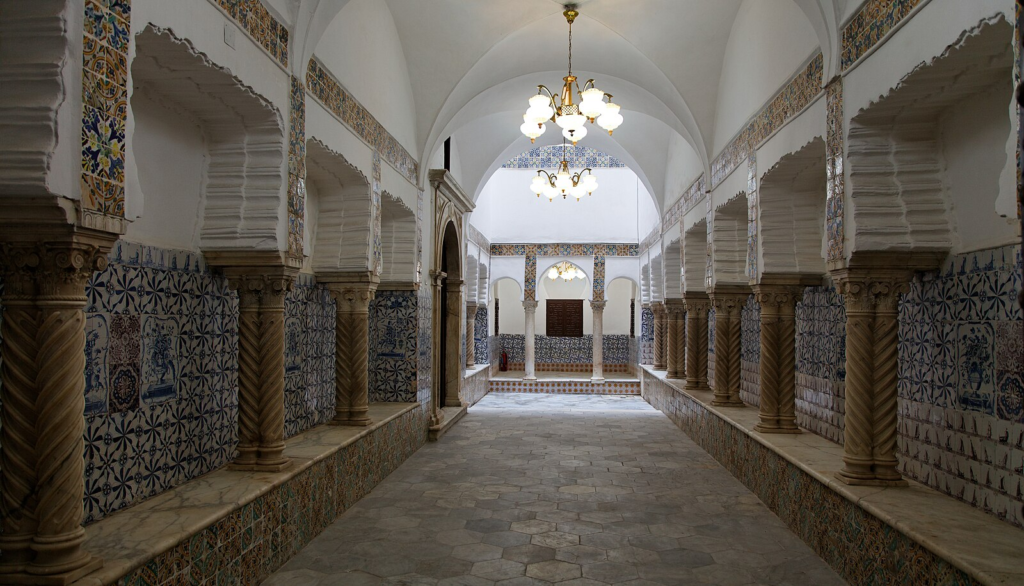
Houses in the Kasbah are typically multi-storied with inward-facing courtyards, offering privacy and protection from the elements. The architecture reflects Islamic principles of modesty and community, with exterior facades often unassuming while interiors are richly adorned with intricate tilework, carved wood, and plaster decorations. The layout of the Kasbah also reflects a deep social cohesion, as public fountains, mosques, and hammams (public baths) are seamlessly integrated into the urban fabric, encouraging communal life.
Berber Vernacular Architecture: Harmony with Nature
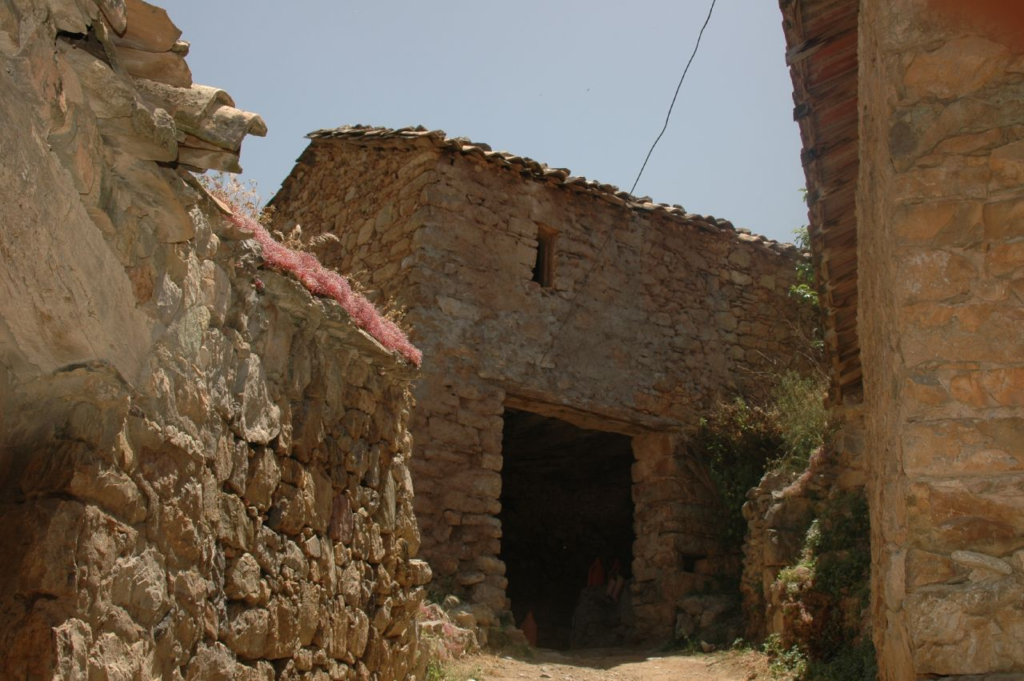
In contrast to the Ottoman-influenced urban centers, Berber architecture found in the Kabylie region and the Saharan Atlas mountains represents a more rural, vernacular tradition. Berber homes are typically built from locally sourced materials, such as stone, wood, and earth, fostering a strong harmony with the natural environment.
These homes are typically rectangular and consist of one or two stories, with flat roofs used for drying crops or storing goods. Thick walls provide insulation against both heat and cold, while small windows reduce sun exposure. The structures are both practical and aesthetically pleasing, often decorated with symbolic motifs carved into wood or painted onto walls, reflecting the spiritual and cultural beliefs of the community.
Villages are strategically positioned on hilltops or mountain slopes to maximize defense and utilize agricultural land effectively. In Kabylie, homes often cluster tightly together, emphasizing community and mutual support, a central tenet of Berber social organization.
Ksour and Oases Architecture of the Sahara

Further south, the architecture adapts to the harsh Saharan environment. Here, traditional settlements called ksour (plural of ksar) dominate the landscape. A ksar is a fortified village made of adobe or stone, usually centered around a communal granary and mosque. These structures are designed to withstand extreme temperatures and sandstorms, with thick walls and minimal openings.
One of the most famous ksour is Timimoun, located in the Gourara region. Known for its striking red ochre buildings, Timimoun’s architecture combines Sudanese, Moorish, and local Saharan influences. Houses are built close together, often with arcaded walkways and internal courtyards. The palette of reds and browns helps blend the structures seamlessly into the desert surroundings.
Oases also play a critical role in Saharan life and architecture. In these fertile areas, water sources allow for agriculture and more permanent settlements. Palm groves, known as palmeraies, often surround towns like Ghardaïa and Beni Isguen in the M’zab Valley. These towns, founded by the Ibadite Berbers in the 11th century, are another UNESCO World Heritage Site, notable for their strict geometric planning and communal ethos.
M’zab architecture is particularly distinctive. Each town features a central mosque with a minaret that doubles as a watchtower, surrounded by concentric circles of houses. The homes are modest yet efficient, featuring thick walls, small windows, and internal courtyards that provide light and ventilation while maintaining privacy.
Islamic and Moorish Influences on Architecture
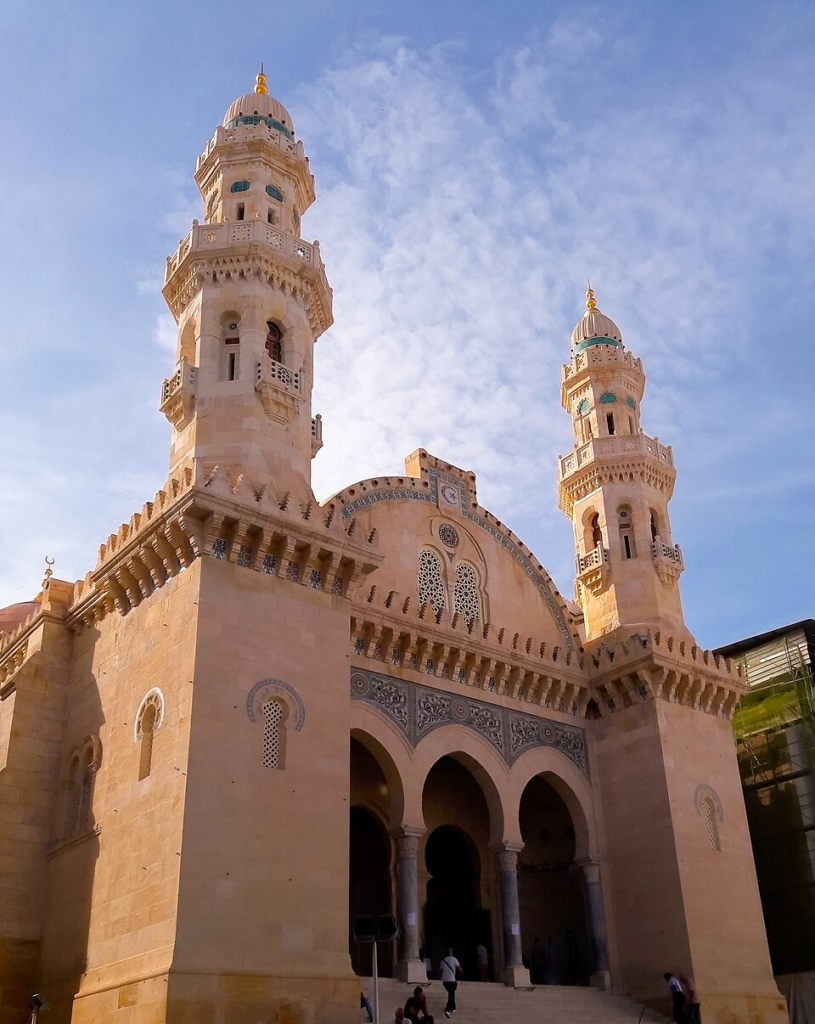
Algerian traditional architecture is deeply influenced by Islamic and Moorish aesthetics, which were introduced to the region through centuries of Arab rule and the arrival of Andalusian refugees following the Reconquista in Spain. This influence is particularly evident in decorative elements such as arabesques, geometric patterns, and calligraphy that adorn mosques, palaces, and private homes.
Mosques are central to traditional Algerian communities, and their architectural styles vary across the country. In northern cities, Ottoman-style mosques are characterized by domes, minarets, and ornate tilework, as seen in the Ketchaoua Mosque in Algiers. In the Sahara, mosques are more austere, built with mud brick and featuring squat, square minarets that blend into the desert landscape.
Courtyards, a staple of Islamic architecture, are a key feature in many homes in Algeria. These open-air spaces serve as the heart of the household, where people gather for socializing, cooking, and relaxation. They also aid in natural cooling, a crucial adaptation to Algeria’s often hot climate.
Preservation and Modern Challenges
In the modern era, Algeria’s traditional architecture faces numerous challenges. Urbanization, population growth, and economic pressures have led to the degradation or replacement of many historic buildings. Informal construction and modern materials often disregard traditional methods and aesthetics, leading to a loss of architectural identity.
However, there are growing efforts to preserve and restore Algeria’s architectural heritage. Government programs, international partnerships, and local initiatives are working to rehabilitate historic sites, promote sustainable tourism, and educate younger generations about traditional building techniques. Architects and urban planners are increasingly looking to vernacular models for inspiration in designing climate-appropriate and culturally resonant buildings.
History & The Future
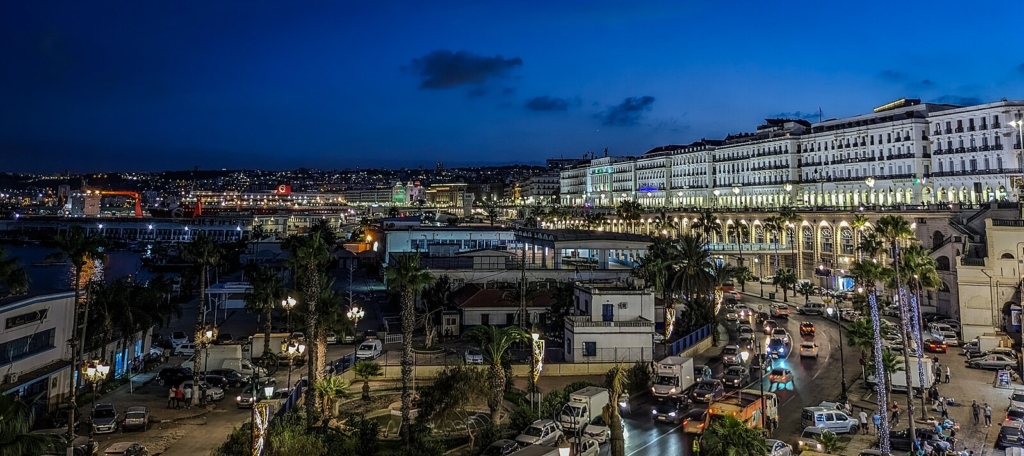
The traditional architecture of Algeria reflects its complex history and diverse landscapes. From the winding alleys of the Kasbah to the fortified ksour of the desert, Algerian architecture tells a story of adaptation, resilience, and cultural fusion. It is a heritage worth preserving – not only for its aesthetic value but also for the deep wisdom it holds in responding to human needs in harmony with nature. As Algeria moves forward, its architectural past offers valuable lessons for building a sustainable and culturally rich future.
Ralph Hage is a Lebanese American architect who divides his time between Lebanon and the United States.
Want more articles like this? Sign up for our e-newsletter!
Check out our blog here!