

Subscribe
to receive news by email

Poll
Will the Trump Administration Shift U.S. Policy in Favor of Palestine?
- No (87%)
- Yes (13%)
 Loading ...
Copyright © 2026 Arab America
Go topAppeals Court Reverses Decision that Released Mahmoud Khalil
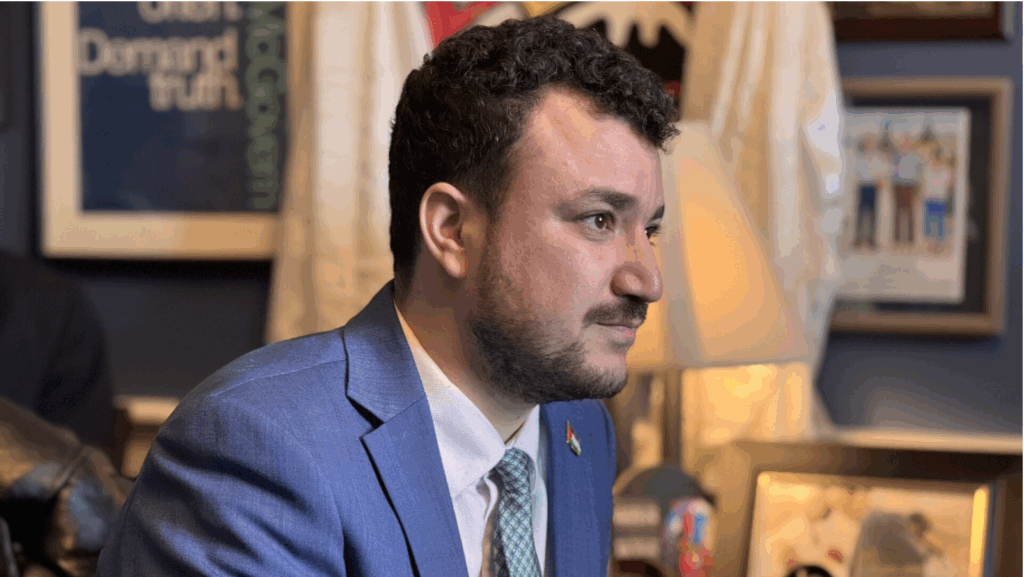
Photo by Office of Representative Jim McGovern, Public domain, via Wikimedia Commons
By Jake Harris / Arab America Contributing Writer
A panel of judges on a US appeals court in Philadelphia reversed the ruling that released Palestinian activist Mahmoud Khalil from detention. Khalil was detained on allegations from the Trump administration that he was involved in activities aligned to Hamas. Khalil is not charged with any crime. The move by the Trump administration is part of a larger effort to crack down on pro-Palestinian protests. Many of these protests are occuring specifically on college campuses. The White House argues that because Khalil is not a citizen, he is eligible for deportation on the grounds that his protests were a threat to US Foreign Policy. Khalil is a Green Card holder who’s wife is a US citizen.
Legitimacy of the Allegations
This argument has been used for numerous on campus detainments during the height of the Gaza Encampment movement on college campuses. The alleged evidence that Mahmoud Khalil is connected with Hamas in any way was challenged by Patrick Eddington. Eddington is a scholar for the Cato Institute on issues relating to civil liberties and homeland security. Eddington noted an article from The Times that challenged the legitimacy of the allegation from White House Press Secretary Karoline Leavitt that Khalil participated in a protest where fliers were handed out with the Hamas insignia on it. Eddington’s piece on the Cato Institute website illustrated the vagueness of the allegation that Khalil’s actions are seriously adverse for US Foreign Policy, and a threat to national security. There has been no such evidence presented that Khalil is a foreign agent of any kind.
Mahmoud Khalil’s defense
In an interview with Christiane Amanpour on CNN, Khalil challenged the connotation that the protests were antisemitic and said Jewish protesters were an integral part of the movement. Mahmoud Khalil argued that the controversial slogans “From the river to the sea” and “globalize the intifada” are mischaracterized.
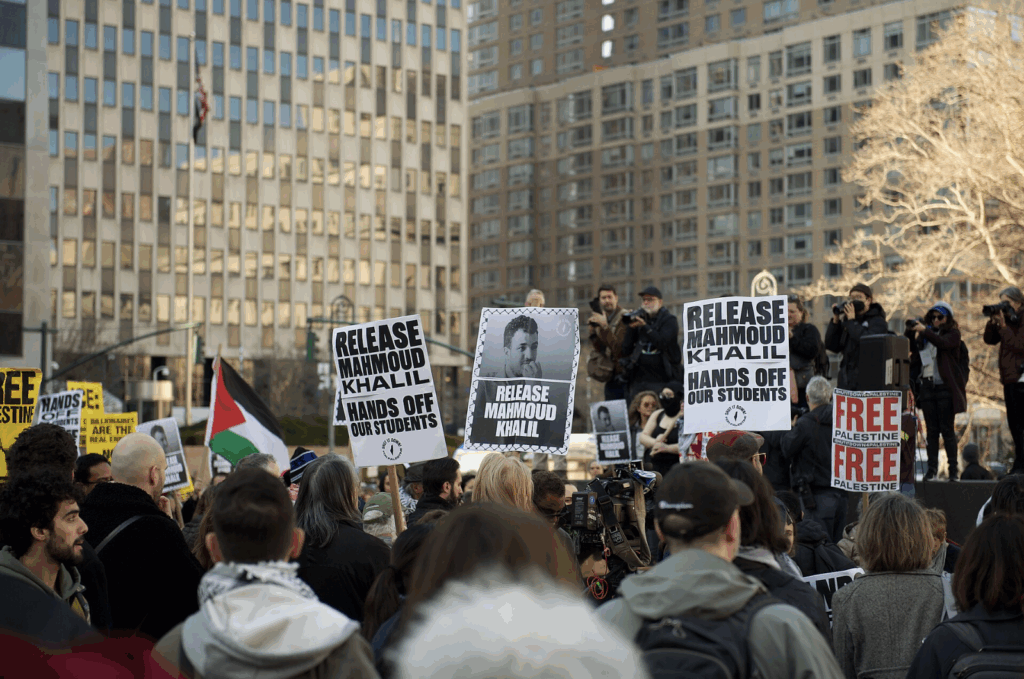
The case has become significantly more than an immigration case, it is an argument over constitutionality. Issues about overarching legal principles are often the types of cases that the Supreme Court agrees to hear. It is still unclear if this matter will ever get to that point.
Majority and Dissenting Opinions
The appellate court reversed the decision on the grounds that the district court did not have the jurisdiction. The majority opinion cited that under the Immigration and Nationality Act, the appeal to the detention should’ve been heard by an immigration judge through an appeal of a removal order. Judge Ariana Freeman wrote a strongly worded dissenting opinion. Judge Freeman argued that Khalil is facing “now or never” circumstances. She argued that the violation of his constitutional rights can not wait indefinitely to be ruled on. Freeman was appointed by Joe Biden in 2022. The split in opinion fractured on party lines of the presidents who appointed the judges. Two were appointed by Republican Presidents, one by a Democratic president.
Mahmoud Khalil’s Legal Team Responds
Khalil’s legal team has voiced their obvious disappointment with the ruling. At the same time they are choosing to remain steadfast in their fight against the administration’s deportation efforts. The American Civil Liberties Union, as well as Amnesty International have made their position clear that the detainment is unlawful and a violation of the first amendment.
During Khalil’s detention, he missed the birth of his child. Khalil described his period in detention as having a lack of privacy, overcrowded conditions, as well as inedible food. Khalil alleged very cold conditions and denial of blankets.
New York City mayor Zohran Mamdani argued that the case is an attack on free expression nationwide.
Larger Themes Present in the Case
It has become a major point of debate across many wider topics. It has sparked significant debate on the rights of green card holders compared to US Citizens. To what extent are non-citizens rights on US soil different from citizens? Aside from constitutional arguments the case has generated debate on foreign policy. Debates pertained to the extent of US support for Israel. Arguments over how this alliance has contributed to an implied association between anti-Israel sentiment automatically being anti-American sentiment. Whenever a resolution comes to this saga, the result will set a precedent in US law that is likely to have lasting impacts on how the government defines the first amendments grey areas.
Want more articles like this? Sign up for our e-newsletter!
Check our blog here!





.jpg)
