
Subscribe
to receive news by email

Poll
Will the Trump Administration Shift U.S. Policy in Favor of Palestine?
- No (87%)
- Yes (13%)
 Loading ...
Copyright © 2026 Arab America
Go topArab American Victories; The Power of Mayoral Rhetoric

By: Laila Ali / Arab America Contributing Writer
This November, on stages across New York, Michigan, and beyond, a new generation of Arab-American mayors took the oath of office. In their victory speeches, Zohran Mamdani in New York City, Abdullah Hammoud in Dearborn, and Adam Alharbi in Hamtramck each addressed their hometowns in the same language.It was not the language of partisanship, or of victory. It was the language of belonging.
For Mamdani, Hammoud, and Alharbi, belonging is not a slogan or sentimental value, it is the work of government. They view inclusion not as an abstract value but as an imperative that must be built into a city’s policies: who can afford to live in it, who feels safe in it, and who can see their story in public life.
Zohran Mamdani: Hope as Public Policy

In New York City, Zohran Mamdani, 29, made history as the first Muslim mayor in the city’s history and one of its youngest. His victory speech was a statement less of self-congratulation than of renewal. He thanked “millions of New Yorkers” for choosing “hope over despair” and then spelled out how he would make hope policy. Mamdani’s first initiatives in office aim to address New York’s affordability crisis with a rent freeze for over two million tenants, free and faster buses, and universal childcare. He will also create a Department of Community Safety to coordinate mental health, homelessness, and neighborhood services. His message was clear: belonging requires stability.
A city cannot be inclusive if its residents are priced out of their neighborhoods, or if safety is a form of punishment rather than care. “New York will be the light in a moment of political darkness,” he said, vowing to make Muslims, immigrants, and working-class New Yorkers feel that they belong “not just in the five boroughs, but in the halls of power.” Mamdani’s campaign redefined identity politics as infrastructure. By tying belonging to affordability, he offered a model of inclusion rooted in access and economic dignity.
Abdullah Hammoud: Belonging Through Trust
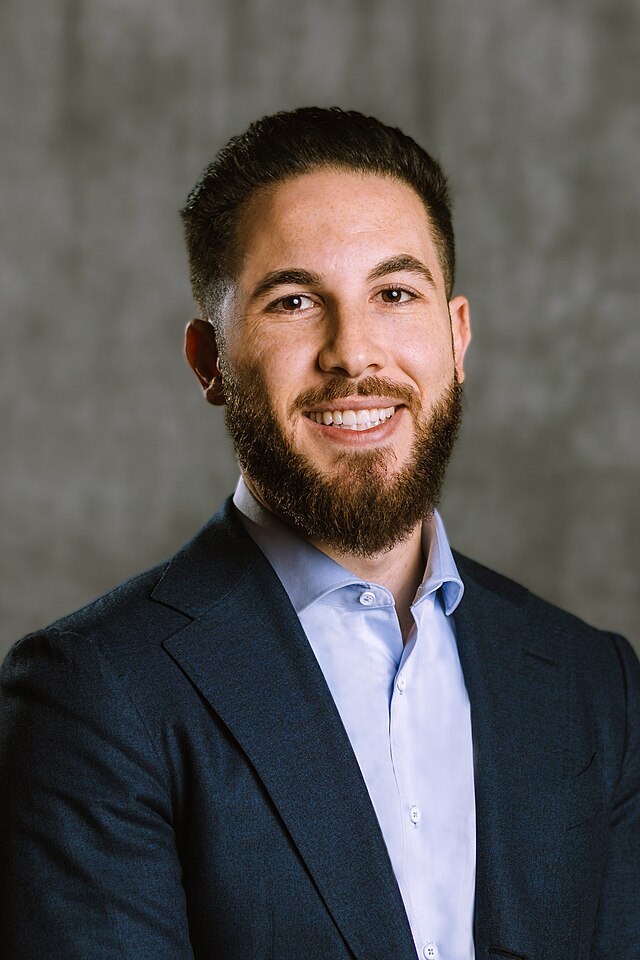
In Dearborn, Michigan, 35-year-old Mayor Abdullah Hammoud easily won re-election with over 71 percent of the vote, according to FOX 2 Detroit. His victory was less a mandate than a reaffirmation of the trust he earned through steady, pragmatic leadership as the mayor of one of America’s most diverse cities.
Hammoud’s first term produced tangible wins: more than 100 new small businesses, revitalized commercial corridors, and large-scale stormwater and infrastructure projects that remedied years of flooding. But his investments in the city were more than material. They turned Dearborn’s neighborhoods into evidence of what representation can deliver when it is paired with competence.
Hammoud’s leadership has never rested solely on policy, either. It is anchored in inclusivity. He once told Dearborners, “For those who were ever made to feel that their names were unwelcome, you are as American as anyone else.” That statement remains a touchstone of his mayoralty. His administration treats belonging as both moral and practical, a contract of trust between citizens and city hall. When residents see government deliver on the basics, they no longer view representation as symbolic, but as reliable. Hammoud’s Dearborn has become a national model of how identity politics, done right, can be a source of unity rather than division.
Adam Alharbi: Coexistence in Practice
In nearby Hamtramck, Yemeni-American engineer Adam Alharbi became the city’s new mayor, presiding over one of the only all-Muslim governments in the United States. His victory speech was brief but decisive: “Hamtramck is a city for everyone, and we will work together for a better future that ensures justice, achieves development, and preserves the spirit of coexistence that distinguishes our city.”
Those three words, justice, development, coexistence, they summarize Alharbi’s governing philosophy. His early agenda will focus on infrastructure renewal, housing rehabilitation, and transparent budgeting, all issues that transcend ethnic and religious identity lines in a city shared by Yemeni, Bangladeshi, Bosnian, and Eastern European communities.
Alharbi’s approach is a mirror of his engineering background: practical and steady. Where Mamdani forges belonging through access and Hammoud through trust, Alharbi does so through coexistence: the careful maintenance of a city where differences are neither erased nor weaponized, but woven into the fabric of civic life.
A Shared Blueprint
Across New York, Dearborn, and Hamtramck, three mayors are writing a new playbook for Arab-American leadership. Each of them proves that belonging is not a by-product of good government, it is good government.
Mamdani’s New York shows that dignity begins with affordability. Hammoud’s Dearborn proves that representation matures when it is reliable. Alharbi’s Hamtramck illustrates that coexistence must be designed, renewed, and protected. They are not simply firsts for Arab and Muslim American communities. They are mayors who know that leadership requires listening and that democracy is sustained when people can see themselves in its institutions.
Belonging, Block by Block
The cities they govern could not be more different: a global metropolis, a regional hub, and a compact industrial town. But their visions overlap on one point: belonging is built. It is inscribed in the small things, a streetlight fixed, a business opened, a home no longer under water, that tell residents that their city remembers them.
In an age of polarization, Mamdani, Hammoud, and Alharbi are crafting a politics that moves beyond representation to restoration. They are turning the language of inclusion into a blueprint for fairness and shared progress. When Mamdani promised “a city government that helps everyone,” he was speaking not only for New Yorkers, but for a generation of Arab and Muslim American leaders who believe that to belong is to be cared for, and that to govern with empathy is the truest measure of power.
Want more articles like this? Sign up for our e-newsletter!
Check out our blog here!