Subscribe
to receive news by email

Poll
Will the Trump Administration Shift U.S. Policy in Favor of Palestine?
- No (87%)
- Yes (13%)
 Loading ...
Copyright © 2026 Arab America
Go topArab Americans and U.S. Voting Power: Underrepresented, but Rising
By: Layla Mahmoud / Arab America Contributing Writer
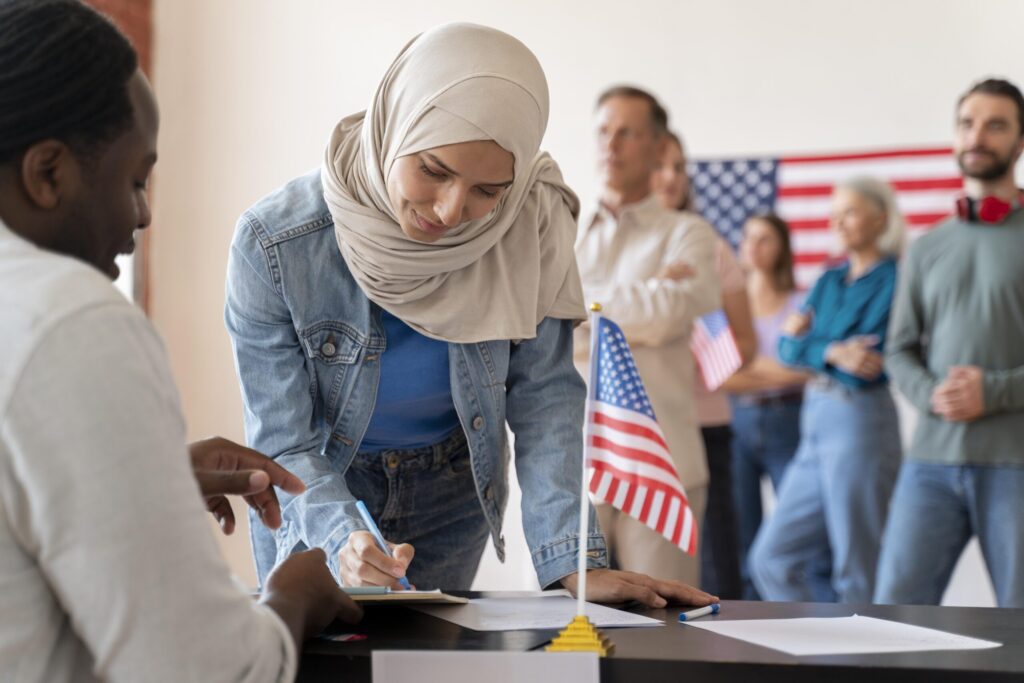
Arab Americans have long existed on the fringes of U.S. political life, numerous in number, but overlooked in national conversations. Despite an estimated population of over 3.7 million, Arab Americans’ voting power remains underrepresented in government, undercounted in official data, and frequently misunderstood. However, over the past two decades, a quiet political awakening has emerged. This community is beginning to assert its place in American democracy, from higher voter turnout to a growing number of Arab American candidates.
A History of Political Invisibility
The underrepresentation of Arab Americans in U.S. politics is not accidental; it’s rooted in decades of structural erasure. For much of the 20th century, Arab Americans were classified as “white” on census forms, making their population statistically invisible. This categorization not only erased cultural and religious differences but also excluded them from data that drives funding, research, and policy decisions.
Moments of political visibility often came during times of crisis, such as the Gulf War or 9/11, when Arab Americans were framed as threats rather than constituents. Following 9/11, surveillance programs and rising Islamophobia discouraged many from political participation out of fear of being profiled or misunderstood. This created a deep disconnect between Arab American communities and mainstream political institutions.
A New Era of Civic Engagement
Despite these barriers, recent years have seen a notable shift. Organizations like the Arab American Institute (AAI) and Emgage have worked to mobilize voters through education, outreach, and advocacy. As a result, Arab American voter registration and turnout have increased significantly, particularly in key swing states like Michigan, Pennsylvania, and Florida.
Michigan, in particular, has become a case study in Arab American political influence. In cities like Dearborn and Hamtramck, Arab American communities have driven record-high voter participation and helped shape local and state elections. These communities are not only showing up to vote; they’re demanding that candidates address their concerns, from civil rights to foreign policy.
Representation on the Ballot
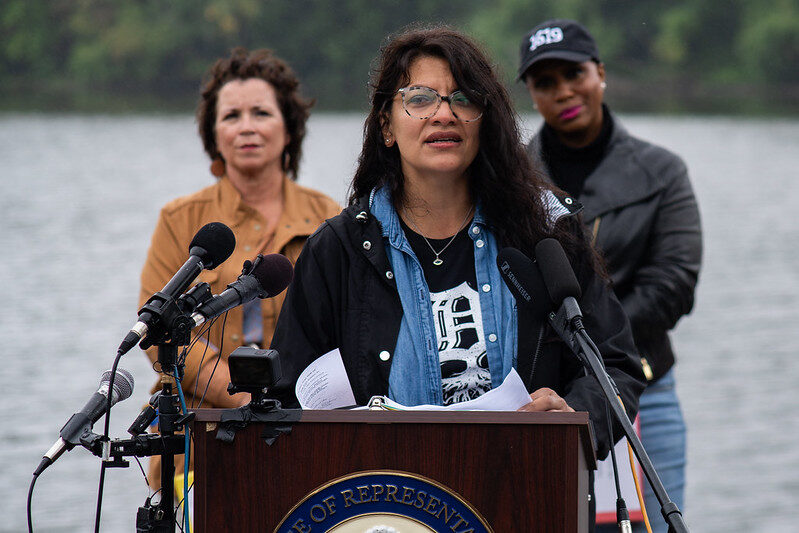
Another key development is the rise of Arab American candidates at all levels of government. In 2018, Rashida Tlaib, a Palestinian American from Detroit, became one of the first two Muslim women elected to Congress. Known for her progressive politics, Tlaib has used her platform to advocate for racial justice, economic equity, and Palestinian rights, which are topics long considered politically risky in Washington.
Other Arab American figures, like Virginia’s Sam Rasoul and New York’s Zohran Mamdani (Ugandan-Indian but representing overlapping political movements), are helping redefine who gets to speak for their communities. These candidates often draw support from multiracial, working-class, and youth-led coalitions, proving that Arab American identity is not a political liability, but a strength.
Barriers That Remain
Still, the path to full political power is far from clear. Arab Americans continue to face structural and social obstacles, including:
Census Invisibility: Without a standalone category, Arab Americans remain undercounted, limiting their access to federal resources and accurate political representation.
Racial and Religious Bias: Candidates with Arab or Muslim backgrounds often face bigoted attacks or are scrutinized more harshly than their peers.
Fragmentation: The Arab American community is incredibly diverse, spanning nationalities, religions, languages, and political ideologies, making unified platforms harder to build.
These challenges are compounded by limited access to traditional political infrastructure, such as donor networks, long-standing advocacy organizations, and established party support.
A Generation Ready to Lead
Despite these hurdles, a new generation of Arab Americans is taking ownership of the political process. Young people raised in post-9/11 America are turning their experiences of marginalization into motivation. They are leading grassroots campaigns, creating content on TikTok and Instagram to inform peers, and building political literacy in their communities.
This political awakening is not limited to Arab issues. Arab American youth are organizing around climate justice, reproductive rights, student debt, and racial equity. They are placing their identity within broader struggles for justice locally and globally.
Looking Ahead
The political story of Arab Americans’ voting power in the U.S. is still being written. From a history marked by exclusion and misrepresentation, the community is now entering a new chapter defined by agency, visibility, and growing influence.
If current trends continue, Arab Americans will play a pivotal role in shaping electoral outcomes and public policy, not just on Middle East-related issues, but on the full spectrum of American life. The question is no longer if Arab Americans belong in U.S. politics, but how much power they are ready to claim.
Want more articles like this? Sign up for our e-newsletter!
Check out our blog here!